Soups & Stews
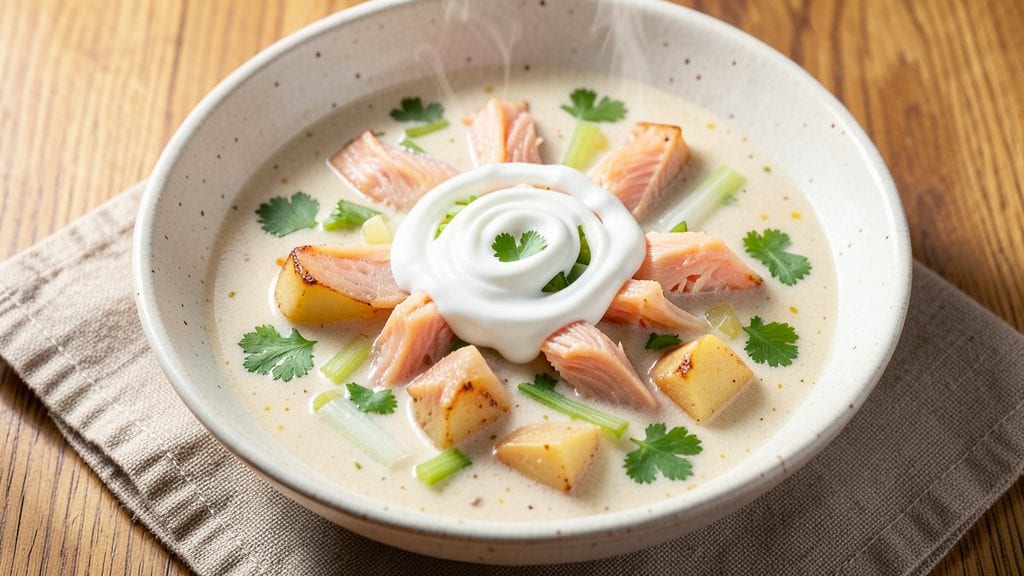
This canned salmon chowder soup recipe transforms simple pantry staples into a rich, comforting bowl of smoky dill-infused goodness—perfect for chilly evenings. The secret lies in balancing creamy broth with the bold flavor of canned salmon, creating a dish that’s both hearty and effortless to prepare.
I developed this recipe after realizing how quickly canned salmon could elevate a classic chowder without sacrificing texture or taste.
The beauty of this one-pot wonder is its versatility—whether you’re feeding a family or meal prepping for the week, it delivers restaurant-quality results in under an hour.
Sautéed onions and celery form the aromatic base, while a touch of smoked paprika adds depth, and the salmon flakes apart beautifully into the velvety broth. The dill isn’t just for garnish; it infuses the soup with a bright, herby freshness that cuts through the richness.
What you’ll end up with is a creamy yet light chowder where every spoonful delivers tender salmon, tender potatoes, and a broth so flavorful it disappears in seconds. The optional garnishes—fresh dill, a swirl of sour cream, or crispy crackers—let you customize it to your taste.
This is the kind of soup that warms you from the inside out, proving that canned salmon can be just as impressive as fresh.
Serve it alongside a crisp green salad or crusty bread for the full experience. The best part? Leftovers reheat beautifully, making it a foolproof solution for busy weeknights. Let’s get cooking—your taste buds will thank you.
Ingredients for canned salmon chowder soup
Pantry staples meet ocean freshness in this smoky dill chowder—creamy yet light, perfect for chilly nights.
| Ingredient | Amount | Notes |
|---|---|---|
| Canned Salmon 🐟 | 2 cans | Wild-caught preferred, drained |
| Russet Potatoes 🥔 | 1 ½ lb | Peeled, cubed into 1-inch pieces |
| Celery Stalks 🧅 | 3 whole | Diced, about 1 cup |
| Yellow Onion 🧅 | 1 whole | Diced, about 1 cup |
| Celery Leaves 🌿 | ½ cup | Fresh, chopped for garnish |
| Heavy Whipping Cream 🥛 | 1 cup | Full-fat for creaminess |
| Chicken Broth 💧 | 4 cups | Low-sodium preferred |
| Fresh Dill 🌿 | ¼ cup | Chopped, stems removed |
| Smoked Paprika 🌶️ | 1 tsp | For smoky depth |
| Garlic Cloves 🧄 | 3 cloves | Minced, about 1 tsp |
| Extra-Virgin Olive Oil 🫒 | 2 tbsp | For sautéing |
| Salt 🧂 | 1 tsp | Adjust to taste |
| Black Pepper 🌶️ | ½ tsp | Freshly ground |
| Lemon Juice 🍋 | 1 tbsp | Freshly squeezed |
| Sour Cream 🥛 | ¼ cup | For garnish, optional |
The salmon is the star, so wild-caught makes all the difference—it’s richer and less fishy than farmed. Trader Joe's and Costco usually carry high-quality brands like Wild Planet or Vital Choice. If you’re using canned salmon with skin, leave it on for extra texture. The potatoes should be firm but not waxy—Russet or Yukon Gold work best. I always peel and cube them myself, but pre-cut bags save time if you're short on it. For the dill, fresh is non-negotiable here—dried just won’t give that bright, herby punch. Look for vibrant green stems at the grocery store or farmers market.
No smoked paprika? Substitute half a teaspoon of liquid smoke plus a pinch of regular paprika for that smoky flavor. Short on fresh dill? Dried dill at one-third the amount works in a pinch, but the flavor won’t be as bright. The celery leaves are optional but add a nice garnish—if you skip them, extra fresh dill on top looks just as pretty. Using low-sodium broth? Add an extra pinch of salt at the end. The heavy cream gives it that velvety texture, but if you're watching calories, half-and-half works too—just expect it to be slightly lighter. And if you’re feeling fancy, a splash of white wine in the sautéing step adds depth.
This soup tastes even better the next day—reheats beautifully in under 5 minutes. Store leftovers in the fridge for up to 5 days or freeze portions for 3 months. I like to double the batch and freeze half because it’s perfect for lazy lunches. The cream will separate when reheating, so just give it a quick stir before serving. Garnish with extra dill, a dollop of sour cream, or crispy crackers right before eating—none of that should go in before storing, or it’ll get soggy.
Why You'll Love This Recipe
- Same soup, endless uses: a quick lunch, a hearty side for grilled fish, or even a potluck crowd-pleaser. The potatoes soak up the broth perfectly, so it’s always satisfying—no matter the occasion.
- Pantry-Friendly Magic: I swear by this recipe when my fridge is bare—just open a can of salmon, toss in potatoes, and let the broth do the work. No last-minute grocery runs, no stress.
- Salmon’s Rich Surprise: That flaky canned salmon adds a depth you’d never guess from the ingredients list. The celery leaves (yes, use the whole stalk!) give it a bright, almost herby lift that makes it taste like you slaved over it.
- Weeknight to Potluck: Same soup, endless uses: a quick lunch, a hearty side for grilled fish, or even a potluck crowd-pleaser. The potatoes soak up the broth perfectly, so it’s always satisfying—no matter the occasion.
Step-by-step instructions for canned salmon chowder soup
Here's how to create a rich, smoky chowder where every spoonful delivers perfect creaminess.
Sauté the Aromatic Base
Heat the 2 tablespoons extra-virgin olive oil in a large pot over medium heat. Add the diced yellow onion and 3 whole celery stalks (about 1 cup total) and cook for 5-6 minutes until softened and translucent. You'll see the onion turn pale golden and the celery lose its crunch.
Add the 3 cloves minced garlic and 1 teaspoon smoked paprika, stirring constantly for 30 seconds until fragrant. The paprika will deepen the smoky flavor while the garlic infuses its bright aroma. This aromatic base forms the flavor foundation for the entire chowder, so don't rush this step.
Simmer the Potatoes and Broth
Add the 1.5 pounds cubed russet potatoes to the pot and stir to coat them in the aromatic oil. Pour in the 4 cups chicken broth and bring to a gentle boil. Once boiling, reduce heat to medium-low and let it simmer uncovered for 12-15 minutes until the potatoes are fork-tender.
You'll know they're ready when a knife slides in easily with just slight resistance. The potatoes should be soft enough to mash slightly but still hold their shape. This cooking time ensures they absorb the broth's flavors while maintaining their structure in the finished soup.
Incorporate the Salmon and Dill
Gently stir in the 2 cans drained canned salmon, breaking up any large chunks with a wooden spoon. Add the 0.25 cup chopped fresh dill and 1 tablespoon freshly squeezed lemon juice. The lemon brightens the rich flavors while the dill adds fresh herbal notes that complement the smoky paprika.
Simmer the chowder for an additional 5 minutes to allow all the flavors to meld together. You'll notice the soup becoming more cohesive and aromatic as the dill releases its oils and the lemon juice integrates with the broth. This is where the chowder transforms from a collection of ingredients to a harmonious dish.
Finish with Cream and Season
Reduce the heat to low and gradually whisk in the 1 cup heavy whipping cream. Stir constantly for 2-3 minutes until the soup reaches your desired thickness and the cream is fully incorporated. The soup should be velvety smooth with a luxurious mouthfeel.
Season with 1 teaspoon salt and 0.5 teaspoon freshly ground black pepper. Taste and adjust the seasoning if needed—this is where you can fine-tune the balance between the smoky, creamy, and bright flavors. The chowder should be rich but not overly salty, with a perfect harmony of all the ingredients.
Serve with Garnish
Ladle the chowder into bowls and garnish each serving with a dollop of 0.25 cup sour cream and a sprinkle of 0.5 cup chopped celery leaves. The sour cream adds a cool contrast to the warm soup, while the celery leaves provide a fresh, crisp element that cuts through the richness.
Serve immediately while hot, as the flavors continue to develop as the soup sits. Each spoonful should deliver the perfect combination of creamy texture, smoky depth from the paprika, fresh dill notes, and the bright lemon finish. This chowder is comforting yet sophisticated, with every ingredient playing its part in creating a memorable dish.
Pro Tips For Making Canned Salmon Chowder Soup
- Simmer Potatoes Low: After boiling them whole for 10 minutes, switch to a gentle simmer—any hotter and they’ll turn to mush. I learned this the hard way when I rushed the process and ended up with a gluey soup instead of creamy chunks.
- Drain and Rinse Salmon: Open that can of salmon, drain it thoroughly, then rinse the flakes under cold water to cut the fishy brine. Trust me, your chowder won’t taste like a salty sea disaster if you do this first.
- Sweat Onions Slowly: Don’t rush the onion—cook it over medium-low heat for 5-6 minutes until it’s translucent and soft. After burning two batches, I finally realized high heat just makes the soup taste bitter.
- Stir in Celery Leaves Last: Save those celery leaves for the final 2 minutes of cooking—they’ll wilt into a bright, herby garnish instead of dissolving into nothing. (Yes, even if you’re impatient like me.)
Make-ahead tips for this dish
Meal Prep Strategy
Double the recipe and store it in airtight glass containers for up to 5 days in the fridge. I use Pyrex 4-cup containers because they distribute heat evenly when reheating.
The cream will separate slightly, so give it a quick stir before serving—this keeps the texture velvety smooth without breaking the emulsion. 🥫
Freezer-Friendly Tips
For long-term storage, freeze portions in quart-sized freezer bags with 1-inch headspace to prevent expansion cracks. Label each bag with the date and reheat directly from frozen—just add ¼ cup water per serving to prevent drying out.
Thaw overnight in the fridge for best results, but you can also microwave it covered on 50% power for 3-4 minutes for a quick meal. ❄️
Batch Cooking Hacks
Pre-chop all vegetables while watching TV or listening to a podcast—it takes about 15 minutes and makes the actual cooking process effortless. I like to pre-cook the potatoes separately in the microwave for 8-10 minutes (pierced with a fork) to cut down on stovetop time.
This shaves 10 minutes off your total prep when making multiple batches. ⏱️
Reheating Perfection
Stovetop reheating gives the best results: Heat over medium-low for 5-7 minutes, stirring occasionally, until steaming. Avoid boiling, which can make the cream curdle. For microwave reheating, use low power in 1-minute intervals, stirring between each, until heated through. The soup should reach 165°F internally for safety. 🔥
Garnish Prep Ahead
Store all garnishes—sour cream, fresh dill, and celery leaves—separately in small containers. Add them fresh just before serving to maintain vibrant colors and crisp textures.
I keep a mini chopping board in my fridge for quick garnish prep when reheating. This keeps your chowder looking restaurant-fresh even after storage. 🌿
Portion Control
Use 1-cup portion scoops to divide chowder evenly for meal prep. This ensures consistent servings and prevents overfilling containers. I like to serve with whole-grain crackers on the side—package them separately to keep them crispy. Label containers with reheating instructions to make grab-and-go lunches effortless. 🍽️
Nutrition facts
Frequently asked questions
Can I make this chowder without heavy cream for a lighter version?
Swap the heavy cream for ½ cup half-and-half plus ½ cup unsweetened almond milk to cut calories while keeping it creamy. For extra richness, stir in 2 tablespoons melted butter at the end. The texture will be slightly lighter but still velvety smooth.
How do I prevent the chowder from getting too thick when reheating?
Add 1-2 tablespoons of broth or water per serving when reheating to restore the ideal consistency. Stir constantly over medium-low heat and avoid boiling—this keeps the cream from separating. For microwave reheating, use low power in 30-second intervals to prevent curdling.
What’s the best way to use canned salmon leftovers in this recipe?
Break up any remaining canned salmon into 1-inch chunks and stir them in during the final 5 minutes of simmering. For extra flavor, add ½ teaspoon smoked paprika and 1 tablespoon lemon juice to the pot. The salmon will reabsorb the broth’s flavors beautifully, making it taste fresh every time.
Can I make this chowder dairy-free?
Yes! Replace the heavy cream with 1 cup full-fat coconut milk (for richness) or 1 cup cashew cream (blend 1 cup soaked cashews + 1 cup water). Add 1 teaspoon nutritional yeast for a cheesy depth. The coconut milk gives a subtle tropical note, while cashew cream keeps it neutral. For best results, simmer the potatoes in vegetable broth first before adding the dairy-free cream.
Why did my chowder turn out too salty?
Low-sodium broth or added salt can accumulate quickly. If it’s too salty, stir in ½ cup plain yogurt or sour cream (this dilutes the salt) and add ¼ cup cold water to balance the flavors. For future batches, taste the broth before adding salt—this prevents over-salting. A splash of lemon juice also helps brighten the flavors if needed.