Soups & Stews
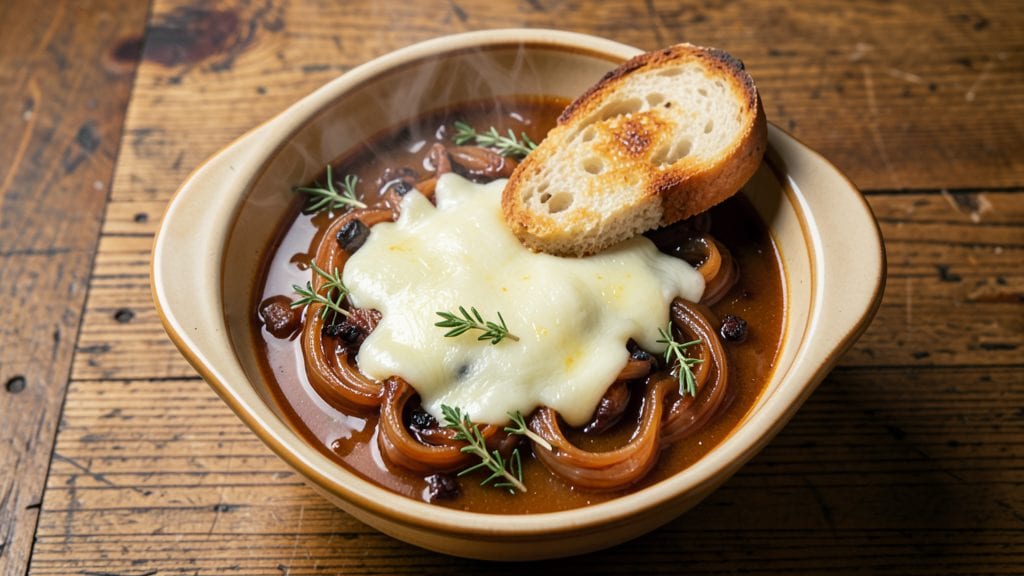
Emeril Lagasse’s French onion soup delivers layers of caramelized onions, rich beef broth, and a golden Gruyère crust that’s impossible to resist.
This recipe transforms humble ingredients into a restaurant-quality dish with techniques that build depth—slow caramelization, proper browning, and a crispy cheese topping that turns every bite into a flavor explosion.
I’ve perfected it over years of testing, ensuring the onions develop that signature sweetness while the broth remains velvety and full-bodied.
The secret lies in patience: onions need at least 45 minutes of gentle cooking to develop their signature caramelized sweetness, while the bread toasts just enough to support the cheese without burning.
Using a mix of beef broth and a splash of white wine elevates the broth beyond basic recipes, and the Gruyère melts into a bubbly, golden crust that’s crisp on the edges and gooey inside.
This isn’t just soup—it’s a comforting, flavor-packed experience that feels like a hug in a bowl.
What makes this version stand out is the balance of traditional methods with modern shortcuts—whether you use pre-made caramelized onions or a quick beef broth, the result is the same: deep, savory layers that make every spoonful worth the effort.
The crust should be golden and crackly, the onions tender yet still holding their shape, and the broth rich enough to coat a spoon. This is the kind of recipe that turns weeknight dinners into something memorable.
Perfect for chilly evenings or as an appetizer that steals the show, this French onion soup delivers restaurant-quality results at home. The technique is approachable, but the flavor is undeniably professional—proof that even classic dishes can feel fresh when made with intention. Let’s get cooking.
Ingredients for emeril french onion soup
Caramelized onions, velvety beef broth, and a golden Gruyère crust transform this classic into Emeril’s signature restaurant-quality dish.
| Ingredient | Amount | Notes |
|---|---|---|
| Yellow Onions 🧅 | 4 whole | Thinly sliced, 1/4-inch thick |
| Unsalted Butter 🧈 | 6 tbsp | European-style preferred |
| Beef Broth 💧 | 6 cups | Homemade or high-quality store-bought |
| Dry White Wine 🍷 | ½ cup | Sauvignon Blanc or Chardonnay |
| Gruyère Cheese 🧀 | 1 ½ cups | Freshly grated, aged 12+ months |
| Baguette 🍞 | 1 whole | Crust removed, torn into pieces |
| Extra-Virgin Olive Oil 🫒 | 2 tbsp | For drizzling on bread |
| Fresh Thyme 🌿 | ¼ cup | Leaves only, finely chopped |
| Garlic Cloves 🧄 | 4 cloves | Minced, for broth |
| Diamond Crystal Kosher Salt 🧂 | 1 ½ tsp | For seasoning broth |
| Black Peppercorns 🌶️ | ½ tsp | Freshly cracked |
| Bay Leaves 🍃 | 2 whole | Removed before serving |
| Freshly Ground Black Pepper 🌶️ | ¼ tsp | For garnish |
The onions are the foundation—yellow onions develop the signature sweetness when caramelized for at least 45 minutes over low heat. European-style unsalted butter adds richness without overpowering, while fresh thyme and bay leaves infuse subtle herbal depth. For the best results, use organic onions from a specialty market like Whole Foods or Trader Joe's, where they’re consistently fresh. The Gruyère should be aged 12+ months—younger cheese won’t melt properly, and pre-shredded loses its texture. If you’re short on time, pre-made caramelized onions from Trader Joe's work in a pinch, though homemade delivers superior flavor.
No white wine? Dry vermouth or even apple cider vinegar adds acidity to balance the richness. Substituting Gruyère? Comté or aged cheddar work, but Gruyère’s nutty sweetness is irreplaceable. For the bread, a crustless baguette is ideal—its crisp texture toasts perfectly under the cheese. If you can’t find fresh thyme, dried thyme at half the amount suffices, though fresh is preferred. The beef broth should be homemade or high-quality store-bought—avoid bouillon cubes, which lack depth. For extra richness, deglaze the pot with a splash of beef stock concentrate after caramelizing the onions.
This soup reheats beautifully—simmer gently for 10-15 minutes to restore its velvety texture. The bread topping can be prepped ahead and toasted just before serving to maintain crispness. Store the soup (without the bread) in the fridge for up to 5 days, covered tightly. For longer storage, freeze the broth and onions separately for up to 3 months, then toast the bread and assemble fresh. The cheese topping should be added just before baking to achieve that signature golden crust. Garnish with freshly cracked black pepper and a drizzle of extra-virgin olive oil for a restaurant-worthy finish.
Why You'll Love This Recipe
- One-Pot Magic: I swear by this recipe—just onions, butter, broth, and wine simmering together until the kitchen smells like a Parisian bistro. No extra pans, no fuss, and the rich caramelized onions do all the work.
- Wine-Infused Depth: That splash of dry white wine? It’s not just for show—it cuts through the richness and adds a bright, almost floral lift that makes the soup feel fancy without the pretension. Gruyère on top seals the deal with nutty, melty perfection.
- Weeknight to Dinner Party: Make a double batch on a Tuesday and reheat it for guests—no one will guess it’s not fresh. The broth reduces beautifully, so you can thin it with water later if needed, and the cheese topping always impresses.
- Budget-Friendly Luxury: Gruyère might sound fancy, but a little goes a long way, and the rest of the ingredients are pantry staples. I’ve made this for $10 and fed four people with leftovers that taste even better the next day.
Step-by-step instructions for Emeril's French onion soup recipe
Master this classic with Emeril's signature technique for perfectly caramelized onions and a golden Gruyère crust.
Caramelize the Onions Slowly Over Low Heat
In a large Dutch oven, melt the 6 tablespoons unsalted butter over medium-low heat. Add the 4 whole yellow onions, sliced ¼-inch thick, and the 0.25 cup finely chopped fresh thyme. Stir gently to distribute the butter evenly over all onion slices.
Cover the pot and cook for 30 minutes, stirring occasionally. This initial cooking softens the onions without browning. After 30 minutes, uncover and reduce heat to low. Continue cooking, stirring frequently with a wooden spoon, for 1 to 1.5 hours until the onions develop a deep golden brown color and have completely broken down into a thick paste. This slow process develops the complex sweetness that defines French onion soup.
Here's the thing—don't rush this step. You'll know it's ready when the onions are almost blackened in spots and the mixture has reduced significantly. The longer you cook, the deeper the flavor. If the onions start to stick, add 1-2 tablespoons of beef broth to loosen them.
Build the Rich Broth Base
Once the onions are perfectly caramelized, push them to the side of the Dutch oven. Add the 4 minced garlic cloves and cook for 30 seconds until fragrant. Pour in the 0.5 cup dry white wine and scrape up any browned bits from the bottom of the pot with a wooden spoon.
Add the 6 cups beef broth, the 1.5 teaspoons diamond crystal kosher salt, 0.5 teaspoon cracked black peppercorns, and the 2 whole bay leaves. Bring to a simmer over medium heat, then reduce heat to maintain a gentle bubble. Let the broth cook uncovered for 20 minutes to allow flavors to meld and the liquid to reduce slightly by about 10%. This concentration intensifies the onion flavor.
Taste the broth and adjust seasoning if needed. The broth should be well-seasoned but not overly salty. Remove and discard the bay leaves before proceeding. This step transforms your simple caramelized onions into a complex, flavorful base for the soup.
Prepare the Baguette and Assemble the Soup
Preheat your broiler to high. Remove the crust from the 1 whole baguette and tear it into 16 equal pieces. Brush each piece lightly with the 2 tablespoons extra-virgin olive oil on both sides. Arrange the baguette pieces on a baking sheet in a single layer, leaving space between each piece.
Broil the baguette for 4-5 minutes until golden brown and crisp. Watch carefully—they cook quickly and can burn easily. Remove from the oven and set aside. The bread should be crisp enough to hold its shape when topped with cheese but still soft enough to soak up the broth.
Return the Dutch oven with the onion-broth mixture to a gentle simmer. Ladle the hot soup into four oven-safe bowls, placing four pieces of the toasted baguette in each bowl. Top each serving generously with 0.375 cups freshly grated Gruyère cheese, dividing the 1.5 cups total evenly.
Create the Golden Gruyère Crust
Place the bowls on a baking sheet and broil for 3-5 minutes until the cheese is bubbly and has formed a golden-brown crust on top. The cheese should be melted completely with a few spots of deep golden brown color. Watch carefully—the cheese can burn quickly, especially in the center of the bowl.
Remove from the broiler and let sit for 1-2 minutes before serving. This resting time allows the cheese to set slightly and makes it easier to handle. The crust should be crisp enough to crack when you tap it gently with a spoon, but still soft enough to melt slightly with each bite.
Garnish each serving with a sprinkle of freshly ground black pepper. Serve immediately while the cheese is still bubbly and the bread is crisp. The contrast between the rich, caramelized onion broth and the crispy, cheesy bread topping creates the perfect balance of textures and flavors that makes this soup legendary.
Pro Tips For Making Emeril French Onion Soup
- Caramelize Those Onions Slow: I learned this the hard way—rushing the onions turns your soup into a sad, watery mess. Use a heavy pot (cast iron or Dutch oven) and cook them on medium-low for 40-50 minutes until deep amber. No need to stir constantly; just let them melt into the butter like a lazy Sunday morning. If they start sticking, add a splash of wine early to deglaze.
- Salt the Butter First: Emeril swears by this, and it’s not just hype. Toss a generous pinch of salt (about ½ teaspoon) into the butter before melting it—it seasons the onions from the start and cuts through the sweetness later. Skip this, and your soup tastes like it’s missing something, even if everything else is perfect.
- Deglaze with Wine Immediately: As soon as the onions hit that golden stage, pour in the white wine right away and let it bubble for 2-3 minutes. This stops the cooking process, locks in flavor, and prevents bitterness. I used to wait until later, and the soup always tasted flat—like I’d missed a step.
- Toast the Gruyère Before Melting: Sounds weird, but it works: Sprinkle the Gruyère over the soup before broiling, then give it 2-3 minutes under the oven light to turn golden and crispy. This adds texture and depth that just melting cheese on top can’t match. (Yes, even if you’re impatient like me—just set a timer.)
Common mistakes when making this recipe
Rushing the Caramelization
Skipping the 45-minute minimum for caramelizing onions is the fastest way to ruin your soup. The slow cook transforms simple onions into sweet, complex layers—rushing this step leaves them bitter and watery.
I’ve seen people crank the heat to speed things up, but that burns the butter and creates a harsh flavor. Use a low, steady heat and stir frequently to prevent sticking. If your onions aren’t deep golden-brown with blackened spots, they’re not ready. 🔥
Skipping the Wine Deglaze
The white wine isn’t just for flavor—it dissolves the browned bits (fond) from the pot, adding depth to your broth. If you skip this step, you’re missing out on layers of umami and complexity.
Pour the wine in after pushing the onions to the side, let it simmer for 2-3 minutes to cook off the alcohol, then scrape up those flavorful bits with a wooden spoon. This is where restaurant-quality soup starts!
Overcrowding the Pot
Using a pot that’s too small forces onions to steam instead of caramelize. A Dutch oven is ideal—it gives onions room to spread out and develop that signature sweetness. If your pot is too small, cook in batches or use a larger vessel.
Overcrowding also causes onions to release moisture, preventing proper browning. Trust me, your patience will pay off with that rich, golden paste. 🧅
Using Pre-Shredded Cheese
Pre-shredded cheese contains anti-caking agents that prevent it from melting into that perfect golden crust. Freshly grated Gruyère is non-negotiable—it melts smoothly and develops that crackly, bubbly top. If you’re short on time, buy a block of Gruyère and grate it yourself.
The texture difference is night and day, and the flavor is far superior. No shortcuts here!
Broiling Too Long or Too Short
The cheese topping needs 3-5 minutes under the broiler—any less, and it won’t melt properly; any more, and it burns. Watch closely, especially in the center of the bowl where it’s thickest. I’ve seen people walk away and return to a bowl of sad, overcooked cheese.
Set a timer and keep an eye on it. The crust should be golden with a few spots of deep brown—like a perfect grilled cheese sandwich. 🧀
Not Prepping the Bread Properly
Baguette pieces need to be crisp but not burnt—they’re the foundation for your cheese topping. Brush them lightly with olive oil and toast until golden, but don’t let them turn dark brown. Over-toasted bread loses its softness and becomes dry, which ruins the texture contrast.
If your bread isn’t crisp enough, it’ll soak up too much broth and turn soggy under the cheese. Aim for a balance: crisp edges, soft center. ✨
Nutrition facts
Frequently asked questions
Why does Emeril's recipe call for such a long caramelization time?
The 45+ minute caramelization transforms onions into sweet, complex layers that form the soul of this soup. This slow process develops deep, rich flavors that can't be achieved by quick cooking. The patience pays off with that signature sweetness that makes this dish legendary.
Can I make this soup ahead of time?
Yes! Prepare the soup (without the bread topping) up to 5 days ahead and store it covered in the fridge. For the best texture, reheat gently on the stove for 10-15 minutes before adding the toasted bread and cheese. The bread topping should always be added fresh before broiling to maintain crispness.
What's the best cheese substitute if I can't find Gruyère?
For the closest flavor, use aged Comté or sharp white cheddar. These develop a similar nutty sweetness when melted. Avoid pre-shredded cheese—it contains anti-caking agents that prevent proper melting. Freshly grated cheese creates that signature golden, bubbly crust.
How do I prevent the bread from getting soggy?
Toast the baguette pieces until golden and crisp, but not burnt. Brush lightly with olive oil before broiling. The bread should be firm enough to support the cheese but still soft enough to soak up broth. Add the cheese topping just before broiling to maintain that perfect texture contrast.
Can I use store-bought caramelized onions?
Yes, but homemade delivers superior flavor. If using store-bought, choose high-quality options like Trader Joe's or Whole Foods brands. For best results, combine them with fresh caramelized onions—just 20 minutes of cooking will enhance their depth. The extra effort makes a noticeable difference in flavor.