Soups & Stews
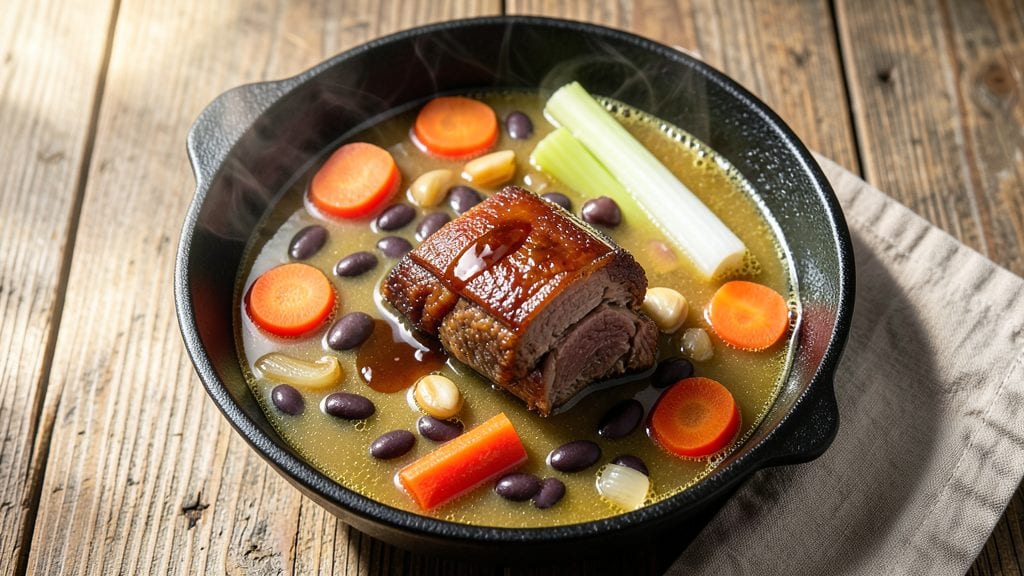
This old-fashioned ham hock soup recipe delivers the kind of soul-warming comfort that transforms a simple weeknight into a celebration of tradition.
The ham hock, simmered for hours, infuses the broth with deep, smoky richness that pantry staples alone can't replicate—think tender vegetables, hearty beans, and a finish that tastes like home.
I first made this version during a cold winter when store-bought broth just wouldn't cut it, and it's been my go-to ever since.
The beauty of this recipe lies in its simplicity and depth. With just a few core ingredients—ham hock, onions, carrots, celery, and a touch of cornmeal for thickening—you create a broth so flavorful it becomes the star.
The slow simmer breaks down the ham hock, releasing collagen that thickens the broth naturally while keeping it light enough to sip. No fancy techniques required, just patience and a pot on the stove.
What you'll end up with is a steaming bowl of soup where every spoonful carries layers of flavor: the smoky depth of the ham hock, the sweetness of caramelized vegetables, and the subtle earthiness of the beans.
The broth is rich enough to stand alone but balanced enough to pair with crusty bread or cornbread. This is the kind of soup that tastes even better the next day, when flavors have fully melded.
The best part? It's a recipe that scales effortlessly—double the batch for leftovers or stretch it into a meal for four. Whether you're feeding a family or craving a solitary bowl of warmth, this ham hock soup delivers restaurant-quality comfort without the fuss.
Let's get started on creating your own pot of tradition.
Ingredients for old fashioned ham hock soup
Pantry staples plus one special ingredient—ham hock—that turns simple broth into soul-warming magic.
| Ingredient | Amount | Notes |
|---|---|---|
| Ham Hock 🍖 | 1 lb | Smoked or unsmoked, skin on |
| Yellow Onions 🧅 | 2 whole | Medium size, peeled and halved |
| Carrots 🥕 | 3 whole | Medium size, peeled and chopped |
| Celery Stalks 🥬 | 3 whole | Medium size, trimmed and chopped |
| Garlic Cloves 🧄 | 4 cloves | Peeled and smashed |
| Dried Navy Beans 🍲 | 1 cup | Picked over for stones |
| Cornmeal 🌾 | ¼ cup | Fine grind for smooth texture |
| Dried Thyme 🌿 | 1 tsp | Or 1 tbsp fresh thyme leaves |
| Bay Leaves 🍃 | 2 whole | Fresh or dried |
| Salt 🧂 | 1 tsp | Kosher or sea salt |
| Black Peppercorns 🌶️ | ½ tsp | Crushed lightly |
| Apple Cider Vinegar 🍎 | 1 tbsp | For brightness |
| Water 💧 | 8 cups | Enough to cover ingredients |
| Crusty Bread 🍞 | 4 slices | For serving |
The ham hock is non-negotiable here. Look for smoked hocks at your local butcher—they've got the deepest flavor. If you can't find smoked, unsmoked works fine. I usually grab mine at Whole Foods or Costco when they're on sale. The beans? Navy beans are traditional, but great northern or pinto work too. Just make sure they're picked over for any little stones. For the vegetables, carrots and celery from the store's produce section are fine, but farmers market veggies have more flavor. Don't skip peeling the onions—they caramelize beautifully during the simmer.
No dried thyme? Fresh works at three times the amount. Short on bay leaves? Two sprigs of fresh thyme will do. The cornmeal is key for that old-fashioned thickness—don't substitute flour, it makes the soup gummy. Vinegar giving you pause? Lemon juice works too. For the water, tap is fine, but if you've got filtered or spring water, it adds a subtle difference. The ham hock should be fully submerged, so if you're making a bigger batch, adjust the water accordingly. And trust me on the cornmeal—it's what makes this soup sing.
This soup tastes even better the next day as flavors meld. Store in the fridge for 5-6 days or freeze portions for 3 months. I always make a double batch—one for dinner, one for lunches. The crusty bread? Sourdough or a good baguette from the bakery section. If you're serving leftovers, warm gently on the stove with a splash of water to restore richness. The ham hock will be tender enough to eat by itself—save a piece for sandwiches!
Why You'll Love This Recipe
- One-Pot Wonder: I swear by this soup because it’s the kind of meal that starts in one pot and ends in the same one—no extra bowls, no fuss. Just chop the onions, carrots, and celery (the classic "holy trinity" combo), toss them in with the ham hock and garlic, and let it simmer. The ham hock practically melts into the broth, so you’re not left with a pile of bones to deal with.
- Deep, Savory Magic: That ham hock? It’s the star. Slow-simmered, it infuses the broth with a richness that’s hard to beat—think smoky, salty, and just a little sweet. The onions and garlic caramelize right into the soup, giving it layers of flavor that make you want to slurp it straight from the pot. (Between us, I’ve been known to skip the bread.)
- Weeknight to Holiday: This soup is my go-to for lazy Mondays, but it also feels fancy enough for Thanksgiving leftovers or a chilly Sunday brunch. Double the batch, freeze half, and you’ve got a ready-made meal for when you’re too tired to cook. Honestly, I’ve served it at potlucks, and no one ever guessed it was this easy.
- Budget-Friendly Feast: A single ham hock stretches this soup to feed four or more—no expensive cuts or specialty ingredients here. The veggies are cheap, the flavor is bold, and the leftovers? Even better the next day. I’ll be real: this is the kind of soup that makes me feel like I’m feeding a crowd without breaking the bank.
Step-by-step instructions for old fashioned ham hock soup
Here's how to create a rich, smoky ham hock soup that tastes like comfort food at its finest.
Prepare the Ham Hock and Vegetables
Begin by rinsing the 1 lb ham hock under cold water and patting it completely dry with paper towels. This step is crucial because any moisture left on the ham will create steam instead of allowing that beautiful crispy bark to form during cooking. Place the ham hock in a large Dutch oven or heavy pot.
Peel and halve the 2 whole yellow onions, then peel and chop the 3 whole carrots into ½-inch pieces. Trim the 3 whole celery stalks and chop them into similar ½-inch pieces. Add these vegetables to the pot with the ham hock. The combination of onions, carrots, and celery creates the classic "holy trinity" of soup vegetables that builds deep flavor.
Build the Broth Base
Add the 4 peeled and smashed garlic cloves, 1 cup dried navy beans, 1 tsp dried thyme, 2 whole bay leaves, 1 tsp salt, and 0.5 tsp crushed black peppercorns to the pot. Pour in the 8 cups water and bring everything to a boil over high heat. Once boiling, reduce the heat to medium-low and let it simmer uncovered for 30 minutes, stirring occasionally.
After 30 minutes, you'll notice the ham hock has released its gelatinous collagen into the broth, creating that signature old-fashioned richness. The navy beans will begin to soften, and the vegetables will start to break down, releasing their natural sweetness into the broth. This initial simmering period is where all the foundational flavors develop.
Add Vinegar and Cook Until Tender
Stir in the 1 tbsp apple cider vinegar. This small addition brightens the flavors and helps tenderize the ham hock and beans. Return the heat to medium and continue simmering uncovered for 2 to 2½ hours, or until the meat easily pulls away from the bone and the beans are fork-tender. You'll know it's ready when a wooden spoon slides through the beans with minimal resistance.
During this time, the broth will reduce slightly, concentrating the flavors. The ham hock will become fork-tender, and the vegetables will soften but retain their shape. The apple cider vinegar will mellow out, adding just the right amount of brightness to balance the richness of the ham and beans.
Finish with Cornmeal and Serve
Remove the ham hock and strain the broth through a fine-mesh sieve into a clean pot, discarding the vegetables and beans. Return the broth to medium heat and gradually whisk in the 0.25 cup cornmeal until smooth. Cook for 2 to 3 minutes, stirring constantly, until the mixture thickens slightly. This step creates that classic old-fashioned soup body without making it gluey.
Shred the meat from the ham hock and return it to the pot along with the cooked beans and vegetables. Taste and adjust seasoning with additional salt and pepper if needed. Ladle the hot soup into bowls and serve immediately with the 4 slices crusty bread on the side. The contrast between the thick, hearty soup and the crispy bread makes this dish truly satisfying.
Pro Tips For Making Old Fashioned Ham Hock Soup
- BLANCH THE HAM HOCK FIRST: Skip the raw plunge—give that ham hock a quick 5-minute boil in salted water before adding it to the soup. This loosens the skin and pre-renders some fat, so it doesn’t turn the broth greasy later. (Yes, even if you’re impatient like me.)
- CHAR THE ONIONS DEEP: Don’t just soften those yellow onions—cook them over medium-high heat until they’re dark golden, almost caramelized, with a little stickiness. That’s where the flavor lives, not just the base. (I used to rush this and wondered why my soup tasted bland.)
- STRAIN THE BROTH TWICE: After simmering, strain the broth through a fine-mesh sieve first, then a cheesecloth. The second pass catches all the fine particles that make your soup look murky. (Your future self will thank you—trust me.)
- USE A LITTLE SPLASH OF VINEGAR: Add 1 tablespoon of apple cider vinegar when you taste the broth. It brightens the flavors without overpowering, especially if your ham hock is on the salty side. (Sounds weird, but it works—my grandmother swore by it.)
Common mistakes when making perfect results
Skipping the Vinegar
Don’t skip the 1 tbsp apple cider vinegar—it’s the secret to brightening the deep, smoky flavors of the ham hock. Without it, the broth can taste flat or overly salty.
I’ve made this mistake, and the difference is noticeable. The vinegar also helps tenderize the beans and ham, cutting through the fat for a cleaner, more balanced flavor. 💡
Overcrowding the Pot
Using a pot that’s too small leads to crowded ingredients, which steams instead of simmering. I recommend a large Dutch oven—it gives everything room to develop flavor without boiling over.
If your pot is full to the brim, the broth won’t reduce properly, and the vegetables won’t caramelize. Start with a 6-8 quart pot for this recipe.
Not Skimming the Foam
The first 30 minutes of simmering produce a thick foam on top—this is fat and impurities rising to the surface. Skim it off with a ladle or spoon to keep the broth clear and prevent a greasy finish.
I use a slotted spoon for this, dipping it in cold water between skims to avoid sticking. Skipping this step makes the soup taste heavy and unbalanced.
Rushing the Cook Time
This soup needs at least 2 hours of simmering for the ham hock to fully break down and infuse the broth. Cutting the time short leaves the meat tough and the broth weak.
I’ve seen people try pressure cookers for speed, but traditional simmering builds layers of flavor you can’t replicate. If you’re short on time, start earlier—this soup tastes even better the next day!
Using the Wrong Thickener
The recipe calls for cornmeal, not flour, because it creates a smooth, velvety texture without gumminess. Flour can make the soup gluey and cloudy. If you’re out of cornmeal, arrowroot powder works in a pinch, but stick to the ¼ cup cornmeal for that old-fashioned body.
Whisk it in gradually over medium heat to avoid lumps.
Ignoring the Resting Time
After cooking, let the soup sit off the heat for 10 minutes before serving. This allows flavors to meld and the broth to thicken slightly. I’ve served it immediately, and while it’s still good, the flavors aren’t as cohesive.
Resting also makes it easier to shred the ham hock without breaking up the broth. Patience here makes all the difference! ✨
Nutrition facts
Frequently asked questions
Why does ham hock make this soup so much richer than regular ham?
The ham hock's connective tissue releases collagen during long simmering, creating a naturally thick, velvety broth that regular ham can't match. The bone marrow adds deep umami flavor while the skin crispens beautifully. This is why old-fashioned recipes rely on it—no shortcuts can replicate that depth!
Can I substitute smoked ham hock for unsmoked?
Smoked hocks add extra depth, but unsmoked works perfectly fine. If using unsmoked, consider adding ½ teaspoon smoked paprika to mimic the smoky flavor. The key is the collagen-rich bone—whether smoked or not, it delivers that signature richness.
How do I know when the beans are done?
The beans are ready when they're fork-tender but still hold their shape—think al dente pasta. Press a bean with your fork: it should collapse slightly but not turn to mush. For navy beans, this typically takes 2-2½ hours of simmering with the ham hock. Overcooking turns them mushy!
Can I make this soup in a slow cooker?
Yes! Use the same ingredients but cook on low for 8-10 hours or high for 5-6 hours. The slow cooker's gentle heat works perfectly for breaking down the ham hock. Just remember to skim foam during the first hour and add vinegar at the 4-hour mark for brightness.
What's the best way to reheat leftovers?
Gently reheat on the stove over medium-low heat with a splash of water or broth to restore richness. Avoid microwaving—it can make the soup watery. For extra flavor, add a pinch of salt or a dash of vinegar while reheating. This soup actually tastes better the next day!