Soups & Stews
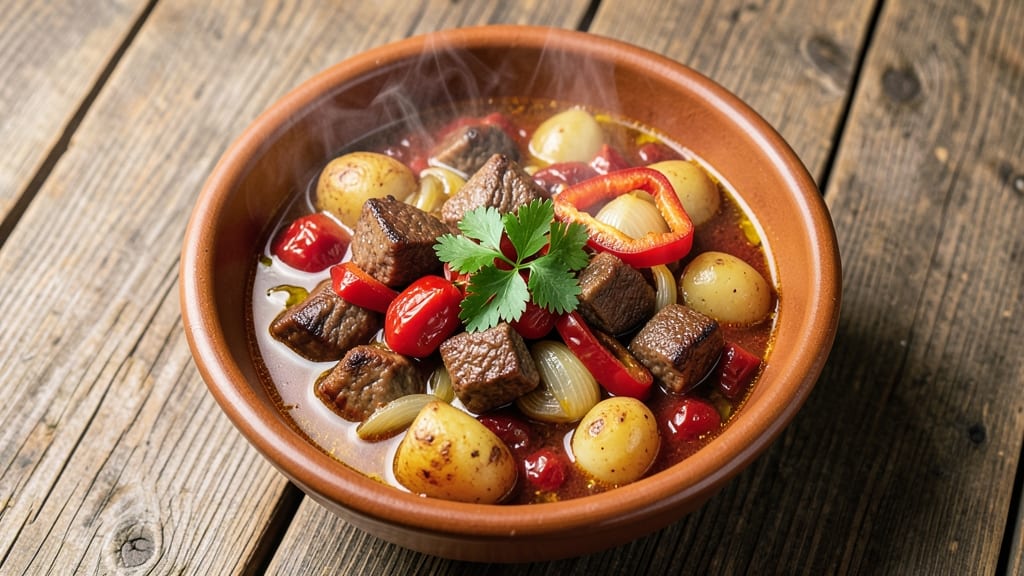
This traditional goulash soup recipe brings Hungary’s hearty flavors to your kitchen with its signature paprika-kissed beef and tender vegetables. The aroma alone—warm spices mingling with caramelized onions and simmering broth—transports you straight to Budapest’s cozy taverns.
I’ve perfected this version over years of testing, balancing authenticity with approachability so even beginners can achieve restaurant-quality depth.
The secret lies in slow simmering: letting the beef break down into tender shreds while the paprika develops its signature smoky-sweet complexity. You’ll start with a rich beef broth base, then layer in onions, peppers, and potatoes until everything melds into a comforting, one-pot masterpiece.
The key ingredient? Quality Hungarian paprika—its earthy warmth distinguishes true goulash from imitations.
By the time you ladle this into bowls, you’ll have a soup that’s rich yet balanced, with beef so tender it falls apart at the touch and vegetables perfectly softened but still vibrant.
The crusty bread on the side? Pure tradition. This isn’t just a meal—it’s a taste of Hungarian heritage, made simple enough for weeknight dinners but bold enough to impress guests.
For those who love tradition with flexibility, I’ll share variations—from different paprika types to meat swaps like pork or veal—so you can adapt it to your tastes while keeping the soul of goulash intact. Let’s get cooking!
Ingredients for traditional goulash soup
Pantry staples meet Hungarian tradition—just 15 ingredients for soul-warming goulash.
| Ingredient | Amount | Notes |
|---|---|---|
| Beef Chuck Roast 🥩 | 2 lb | Cut into 1-inch cubes, trimmed of fat |
| Yellow Onions 🧅 | 3 whole | Medium size, thinly sliced |
| Bell Peppers 🌶️ | 2 whole | Red or yellow, sliced into strips |
| Russet Potatoes 🥔 | 2 lb | Waxy variety, peeled and cubed |
| Tomatoes 🍅 | 2 whole | Roma or plum, diced |
| Hungarian Paprika 🌶️ | 3 tbsp | Sweet or hot variety, not smoked |
| Beef Broth 💧 | 4 cups | Homemade or high-quality store-bought |
| Red Wine 🍷 | 1 cup | Dry, like Cabernet Sauvignon |
| Garlic Cloves 🧄 | 4 cloves | Minced, fresh preferred |
| Carrots 🥕 | 2 whole | Medium, sliced into rounds |
| Bay Leaves 🍃 | 2 whole | Fresh or dried |
| Thyme 🌿 | 1 tsp | Dried, or 1 tbsp fresh |
| Salt 🧂 | 1 ½ tsp | Diamond Crystal kosher salt |
| Black Pepper 🌶️ | ½ tsp | Freshly ground preferred |
| Olive Oil 🫒 | 2 tbsp | Extra-virgin, for searing |
The beef is non-negotiable—chuck roast is the gold standard here, breaking down into tender strands. Grab it from the butcher counter if possible, or the pre-cubed section at Whole Foods saves time. Look for good marbling, not lean cuts. The Hungarian paprika? Don’t settle for generic paprika—Penzeys or Kalustyan’s carry the real deal, and it makes all the difference. I’ve used sweet and hot varieties; sweet gives a milder, more traditional flavor, while hot adds depth. The onions? Yellow onions caramelize best—skip the red unless you want color over flavor.
No Hungarian paprika? Sweet paprika plus a pinch of smoked paprika gets you 80% there. Short on red wine? Beef broth with 1 tbsp balsamic vinegar mimics the acidity. The tomatoes can be canned (San Marzano if you’re fancy), but fresh Roma tomatoes add brightness. Bell peppers? Yellow or red work best—they’re sweeter than green. If you’re swapping beef, pork shoulder works well, but it’ll be slightly fattier. For a lighter version, use lean ground beef instead of chuck, but expect less tenderness. The bay leaves? Fresh is better, but dried works in a pinch—just double the amount.
This soup tastes even better the next day as flavors meld. Store leftovers in the fridge for up to 5 days—the beef gets more tender with time. For freezing, portion into airtight containers and it keeps for 3 months. I like to make a double batch and freeze half—perfect for lazy weeknights. The paprika loses potency over time, so if you’re storing the dry blend separately, keep it in a dark, airtight container for up to 6 months. Reheat gently on the stove, stirring occasionally to prevent burning.
Why You'll Love This Recipe
- One-Pot Magic: I swear by this recipe because it’s literally dump-and-simmer. Toss in the beef chuck, onions, bell peppers, and potatoes—no fancy techniques, just a big pot and patience. The slow cook transforms tough cuts into melt-in-your-mouth shreds while you handle the rest of your day.
- Deep, Rich Flavor: That beef chuck? It’s the star—caramelizing in the pot until it’s fall-apart tender, while the tomatoes and onions build a base so savory it’ll make you forget takeout exists. Honestly, the first time I smelled it simmering, I nearly canceled my plans just to eat a spoonful straight from the pot.
- Leftovers That Beg for More: This soup only gets better after sitting overnight. The flavors meld into something even deeper, and the potatoes soak up all that rich beef broth. I’ll be real: I’ve reheated it three times in a row, and my family still asks for seconds—no complaints, just empty bowls.
- Budget-Friendly Crowd-Pleaser: Beef chuck is affordable, and this recipe stretches easily to feed four or more. Add extra potatoes or a can of beans if you’re feeding a houseful, and suddenly you’ve got a hearty, filling meal that won’t break the bank. It’s my go-to when I need to feed everyone without stressing over grocery costs.
Step-by-step instructions for traditional goulash soup recipe
Follow this time-tested method for a rich, hearty goulash with deep paprika flavor and tender beef.
Sear the Beef Chuck Roast for Maximum Flavor
Heat the 2 tablespoons olive oil in a large Dutch oven over medium-high heat until shimmering. Working in batches to avoid crowding, add the 2 lb beef chuck roast cut into 1-inch cubes, trimmed of fat. Sear each piece for 2-3 minutes per side until deeply browned and caramelized. This step develops the Maillard reaction, creating that fundamental goulash depth.
Real talk: Don't rush this. You'll know it's ready when the beef releases easily from the pan and develops a rich, brown crust. Transfer the seared beef to a plate and set aside temporarily. The browned bits left in the pot will form the base of your soup, so don't scrape them out—just let them be.
Build the Paprika-Kissed Base with Aromatics
In the same Dutch oven, add 3 whole yellow onions sliced thinly and 2 whole carrots sliced into rounds. Cook for 5 minutes until the onions soften and begin to caramelize at the edges. Add 4 cloves garlic cloves minced and cook for another 30 seconds until fragrant.
Here's where the magic happens: Reduce heat to medium-low and sprinkle in 3 tablespoons Hungarian paprika, stirring constantly for 1 minute until the spices bloom and fill your kitchen with that unmistakable aroma. Add 1 teaspoon thyme and 1.5 teaspoons salt, stirring to coat everything evenly. This is the flavor foundation of your goulash, so don't skip the blooming step.
Deglaze and Simmer with Wine and Broth
Pour in 1 cup red wine and scrape up all those beautiful browned bits from the bottom of the pot with a wooden spoon. Let the wine simmer for 3-4 minutes until reduced by half. This deglazing step captures all that concentrated beef flavor you worked so hard to develop.
Add 4 cups beef broth, bringing the mixture to a gentle simmer. Return the seared beef to the pot along with 2 whole bay leaves. Partially cover and let it simmer for 1 hour, stirring occasionally. You're looking for the beef to become fork-tender while maintaining its shape—this is the hallmark of a properly cooked goulash.
Add Vegetables and Finish Cooking
After the beef has simmered for 1 hour, add 2 whole bell peppers sliced into strips, 2 lb russet potatoes cubed, and 2 whole tomatoes diced. Stir gently to combine, then continue simmering for another 30-40 minutes until the potatoes are tender and the vegetables are cooked through.
Taste and adjust seasoning with 0.5 teaspoon black pepper if needed. The soup should be rich and flavorful, with the paprika's warmth balanced by the acidity of the tomatoes and wine. I know it seems like a long cook time, but this slow simmer is what develops the deep, complex flavors that make goulash so special.
Rest and Serve with Crusty Bread
Remove the 2 whole bay leaves before serving. Let the goulash rest for 10 minutes off the heat—this allows the flavors to meld even more and makes serving easier. The soup should be thick enough to coat the back of a spoon but still have a pleasant mouthfeel.
Serve immediately with crusty bread to soak up every last bit of that paprika-kissed goodness. The beef should be tender enough to pull apart with a fork, the vegetables perfectly cooked but still holding their shape, and the broth rich with all the developed flavors. This is the goulash your ancestors would recognize—comforting, hearty, and full of tradition.
Pro Tips For Making Traditional Goulash Soup
- Sear the Chuck First: Skim the fat off the beef chuck roast—leave about 1/4 inch—and sear it in a heavy pot over medium-high heat until deeply browned on all sides. I learned the hard way that skipping this step means flavorless goulash; the Maillard reaction is non-negotiable here.
- Cut Potatoes Small: Slice the russet potatoes into 1/2-inch cubes, not chunks. They’ll cook faster and absorb the rich beef broth evenly, avoiding that sad, undercooked center. Yes, it takes a few extra minutes, but mushy potatoes ruin everything.
- Deglaze with Tomato Paste: After searing the onions and peppers, sprinkle 1 tablespoon of tomato paste into the pot and let it brown for 2 minutes before adding liquid. This thickens the base and deepens the color—my lazy shortcut used to skip this, and the soup always tasted thin.
- Simmer Low and Long: Keep the goulash at a gentle simmer (small bubbles, occasional skimming) for at least 2 hours, not a rolling boil. High heat turns the beef tough and the potatoes gluey. I was impatient once and ended up with a stew, not soup—don’t make that mistake.
Wine and beer pairings for this dish
Hungarian Reds
For a true taste of Hungary, pair your goulash with a Bull’s Blood (Egri Bikavér)—this rustic red from Northern Hungary has deep berry and spice notes that complement the paprika perfectly.
If you can’t find it, Kékfrankos (Blaufränkisch) from Tokaj offers similar earthy complexity. Both wines have enough acidity to cut through the richness while enhancing the paprika’s warmth. 🍷
Full-Bodied Reds
International reds work beautifully too. A Cabernet Sauvignon with its dark fruit and tannins mirrors the beef’s depth, while a Syrah from the Rhône Valley brings peppery notes that echo the goulash’s spices.
I’ve also enjoyed a Zinfandel—its jammy flavors stand up to the tomatoes and wine in the recipe.
Lighter Options
If you prefer something lighter, try a Pinot Noir from Burgundy or Oregon. Its bright acidity and red fruit flavors provide a refreshing contrast without overwhelming the dish. For a budget-friendly choice, Gamay from Beaujolais offers a juicy, easy-drinking match that won’t overpower the paprika’s signature warmth.
Beer Pairings
A Hungarian-style dark lager like Dreher or Soproni bridges the gap between wine and beer pairings beautifully. The malt sweetness balances the paprika’s heat, while the hop bitterness cleanses your palate. For a hoppier option, try a Belgian Dubbel—its caramel and spice notes complement the goulash’s depth.
Non-Alcoholic Choices
Skip the alcohol? No problem. A sparkling apple cider with its crisp acidity refreshes the palate, while a ginger beer adds a zesty kick that cuts through the richness. For something more substantial, try a black tea like Earl Grey—its bergamot notes create an unexpected but harmonious pairing.
Serving Temperature
Serve your wine at 60-65°F—too cold and the flavors will be muted; too warm and the alcohol will dominate. Let red wines breathe for 10-15 minutes before pouring. For beer, serve lagers at 45-50°F and ales at 50-55°F to highlight their flavors alongside the goulash’s warmth. 💡
Nutrition facts
Frequently asked questions about Hungarian goulash
Why does authentic goulash require slow simmering?
The 1.5-hour simmer transforms tough beef chuck into tender strands while developing the paprika's complex flavors. This patient cooking creates the signature rich, velvety texture that separates true goulash from quick versions. The aromatics also meld gradually, building depth that rushed cooking can't achieve.
Can I substitute beef with another protein?
For a traditional twist, use pork shoulder (adds fat for richness) or veal (more tender). Even ground beef works in a pinch, though the texture will differ. The key is choosing meat with enough fat and connective tissue to break down during simmering. Avoid lean cuts like chicken breast—they won't develop the same satisfying texture.
What makes Hungarian paprika different from regular paprika?
Hungarian paprika is made from 13+ varieties of sweet or hot peppers, carefully blended and stone-ground for a distinct earthy, slightly sweet flavor. Regular paprika often contains fillers and lacks this complexity. For authentic goulash, always use sweet or hot Hungarian paprika (never smoked). The difference is like comparing a symphony to a single note—subtle but transformative.
How do I fix goulash that's too thin or too thick?
For thin soup, simmer uncovered for 10-15 minutes to reduce the liquid. If too thick, stir in ½ cup hot beef broth at a time until reaching your desired consistency. The ideal texture should coat the back of a spoon but still be ladle-friendly. Remember: goulash thickens as it cools, so adjust while hot.
Can I make goulash in a slow cooker?
Yes! Brown the beef first, then transfer everything to your slow cooker and cook on low for 6-7 hours or high for 3-4 hours. The slow cooker's gentle heat mimics traditional simmering. Just check occasionally to ensure the potatoes don't overcook. The result will be just as tender and flavorful—perfect for hands-off cooking.