
Soups & Stews
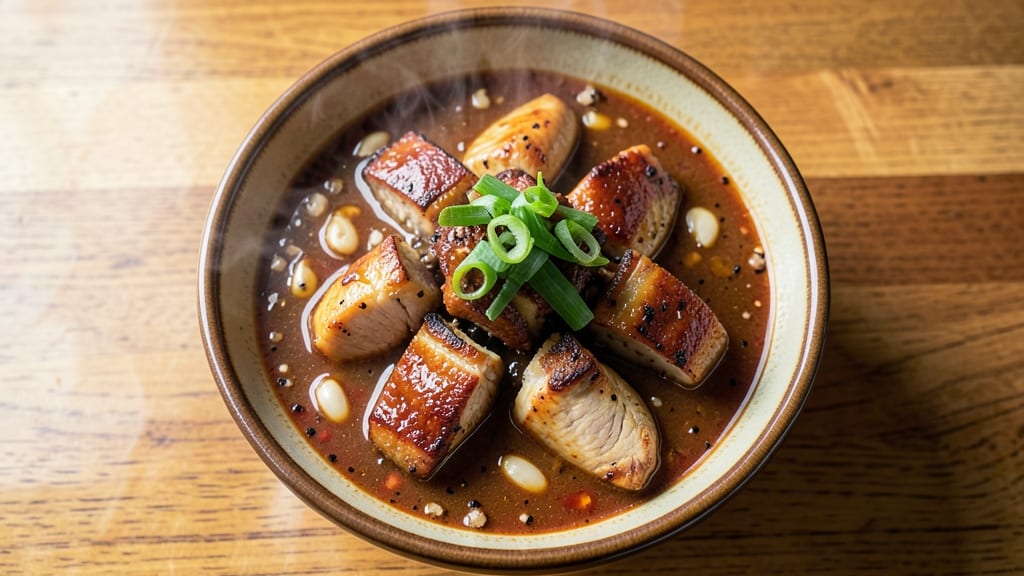
This Filipino adobo soup recipe delivers the bold, tangy-sweet flavors of traditional adobo in a comforting one-pot meal that simmers for hours to develop deep umami richness.
The secret lies in balancing soy sauce, vinegar, and garlic into a complex marinade that transforms tough cuts of meat into fork-tender perfection while infusing the broth with layers of flavor.
I've perfected this version after years of testing—it's the kind of soup that turns a simple weeknight into a celebration of Filipino home cooking.
The beauty of this recipe is its versatility—you can use chicken, pork, or even a mix of both, depending on your preference. Aromatic bay leaves, black peppercorns, and a touch of brown sugar round out the flavor profile, creating a broth that's both savory and slightly sweet.
The slow simmering process (about 2 hours) ensures the meat stays tender while the vegetables absorb all that delicious flavor, resulting in a hearty soup that's as nourishing as it is flavorful.
By the time you're ready to serve, you'll have a steaming pot of golden broth filled with tender meat, vibrant vegetables, and a sauce that clings to every bite.
The aroma alone will have everyone gathered around the table, and the first spoonful delivers that perfect balance of tangy, sweet, and savory that defines adobo. This isn't just soup—it's a taste of home in every bowl.
Perfect for cold evenings, family gatherings, or when you crave something comforting yet packed with flavor. The leftovers reheat beautifully, making it an ideal meal prep option too. Let's get cooking—this recipe is about to become a staple in your kitchen.
Ingredients for adobo soup
Six ingredients transform into this soul-warming Filipino adobo soup everyone will crave.
| Ingredient | Amount | Notes |
|---|---|---|
| Chicken Thighs 🍗 | 2 ½ lb | Bone-in, skin-on preferred |
| Pork Shoulder 🥩 | 2 ½ lb | Cut into 2-inch chunks |
| Soy Sauce 🍶 | ½ cup | Dark soy for color depth |
| Cane Vinegar 🍋 | ½ cup | White vinegar substitute |
| Garlic Cloves 🧄 | 8 cloves | Minced, fresh preferred |
| Brown Sugar 🍯 | ¼ cup | Light or dark variety |
| Bay Leaves 🌿 | 2 whole | Dried, crushed slightly |
| Black Peppercorns 🌶️ | 1 tsp | Crushed, not ground |
| Carrots 🥕 | 1 ½ lb | Whole, peeled, sliced |
| Potatoes 🥔 | 2 lb | Russet or Yukon gold |
| Onions 🧅 | 2 whole | Yellow or red, sliced |
| Green Bell Peppers 🌶️ | 2 whole | Sliced, seeds removed |
| Water 💧 | 6 cups | Or chicken broth |
| Olive Oil 🫒 | 2 tbsp | For searing meat |
| Salt 🧂 | 1 ½ tsp | Kosher or sea salt |
The meat is where the magic happens. Chicken thighs and pork shoulder give you that perfect balance of tenderness and flavor—thighs stay juicy, pork adds richness. Most grocery stores carry these cuts, but Filipino markets or Costco often have better prices if you're doing a big batch. Look for good marbling in the pork and plump, firm thighs for chicken. If you can't find pork shoulder, pork butt works too—just ask your butcher to cut it into chunks. The soy sauce matters here too—dark soy gives that signature color, but regular soy works if that's what you've got.
No cane vinegar? White vinegar or apple cider vinegar will do in a pinch, though the flavor won't be quite the same. The brown sugar is non-negotiable—it balances the tangy-sweet profile that defines adobo. Coconut sugar works if you want to go natural. For the aromatics, fresh garlic is ideal, but if you're using dried, reduce to half the amount. The bay leaves and peppercorns are easy to find at any grocery store—just make sure they're not ancient. Trader Joe's often has good quality dried herbs and spices. The potatoes and carrots can be any variety you like, but Russet potatoes hold up best to long cooking.
This soup tastes even better the next day—3-4 days in the fridge, no problem. Freezes beautifully for up to 3 months if you want to make a big batch. I always double the recipe because leftovers mean easy lunches. Store it in the pot with the lid on, or portion into containers. The broth gets richer as it sits, so don't skip reheating. Just add a splash of water if it's too thick after chilling.
Why You'll Love This Recipe
- Pantry Magic: I swear by this one—just pull out soy sauce, vinegar, and garlic from your shelf, and boom. The magic happens in the simmer. No fancy shopping lists or last-minute grocery runs.
- Tangy Umami Bomb: That balance of salty soy and bright vinegar? It’s like a flavor explosion in your mouth. The pork shoulder gets so tender it falls apart, and the chicken stays juicy—no dry bites here.
- Leftovers That Save Me: This soup only gets better the next day. I make a big batch on Sundays, and by Wednesday, it’s still my go-to lunch—packed with protein, cheap to stretch, and always delicious.
- Weeknight Workhorse: Between us, this is my secret weapon for busy nights. Throw everything in one pot, let it bubble while you handle the kids’ homework, and dinner’s ready when you need it. No stress, all flavor.
Step-by-step instructions for Filipino adobo soup
This one-pot wonder delivers deep flavor with minimal effort—just follow the timing.
Sear the Meats for Maximum Flavor
Heat a large Dutch oven over medium-high heat and add the 2 tablespoons olive oil. Once shimmering, add the 2.5 pounds pork shoulder in 2-inch chunks, working in batches to avoid crowding. Sear for 5-6 minutes until the edges are golden brown and crispy—this builds the rich, caramelized foundation of the soup.
Remove the pork and set aside. In the same pot, add the 2.5 pounds chicken thighs, skin-side down. Sear for 4-5 minutes until the skin is golden and crispy, then flip and cook another 3-4 minutes until the internal temperature reaches 165°F. This step ensures tender meat with a perfect crust. Transfer the chicken to a plate and set aside with the pork.
Sauté the Aromatics and Build the Base
In the same Dutch oven, reduce heat to medium and add the 2 whole onions, sliced, and the 8 cloves garlic, minced. Cook for 3-4 minutes until the onions soften and the garlic becomes fragrant—this releases their natural sweetness and depth of flavor. Here's where it gets good: Add the 2 whole bay leaves and 1 teaspoon crushed black peppercorns, stirring for 30 seconds to toast the spices lightly.
Pour in the 0.5 cup soy sauce and 0.5 cup cane vinegar, scraping up any browned bits from the bottom of the pot. These bits are packed with flavor—don't miss them. Let the mixture simmer for 2 minutes until slightly reduced. This step balances the tangy, savory profile that defines adobo.
Combine Everything and Simmer Slowly
Return the seared pork and chicken to the pot. Add the 1.5 teaspoons salt, 0.25 cup brown sugar, 6 cups water, 1.5 pounds sliced carrots, 2 pounds sliced potatoes, and 2 whole sliced green bell peppers. Stir gently to combine, ensuring the vegetables are submerged but the meat is mostly uncovered—this allows the meat to cook evenly without steaming.
Bring the mixture to a gentle boil, then reduce heat to low. Cover and let it simmer for 1 hour and 15 minutes, stirring occasionally. You'll know it's ready when the chicken and pork are fork-tender and the vegetables are soft but not mushy. The soup should have thickened slightly, with a glossy, umami-rich sauce coating everything.
Adjust Seasoning and Serve
Remove the 2 whole bay leaves and taste the broth. Adjust seasoning if needed—add a splash more soy sauce for saltiness or a bit of vinegar for tang. Here's the thing: The flavors will deepen as it sits, so don't overcorrect. Let the soup rest off the heat for 5 minutes to allow the meat to absorb the flavors fully.
Serve the adobo soup hot, ladling the meat and vegetables with the rich, aromatic broth. The perfect bowl should have tender, flavorful meat, slightly caramelized vegetables, and a sauce that's tangy, sweet, and deeply savory. Pair it with steamed rice to soak up every last drop of that irresistible broth.
Pro Tips For Making Adobo Soup
- Brown the Meat First: Skip the direct boiling—sear the chicken thighs and pork shoulder in a hot pot until they release crispy brown bits. That caramelized crust locks in flavor and prevents the soup from tasting flat later. (Yes, even if you’re impatient like me, don’t rush this.)
- Minimize Vinegar Burn: Add cane vinegar after the meat is fully cooked, not at the start. Dumping it in early turns your soup into a sad, watery mess—wait until the meat’s tender, then stir it in slowly. The acid needs something to react with, not just float in broth.
- Double-Check Garlic: Smash the garlic cloves with the flat side of your knife before adding them—no chopping needed. Whole cloves burn easily, and chopped ones disappear into oblivion. This guarantees real garlic flavor, not just a vague "something’s in here" taste.
- Simmer, Don’t Boil: Once everything’s in the pot, keep the heat low enough that you barely see bubbles—gentle simmering prevents the pork from falling apart and the chicken from drying out. High heat turns adobo into a mushy, one-note stew. (Trust the process.)
Wine and beer pairings for this recipe
White Wine Pairings
Filipino adobo soup's tangy-sweet balance calls for a crisp white wine with enough acidity to cut through the richness. I reach for a dry Riesling from Germany or Alsace—its citrus and mineral notes complement the vinegar while standing up to the soy sauce's depth.
A Sauvignon Blanc from New Zealand, with its bright herbal and grapefruit flavors, also works beautifully. Both wines refresh your palate between bites of tender pork and chicken. 🍷
Light Beer Options
For beer lovers, a Belgian Witbier like Hoegaarden or Allagash is perfect—its coriander and orange peel notes mirror the adobo's aromatic complexity. The slight effervescence cleanses your palate between spoonfuls. If you prefer something lighter, a Pilsner from Czech Republic or Germany provides crisp, clean contrast without overpowering the dish.
Avoid heavy lagers or stouts that would clash with the soup's delicate balance. 🍺
Red Wine Exception
While white wine and beer dominate, a light Pinot Noir from Oregon or Burgundy can work if you prefer red. Look for one with bright acidity and red fruit notes—avoid heavy, tannic Cabernets that would overpower the dish.
I've found a Pinot Noir from Willamette Valley with its cherry and earthy undertones pairs surprisingly well. 🍇
Non-Alcoholic Pairings
For those skipping alcohol, a sparkling ginger beer like Fever-Tree adds zesty contrast without competing flavors. Alternatively, a cucumber-mint infused water with a squeeze of lime enhances the soup's freshness. Both options let the adobo's complex flavors shine while providing refreshing balance. 💧
Regional Filipino Twist
In the Philippines, locals often pair adobo with barong-barong—a sweet, sticky rice cake—but for Western palates, I recommend steamed jasmine rice instead. The rice soaks up the rich broth beautifully, creating the perfect vessel for each flavorful bite. This classic pairing remains timeless for a reason. ✨
Nutrition facts
Frequently asked questions
Can I make this adobo soup with just chicken or pork?
The recipe works perfectly with either chicken thighs only (for a lighter version) or pork shoulder only (for richer flavor). If using chicken alone, reduce the simmering time to 1 hour since it cooks faster. For pork-only, extend to 2 hours to ensure tenderness. The broth will still develop deep umami, though the texture will differ slightly.
What can I substitute if I don't have cane vinegar?
Use white vinegar or apple cider vinegar in a 1:1 ratio—they'll work, though the flavor won't be identical. For a deeper taste, add 1 teaspoon of fish sauce to compensate for the missing complexity. Avoid balsamic vinegar, as its sweetness will throw off the balance. The key is maintaining the tangy-sweet profile that defines adobo.
Why does my adobo soup taste too salty?
This usually happens from over-salting the meat or using too much soy sauce. Start by tasting the broth after simmering—if it's too strong, dilute with 1-2 cups of water or broth and adjust seasoning. For future batches, reduce the salt to 1 teaspoon and soy sauce to 0.3 cup. The vinegar's acidity can also make saltiness more pronounced, so balance it with a touch of brown sugar.
Can I make this soup in an Instant Pot?
Yes! Sear the meats first, then sauté aromatics. Add all ingredients and cook on high pressure for 30 minutes (natural release). The meat will be tender, but the broth may be thinner—reduce it uncovered on the stove for 10-15 minutes to thicken. For best results, use the manual high-pressure setting and check for doneness early.
What vegetables can I add or swap?
Feel free to customize! Swap potatoes for sweet potatoes or butternut squash for extra sweetness. Add green beans, corn, or eggplant (they hold up well). For heartier texture, include radishes or daikon. Just avoid delicate veggies like zucchini—they'll turn mushy. The key is balancing flavors: tangy, sweet, and savory.