
Soups & Stews
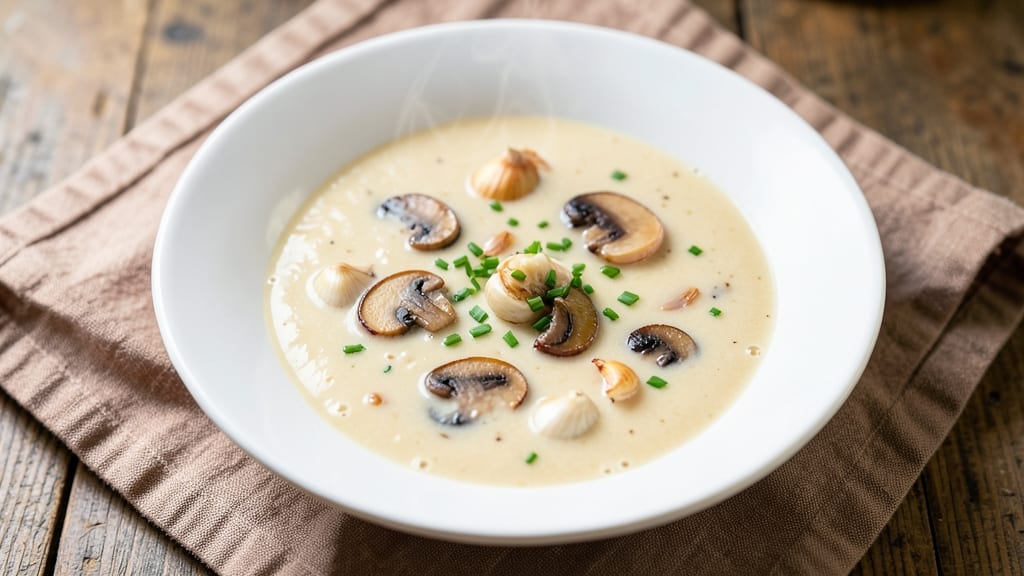
Alton Brown's cream of mushroom soup recipe delivers velvety smoothness that rivals restaurant-quality versions, and the secret lies in roasting the garlic for depth. This isn't just another soup—it's a methodical process where technique transforms simple ingredients into something extraordinary.
The roux foundation and careful reduction create that signature velvety texture while preserving the mushrooms' earthy flavor. Every step matters when you're aiming for professional results at home.
What sets this recipe apart is Alton Brown's signature approach: precise timing, proper ingredient preparation, and the roasted garlic trick that adds complexity without overpowering. We'll start with properly sautéed mushrooms to develop their flavor, then build that rich roux base that prevents lumps and creates the perfect mouthfeel.
The slow reduction transforms basic broth into a flavorful liquid that carries the soup's depth.
By following these exact steps, you'll end up with a creamy soup that's perfectly balanced—rich yet not heavy, smooth yet still textured. The roasted garlic adds a subtle sweetness that complements the mushrooms beautifully, while the proper thickening technique ensures each spoonful has that luxurious consistency.
This is the kind of soup that makes you pause before taking the first bite, knowing it's going to be exceptional.
The beauty of this recipe is its versatility—serve it as a comforting starter, pair it with grilled cheese sandwiches, or use it as a base for other dishes.
Once you master this technique, you'll never settle for store-bought versions again. Let's get started on creating your own restaurant-quality cream of mushroom soup.
Ingredients for alton brown cream of mushroom soup
The foundation of restaurant-quality cream of mushroom soup begins with these carefully selected ingredients.
| Ingredient | Amount | Notes |
|---|---|---|
| White Button Mushrooms 🍄 | 1 ½ lb | Sliced 1/4-inch thick for even cooking |
| Garlic Cloves 🧄 | 6 whole | Roasted for deep sweetness and complexity |
| Unsalted Butter 🧈 | ½ cup | European-style preferred for higher fat content |
| All-Purpose Flour 🌾 | ¼ cup | Sifted for smooth roux development |
| Vegetable Broth 💧 | 4 cups | Low-sodium preferred for flavor control |
| Heavy Cream 🥛 | 1 cup | Full-fat for optimal creaminess |
| Shallots 🧅 | 1 whole | Minced for subtle sweetness |
| Diamond Crystal Kosher Salt 🧂 | 1 ½ tsp | Adjust to taste after tasting |
| Freshly Ground Black Pepper 🌶️ | ½ tsp | Cracked peppercorns preferred |
| Dried Thyme 🌿 | ½ tsp | French thyme for authentic flavor |
| Fresh Parsley 🌿 | ¼ cup | Chopped for bright finishing touch |
| Extra-Virgin Olive Oil 🫒 | 1 tbsp | For roasting garlic and mushrooms |
| Chicken Fat or Duck Fat 🍗 | 1 tbsp | Optional for enhanced richness |
The mushrooms and garlic are the soul of this soup, so prioritize quality. White button mushrooms should be firm with no bruising—avoid those with slimy caps. For the garlic, organic cloves from a trusted source like Whole Foods Market or a local farmers' market yield the best results. The roasting process transforms their flavor, so don't compromise on freshness. European-style unsalted butter (like Plugrá) contains more fat, which is crucial for that velvety texture. If you can't find it, Land O'Lakes European Style works well too. The vegetable broth should be rich—Homemade or high-quality store-bought like Pacific Foods makes all the difference.
Substitutions must be strategic to maintain balance. If you're avoiding dairy, full-fat coconut milk can replace the heavy cream (though texture will differ slightly). For the butter in the roux, olive oil or duck fat works in a pinch, though butter's flavor is irreplaceable. No shallots? Substitute with 1/4 cup finely diced red onion, but reduce the amount slightly to prevent overpowering. The thyme can be swapped for dried marjoram at half the quantity, though the flavor profile will shift. Fresh parsley is ideal for garnish, but dried parsley at one-third the amount will suffice. The roasted garlic trick is non-negotiable—raw garlic will yield a bitter, overpowering result.
Proper storage ensures maximum flavor retention. The roux can be made ahead and refrigerated for up to 3 days, though it's best used fresh. The finished soup keeps well in the refrigerator for 4-5 days, with flavors deepening over time. For longer storage, freeze portions in airtight containers for up to 3 months. When reheating, do so gently over low heat to prevent curdling. The roasted garlic can be prepared a day ahead and stored in the refrigerator, sealed in a small container with a bit of olive oil to preserve its moisture and flavor.
Why You'll Love This Recipe
- Here’s what sold me: a single jar of mushrooms and a head of garlic stretch way further than canned soup. I use the same base for mashed potatoes, grilled cheese, or even a quick pasta—no extra shopping, just creative reuse. (Yes, even on a Tuesday night.)
- No Fussy Prep: I swear by this recipe because it’s the kind of dish where you actually use what’s already in your pantry. Sauté mushrooms and garlic in butter, sprinkle in flour, pour in broth—boom. No peeling, no dicing, no stress. Even my college apartment days couldn’t kill this simplicity.
- Umami Bomb: That moment when the flour-to-broth roux thickens? Chef’s kiss. The mushrooms caramelize just enough to add depth, while the garlic lingers like a warm hug. It’s rich but not heavy, creamy without being cloying—honestly, it’s the kind of flavor that makes you pause mid-sip of wine and go, “Wait, why am I not eating this right now?”
- Leftovers That Don’t Suck: Between us, most cream soups turn gluey or watery the next day. Not this one. The flour-butter base keeps it velvety smooth, so I make a double batch on Sundays. Reheat it, add a splash of broth if needed, and it’s still ridiculously good—perfect for lazy mornings or when you’re too tired to cook.
Step-by-step instructions for cream of mushroom soup with roasted garlic
Mastering this technique delivers restaurant-quality depth with velvety texture every time.
Roast the Garlic and Sauté the Mushrooms
Preheat your oven to 400°F. Peel the 6 whole garlic cloves and place them on a parchment-lined baking sheet. Drizzle with 1 tablespoon extra-virgin olive oil and toss to coat evenly. Roast for 15-20 minutes until the cloves are golden brown and soft when pressed with a fork. This roasting transforms raw garlic's sharpness into sweet, caramelized depth.
While the garlic roasts, heat 1 tablespoon chicken fat or duck fat in a large Dutch oven over medium-high heat. Add the 1.5 lb white button mushrooms, sliced ¼-inch thick, and cook for 8-10 minutes until they release their moisture and begin to brown. The mushrooms should develop a rich, earthy aroma and slight crispness at the edges. Remove them from the pan and set aside.
Build the Roux and Deglaze
Reduce the heat to medium and add 0.5 cup unsalted butter to the same Dutch oven. Allow it to melt completely, then whisk in 0.25 cup all-purpose flour to form a smooth roux. Cook for 2-3 minutes, stirring constantly, until the mixture turns a light golden color and smells nutty. This roux serves as the flavor foundation and thickening agent for the soup.
Remove the roasted garlic from the oven and squeeze the cloves from their skins into the roux. Add the 1 whole minced shallot and cook for 1 minute until fragrant. Immediately pour in 4 cups vegetable broth, scraping up any browned bits from the bottom of the pan. Bring to a gentle simmer and let it cook for 5 minutes to allow the flavors to meld.
Finish with Cream and Seasoning
Return the sautéed mushrooms to the pot and stir to combine. Add the 1 cup heavy cream and 0.5 teaspoon dried thyme, then simmer for 5-7 minutes until the soup thickens slightly and coats the back of a spoon. The soup should be velvety but not gluey—adjust the consistency by adding more broth if needed.
Season with 1.5 teaspoons diamond crystal kosher salt and 0.5 teaspoon freshly ground black pepper. Taste and adjust the seasoning—this is where you'll appreciate using low-sodium broth. The soup should be rich but not overly salty, with a perfect balance of earthy mushroom, sweet roasted garlic, and subtle thyme notes.
Garnish and Serve
Remove the soup from heat and stir in 0.25 cup chopped fresh parsley. The parsley adds a bright, fresh finish that cuts through the richness. Ladle the soup into bowls immediately and serve while warm. The roasted garlic trick elevates this classic soup from ordinary to extraordinary, with layers of flavor that develop with each spoonful.
For an extra touch, top each serving with a dollop of crème fraîche or a sprinkle of freshly cracked black pepper. The contrast of textures and temperatures makes each bite even more satisfying. This soup keeps well in the refrigerator for up to 3 days, though I find it's best enjoyed fresh when the flavors are at their peak.
Pro Tips For Making Alton Brown Cream Of Mushroom Soup
- Sweat the Mushrooms Slow: I learned this the hard way—rushing the mushrooms in butter just makes them soggy. Simmer them on medium-low for 8-10 minutes until all the moisture evaporates. You’ll know it’s right when the pan looks dry and the mushrooms release their earthy flavor into the fat.
- Don’t Skimp on Butter: Unsalted butter here isn’t just fat—it’s flavor. Use the full amount (or even a little extra) and let it melt completely before adding flour. This creates a proper roux that won’t taste like raw flour when mixed with broth.
- Whisk Like Your Life Depends on It: When combining the flour-butter mix with broth, stir aggressively at first to avoid lumps. Then, once it thickens, switch to gentle stirring to prevent scorching. I used to rush this, and the soup always tasted uneven.
- Strain for Smoothness: After cooking the mushrooms, strain them through a fine-mesh sieve before adding them back to the soup. This removes grit and keeps the texture velvety—especially important if you’re serving it over mashed potatoes or with crusty bread. (Yes, even if you’re impatient like me.)
Common mistakes when making great alton brown cream of mushroom soup
Overcooking the Mushrooms
One of the biggest mistakes is cooking the mushrooms too long, which turns them mushy and dulls their flavor. I’ve seen this happen when people keep them on heat beyond 8-10 minutes—they lose their texture and earthy aroma.
The goal is to develop their flavor while maintaining a slight crispness. Remove them as soon as they release moisture and begin to brown at the edges. If they’re still raw-tasting, you’ve gone too far. 🍄
Skipping the Roux Development
Many home cooks rush the roux step, either undercooking it or burning it. A proper roux should be light golden and nutty-smelling—this takes 2-3 minutes of constant stirring over medium heat. If you rush it, the flour won’t fully cook, leading to a raw, floury taste.
On the flip side, if it darkens too much, it’ll taste bitter. Keep a close eye on it, and don’t walk away!
Using Raw Garlic Instead of Roasted
The roasted garlic trick is non-negotiable for depth of flavor. Raw garlic can make the soup taste harsh and overpowering. When you roast the garlic at 400°F for 15-20 minutes, it caramelizes into sweet, mellow cloves.
If you’re short on time, don’t skip this step—try roasting it at 350°F for 25 minutes instead, but don’t use raw garlic as a shortcut.
Adding Cream Too Early
Adding heavy cream before the soup has fully reduced can cause the mixture to curdle or separate. The cream should be introduced only after the broth and mushrooms have simmered together for 5-7 minutes, ensuring the soup is hot enough to handle the cream’s addition.
If you add it too soon, the heat won’t be consistent, and the soup may split. Stir gently to incorporate it smoothly.
Ignoring the Deglaze Step
Deglazing the pan after cooking the roux is crucial for flavor extraction. Those browned bits (fond) on the bottom of the pan contain deep, savory notes that elevate the soup. If you skip this step, you’re missing out on layers of umami.
Immediately pour in the broth and scrape the pan clean—don’t let those bits dry out or burn, as they’ll turn bitter.
Over-Salting or Under-Seasoning
Seasoning is a balancing act. Using high-sodium broth can make the soup taste flat, while adding too much salt upfront can ruin it. Taste as you go—start with 1.5 teaspoons kosher salt and adjust gradually.
The roasted garlic and thyme add complexity, so don’t overpower them with extra seasoning. A pinch of pepper at the end can brighten the flavors without overwhelming them. 💡
Nutrition facts
Frequently asked questions
Can I make this soup without heavy cream for a lighter version?
Yes! Replace the heavy cream with 1 cup full-fat coconut milk for a dairy-free option, though texture will be slightly thinner. For a lighter but still creamy version, use ½ cup coconut milk + ½ cup whole milk. The roasted garlic and proper roux will still deliver that rich depth, just with fewer calories.
How do I prevent the soup from getting gluey or too thick?
Stir constantly during the 5-7 minute simmer after adding cream, and keep heat at a gentle simmer—not a boil. If it thickens too much, whisk in 1-2 tablespoons of warm broth to adjust. The key is patience—the soup should coat the back of a spoon but remain smooth, never pasty.
Can I use store-bought cream of mushroom soup as a shortcut?
While you can, you won’t achieve the same depth of flavor. Store-bought versions often contain preservatives and lack the roasted garlic complexity. This recipe’s velvety texture and rich umami come from the roux technique and proper mushroom development—steps that shortcuts skip. Think of it as the difference between homemade pasta and boxed.
What’s the best way to reheat leftovers without breaking the texture?
Reheat gently on the stovetop over low heat (never microwave) until just warm—about 3-5 minutes. Add 1-2 tablespoons of warm water or broth if it thickens too much. Stir constantly to prevent separation, and finish with a splash of cream if needed. The texture should remain silky, not grainy.
What mushrooms work best besides white button?
Cremini or baby bella mushrooms add deeper earthiness, while oyster mushrooms bring a slightly sweet, meaty texture. Avoid leafy varieties like shiitake—they’re too fibrous. For a classic flavor, stick with white buttons, but creminis are a great upgrade for more robust taste.