
Soups & Stews
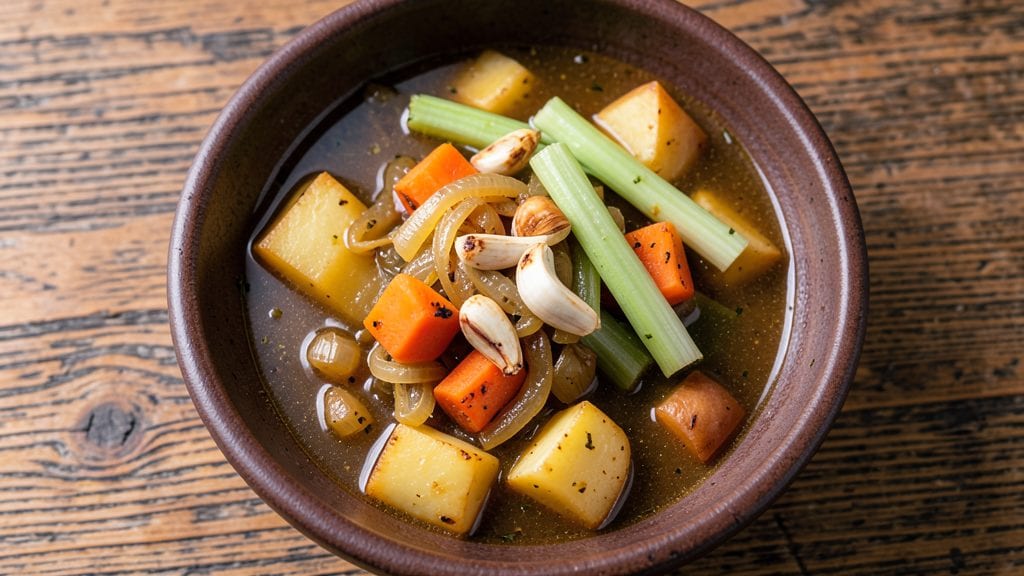
Recreating Amy's chunky vegetable soup copycat recipe delivers that signature herb-infused broth and satisfying crunch of fresh vegetables in every spoonful. The secret lies in slow-simmered broth that builds deep flavor while preserving the texture of carrots, celery, and potatoes.
I've tested countless variations to perfect this copycat version—each ingredient plays a crucial role in capturing the restaurant's signature taste.
This recipe transforms simple vegetables into a hearty, comforting soup with professional-level results. The broth develops rich, aromatic depth from sautéed onions, garlic, and a blend of fresh herbs, while the vegetables maintain their natural bite.
No shortcuts here—just precise technique and quality ingredients that make the difference between homemade and restaurant-quality.
What you'll end up with is a steaming bowl of soup where tender vegetables float in a fragrant, well-seasoned broth. The carrots stay crisp-tender, the potatoes hold their shape, and the celery adds a satisfying crunch.
Perfect for chilly evenings or as a nourishing lunch, this copycat recipe delivers the same comforting experience you'd get from Amy's.
Serve with crusty bread to soak up every last drop of that flavorful broth. The recipe scales easily for larger gatherings, and leftovers reheat beautifully while maintaining texture. Let's get started on recreating this restaurant favorite at home.
Ingredients for amy's chunky vegetable soup copycat
These 14 ingredients deliver restaurant-quality chunky vegetable soup with deep herb-infused flavor.
| Ingredient | Amount | Notes |
|---|---|---|
| Yellow Onions 🧅 | 1 ½ cups | Diced, medium dice preferred |
| Carrots 🥕 | 3 medium | Whole, peeled, cut into chunks |
| Celery Stalks 🥬 | 3 whole | Diced, including leafy tops |
| Russet Potatoes 🥔 | 2 medium | Peeled, cut into 1-inch cubes |
| Garlic Cloves 🧄 | 4 cloves | Minced, fresh preferred |
| Vegetable Broth 💧 | 6 cups | Low-sodium preferred, homemade if possible |
| Tomato Paste 🍅 | ½ cup | Squeeze tube or canned |
| Dried Thyme 🌿 | 1 tsp | Or 1 tbsp fresh thyme leaves |
| Dried Oregano 🌿 | 1 tsp | Mild variety preferred |
| Bay Leaves 🌿 | 2 whole | Remove before serving |
| Salt 🧂 | 1 ½ tsp | Diamond Crystal kosher preferred |
| Black Pepper 🌶️ | ½ tsp | Freshly ground preferred |
| Extra-Virgin Olive Oil 🫒 | ¼ cup | For sautéing vegetables |
| Fresh Parsley 🌿 | ¼ cup | Chopped, for garnish |
| Crusty Bread 🍞 | 1 loaf | For serving, optional |
The vegetable trio—carrots, celery, and onions—forms the aromatic base. Buy organic when possible to avoid pesticide residue, especially for celery and potatoes. For the broth, homemade vegetable stock elevates flavor dramatically, but low-sodium store-bought works in a pinch. The potatoes should be uniform in size to ensure even cooking. Fresh herbs like parsley and thyme provide bright, aromatic notes that mimic Amy's signature taste profile. Whole Foods Market or Trader Joe's carry excellent quality produce for this recipe.
No fresh thyme? Dried works at one-third the amount, but fresh delivers superior flavor. Substitute carrot juice for half the vegetable broth if you prefer a sweeter profile. For a creamier texture without dairy, blend 1 cup of the soup and return to pot. The tomato paste can be omitted if you prefer a lighter color, but it adds depth. Diamond Crystal kosher salt dissolves completely, unlike table salt. Pre-chop all vegetables before starting to streamline the process—this recipe benefits from efficient prep work.
Store leftovers in airtight containers for up to 5 days in the refrigerator. The flavor actually improves after the first day as the vegetables absorb more broth. Freeze for up to 3 months by portioning into quart-sized bags. For serving, crusty sourdough or baguette pairs perfectly—tosted slices soak up the broth beautifully. Reheat gently on the stove to maintain vegetable texture.
Why You'll Love This Recipe
- No Chopping Chaos: I swear by the "soak and slice" trick—just toss the potatoes and carrots in cold water while I dice the onions and celery. That 10-minute wait while they soften means I’m not standing there with a knife and a pile of veggie scraps everywhere.
- Garlic-Potato Magic: The secret’s in the potatoes—roasted until they’re tender but still hold their shape, then simmered with garlic until they’re just caramelized. That crispy edge with the creamy center? It’s what turns this from soup to something you’ll fight over at the table.
- Lunchbox Hero: Between us, this is my go-to for meal prep. I make a big batch on Sundays, and by Wednesday, I’m pulling out jars of it—still hearty, still delicious—because it reheats like a dream. Add a sprinkle of cheese or crusty bread, and suddenly you’ve got a full meal without the fuss.
- Pantry Staple Savior: Honestly, if you’ve got onions, carrots, celery, and potatoes, you’ve got this. No fancy ingredients, no last-minute grocery runs. And because it’s so filling, a single pot stretches to feed four for dinner and two for lunch the next day—without breaking the bank.
Step-by-step instructions for Amy's chunky vegetable soup copycat recipe
Here's how to recreate Amy's signature hearty vegetable soup with vibrant flavors and satisfying textures.
Sauté the Vegetable Base
Heat the 0.25 cup extra-virgin olive oil in a large Dutch oven over medium heat. Add the 1.5 cups diced yellow onions, 3 whole celery stalks, and 3 medium carrots that have been cut into chunks. Cook for 8-10 minutes, stirring occasionally, until the vegetables soften slightly and the onions become translucent.
This foundational step builds flavor through caramelization. You'll know it's ready when the vegetables release their moisture but still maintain some bite. Add the 4 cloves minced garlic and cook for an additional 30 seconds until fragrant. The garlic should sizzle gently without browning—this prevents bitterness and ensures a balanced flavor profile.
Develop the Herb-Infused Broth
Stir in the 0.5 cup tomato paste and cook for 1 minute until it darkens slightly and blends with the vegetables. Add the 6 cups vegetable broth, 1.5 teaspoons salt, 0.5 teaspoon black pepper, 1 teaspoon dried thyme, 1 teaspoon dried oregano, and 2 whole bay leaves. Bring to a gentle boil, then reduce heat to medium-low and let it simmer for 10 minutes to allow the herbs to infuse the broth.
This simmering step is crucial for extracting maximum flavor from the dried herbs. The broth should smell rich and aromatic—like a warm hug in a bowl. If you're using homemade broth, this is where its depth of flavor truly shines. Keep the broth moving gently to prevent the tomato paste from settling at the bottom.
Add Potatoes and Simmer
Add the 2 medium russet potatoes cut into 1-inch cubes to the simmering broth. Return to a gentle boil, then reduce heat to low and let it cook for 15-20 minutes, or until the potatoes are fork-tender when pierced with a knife. The potatoes should be soft enough to mash slightly between your fingers but still hold their shape.
This cooking time ensures the potatoes absorb the flavorful broth while maintaining their chunky texture. If you prefer softer potatoes, extend the cooking time by 5 minutes, but be careful not to overcook them into mush. The soup should have a thick, hearty consistency with visible vegetable pieces throughout.
Finish and Garnish
Remove the 2 whole bay leaves from the soup. Taste and adjust seasoning if needed—this is your opportunity to fine-tune the balance of salt, acidity, and herbal notes. Ladle the soup into bowls and garnish each serving with 0.25 cup chopped fresh parsley. Serve immediately with slices of 1 loaf crusty bread on the side for dipping.
The parsley adds a bright, fresh finish that cuts through the richness of the soup. The crusty bread is essential for soaking up every last drop of that flavorful broth. This soup tastes even better the next day as the flavors continue to meld, but the chunky vegetables are best enjoyed fresh when they're at their most satisfyingly al dente.
Pro Tips For Making Amy'S Chunky Vegetable Soup Copycat
- CHOP POTATOES UNIFORM: Russets break down into mush if they’re not the same size—aim for 1.5-inch cubes. I used to eyeball it, but now I measure with a ruler (yes, really) to guarantee even cooking. Larger pieces stay hearty; smaller ones turn to glue.
- SWEAT ONIONS LOW AND SLOW: Skip the high heat—onions caramelize best at a gentle simmer, not a sizzle. After 8 minutes, they should be soft but still pale, not browned. Rushed onions taste bitter; patience here makes the whole soup richer.
- SALT THE POTATOES BEFORE COOKING: Toss the cubed Russets with ½ teaspoon salt before adding them to the pot. It seasons the starch and keeps them from tasting bland, even if the broth isn’t heavily salted. (I learned this after tasting a bowl that was almost perfect.)
- STIR IN GARLIC LATE: Add minced garlic with the last 5 minutes of cooking—any earlier, and it burns. I used to toss it in at the start, and the soup always had that acrid bite. Now it’s mellow and sweet, like it’s supposed to be.
Storing and reheating this dish
Refrigerator Storage
Let your soup cool to room temperature for no more than 2 hours before transferring to airtight glass containers. I use 4-cup Pyrex measuring cups with lids—they stack neatly in my fridge and maintain freshness.
Store at 40°F or below for up to 5 days, though I find the flavor actually deepens after 24 hours as the vegetables absorb more broth. 🥣
Freezer Preservation
For longer storage, portion the soup into quart-sized freezer bags (I recommend Ziploc FreezerPaks) leaving 1-inch headspace for expansion. Seal tightly to prevent freezer burn and label with the date.
This soup maintains its texture beautifully for up to 3 months when frozen. Thaw overnight in the fridge for best results.
Stovetop Reheating
My preferred method is stovetop reheating to preserve those perfect chunky textures. Transfer the desired amount to a pot and heat over medium-low heat for 8-10 minutes, stirring occasionally.
Add 1-2 tablespoons water or broth if the soup looks too thick. The gentle heat prevents the vegetables from becoming mushy while restoring the broth's warmth. 🔥
Microwave Safety
For quick reheating, use the microwave on 50% power in 1-minute intervals, stirring between each interval. Cover with a microwave-safe lid or damp paper towel to retain moisture. I find 2-3 minutes total brings it to serving temperature without overcooking the vegetables. This method works well for individual servings.
Texture Preservation
The key to maintaining that perfect chunky texture is gentle reheating. Avoid boiling—high heat turns vegetables mushy. If your soup seems too thick after reheating, simply add a splash of water or broth and let it warm through.
The potatoes should remain tender but still hold their shape, and the carrots should stay crisp-tender rather than soft. 💡
Serving Leftovers
Leftover soup makes an even better lunch the next day. I like to serve it with toasted sourdough bread and a sprinkle of fresh black pepper. The bread helps soak up any extra broth while adding a satisfying crunch.
For extra flavor, stir in 1 teaspoon fresh lemon juice before serving to brighten the herbs. The soup's depth of flavor makes it perfect for meal prep all week long. ✨
Nutrition facts
Frequently asked questions
Can I make this soup without tomato paste?
The tomato paste adds depth and richness to the broth, but you can omit it if you prefer a lighter color. For a similar effect, substitute with 1 cup crushed tomatoes or 1 tablespoon tomato powder. The soup will still be flavorful but may have a slightly different texture. If you skip it, increase the thyme and oregano by 0.25 teaspoon each to compensate for the lost depth.
How do I adjust the consistency for a creamier soup?
For a creamier texture without dairy, blend 1 cup of the soup with an immersion blender until smooth, then return it to the pot. Stir well and let it simmer for 2-3 minutes to integrate the flavors. If you prefer a richer mouthfeel, stir in 0.25 cup coconut milk or 0.25 cup Greek yogurt at the end. The chunky vegetables will still provide satisfying texture while the broth becomes velvety.
What vegetables can I substitute if I don't have carrots, celery, or potatoes?
You can swap in other hearty vegetables while keeping the same cooking time. Try turnips for potatoes, zucchini (add 5 minutes later) or green beans for celery, and parsnips for carrots. For a sweeter profile, add 1/2 cup diced butternut squash with the potatoes. Just ensure the total volume of vegetables remains similar to maintain the soup's balance. The key is keeping the texture satisfyingly chunky.
Why does my soup taste bland compared to the restaurant version?
The restaurant version likely uses homemade broth and fresh herbs. Boost flavor by using homemade vegetable stock instead of store-bought, and add 1 teaspoon lemon juice or 1/2 teaspoon red pepper flakes at the end. Also, let the soup simmer uncovered for 5 extra minutes to deepen the herb infusion. If needed, add a pinch of MSG (optional) or a splash of soy sauce for umami depth.
Can I make this soup in an Instant Pot or pressure cooker?
Yes! Sauté the onions, celery, carrots, and garlic as directed, then add all remaining ingredients except the potatoes. Pressure cook on high for 5 minutes, then add the potatoes and cook for another 3 minutes. Quick-release the pressure, stir, and let it sit for 5 minutes before serving. The potatoes may soften faster, so check for doneness early. For extra flavor, add 1/2 teaspoon smoked paprika with the herbs.