
Soups & Stews
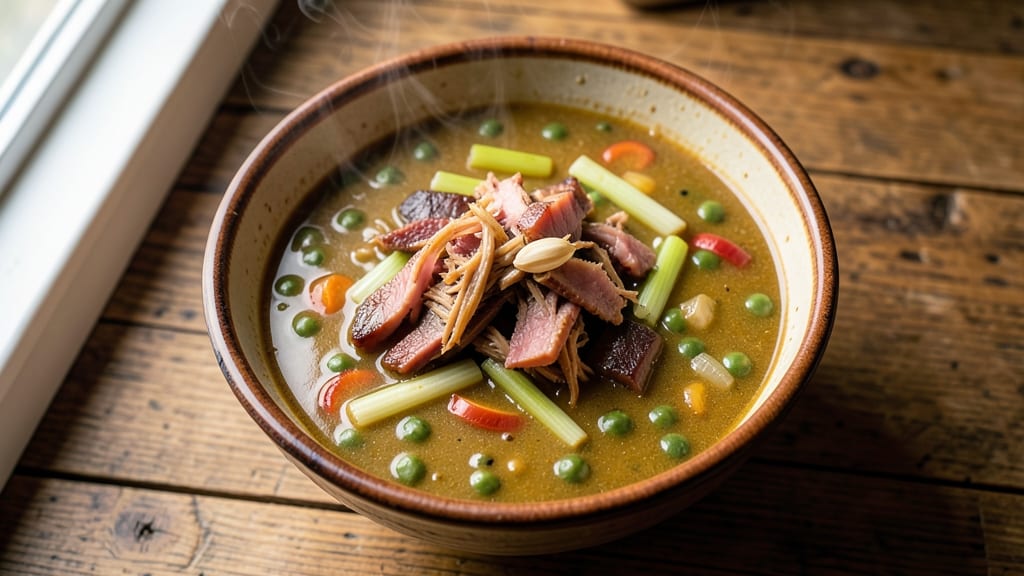
This Andersen's split pea soup recipe with ham hocks delivers the smoky, ham-infused richness that makes it a comfort food classic. The ham hocks infuse the broth with deep, savory flavor as they slowly break down, creating a soup that's hearty and satisfying.
I first made this recipe during a chilly winter evening when I wanted something that would warm both body and soul—it became an instant family favorite.
The key lies in the long simmer, which transforms tough ham hocks into tender, flavorful pieces while developing the split peas into a creamy, velvety texture.
What sets this recipe apart is the balance of traditional techniques with modern convenience—no need for fancy equipment or complicated steps. The ham hocks, simmered for hours, release their collagen into the broth, creating a naturally thickened soup without the need for flour or cornstarch.
The split peas soften just enough to create that signature creamy consistency, while the ham adds a satisfying bite and depth of flavor that elevates the dish beyond simple comfort food. This is the kind of soup that tastes even better the next day, as the flavors meld and intensify.
The result is a rich, smoky, and deeply flavorful split pea soup that's perfect for cold weather gatherings or cozy weeknight dinners. The aroma alone—warm, savory, and slightly sweet—will draw everyone to the table.
Each spoonful delivers a perfect blend of tender ham, creamy peas, and a broth so flavorful it's worth savoring slowly. Whether you're serving it as a main dish or pairing it with crusty bread, this recipe delivers restaurant-quality results with minimal effort.
Ready to make this foolproof, one-pot wonder? The instructions are straightforward, and the ingredients are simple—just gather them, follow the steps, and let the magic happen in the pot.
This is the kind of recipe that gets better with time, both in the cooking process and in the hearts of those who taste it. Let's get started!
Ingredients for andersen's split pea soup recipe with ham hocks
Simple pantry staples transform into a soul-warming split pea soup with deep, smoky ham flavor.
| Ingredient | Amount | Notes |
|---|---|---|
| Dried Green Split Peas 🌱 | 2 cups | Unsoaked, high-quality preferred |
| Ham Hocks 🍖 | 2 whole | Fresh or frozen, skin-on preferred |
| Onion 🧅 | 1 whole | Yellow or white, chopped |
| Carrots 🥕 | 3 medium | Peeled, chopped into chunks |
| Celery Stalks 🥬 | 3 whole | Chopped, leafy parts removed |
| Garlic Cloves 🧄 | 4 cloves | Peeled, minced |
| Bay Leaves 🌿 | 2 whole | Fresh or dried |
| Thyme Sprigs 🌿 | 4 whole | Fresh, stems removed |
| Salt 🧂 | 2 tsp | Kosher or sea salt |
| Black Peppercorns 🌶️ | 1 tsp | Freshly cracked |
| Water 💧 | 8 cups | Filtered preferred |
| Olive Oil 🫒 | 2 tbsp | Extra-virgin for richness |
| Apple Cider Vinegar 🍎 | 1 tbsp | For brightness |
| Fresh Parsley 🌿 | ¼ cup | Chopped, for garnish |
The ham hocks are non-negotiable for that signature smoky richness. Butcher shops often carry them fresh, but frozen works perfectly too—just thaw overnight in the fridge. Look for hocks with good marbling and minimal salt residue. If you can't find them, smoked ham shanks are a decent substitute, though not identical. The split peas should be bright green and plump—avoid anything with a musty smell. I usually grab mine from Whole Foods or the bulk section at Trader Joe's, where they're consistently high quality. For the vegetables, fresh is best, but frozen carrots and celery work in a pinch if that's what you have on hand.
No ham hocks? Smoked ham bones or even pork ribs can work, though the flavor won't be identical. The vinegar adds brightness—if you're sensitive to acidity, reduce to 1 teaspoon. Fresh herbs make a difference, but dried thyme at one-third the amount gets you close. For the carrots, baby carrots chopped into chunks save prep time without sacrificing texture. The olive oil might seem unnecessary, but it helps build flavor in the initial sauté. If you're using a pressure cooker, reduce the water by 2 cups—split peas absorb liquid quickly. For a vegetarian version, swap ham hocks for extra smoked paprika and liquid smoke, though it won't be the same.
This soup tastes even better the next day as flavors meld. Store in an airtight container in the fridge for up to 5 days. For longer storage, freeze portions for up to 3 months. I like to portion it into individual containers so I can grab a ready-made lunch. The ham hocks can be pre-cooked separately to save time, then added back later. If you're making this ahead for a gathering, the aroma alone will have everyone anticipating dinner. The parsley garnish is optional but adds a fresh finish—use it if you've got it, skip it if you don't.
Why You'll Love This Recipe
- One-Pot Magic: I swear by this recipe because it’s literally dump-and-go after chopping the veggies. Toss the split peas, ham hocks, and the classic onion-carrot-celery combo into a pot, cover with water, and let it simmer—no stirring, no fuss. The ham hocks melt into the broth like they were born to be there.
- Rich Without Effort: Between us, this soup tastes like it simmered for hours, but I’ve got it ready in under an hour. The ham hocks infuse the split peas with smoky, salty depth, while the carrots and celery sweeten just enough to balance the earthy peas. Honestly, it’s the kind of flavor that makes you forget you didn’t slave over it.
- Leftovers That Shine: This recipe begs to be made in bulk—it only gets better as the flavors meld overnight. I freeze half for lazy Mondays, and the rest? It disappears faster than I can say “second bowl.” Even my picky-eater husband grabs a spoonful straight from the pot.
- Budget-Friendly Comfort: Split peas and ham hocks stretch into a meal that feeds four for under $10. No fancy ingredients, no waste—just pure, hearty satisfaction. It’s my go-to when I need to stretch a grocery haul, and trust me, no one complains about the leftovers.
Step-by-step instructions for Andersen's split pea soup with ham hocks
This one-pot method builds deep, smoky ham flavor while keeping the peas tender and hearty.
Parboil the Ham Hocks and Prepare Vegetables
Place the 2 whole ham hocks in a large pot and cover them with the 8 cups of water. Bring to a boil over medium-high heat, then reduce to a gentle simmer for 30 minutes. This parboiling step extracts initial flavors and softens the ham slightly for easier shredding later.
While the ham hocks simmer, peel and chop the 3 medium carrots into ½-inch chunks, and chop the 3 whole celery stalks into ¼-inch pieces. Remove the leafy parts from the celery stalks first—they add bitterness. Finely chop the 1 whole onion and mince the 4 cloves garlic cloves. Set these vegetables aside in separate bowls until ready to use.
Sauté Aromatics and Build the Base
Remove the ham hocks from the pot using tongs and set them aside. Strain the cooking liquid through a fine-mesh sieve into a clean large pot, discarding any solids. Return the strained liquid to the pot and bring it back to a boil over medium-high heat. Reduce heat to medium-low and add the 2 tablespoons olive oil.
Add the chopped onion, carrots, and celery stalks to the pot. Cook for 8-10 minutes, stirring occasionally, until the vegetables begin to soften and the onion becomes translucent. Add the minced garlic cloves and cook for an additional 1 minute until fragrant. This step develops the foundational flavors that will carry through the entire soup.
Combine All Ingredients and Simmer
Add the 2 cups dried green split peas, the 2 whole bay leaves, and the 4 whole thyme sprigs to the pot. Stir well to combine. Return the ham hocks to the pot and add the 2 teaspoons salt and 1 teaspoon black peppercorns. Pour in the 1 tablespoon apple cider vinegar, which adds brightness and helps tenderize the peas.
Bring the soup back to a boil, then reduce heat to low and cover the pot. Let it simmer for 1 hour 15 minutes, stirring occasionally. You'll notice the peas will begin to soften and the ham hocks will release from the bone more easily as they cook. The soup should develop a rich, smoky aroma from the ham and herbs.
Shred the Ham and Finish Cooking
After the initial simmering time, remove the ham hocks from the pot and shred the meat using two forks, discarding any bones or connective tissue. Return the shredded ham to the pot. Remove and discard the bay leaves and thyme sprigs.
Continue simmering the soup uncovered for an additional 30-45 minutes until the peas are tender but not mushy. The soup should have thickened slightly, and the peas should be fully cooked. Taste and adjust seasoning with additional salt if needed. The ham should be fully integrated into the soup, creating a rich, hearty base.
Garnish and Serve
Remove the pot from heat and stir in the ¼ cup chopped fresh parsley. This adds a fresh, vibrant finish that balances the deep, smoky flavors of the ham and peas. Ladle the soup into bowls and serve immediately, accompanied by crusty bread or over buttered egg noodles.
The soup should be thick enough to coat the back of a spoon but still have a pleasant texture. Each bowl should be rich with the smoky ham flavor, tender peas, and a touch of brightness from the vinegar and parsley. This method ensures a deeply flavorful, comforting soup that's perfect for cold weather or family gatherings.
Pro Tips For Making Andersen'S Split Pea Soup Recipe With Ham Hocks
- BLANCH HAM HOCKS FIRST: Skip the raw ham hocks straight into the pot—I learned the hard way that simmering them unblanched makes the broth cloudy and the meat tough. Boil them 10 minutes first to render fat and loosen connective tissue, then add everything else. The broth will be clearer and the ham richer.
- SWEAT VEGETABLES UNTIL SOFT: Don’t just chop onions, carrots, and celery—cook them until they’re almost falling apart. High heat for 8–10 minutes with a splash of water caramelizes the flavors and prevents the soup from tasting raw. (Yes, even if you’re impatient like me.)
- DON’T SKIP THE SKIM: After the first 30 minutes of simmering, skim off the foam and congealed fat from the surface. I used to ignore this, and the soup always ended up greasy. A fine-mesh strainer or ladle makes it easy—your future self will notice the difference.
- USE COLD WATER FOR SOAKING: Soak the split peas in cold water for at least 4 hours (or overnight) instead of hot. Hot water can toughen them, and cold water lets them absorb evenly. Drain well before cooking—wet peas dilute the broth and drag down cooking time. (Your grandmother was right about this.)
Serving suggestions for leftovers
Classic Bread Pairings
This soup pairs beautifully with crusty sourdough or rustic whole wheat bread—the dense texture soaks up the rich broth perfectly. I recommend a baguette-style loaf from your local bakery, sliced thick and toasted with garlic butter.
For extra indulgence, try cheesy pull-apart bread like a brioche or focaccia drizzled with olive oil before serving. 🥖
Protein Additions
For a heartier meal, serve with crispy bacon or crumbled sausage on top. I like adding applewood-smoked bacon because it complements the ham hocks' flavor. Another great option is shredded rotisserie chicken—just mix it in during the last 5 minutes of simmering to keep it tender.
For vegetarians, crispy chickpeas or toasted pumpkin seeds add satisfying texture.
Side Dish Ideas
A simple arugula salad with lemon vinaigrette cuts through the soup's richness. Toss 4 cups baby arugula with 2 tbsp olive oil, 1 tbsp lemon juice, and ½ tsp Dijon mustard.
For a heartier side, roasted Brussels sprouts with balsamic glaze add a touch of sweetness. Another crowd-pleaser is cornbread—the slight sweetness balances the soup's savory depth. 🥗
Toppings for Extra Flavor
Finish each bowl with crispy fried onions for a sweet crunch, or a dollop of sour cream to cool the richness. I also love adding hot sauce (like Cholula) or Worcestershire sauce for an umami kick.
For a smoky touch, sprinkle with smoked paprika or a dash of liquid smoke right before serving. These toppings let everyone customize their bowl to taste.
Beverage Pairings
A dark beer like Guinness or Amber Ale complements the soup's deep flavors perfectly. For wine lovers, a Cabernet Sauvignon or Syrah stands up to the richness.
If you prefer something lighter, a sparkling apple cider adds a refreshing contrast. Avoid overly sweet drinks—they can clash with the ham's smokiness. 🍷
Make-Ahead Serving Tips
This soup tastes even better the next day, so make it ahead for gatherings. Reheat gently on the stovetop with a splash of water or broth to restore thickness. For serving, use a chafing dish or slow cooker to keep it warm and bubbling.
Garnish with fresh parsley just before serving to keep it vibrant. Leftovers freeze beautifully—just thaw overnight in the fridge before reheating. 💫
Nutrition facts
Frequently asked questions
Why do ham hocks make this split pea soup so much richer than other versions?
The ham hocks release collagen and marrow into the broth as they simmer, creating a naturally thickened, deeply flavorful base. Unlike regular ham bones, they provide both meat and connective tissue that breaks down into the soup, adding a smoky, savory depth that's hard to replicate with other proteins. The slow cooking process (over 2 hours) is key to extracting these rich flavors.
Can I use regular ham bones instead of ham hocks?
You can, but the flavor and texture will differ. Ham hocks provide both meat and connective tissue, while regular ham bones offer mostly bone broth. For a closer result, use 2 ham shanks or 4-5 ham hocks (if available). If you must substitute, add ½ teaspoon liquid smoke and 1 extra bay leaf to compensate for the lost depth.
How do I know when the split peas are perfectly tender?
Peas should be soft but still hold their shape—they'll mash easily between your fingers but not turn to mush. Test one after 1 hour 15 minutes of simmering. If they're still firm, continue cooking for another 15-30 minutes. Overcooking turns them mealy, while undercooking leaves a chalky texture. The broth should coat the back of a spoon but remain slightly loose.
What if my soup turns out too thick or too thin?
For thicker soup, simmer uncovered for 10-15 extra minutes to reduce the liquid. If it's still too thin, mash ½ cup peas with a fork to thicken naturally. For thinner soup, stir in ½ cup warm water or broth. Avoid adding flour or cornstarch—it masks the ham's natural richness. Adjust seasoning last, as saltiness intensifies as the soup cools.
Can I make this in a slow cooker or Instant Pot?
For a slow cooker, combine all ingredients (except parsley) and cook on LOW for 8 hours or HIGH for 4-5 hours. For an Instant Pot, sauté veggies first, then add everything else and pressure cook for 20 minutes on high. Release pressure naturally, then shred ham and finish with 15 minutes on sauté mode. Both methods work, but stovetop gives you more control over texture.