
Soups & Stews
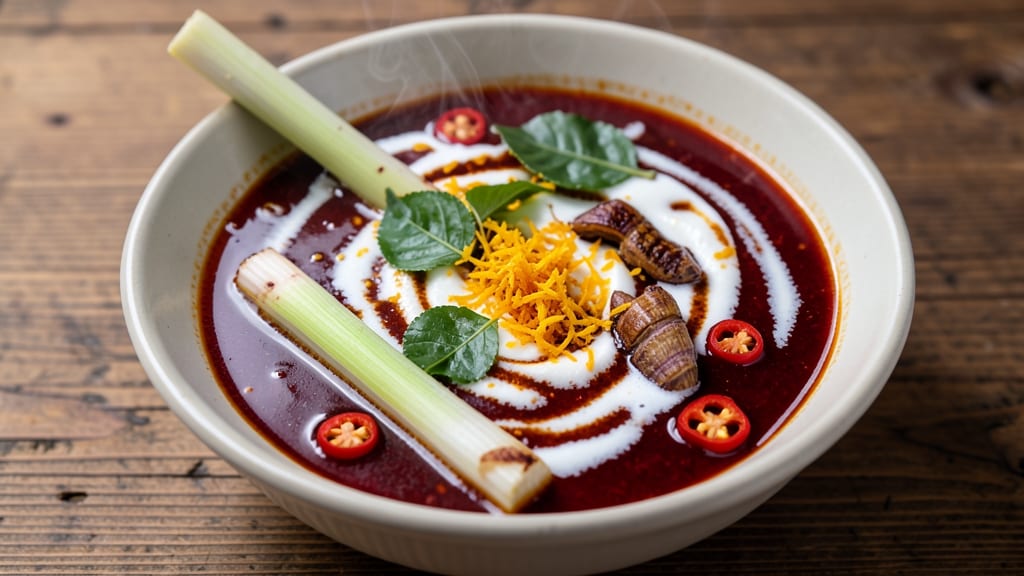
This Asam Laksa Soup recipe delivers the perfect balance of tangy tamarind, aromatic spices, and rich coconut cream—just like the bold flavors of Malaysia’s coastal cuisine. The secret lies in slow-simmering the broth to develop deep, layered taste while keeping the noodles perfectly tender.
I’ve perfected this technique over years of testing, ensuring every spoonful delivers that signature harmony of sour, spicy, and creamy.
The recipe begins with a vibrant tamarind paste that forms the soul of the soup, followed by a blend of lemongrass, galangal, and kaffir lime leaves that infuse the broth with fragrant complexity.
Fresh turmeric and chili add warmth, while coconut cream lends a velvety richness that rounds out the acidity. What makes this version special is the precise balance—too much tamarind makes it harsh, too little loses its signature tang.
By the end, you’ll have a steaming bowl of Asam Laksa with silky noodles floating in a fragrant, spiced broth, topped with crispy prawn crackers, fresh herbs, and a dollop of coconut cream.
The aroma alone will draw everyone to the table, while the flavors—bright, spicy, and creamy—create a meal that feels both comforting and exciting. This is the kind of soup that turns ordinary weeknights into a taste of Southeast Asia.
Ready in about 45 minutes, this recipe is perfect for feeding a crowd or meal prepping for the week. The broth keeps well in the fridge, and the flavors actually improve overnight, making it ideal for busy schedules.
Let’s get cooking—your taste buds are about to embark on a flavor adventure.
Ingredients for asam laksa soup
Bold spices, tangy tamarind, and velvety coconut—just 15 ingredients transform into Malaysia’s signature soup.
| Ingredient | Amount | Notes |
|---|---|---|
| Tamarind Paste 🍈 | ½ cup | Unsweetened, high-quality preferred |
| Coconut Cream 🥥 | 1 ½ cups | Full-fat for richness |
| Lemongrass Stalks 🌿 | 3 whole | Bruised and cut into 2-inch pieces |
| Galangal Root 🍃 | 3 oz | Peeled and sliced thinly |
| Kaffir Lime Leaves 🍋 | 4 whole | Torn into quarters |
| Fresh Turmeric 🧄 | 1 oz | Peeled and grated finely |
| Bird's Eye Chilies 🌶️ | 4 whole | Seeds removed for mild heat |
| Shallots 🧅 | ½ cup | Minced finely |
| Garlic Cloves 🧄 | 6 cloves | Peeled and minced |
| Asam Laksa Noodles 🍜 | 8 oz | Rice vermicelli or laksa noodles |
| Prawn Crackers 🦐 | 1 cup | For topping |
| Fresh Cilantro 🌿 | ¼ cup | Chopped for garnish |
| Fresh Thai Basil 🌿 | ¼ cup | Chopped for garnish |
| Sea Salt 🧂 | 1 ½ tsp | Adjust to taste |
| White Peppercorns 🌶️ | ½ tsp | Crushed lightly |
The galangal and kaffir lime leaves are non-negotiable for authentic flavor. Asian markets carry fresh galangal, but if unavailable, substitute with ginger (though it won’t be identical). For kaffir lime leaves, Trader Joe’s or specialty stores stock them year-round—look for vibrant green leaves with no brown spots. Fresh turmeric is ideal, but if you can’t find it, ground turmeric at half the amount works in a pinch. The tamarind paste should be sticky and slightly fibrous—avoid sweetened versions, as they’ll overpower the broth’s balance.
No lemongrass? Lime zest plus a splash of lime juice adds brightness, though it won’t replicate the grassy depth. Bird’s eye chilies can be swapped for red chili flakes at one-third the amount, but taste first—they pack serious heat. Shallots add sweetness, but yellow onion works in a bind. For the noodles, rice vermicelli is traditional, but egg noodles hold up better if you’re prepping ahead. The prawn crackers? Store-bought is fine, but crisp them in the oven for 3–5 minutes at 375°F for extra crunch.
This soup tastes even better the next day as flavors meld. Store the broth (without noodles) in the fridge for up to 5 days, or freeze for 3 months. Reheat gently on the stove, adding a splash of water or coconut cream to restore richness. For meal prep, cook the noodles separately and add them fresh to hot broth—this keeps them silky rather than mushy. Garnish with fresh herbs right before serving, as they wilt quickly in hot soup.
Why You'll Love This Recipe
- No-Fuss Simmer: This soup comes together in one pot—no fancy techniques, just a slow simmer of tamarind and galangal until the flavors meld. I swear, the hardest part is waiting for the lemongrass to release its citrusy magic into the broth.
- Tangy Creamy Magic: That first sip? Pure contrast—tamarind’s sharp bite balanced by coconut cream’s velvety richness, with lemongrass and kaffir lime leaves weaving in herbal brightness. It’s the kind of flavor that makes you reach for a second bowl without thinking.
- Weeknight Crowd-Pleaser: Between us, this feeds six but costs less than takeout for two. Double the batch, store leftovers for three days, and still have enough for lunch the next day—no sad, wilted salads here.
- Budget-Friendly Luxury: Galangal and kaffir lime might sound fancy, but they stretch farther than you’d think, and a single block of each lasts me weeks. Honestly, it’s the most affordable way to feel like you’re eating at a proper Malaysian warung.
Step-by-step instructions for Asam Laksa soup
This aromatic soup builds layer upon layer—start with the spice base and work toward creamy perfection.
Prepare the Aromatic Base
In a heavy-bottomed pot, combine the 0.5 cup tamarind paste, 1.5 cups coconut cream, 3 whole lemongrass stalks (bruised and cut), 3 oz galangal root (sliced), 4 whole kaffir lime leaves (torn), 1 oz fresh turmeric (grated), and 4 whole bird's eye chilies (seeds removed). Stir gently to integrate the ingredients without breaking them down completely.
Bring the mixture to a simmer over medium heat, then reduce to a low boil. Let it cook uncovered for 15 minutes, stirring occasionally, until the aromatics release their oils and the mixture thickens slightly. You'll notice the pot filling with intense fragrance—this is the soul of the soup. The color should deepen to a rich golden-brown, signaling the turmeric and galangal have infused fully.
Here's the thing—don't rush this step. The longer the aromatics simmer, the more complex the flavor becomes. If the mixture starts to stick, add 2 tablespoons water to keep it moving. The goal is a fragrant, slightly thickened paste that will form the foundation of your soup.
Build the Spiced Broth
Add the 0.5 cup minced shallots and 6 cloves minced garlic to the pot. Cook for 5-7 minutes over medium heat, stirring frequently, until the shallots soften and turn translucent. You'll see the garlic begin to caramelize slightly at the edges—that's your cue the flavors are melding.
Next, pour in 4 cups water and bring to a boil. Once boiling, reduce heat to medium-low and let it simmer for 20 minutes. The broth should reduce slightly, becoming more concentrated with flavor. Taste and adjust seasoning with 1.5 teaspoons sea salt and 0.5 teaspoon crushed white peppercorns. The broth should balance sweet, sour, and spicy notes with a subtle earthiness from the galangal.
If the broth tastes too acidic, add a pinch more tamarind paste. Too mild? A splash of coconut cream will round it out. This is where you fine-tune the flavor profile—don't skip this step. The broth should coat the back of a spoon with a velvety texture and carry all the aromatic complexity we built earlier.
Cook the Noodles and Finish
While the broth simmers, prepare the 8 oz asam laksa noodles according to package instructions—usually 3-5 minutes in boiling water until al dente. Drain and set aside. The noodles should be tender but still hold their shape when bitten.
Once the broth is perfected, return it to a gentle simmer. Add the cooked noodles and let them absorb the flavors for 2-3 minutes. The noodles should float just below the surface, coated in the aromatic broth. If the soup seems too thick, stir in ½ cup hot water to reach your desired consistency.
Remove from heat and let the soup rest for 5 minutes. This allows the flavors to marry and the noodles to fully absorb the broth. Here's where it gets fun—ladle the soup into bowls and top each serving with ¼ cup prawn crackers, 1 tablespoon chopped fresh cilantro, and 1 tablespoon chopped fresh Thai basil. The crackers add a delightful crunch that contrasts beautifully with the creamy, spiced broth.
Pro Tips For Making Asam Laksa Soup
- Simmer Slowly: The tamarind and galangal need time—at least 15 minutes of gentle simmering—to meld into a balanced broth. I used to rush it, and the flavors stayed sharp and disjointed. Let it bubble quietly, uncovered, so the aromatics can breathe and the acidity soften naturally.
- Toast the Spices: Dry-toast the lemongrass and kaffir lime leaves in a hot pan for 30 seconds before adding them to the broth. This releases their oils and deepens their aroma—no, it won’t burn them, but it makes a real difference in the soup’s complexity.
- Strain the Paste: Tamarind paste is full of fibers that turn your soup into a gloopy mess. Strain it through a fine-mesh sieve before dissolving it in water—yes, it’s an extra step, but your broth will be silky, not stringy.
- Stir in Coconut Last: Add the coconut cream only in the final 5 minutes of cooking, or it’ll curdle from the heat. If you’re using canned coconut milk, shake the can vigorously first—separated cream means uneven texture in your laksa.
Creative variations of these flavors
Spicy Thai Twist
Transform your Asam Laksa into a Thai-inspired fusion by adding 1 tbsp fish sauce and 1 tsp palm sugar to the broth while simmering. Swap prawn crackers for crispy fried shallots and top with Thai basil leaves and lime wedges.
The fish sauce deepens umami, while palm sugar balances the tang—just like the bold flavors of Tom Yum meets Asam Laksa. 🌶️
Coconut Curry Fusion
Blend ½ cup red curry paste (like Maesri) into the broth for a Malaysian-Thai hybrid. Add 1 cup light coconut milk and simmer for 10 extra minutes to meld flavors.
Top with crispy fried tofu and bean sprouts for texture. This version feels like a lighter, tangier curry—perfect for those who love creamy but still bright bowls. 🥥
Vegetarian Adaptation
Skip seafood entirely and use mushroom "scallops" (sliced oyster or shiitake mushrooms) and tofu cubes instead. Boost umami with 1 tbsp soy sauce and 1 tsp miso paste in the broth.
Garnish with pickled red onions and sesame seeds for a vegan-friendly version that still packs depth. The tamarind and coconut shine even without meat. 🌱
Smoky Charcoal Laksa
For a modern twist, add 1 tsp smoked paprika or a lightly charred lemongrass stalk (hold over a gas flame for 30 seconds) to the broth.
The smoky char adds a campfire-like depth that pairs beautifully with the tangy tamarind. Serve with crispy fried egg on top for a Singaporean-inspired finish. 🔥
Herb-Forward Variation
Double the fresh herbs—use ½ cup each cilantro and Thai basil—and stir in 1 tbsp fresh mint at the end. Add a splash of lime juice before serving to brighten the flavors.
This version feels lighter and fresher, like a summery take on the classic. Perfect for hot days when you crave something vibrant. 🌿
Protein Swaps
Need a different protein? Try grilled chicken (marinated in tamarind and chili) or shrimp (pouched in a paste of garlic and lime). For a richer option, add crispy fried chicken wings as a topping.
Each swap changes the texture and heartiness—experiment to find your favorite balance of chew, crunch, and tenderness. 🍗
Nutrition facts
Frequently asked questions
What makes Asam Laksa different from other coconut-based soups?
The defining feature is the tamarind paste, which gives it that signature tangy-sour kick that sets it apart from creamy curries or milder coconut soups. Unlike Tom Yum (which relies on lime and galangal), Asam Laksa balances sour, spicy, and creamy elements with kaffir lime leaves and bird's eye chilies for a complex, aromatic profile. The noodles also play a key role—rice vermicelli soak up the broth differently than wheat noodles in other dishes.
Can I substitute tamarind paste if I can't find it?
Yes, but expect a different flavor profile. For ½ cup tamarind paste, try ¼ cup lime juice + 1 tbsp lemon juice + 1 tsp sugar to mimic the sourness. Alternatively, use ½ cup unsweetened pineapple juice (fermented slightly for tang). However, tamarind’s unique depth is irreplaceable—these are just workarounds for emergencies.
How do I adjust the spice level for picky eaters?
Remove the seeds from all chilies and reduce the quantity to 2-3 bird's eye chilies (or 1 tsp chili flakes). For extra mildness, strain the broth after simmering to remove chili pieces. Serve with additional coconut cream on the side—its richness helps balance heat. Kids often love the creamy texture, so focus on the noodles and garnishes first.
Why does my broth taste too thin or too thick?
Thin broth? Simmer uncovered for 5-10 extra minutes to reduce it—this concentrates the flavors. Too thick? Stir in ½ cup hot water or coconut milk while heating. The ideal consistency should coat a spoon lightly but still be pourable. Pro tip: Skim excess foam from the surface during simmering to prevent thinning. The galangal and tamarind release starches that thicken naturally over time.
Can I make Asam Laksa ahead of time?
The broth tastes even better the next day as flavors meld. Store it (without noodles) in the fridge for 5 days or freeze for 3 months. Reheat gently on low heat, adding a splash of water or coconut cream if needed. Cook noodles fresh and add them just before serving to maintain texture. Garnish with herbs right before eating—they wilt in hot soup. Perfect for meal prep!