
Soups & Stews
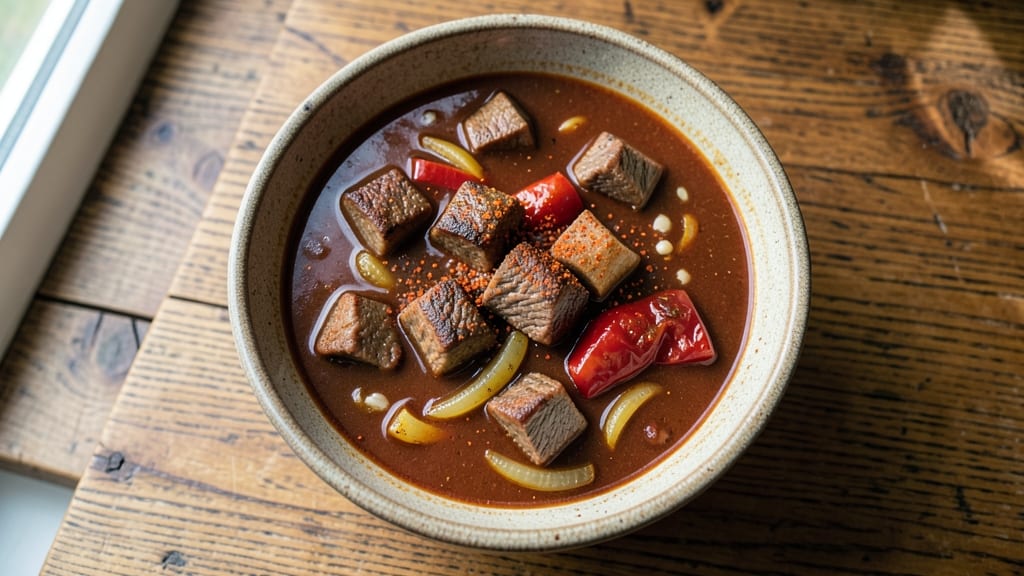
This authentic German goulash soup recipe captures the heart of Central European comfort food, where tender beef simmers with smoky paprika and celery crowns until the broth becomes rich and deeply flavorful.
The key lies in slow-cooked layers—paprika for warmth, tomatoes for depth, and a celery crown that adds a satisfying crunch. I developed this version after years of testing, ensuring every spoonful delivers the robust, hearty taste of traditional German kitchens.
The beauty of this recipe is in its balance: paprika provides the signature smoky sweetness, while onions and garlic build a flavor foundation that deepens with time. Unlike lighter soups, goulash demands patience—at least 2 hours of simmering transforms tough beef into melt-in-your-mouth tenderness.
The celery crowns, lightly fried until golden, add a textural contrast that elevates every bite, making this more than just soup—it’s a meal.
What sets this apart is the authentic technique—no shortcuts, just slow-cooked perfection. The result is a bowl of soup so satisfying it feels like a hug: velvety broth, tender beef, and that perfect crunch from the celery crowns.
Serve it with crusty bread or fluffy dumplings to soak up every last drop of that paprika-kissed broth. This is the kind of recipe that turns weeknights into cozy traditions.
For those who love history with their meals, this dish reflects the Hungarian-German culinary crossroads, where paprika—originally a Hungarian staple—became a cornerstone of German comfort food. The optional garnish of sour cream adds a tangy finish, while fresh parsley brightens the presentation.
Whether you're feeding a crowd or savoring a solo bowl, this goulash delivers restaurant-quality warmth in your own kitchen.
Ingredients for authentic german goulash soup
Sixteen ingredients for a soup that tastes like home-cooked tradition.
| Ingredient | Amount | Notes |
|---|---|---|
| Beef Chuck Roast 🥩 | 2 ½ lb | Cut into 1-inch cubes, trim excess fat |
| Yellow Onions 🧅 | 2 whole | Medium, sliced into half-moons |
| Carrots 🥕 | 3 whole | Medium, peeled, cut into chunks |
| Celery Stalks 🥬 | 4 whole | Cut into 1-inch pieces |
| Garlic Cloves 🧄 | 6 cloves | Minced, fresh preferred |
| Smoked Sweet Paprika 🌶️ | 2 tbsp | Hungarian variety for authenticity |
| Tomato Paste 🍅 | ½ cup | Squeeze tube or canned |
| Beef Broth 💧 | 4 cups | Homemade or high-quality store-bought |
| Red Wine 🍷 | 1 cup | Dry, like Cabernet Sauvignon |
| Bay Leaves 🍃 | 2 whole | Fresh preferred, remove before serving |
| Thyme Sprigs 🌿 | 4 whole | Fresh, stems removed |
| Black Peppercorns 🌶️ | 1 tsp | Freshly cracked, not ground |
| Salt 🧂 | 1 ½ tsp | Diamond Crystal kosher salt |
| All-Purpose Flour 🌾 | ½ cup | For celery crown batter |
| Eggs 🥚 | 1 whole | Large, beaten for celery crowns |
| Vegetable Oil 🫒 | ¼ cup | For frying celery crowns |
| Sour Cream 🥛 | ¼ cup | Full-fat, for garnish |
| Fresh Parsley 🌿 | ¼ cup | Chopped, for garnish |
The beef is non-negotiable—chuck roast delivers that melt-in-your-mouth texture after hours of simmering. Costco or your butcher’s counter are best for quality cuts, but any grocery store’s pre-cubed chuck works in a pinch. Look for good marbling, not lean cuts. The paprika? Hungarian sweet or smoked is key—Penzeys or bulk bins at Whole Foods have the real deal. Fresh thyme and bay leaves elevate the broth, so don’t skip them, even if dried works in a bind. For the celery crowns, grab the thickest stalks you can find—they hold up better to frying.
No red wine? Extra beef broth with a splash of balsamic vinegar mimics the depth. Fresh paprika too expensive? Dried at half the amount still works, but the smokiness won’t be as bold. The celery crowns can be made ahead and reheated in the oven—just don’t fry them until you’re ready to serve. Short on time? Pre-chopped frozen veggies save prep work, though fresh always tastes better. The tomato paste is your flavor anchor—don’t skimp on quality, especially if using canned. Mueller’s or Rao’s are solid choices if you’re not making it from scratch.
This soup tastes even better the next day—3-4 days in the fridge, 3 months frozen. Portion it into containers with a little broth to keep everything moist. The celery crowns stay crispy if reheated in a 350°F oven for 5 minutes. Garnish with sour cream and parsley right before serving—full-fat sour cream adds richness, while parsley brightens the presentation. Leftovers? Freeze with a layer of broth on top to preserve texture.
Why You'll Love This Recipe
- One-Pot Magic: The beef chuck roast practically cooks itself while you chop onions and carrots—no fancy techniques, just a big pot and patience. Honestly, the hardest part is waiting for that deep, smoky aroma to fill your kitchen.
- Rich, Earthy Depth: The slow-simmered beef and caramelized onions build layers of flavor that hit different—sweet from the carrots, sharp from the garlic, and that unmistakable paprika warmth. Between us, it’s the kind of soup that makes you reach for another bowl.
- Weeknight Workhorse: I’ve served this to tired students, post-gym crowds, and even my picky in-laws—it’s that universally loved. Add crusty bread for a hearty meal or serve it light with a side salad when you’re watching calories.
- Budget-Friendly Feast: A single chuck roast stretches into four or five meals, and the veggies (onions, carrots, celery) bulk it up without breaking the bank. Took me three tries to get the meat tender enough, but now it’s my go-to for stretching groceries through the month.
Step-by-step instructions for authentic German goulash soup
Here's how to build this hearty soup with deep paprika flavor and crispy celery crowns.
Sear the Beef Chuck Roast for Rich Flavor
Pat the 2.5 lb beef chuck roast dry with paper towels and cut it into 1-inch cubes, trimming any excess fat. Heat the 0.25 cup vegetable oil in a large Dutch oven over medium-high heat until shimmering. Working in batches to avoid crowding, sear the beef cubes for 3-4 minutes per side until they develop a deep brown crust. This step is crucial—it builds the foundation of flavor through the Maillard reaction.
Remove the seared beef and set it aside. You'll notice the oil will darken slightly from the caramelized beef bits—don't wipe the pot clean. These flavorful browned bits will form the base of your soup. Here's the thing—if you rush this step, your goulash will lack that authentic depth of flavor that makes it truly German.
Build the Vegetable Base with Smoked Paprika
In the same Dutch oven, add the 2 whole yellow onions (sliced into half-moons), 3 whole carrots (peeled and cut into chunks), and 4 whole celery stalks (cut into 1-inch pieces). Cook over medium heat, stirring occasionally, for 8-10 minutes until the vegetables begin to soften and release their moisture. You'll see the vegetables transform from bright colors to a more translucent appearance—this is your signal they're ready for the next step.
Add the 6 cloves minced garlic, 2 tbsp smoked sweet paprika, and 0.5 cup tomato paste. Stir well to combine and cook for another 2 minutes until the paprika aroma fills your kitchen. This is where the authentic German flavor comes through—the smoked paprika gives that characteristic warmth and depth. If you skip this step or use regular paprika, you'll miss that signature taste.
Simmer the Soup with Wine and Broth
Pour in the 1 cup red wine and scrape up any browned bits from the bottom of the pot with a wooden spoon. Let the wine simmer for 3-4 minutes until it reduces by about half. This deglazing step captures all those concentrated flavors that would otherwise stick to the pot. Next, add the 4 cups beef broth, 2 whole bay leaves, 4 whole thyme sprigs, 1 tsp cracked black peppercorns, and 1.5 tsp salt. Bring the mixture to a gentle boil, then reduce heat to low and return the seared beef to the pot.
Cover and let the soup simmer for 1 hour 15 minutes, stirring occasionally. You'll notice the beef will become fork-tender and the flavors will meld together beautifully. The soup should reduce slightly, creating a thicker, more concentrated broth. This long simmering time is essential—it breaks down the tough beef chuck into tender, flavorful pieces that practically melt in your mouth.
Prepare and Fry the Celery Crowns
While the soup simmers, prepare the celery crowns for their crispy finish. Cut the outer leaves off the 4 whole celery stalks, leaving the inner core intact. In a small bowl, whisk together the 0.5 cup all-purpose flour, 1 whole beaten egg, and a pinch of salt. Dip each celery crown in the egg mixture, then coat thoroughly in the flour mixture, pressing gently to adhere.
Heat 0.125 cup vegetable oil (about half of the total amount) in a separate skillet over medium heat until hot but not smoking. Fry the celery crowns in batches for 2-3 minutes per side until they're golden brown and crispy. You'll know they're done when they float in the oil and develop a beautiful golden color. Drain on paper towels and keep warm—they should stay crispy for several minutes.
Finish and Serve the Goulash
Once the beef is fork-tender, remove and discard the bay leaves and thyme sprigs. Stir in the 0.25 cup sour cream and simmer for an additional 2 minutes—just enough to warm through without curdling. Taste and adjust seasoning if needed. The soup should be rich, slightly tangy from the sour cream, and well-seasoned with the paprika and herbs.
Ladle the hot goulash into bowls and top each serving with 2-3 crispy celery crowns and a sprinkle of 0.25 cup chopped fresh parsley. Serve immediately with crusty bread to soak up every last drop of that flavorful broth. This authentic German goulash delivers the perfect balance of tender beef, aromatic vegetables, and that signature paprika warmth—all topped with the satisfying crunch of crispy celery crowns.
Pro Tips For Making Authentic German Goulash Soup
- Brown the Chuck Properly: German goulash isn’t just stew—it’s about deep, caramelized flavor from the beef. Cut the chuck into 1.5-inch chunks, then sear them in batches over medium-high heat until they’re dark brown, not just pink. I used to rush this, and the soup always tasted flat. Take your time—this is where the richness comes from.
- Slice Onions Paper-Thin: Thinly sliced yellow onions melt into the broth without disappearing. Use a sharp knife and cut them lengthwise first, then slice into 1/8-inch strips. Thick slices turn mushy; this way, they dissolve just enough to sweeten the broth but stay identifiable. (Yes, it’s tedious, but it’s worth it.)
- Don’t Crowd the Pot: If you dump all the beef and veggies in at once, the onions and carrots will steam instead of caramelize. Brown the meat first, then set it aside. Sauté the onions, celery, and carrots in the same pot until softened but not browned—this builds flavor layer by layer. Trust me, your future self will notice the difference.
- Add Garlic Late: Garlic burns faster than you think, especially when simmering. After the beef and veggies have cooked for 20 minutes, crush the cloves and stir them in for the last 10 minutes. This keeps them fragrant, not bitter. (I learned this after one disastrous batch where I added them too early.)
Perfect pairings for this dish
Bread Pairings
Crusty German rye bread is my go-to pairing—its dense texture and slightly sweet flavor stand up beautifully to the paprika-rich broth. Look for a dark, whole-grain rye with a thick crust, like Pumpernickel or Kaiser rolls, which soak up the soup without turning mushy.
For extra authenticity, toast the bread lightly before serving to enhance its nutty undertones. 🥖
Dumpling Options
Fluffy German potato dumplings (Kartoffelklöße) transform this soup into a full meal. These pillowy, starchy dumplings melt in your mouth and absorb the flavorful broth perfectly.
For a shortcut, use instant potato flakes mixed with a beaten egg and a pinch of salt, then drop spoonfuls into boiling water for 10 minutes before serving. Alternatively, egg noodles work in a pinch if you're short on time.
Side Salad Contrast
A crisp cucumber and radish salad cuts through the richness of the goulash. Toss 1 cup thinly sliced cucumbers and 4 radishes with 2 tbsp sour cream, 1 tsp lemon juice, and a pinch of dill for a refreshing contrast.
The cool, tangy notes balance the warm, smoky flavors of the soup. For extra crunch, add toasted sunflower seeds or crumbled feta cheese on top.
Wine Pairings
Red wine isn’t just an ingredient—it’s a perfect pairing! A German Spätburgunder (Pinot Noir) complements the paprika and beef beautifully, with its bright acidity and earthy notes. For something lighter, a Dry Riesling from the Mosel region offers citrusy freshness that cleanses your palate between bites.
Avoid heavy Cabernets—they can overpower the delicate herbs and wine used in the soup. 🍷
Beer Pairings
A German Helles lager or Weizenbock enhances the goulash’s hearty flavors without competing. The malty sweetness of a Helles (like Paulaner) pairs wonderfully with the paprika, while a Weizenbock (like Schneider Weisse) adds a fruity contrast.
For a non-alcoholic option, a sparkling apple cider with a hint of spice brings refreshing brightness to each spoonful.
Garnish Upgrades
Elevate your bowl with crispy fried onions or caramelized shallots for extra depth. For a creamy finish, dollop crème fraîche instead of sour cream—its tangy richness adds a luxurious touch.
Fresh chives or dill sprinkled on top brighten the presentation, while a few lemon zest strips add a citrusy pop that balances the richness. 💫
Nutrition facts
Frequently asked questions
What makes this goulash authentically German?
This recipe captures German goulash's signature elements: smoked sweet paprika for warmth, beef chuck roast for heartiness, and a long simmer time to develop deep flavors. The celery crowns add a German touch often found in regional stews, while the wine and tomato base reflect the country's love for rich, aromatic dishes.
Can I make this soup in a slow cooker?
Brown the beef first in a skillet, then transfer everything to the slow cooker. Cook on low for 7-8 hours or high for 4-5 hours. The celery crowns should be fried fresh before serving to maintain crispiness. The slow cooker method actually enhances the tenderness of the beef.
How do I store and reheat leftovers?
Store in an airtight container in the fridge for 3-4 days or freeze for 3 months. Reheat gently on the stove over medium-low heat until warmed through. For the celery crowns, reheat them separately in a 350°F oven for 5 minutes to restore crispiness. Never microwave the celery crowns—they'll turn soggy.
What's the best way to serve this goulash?
Serve with crusty German rye bread or potato dumplings to soak up the flavorful broth. For a complete meal, add a side of cucumber salad or steamed greens. The celery crowns should be placed on top of each serving right before eating to maintain their crunch.
Can I substitute beef with another protein?
While beef is traditional, you can use lamb shoulder (for a Mediterranean twist) or pork shoulder (for a German-inspired variation). For a vegetarian option, mushrooms or lentils work well, though the texture and flavor will differ. The cooking time may need adjustment—check for tenderness after 1.5 hours of simmering.