
Soups & Stews
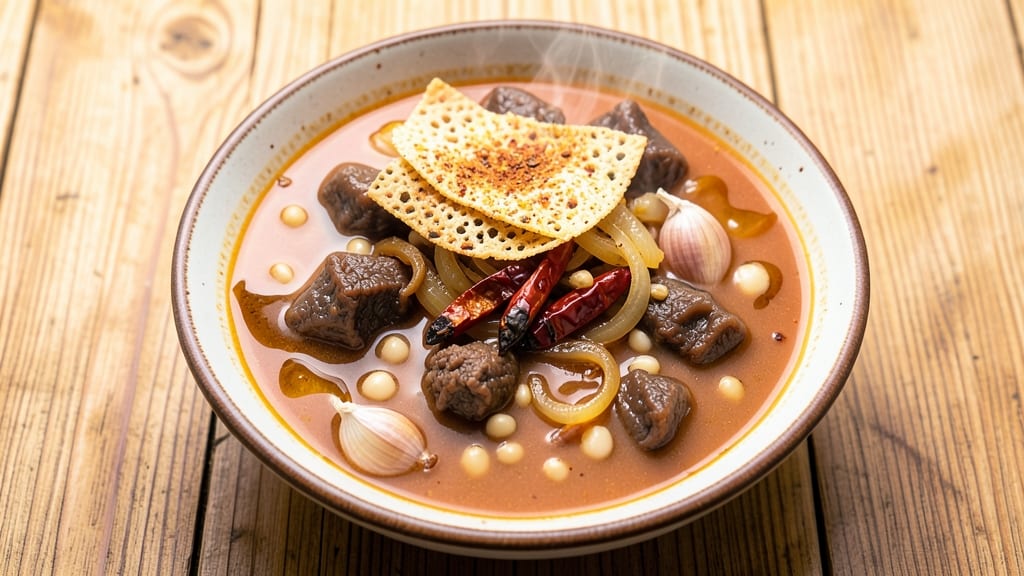
This authentic Mexican menudo soup recipe brings the soul of Mexican home cooking to your kitchen with its rich, spiced broth and tender tripe. The secret lies in slow-simmering the ingredients for hours, allowing the flavors to meld into a deeply comforting dish that's traditionally served to celebrate life's milestones.
I first discovered this recipe during a family gathering in Oaxaca, where it was prepared in a massive pot over an open flame—now I recreate that same homestyle warmth in my own kitchen.
The heart of menudo lies in its ingredients: tripe simmered until tender, hominy for texture, and a blend of chili peppers that add just the right amount of heat without overpowering.
The broth is built layer by layer with garlic, onions, and spices like cumin and oregano, creating a complex flavor profile that's both earthy and vibrant. Unlike many shortcut versions, this recipe stays true to tradition by using fresh, high-quality ingredients and proper simmering techniques.
By the time you finish this recipe, you'll have a steaming bowl of menudo that's rich in both flavor and cultural significance. The tripe becomes fork-tender, the hominy adds a satisfying bite, and the broth is aromatic with just the right balance of spices.
This is the kind of soup that brings people together—whether you're serving it at a celebration or simply enjoying a comforting meal on a chilly evening.
Perfect for gatherings or a hearty weeknight dinner, this menudo recipe delivers restaurant-quality results at home. The leftovers actually taste better the next day as the flavors continue to develop. Let's get cooking and bring a taste of Mexico to your table.
Ingredients for authentic mexican menudo soup
Sixteen ingredients transform into a deeply aromatic menudo that honors Mexican tradition.
| Ingredient | Amount | Notes |
|---|---|---|
| Beef Tripe 🥩 | 1 ½ lb | Cleaned, cut into 1-inch pieces |
| Dried Hominy 🌽 | 1 cup | Soaked overnight, drained |
| Yellow Onions 🧅 | 2 whole | Medium, chopped into half-moons |
| Garlic Cloves 🧄 | 6 cloves | Peeled, smashed |
| Guajillo Chili Peppers 🌶️ | 4 whole | Stems/seeds removed, toasted |
| Ancho Chili Peppers 🌶️ | 2 whole | Stems/seeds removed, toasted |
| Ground Cumin 🌿 | 2 tbsp | Toasted for deeper flavor |
| Mexican Oregano 🍃 | 1 tbsp | Dried, crushed |
| Bay Leaves 🌿 | 2 whole | Fresh preferred |
| Beef Broth 💧 | 6 cups | Low-sodium preferred |
| Tomato Paste 🍅 | ½ cup | Smooth, not chunky |
| Lime Juice 🍋 | ¼ cup | Freshly squeezed |
| Salt 🧂 | 1 ½ tsp | Adjust to taste |
| Black Pepper 🌶️ | ½ tsp | Freshly ground |
| Fresh Cilantro 🌿 | ¼ cup | Chopped, for garnish |
The tripe is the soul of menudo, so source it from a trusted butcher or Latin market—look for clean, white pieces without excess fat. Costco or H-E-B often carry it pre-cut, but if buying whole, ask for the leaf or honeycomb variety. The dried chilis? MexGrocer or Penzeys carry authentic guajillo and ancho—avoid the generic 'chipotle' blends, which lack depth. For hominy, Goya brand is reliable, but if you find El Mexicano at a specialty store, use that. The Mexican oregano is non-negotiable—regular oregano won't give you that earthy, slightly citrusy note. Toast your spices in a dry pan for 30 seconds to wake up their flavors before adding them to the broth.
No guajillo chilis? Ancho chilis alone work in a pinch, but reduce the amount by half to avoid overpowering the broth. Fresh tripe unavailable? Beef short ribs make a decent substitute, though the texture will differ. Short on cumin? Mexican coriander (available at Latin markets) adds a similar earthiness. The tomato paste can be omitted entirely if you prefer a more traditional approach, but it adds a nice depth. For the lime juice, Key West limes, but any fresh lime will do—never bottled juice. If you're serving this for a celebration, double the chilis and lime juice for extra vibrancy.
This soup tastes even better the next day, so plan ahead. Store in an airtight container in the fridge for up to 5 days, or freeze portions for 3 months. The tripe reheats beautifully—just add a splash of water to prevent drying out. Garnish with fresh cilantro and a squeeze of lime right before serving. For a restaurant-style presentation, serve with warm corn tortillas and a side of pickled red onions. The leftovers make incredible tacos the next day—just shred the tripe and mix with the broth for a quick fix.
Why You'll Love This Recipe
- One-Pot Magic: I swear by this—just toss everything into one pot and let it simmer. No chopping boards full of mess, no last-minute prep. The tripe softens while you stir in the onions and garlic, and by the time the guajillo peppers infuse the broth, you’re basically done. (Yes, even on a Tuesday night.)
- Triple-Threat Flavor: That first bite? Crispy tripe edges, creamy hominy, and a slow-building heat from the guajillo peppers—it’s like a hug for your taste buds. The onions caramelize right in the pot, adding this deep, sweet richness that makes you want seconds. Honestly, I’ve never met a menudo that didn’t deliver.
- Crowd-Pleaser Any Day: This is my go-to for game days, sick days, or when my mom’s over for dinner. The hominy soaks up the broth like a sponge, so it’s hearty enough to feed a family but light enough for a solo bowl. Plus, everyone’s got an opinion on spice levels—just adjust the peppers to taste.
- Budget-Friendly Leftovers: Tripe’s cheap, hominy’s cheap, and this soup only gets better the next day. I make a double batch on Sundays, and by Wednesday, it’s still the star of my lunch. Freeze half if you’re feeling extra, because reheating it is just as good as the first serving. (My wallet thanks me.)
Step-by-step instructions for authentic Mexican menudo soup
Here's the traditional method for creating this hearty Mexican comfort dish with rich, layered flavors.
Prepare the Chili Paste and Aromatics
Toast the 4 whole guajillo chili peppers and 2 whole ancho chili peppers in a dry skillet over medium heat for 1-2 minutes per side until fragrant and slightly charred. Place them in a bowl and cover with hot water for 10 minutes to soften. Drain and blend with 2 tablespoons ground cumin, 1 tablespoon mexican oregano, and 2 whole bay leaves until smooth, adding just enough water to create a thick paste.
In a large Dutch oven, sauté the 2 whole yellow onions chopped into half-moons in 2 tablespoons of the beef broth over medium heat for 5-6 minutes until softened and translucent. Add the 6 peeled and smashed garlic cloves and cook for 30 seconds until fragrant. This aromatic base forms the flavor foundation of your menudo.
Cook the Tripe Until Tender
Add the 1.5 lb beef tripe cut into 1-inch pieces to the Dutch oven. Pour in the remaining 5 cups beef broth and bring to a boil. Reduce heat to low, cover, and simmer for 2-2.5 hours until the tripe becomes fork-tender. You'll know it's ready when it easily pulls apart with a fork and the liquid reduces slightly.
During this time, the tripe will release natural fats that create a rich broth. Skim off any excess foam that rises to the surface to keep the broth clear. This slow cooking process is essential for breaking down the collagen in the tripe, creating that signature silky texture.
Build the Flavor Layers
Stir in the chili paste you prepared earlier and cook for 5 minutes to toast the spices. Add the 0.5 cup tomato paste and cook for another 5 minutes, stirring constantly. This step develops the complex, smoky depth that defines authentic menudo.
Add the 1 cup dried hominy that has been soaked overnight and drained. Pour in the 0.25 cup freshly squeezed lime juice and bring the soup to a gentle simmer. Cook for 30 minutes to allow all the flavors to meld together. The hominy should be tender but still hold its shape.
Season and Finish
Season the soup with 1.5 teaspoons salt and 0.5 teaspoon freshly ground black pepper. Taste and adjust the seasoning, remembering that the chili peppers contribute some natural saltiness. Let the soup simmer uncovered for 10 minutes to reduce slightly and intensify the flavors.
Remove the 2 whole bay leaves before serving. Ladle the menudo into bowls and garnish with 0.25 cup chopped fresh cilantro. The bright green color of the cilantro provides a beautiful contrast to the deep red broth and tender tripe.
Pro Tips For Making Authentic Mexican Menudo Soup
- TRIPE FIRST, LOW AND SLOW: I learned this the hard way—tripe needs patience. Start with a cold pot, cover the tripe with cold water, and bring it to a simmer very gradually over medium-low heat. If you rush it, the tripe toughens up and turns rubbery. Once simmering, reduce to the lowest heat possible—this is where flavor develops, not speed.
- SOAK HOMINY TWICE: Dried hominy absorbs water like a sponge, but one soak isn’t enough. Rinse it first, then soak in hot water for 30 minutes, drain, and soak again in fresh water for another 30 minutes. This guarantees it’ll soften properly and not turn to mush later—no one wants gritty hominy in their menudo.
- DEVEIN TRIPE LIKE A PRO: Skip the devining? Your soup will have chewy, stringy surprises. Use a sharp knife to slice along the natural seams of the tripe, then scrape out the membrane with the flat side of your blade—no need for fancy tools. This step makes the difference between "meh" and "wow" in texture.
- SAVE THE CHILI LIQUID: After rehydrating guajillo peppers, don’t dump that soaking liquid—strain it and reserve it. The liquid carries flavor that disappears if you just toss the peppers in. Add it back to the broth later; it’s the shortcut to depth without extra work. (Yes, even if you’re impatient like me.)
Pro cooking tips for this dish
Tripe Tenderizing Tricks
For perfectly tender tripe, start with a 1.5-hour pre-soak in cold water with 1 tbsp vinegar to remove any impurities. I use white vinegar because it neutralizes odors without adding flavor. After soaking, rinse thoroughly under cold water—this step is non-negotiable for authentic menudo. 🥩
Cut the tripe into 1-inch pieces for even cooking, and avoid overcrowding your Dutch oven. I use a 6-quart Dutch oven for this recipe, leaving enough room for the tripe to move freely in the broth. If your pot is smaller, cook in batches to prevent steaming instead of simmering.
Chili Pepper Mastery
Toast your guajillo and ancho chilis over medium heat for 1-2 minutes per side until fragrant—this step unlocks their deep, smoky flavors. For extra authenticity, use a mole torch or blowtorch to char them quickly.
After toasting, soak in hot water for 10 minutes to soften before blending into a paste with 2 tbsp toasted cumin.
If you're sensitive to heat, reduce the ancho chilis to 1 whole pepper and add ½ tsp sugar to the blend to balance the acidity. The key is blending the chilis with just enough water to create a thick paste—this ensures a rich, concentrated flavor without thinning the broth.
Broth Clarity Hacks
Skimming foam during the 2-2.5 hour simmer is essential for a clear broth. I use a fine-mesh skimmer to remove any impurities that rise to the surface.
For extra clarity, add 1 tbsp apple cider vinegar to the broth after the tripe is tender—it helps break down any remaining proteins that could cloud the liquid.
If your broth turns cloudy, strain it through a fine-mesh sieve before serving. This step is especially important if you're using store-bought broth, which often contains additives. For the best results, I recommend using homemade beef broth or a high-quality low-sodium brand like Pacific Foods.
Hominy Prep Secrets
Soak your 1 cup dried hominy overnight in cold water to soften it completely. I use a quart-sized mason jar for easy storage and drainage. After soaking, drain and rinse thoroughly—any remaining grit will make the soup taste bitter.
For extra texture, add ½ cup corn kernels (fresh or frozen) along with the hominy.
If you're short on time, you can soak the hominy for just 4 hours in hot water, but overnight soaking yields the best results. The hominy should be tender but still hold its shape—overcooking turns it mushy.
Add it to the soup during the final 30 minutes of cooking to ensure it absorbs all the flavors.
Flavor Boosting Finishes
A squeeze of 0.25 cup fresh lime juice at the end brightens the entire dish. I add it just before serving to preserve its acidity—never add it too early, or the flavor will mellow out.
For an extra layer of complexity, stir in 1 tsp fish sauce (trust me, it works!) or a pinch of smoked paprika during the final 10-minute simmer.
Garnish with chopped fresh cilantro and a sprinkle of crumbled queso fresco for a restaurant-worthy finish. The cilantro adds freshness, while the queso fresco provides a creamy contrast to the spicy broth. Serve with warm corn tortillas for dipping—it's a game-changer! 🌶️
Nutrition facts
Frequently asked questions
What makes this menudo recipe authentic?
This recipe stays true to tradition by using beef tripe (the heart of menudo), guajillo and ancho chilis for smoky depth, and Mexican oregano—not regular oregano. The slow 2-2.5 hour simmer is key, along with the chili paste made from toasted peppers and toasted cumin. Many shortcut versions skip these essential steps.
Can I substitute tripe with another meat?
While tripe is traditional, you can use beef short ribs or beef shank in a pinch. These will give a slightly different texture but still work well. Avoid chicken or pork—they won't provide the same rich, hearty flavor. If substituting, increase cooking time by 30-45 minutes to ensure tenderness.
How do I make this soup less spicy?
Reduce the ancho chilis to 1 whole pepper (instead of 2) and remove the seeds before toasting. Add ½ teaspoon sugar to the chili paste to balance the heat. For extra mildness, strain the broth through a fine-mesh sieve before serving to remove some of the chili particles.
Can I prepare menudo ahead of time?
Yes! This soup actually tastes better the next day as flavors deepen. Store in an airtight container in the fridge for up to 5 days or freeze for 3 months. Reheat gently on the stove with a splash of water to prevent drying. The tripe reheats beautifully—just avoid boiling it.
What should I serve with menudo?
Traditional pairings include warm corn tortillas for dipping, pickled red onions for acidity, and crumbled queso fresco as a garnish. For a complete meal, add white rice or refried beans. Many Mexican families also serve it with avocado slices and lime wedges for extra freshness.