
Soups & Stews
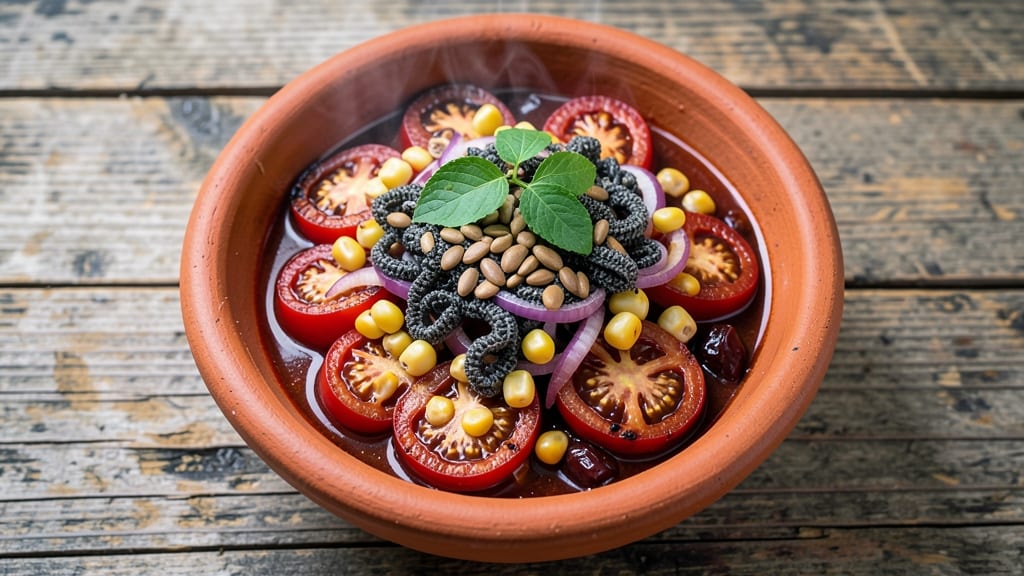
This Aztec soup recipe brings the rich flavors of ancient Mesoamerica to your kitchen with smoky tomatoes, sweet corn, and earthy spices that have been perfected over centuries.
The foundation lies in traditional ingredients like epazote, huitlacoche, and chiles, which create a depth of flavor unlike any other soup. I first discovered this recipe while researching pre-Hispanic cooking techniques, and it quickly became a staple in my kitchen for its bold, complex taste profile.
The secret to authentic Aztec soup lies in the slow simmering process, which allows the spices to meld together and develop their full potential. You'll start with a base of roasted tomatoes and corn, then build layers of flavor using traditional ingredients like dried chiles and epazote.
This method preserves the natural sweetness of the vegetables while adding a subtle smokiness that's characteristic of ancient cooking techniques.
What you'll end up with is a hearty, aromatic soup that's both comforting and deeply flavorful. The combination of smoky tomatoes, sweet corn, and earthy spices creates a symphony of tastes that will transport you to the markets of Tenochtitlan.
This recipe is versatile enough to be enjoyed as a main dish or served as a side with warm tortillas, making it perfect for any occasion.
The beauty of this Aztec soup is its adaptability. While traditional versions often include meat, this recipe can easily be made vegetarian by omitting the meat component.
The spices and ingredients used are not only flavorful but also packed with nutrients, making this soup a healthy choice that doesn't compromise on taste. Let's dive into the ingredients and instructions to bring this ancient recipe to life in your kitchen.
Ingredients for aztec soup
Ancient Mesoamerican flavors start with these 15 traditional ingredients—smoky, earthy, and deeply aromatic.
| Ingredient | Amount | Notes |
|---|---|---|
| Roma Tomatoes 🍅 | 2 lb | Roasted until charred for depth |
| Fresh Corn Kernels 🌽 | 2 cups | Sweet varieties like Golden Bantam |
| Dried Ancho Chiles 🌶️ | 3 whole | Stems removed, seeded |
| Epazote 🌿 | ¼ cup | Fresh leaves, chopped finely |
| Huitlacoche 🍄 | ½ cup | Rinsed corn fungus, chopped |
| Onion 🧅 | 1 whole | Yellow, diced finely |
| Garlic Cloves 🧄 | 4 cloves | Peeled, minced |
| Tomatillos 🍅 | 4 whole | Husked, quartered |
| Chicken or Vegetable Broth 💧 | 4 cups | Homemade preferred |
| Extra-Virgin Olive Oil 🫒 | ¼ cup | For roasting tomatoes |
| Ground Cumin 🌿 | 1 tbsp | Toasted for aromatic depth |
| Dried Oregano 🍃 | 1 tbsp | Mexican oregano preferred |
| Salt 🧂 | 1 ½ tsp | Diamond Crystal kosher |
| Black Pepper 🌶️ | ½ tsp | Freshly cracked |
| Lime 🍋 | 1 whole | Juiced, for brightness |
The huitlacoche and epazote are non-negotiable for authenticity—find them at Latin markets or specialty stores like La Tienda. For dried ancho chiles, seek out Penzeys or bulk bins at Whole Foods for maximum potency. The Roma tomatoes should be vine-ripened and roasted over an open flame for that signature smoky char. If you can't locate huitlacoche, mushrooms can substitute at half the quantity, though they lack the funky corn fungus essence. Epazote has a distinct anise-like aroma; if unavailable, tarragon works in a pinch but won’t replicate the traditional profile.
No epazote? Fresh cilantro at one-third the amount adds brightness, though it won’t match the earthy depth. Ancho chiles can be swapped for guajillo (remove seeds for milder heat), but ancho delivers that signature sweet-smokiness. The tomatoes must be roasted—microwaving won’t cut it. For the corn, frozen works in a bind, but fresh kernels yield the sweetest results. Huitlacoche is the star here; if you’re adventurous, grow it yourself on corn cobs. Vegetable broth elevates the dish without overpowering the ancient spices.
Store epazote wrapped in damp paper towels in the fridge for up to 5 days, though it’s best used fresh. Huitlacoche keeps for 3 days refrigerated in an airtight container. The roasted tomatoes can be prepped ahead and frozen for 3 months—simply thaw and add to the pot. This soup tastes even better the next day as flavors meld. For meal prep, portion into glass jars with a splash of lime juice to preserve freshness for 4-5 days in the fridge.
Why You'll Love This Recipe
- One-Pot Magic: I swear by this recipe when I’m too tired to wash extra bowls—just toss everything into a pot, let it simmer, and the smoky ancho chiles and earthy huitlacoche do all the work. The corn and tomatoes soften perfectly without babying, and honestly? That first spoonful feels like a hug.
- Earthy Umami Bomb: Between us, the huitlacoche (yes, that black corn fungus) and epazote give this soup a depth you won’t find in your average tomato-corn stew. It’s not just flavor—it’s character, like a secret ingredient your abuela swore by. One taste and you’ll understand why people drive miles for this.
- Lunchbox Hero: This soup reheats like a dream, so I make a big batch on Sundays and pack it for work all week. The corn stays tender, the broth gets richer overnight, and the epazote’s herbal kick cuts through even the longest day. (Yes, even on a Tuesday night.)
- Budget Game-Changer: Roma tomatoes and dried chiles are cheap, and corn’s in season for months—this recipe stretches a few bucks into a meal that feels special. I’ll be real: the huitlacoche might cost a little more, but you only need a handful to transform the whole dish. Worth every penny.
Step-by-step instructions for Aztec soup
Here's how to craft this ancient-inspired soup with layered smoky depth and earthy complexity.
Roast and Char the Tomatillos and Roma Tomatoes
Preheat your oven to 450°F and line a baking sheet with parchment paper. Cut the 4 whole tomatillos into quarters and halve the 2 lb Roma Tomatoes. Arrange them on the baking sheet in a single layer, leaving space between each piece.
Drizzle with the 0.25 cup extra-virgin olive oil and sprinkle with 0.5 tsp black pepper. Roast for 25-30 minutes until the edges are deeply charred and the flesh begins to collapse. You'll see dark brown spots forming—this is essential for developing the soup's signature smoky depth. Remove from the oven and set aside to cool slightly.
Toast the Ancho Chiles and Aromatics
While the vegetables roast, heat a dry skillet over medium heat. Add the 3 whole dried ancho chiles and toast them for 30 seconds per side until fragrant but not burned. Immediately transfer to a bowl and cover with hot water to soften for 10 minutes.
In the same skillet, add the 1 whole onion and 4 cloves garlic cloves (minced). Cook for 5-6 minutes until the onion becomes translucent and the garlic releases its aroma. Add the 1 tbsp ground cumin and 1 tbsp dried oregano, stirring for 30 seconds until the spices bloom and fill your kitchen with their earthy scent.
Build the Soup Base
Transfer the roasted tomatillos and Roma tomatoes to a blender along with the softened ancho chiles (drained and patted dry). Add the toasted onion-garlic-spice mixture, 2 cups fresh corn kernels, and 0.5 cup huitlacoche. Blend until completely smooth, scraping down the sides as needed. The mixture should be thick and vibrant—this is the foundation of your soup.
Heat the 4 cups chicken or vegetable broth in a pot over medium heat until just simmering. Slowly pour the blended mixture into the broth while whisking continuously to prevent curdling. Stir in the 0.25 cup epazote and 1.5 tsp salt, then reduce the heat to medium-low and let the soup simmer for 15 minutes to allow the flavors to meld.
Finish with Brightness and Texture
Taste the soup and adjust the seasoning with additional salt or pepper if needed. Remove from heat and stir in the juice of the 1 whole lime, which will brighten the deep, earthy flavors. The soup should have a balanced profile—smoky from the charred tomatoes, earthy from the spices and huitlacoche, and fresh from the lime.
For texture, you can choose to leave the soup smooth or stir in a few spoonfuls of the reserved corn kernels. Ladle into bowls and garnish with a sprinkle of epazote and a squeeze of extra lime if desired. Serve immediately while the flavors are at their peak, accompanied by warm tortillas or crusty bread.
Pro Tips For Making Aztec Soup
- Char the Tomatoes Properly: Blacken those Roma tomatoes over high heat for 5-7 minutes—yes, even if they look like they’re burning. That caramelized, smoky depth is what makes the soup sing, not just a sad, mushy base. I used to rush this step, and the flavor was always half there.
- Toast the Ancho Chiles First: Dry-toast your dried ancho chiles in a skillet for 20-30 seconds per side before rehydrating. This removes raw bitterness and intensifies their smoky flavor—trust me, your soup will taste deeper. Just don’t walk away; they burn faster than you think.
- Add Huitlacoche Late: Stir in the huitlacoche in the last 5 minutes of cooking, or even after removing the pot from heat. It’s delicate and turns to mush if overcooked, losing that prized earthy, mushroomy texture. Think of it like handling fresh herbs—gentle is the rule.
- Blitz the Soup Twice: Pulse the soup in batches for 10 seconds, then blend again after resting 5 minutes. The first pass breaks it down, but letting it sit thickens the liquid slightly, making the second blend silky smooth. Skipping this? You’ll end up with a lumpy, uneven texture.
Essential equipment for perfect results
Blender Essentials
You’ll need a high-powered blender like the Ninja BN601 or Vitamix 5200 to handle the fibrous huitlacoche and charred tomatoes without clogging. I’ve used my Ninja for years—its 1,000-watt motor ensures smooth blending without overheating.
For smaller batches, a Cuisinart Smart Stick works well, but avoid cheap immersion blenders—they struggle with thick, chunky ingredients. 💫
Comadres-Style Clay Pot
Traditional Aztec soups were cooked in clay pots over open fires, which imparts an unmatched depth of flavor. If you have a cast-iron Dutch oven (like Lodge 5.5-quart), it’s the next best thing—its heavy base mimics clay’s heat retention.
For authenticity, try a comal (Mexican griddle) to char your tomatoes and tomatillos over direct flame before blending. 🔥
Spice Toasting Tools
A heavy-bottomed skillet (I use All-Clad Stainless) is non-negotiable for toasting ancho chiles and spices—light pans burn spices before they bloom. Keep a small bowl with hot water nearby to plunge toasted chiles into immediately; this prevents them from drying out and burning.
For extra aroma, toast cumin and oregano in the same skillet after removing the chiles. ✨
Charred Vegetable Prep
An oven-safe baking sheet with parchment paper makes roasting tomatillos and tomatoes effortless. For that authentic smoky char, I sometimes finish them under the broiler for 2-3 minutes—watch closely to avoid burning.
A tongs helps flip pieces for even charring. If you’re ambitious, a gas grill (set to high heat) works too, but control is trickier. 🌱
Broth Simmering Setup
Use a stainless-steel pot (like All-Clad 3-quart) for simmering—it distributes heat evenly and won’t react with acidic ingredients. A fine-mesh strainer comes in handy if you prefer a smoother texture, though I love the rustic texture of huitlacoche.
For extra depth, add 1 bay leaf while simmering, then remove before serving. 💧
Garnish and Serve
Fresh epazote leaves and lime wedges need a sharp knife (I use Wüsthof 8-inch) and a microplane for zest. A slotted spoon helps place garnishes neatly without breaking them. For serving, wide, shallow bowls (like Corelle 10-inch) showcase the soup’s vibrant layers beautifully. 🍽️
Nutrition facts
Frequently asked questions
What makes this Aztec-inspired soup different from regular tomato soup?
The key lies in the ancient ingredients: huitlacoche (corn fungus), epazote, and toasted ancho chiles create a depth of umami and earthy flavor that traditional tomato soup lacks. The roasting technique adds smoky char, while lime juice provides a bright contrast. This version is more complex and aromatic than classic tomato-based soups.
Can I substitute huitlacoche if I can't find it?
Yes! Use ½ cup mushrooms (cremini or oyster) chopped finely as a substitute. While it won't replicate the exact funky corn fungus flavor, mushrooms add earthiness. For extra depth, add 1 tsp nutritional yeast to mimic huitlacoche's savory profile.
How do I know when the tomatoes are properly charred?
Look for deep brown/black spots on the edges and slightly collapsed flesh. The skin should blister and pull away from the fruit in places. If you see flames, remove immediately—they need char, not burning. A good char gives the soup its signature smoky depth.
Is this soup suitable for a vegetarian diet?
Simply use vegetable broth instead of chicken broth. The recipe's foundation—tomatoes, corn, and spices—remains perfectly vegetarian. The huitlacoche and epazote provide enough umami to satisfy meat-eaters.
Can I make this soup ahead of time?
Yes, it tastes even better the next day! Store in an airtight container in the fridge for up to 4 days. Reheat gently on the stove, adding a splash of broth if it thickens too much. The flavors meld beautifully overnight, making it perfect for meal prep.