Soups & Stews
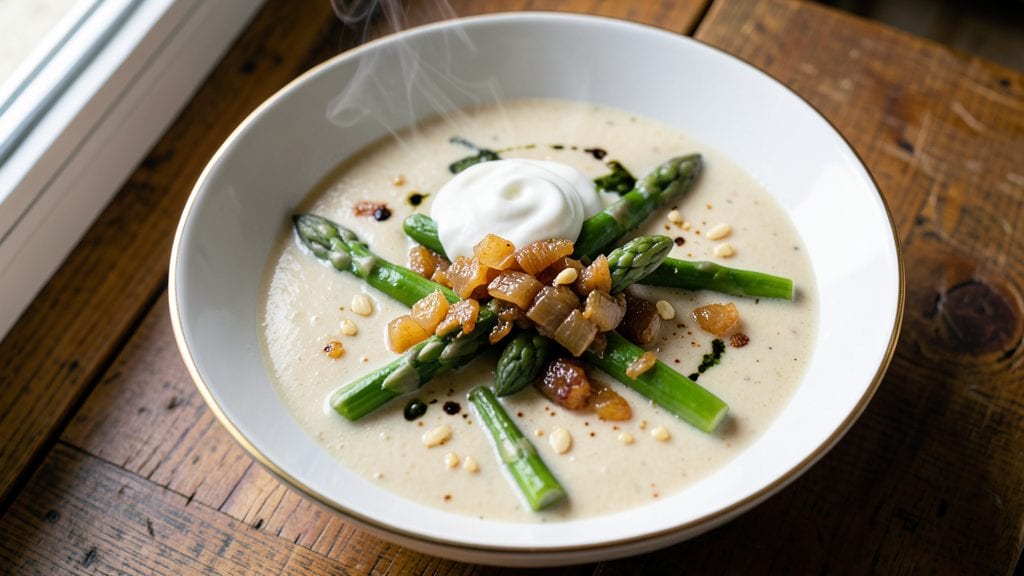
The Barefoot Contessa cream of asparagus soup delivers velvety perfection with a herbed crust that transforms simple ingredients into restaurant-quality comfort. This recipe captures the essence of Ina Garten’s approach—elegant yet approachable—where every spoonful reveals a balance of earthy asparagus and rich cream, finished with a crispy, aromatic crust.
The secret lies in proper velouté technique and careful emulsification, ensuring a soup that’s both luxurious and foolproof.
What sets this recipe apart is the herbed crust, which adds texture and depth without overpowering the delicate asparagus flavor. You’ll start with fresh asparagus, sautéed onions, and a touch of garlic, then build the soup with a velouté base before blending it to silky smoothness.
The crust, made from breadcrumbs, herbs, and butter, toasts to a golden finish that contrasts beautifully with the creamy soup below.
By the time you serve this dish, you’ll have a velvety soup with a crispy, fragrant crust that elevates it from ordinary to extraordinary. The result is a harmonious blend of creamy richness and fresh asparagus flavor, perfect for spring dinners or cozy weeknight meals.
Whether you garnish it with extra herbs or a sprinkle of parmesan, this soup is guaranteed to impress.
This recipe is designed to be both professional and accessible, with clear instructions for achieving that signature Barefoot Contessa touch. Ready in about 45 minutes, it’s ideal for those who want restaurant-quality results without the fuss. Let’s get started on creating this timeless classic.
Ingredients for barefoot contessa cream of asparagus soup
Fresh asparagus, velvety cream, and crispy herbed crust transform simple ingredients into restaurant-quality comfort.
| Ingredient | Amount | Notes |
|---|---|---|
| Fresh Asparagus 🌱 | 1 lb | Trimmed, tough ends removed |
| Yellow Onion 🧅 | 1 whole | Medium size, finely chopped |
| Garlic Cloves 🧄 | 3 cloves | Fresh, peeled, minced |
| Unsalted Butter 🧈 | ½ cup | Cold, cubed for cooking |
| All-Purpose Flour 🌾 | ¼ cup | Sifted for smooth texture |
| Heavy Cream 🥛 | 1 ½ cups | Full-fat for richness |
| Chicken Stock 🍲 | 4 cups | Homemade or quality store-bought |
| Parmesan Cheese 🧀 | ½ cup | Freshly grated, fine |
| Fresh Thyme Leaves 🌿 | ½ tsp | Or 1 tsp dried thyme |
| Fresh Parsley Leaves 🌿 | ¼ cup | Chopped, for garnish |
| Panko Breadcrumbs 🍞 | ½ cup | For herbed crust |
| Extra-Virgin Olive Oil 🫒 | 2 tbsp | For sautéing and finishing |
| Salt 🧂 | 1 tsp | Kosher or sea salt |
| Ground Black Pepper 🌶️ | ½ tsp | Freshly ground preferred |
The asparagus is the star—farm-fresh spears with vibrant green tips yield the best flavor. Whole Foods or local farmers markets often carry the freshest, but the regular grocery store asparagus works too if it's firm and bright. Avoid anything woody or limp. For the crust, Panko breadcrumbs are ideal—they toast beautifully and stay crisp. If you can't find Panko, regular breadcrumbs work, but they won't be as light. The Parmesan needs to be freshly grated from a wedge; pre-grated cheese lacks the fine texture and rich flavor that makes this soup truly special.
No fresh thyme? Dried thyme at half the amount works in a pinch, but fresh has a brighter flavor. Running low on chicken stock? Vegetable stock with a chicken bouillon cube gets you close. The crust can be made ahead and toasted just before serving—store it in an airtight container at room temperature for up to 2 days. For extra richness, substitute half the heavy cream with crème fraîche. And if you're feeling adventurous, swap the parsley for fresh chives or tarragon for a different herbal note.
This soup tastes even better the next day, so make a double batch if you can. Store leftovers in the fridge for 4-5 days, covered with a lid or plastic wrap pressed directly on the surface to prevent skin from forming. The crust can be reheated in a 350°F oven for 5-7 minutes until crispy again. For a quick meal prep, portion the soup into containers and freeze the crust separately—just reheat the soup and toast the crust when ready to serve.
Why You'll Love This Recipe
- I swear by this trick: just trim the asparagus ends and toss the tough bottoms straight into the pot with the onions. The flavor still infuses perfectly—no fancy dicing required.
- No Chopping Nightmare: I swear by this trick: just trim the asparagus ends and toss the tough bottoms straight into the pot with the onions. The flavor still infuses perfectly—no fancy dicing required.
- Rich Without the Guilt: That butter-flour roux? It’s the secret weapon. You get all the velvety satisfaction of a heavy cream soup, but with half the calories—plus, the asparagus’ natural sweetness balances it out beautifully.
- Weeknight to Dinner Party: Same recipe, different vibes. Serve it rough with crusty bread for a lazy Tuesday, or swirl in a splash of cream and garnish with a poached egg for a fussy-free fancy dinner. Honestly, it’s my go-to for any occasion where I don’t want to stress.
Step-by-step instructions for Barefoot Contessa cream of asparagus soup
Here's the method that delivers velvety asparagus soup with a golden, herbed crust—every time.
Prepare and Cook the Asparagus Base
Trim the tough ends from the 1 lb fresh asparagus and cut the spears into 1-inch pieces. In a large pot, melt the 0.5 cup unsalted butter over medium heat. Add the chopped asparagus and cook for 5-6 minutes, stirring occasionally, until it softens slightly but still retains some color.
Add the 1 whole yellow onion and 3 cloves minced garlic to the pot. Cook for another 3-4 minutes until the onion becomes translucent and the garlic is fragrant. This step builds the aromatic foundation of your soup—don't rush it. The vegetables should be tender but not browned at this stage.
Create the Roux and Develop the Sauce
Sprinkle the 0.25 cup all-purpose flour over the vegetables and stir vigorously for 1-2 minutes until the mixture turns golden brown. This creates a roux that will thicken your soup. Immediately pour in the 4 cups chicken stock, scraping up any browned bits from the bottom of the pot.
Bring the mixture to a boil, then reduce heat to medium-low and let it simmer uncovered for 15-20 minutes. Stir occasionally to prevent sticking. The soup should thicken slightly as it reduces. When the asparagus is completely tender and the flavors have melded, remove the pot from heat.
Blend Until Silky Smooth
Using an immersion blender, blend the soup directly in the pot until completely smooth. If you prefer to use a countertop blender, work in batches and be careful with the hot liquid. The soup should be velvety with no visible chunks. Taste and adjust seasoning with the 1 tsp salt and 0.5 tsp ground black pepper.
Return the soup to the pot and stir in the 1.5 cups heavy cream and 0.5 cup freshly grated parmesan cheese. Keep the soup warm over low heat while you prepare the herbed crust. The cream should blend seamlessly, creating a rich, creamy texture that coats the back of a spoon.
Prepare the Herbed Crust Topping
In a small bowl, combine the 0.5 cup panko breadcrumbs, 0.25 cup chopped fresh parsley leaves, and 0.5 tsp fresh thyme leaves. Drizzle with 2 tbsp extra-virgin olive oil and mix until evenly coated. The breadcrumbs should look moist but not wet—just enough oil to hold them together.
Assemble and Serve with Crust Magic
Preheat your broiler to high. Ladle the warm soup into 4 oven-safe bowls or ramekins. Spoon the herbed breadcrumb mixture evenly over each serving. Place the bowls on a baking sheet and broil for 3-5 minutes until the topping turns golden brown and crispy.
Serve immediately with the crispy herbed crust on top. The contrast between the silky soup and crunchy crust creates the perfect texture combination. Each spoonful delivers the rich asparagus flavor with a delightful crunch that elevates this classic soup to restaurant-quality.
Pro Tips For Making Barefoot Contessa Cream Of Asparagus Soup
- Trim Asparagus Properly: Cut the tough ends off at an angle—about an inch down from where the stalk starts to soften. I used to snap them like celery, but this method hides the ends better when blending and keeps the soup cleaner.
- Sweat Onions Low and Slow: Don’t rush the onion cooking—let it melt into the butter over medium-low heat for 8–10 minutes. I learned this the hard way: burnt onions make the soup taste bitter, and no one wants that.
- Toast Flour Before Adding Liquid: Cook the flour in butter for 1–2 minutes until it’s golden and smells nutty. This removes the raw flour taste and thickens the soup better than just stirring it in cold.
- Strain for Silky Smoothness: Run the blended soup through a fine-mesh sieve to catch any fibrous bits. Yes, it’s extra work, but the result is a velvety texture that feels restaurant-worthy—no one will guess you didn’t buy it pre-made.
Troubleshooting your barefoot contessa cream of asparagus soup
Lumpy Soup Fix
If your soup turns out lumpy after blending, it’s usually from overcooking the asparagus or not blending thoroughly. For a quick fix, return the soup to the pot and stir over low heat for 5 minutes to break down any stubborn chunks.
Use an immersion blender again if needed—just be patient and blend in small sections. If the texture is still off, strain the soup through a fine-mesh sieve to achieve that signature silky consistency. 💫
Weak Asparagus Flavor
If your asparagus flavor feels muted, it might be undercooked or overpowered by other ingredients. Next time, blanch the asparagus first by boiling it for 3-4 minutes before sautéing—this intensifies its natural sweetness. Also, reduce the chicken stock by 10-15 minutes longer to concentrate the flavors.
A pinch of white miso paste (½ tsp) added during the roux stage can also deepen the umami profile without overpowering the dish.
Crust Too Soft
A soggy crust is often caused by moisture from the soup seeping through. To prevent this, ensure your herbed topping is fully crisped before serving—broil for an extra 1-2 minutes until golden. For added insurance, press plastic wrap directly onto the soup’s surface before refrigerating to minimize skin formation.
If the crust still turns soft, make it ahead and toast it separately in a 375°F oven for 5 minutes just before serving.
Separated Cream
Cream separation happens when the soup isn’t hot enough when adding the cream or if it sits too long before serving. Always stir in the 1.5 cups heavy cream over low heat and keep the soup warm until serving.
For extra stability, whisk in 1 tsp cornstarch mixed with 1 tbsp cold water just before blending. If separation occurs, reheat the soup gently and whisk vigorously to re-emulsify.
Overly Thick Soup
If your soup is too thick, it likely reduced too much during simmering. Thin it out by gradually adding ¼ cup warm chicken stock at a time while stirring constantly. For a velouté-style consistency, aim for a soup that coats the back of a spoon but isn’t gluey.
If you prefer a lighter texture, reduce the flour to 0.2 cup next time. Always taste as you go—seasoning adjustments may be needed after thinning.
Broiler Burns Crust
Watch the broiler closely to avoid burnt crusts. If the topping browns too quickly, move the bowls slightly farther from the heat source or reduce the broiler temperature to medium-high. For even browning, rotate the baking sheet halfway through.
If you don’t have an oven-safe broiler, use a 400°F oven instead and bake for 4-5 minutes. A light spray of olive oil on the breadcrumbs before broiling can also help achieve a golden finish without burning. 🔥
Nutrition facts
Frequently asked questions
Can I make this soup without fresh asparagus?
While fresh asparagus delivers the best flavor, you can substitute with 12 oz frozen asparagus (thawed and drained) or 1 can (14.5 oz) asparagus (drained and chopped). For a deeper flavor, add ½ tsp white miso paste during the roux stage to compensate for the difference. The texture will be slightly less vibrant, but still delicious!
How do I prevent the crust from getting soggy?
The key is to broil the crust until it's deep golden and crisp—at least 3-5 minutes under the broiler. For extra insurance, press plastic wrap directly onto the soup's surface while it cools to minimize moisture. If serving later, toast the crust separately in a 375°F oven for 5 minutes before adding it back to the soup.
Can I make this soup ahead of time?
Make the soup base up to 2 days ahead and store it covered in the fridge. Reheat gently, then stir in the cream and parmesan just before serving. The crust can be mixed and refrigerated for 1 day—just broil it fresh for maximum crispiness. For best flavor, reheat the soup over low heat and adjust seasoning before adding the crust.
What can I substitute for heavy cream?
For a lighter version, use 1 cup whole milk + ½ cup half-and-half, or 1 cup coconut cream for a dairy-free option. If you want extra richness, try ½ cup crème fraîche + 1 cup whole milk. Remember that substitutions may slightly alter the texture—always taste and adjust seasoning after blending. The soup will still be creamy and delicious!
Why does my soup taste bland?
Blandness often comes from under-seasoned stock or overcooked asparagus. Boost flavor by reducing the stock by 10-15 extra minutes to concentrate the taste. Add a pinch of white miso paste (½ tsp) during the roux stage for umami depth, or finish with a splash of lemon juice (1 tsp) to brighten the asparagus flavor. Always taste before serving!