
Soups & Stews
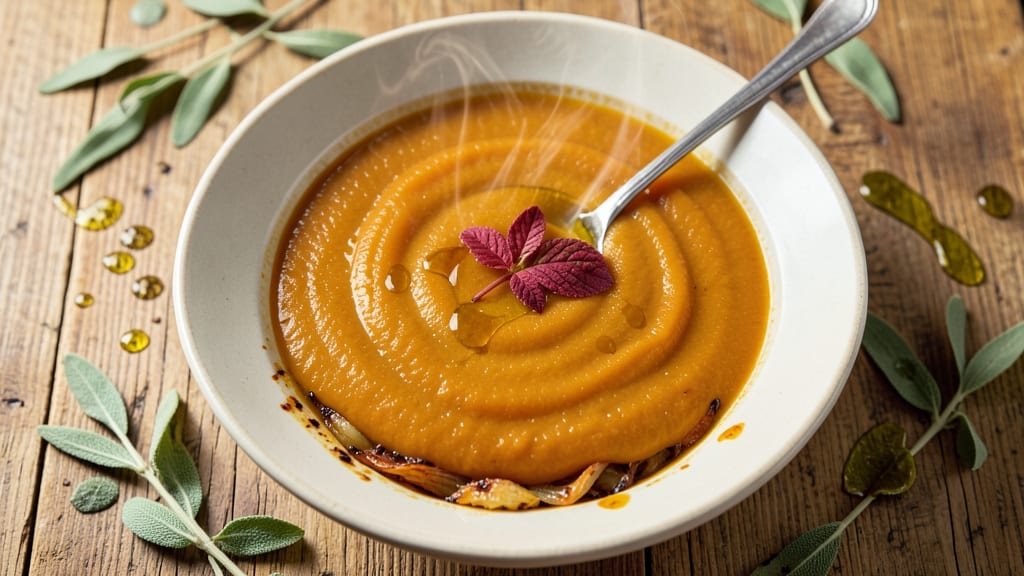
This basic butternut squash soup recipe delivers velvety sweetness and comforting warmth in every spoonful—perfect for chilly evenings. The roasted squash forms the heart of this dish, caramelizing into natural sugars that create depth without added sweetness.
I’ve perfected the technique to ensure a smooth texture while keeping the preparation straightforward, so you can enjoy restaurant-quality results at home.
The secret to achieving that crispy sage topping lies in toasting the leaves until they’re golden and fragrant, then crumbling them over the finished soup for contrast. This method elevates the dish from simple to sophisticated, adding both visual appeal and a burst of herbal freshness.
With just a few pantry staples and 30 minutes of active time, you’ll have a bowl of soup that’s creamy, aromatic, and ready to impress.
What sets this recipe apart is the balance of flavors—sweet roasted squash, earthy onions, and a touch of nutmeg for warmth. The broth simmers until rich and fragrant, while the sage topping adds a textural element that makes each bite satisfying.
Whether you’re feeding a family or treating yourself, this soup is a foolproof way to bring comfort to your table.
Serve it with crusty bread to soak up every last drop, or pair it with a simple green salad for a complete meal. The best part? Leftovers reheat beautifully, making this a perfect make-ahead dish for busy weeks. Let’s get started on creating this cozy classic.
Ingredients for basic butternut squash soup
Six ingredients transform into velvety soup with crispy sage magic—perfect for cozy nights.
| Ingredient | Amount | Notes |
|---|---|---|
| Medium Butternut Squash 🎃 | 2 whole | Peeled, seeded, cut into 1-inch cubes |
| Yellow Onion 🧅 | 1 whole | Medium, diced into 1/4-inch pieces |
| Fresh Garlic Cloves 🧄 | 4 cloves | Peeled, minced finely |
| Fresh Sage Leaves 🌿 | ½ cup | Whole leaves, stems removed |
| Vegetable Broth 💧 | 4 cups | Low-sodium, homemade or quality store-bought |
| Extra-Virgin Olive Oil 🫒 | ¼ cup | High-quality, fruity variety |
| Unsalted Butter 🧈 | 2 tbsp | Cold, cubed for roasting |
| Ground Nutmeg 🌶️ | ¼ tsp | Freshly grated preferred |
| Sea Salt 🧂 | 1 ½ tsp | Diamond Crystal preferred |
| Freshly Ground Black Pepper 🌶️ | ½ tsp | Cracked peppercorns preferred |
| Heavy Cream 🥛 | ½ cup | Full-fat for richness |
| Crusty Bread 🍞 | 6 slices | For serving, optional |
The butternut squash is the star—choose a medium-sized squash with a vibrant orange hue and firm skin. Whole Foods or Trader Joe's carry the best quality, but any grocery store will have them in season. For the sage, fresh leaves from a local farmers market have the most intense flavor, but dried works in a pinch (use one-third the amount). The vegetable broth should be rich and flavorful—homemade is ideal, but store-bought brands like Pacific Foods or Imagine are solid backups. Don’t skip the roasting step—it caramelizes the natural sugars for that restaurant-quality depth.
No butternut squash? Acorn or kabocha squash works just as well. Short on fresh sage? Thyme or rosemary at half the amount adds a different but lovely herbal note. The heavy cream can be swapped for coconut milk for a dairy-free version, though the texture will be slightly lighter. For the vegetable broth, mushroom broth adds umami depth if you’re feeling adventurous. The nutmeg is non-negotiable—it’s what ties all the flavors together, so grate it fresh if possible. If you’re in a hurry, a pinch of cinnamon can mimic the warmth, but it won’t be the same.
This soup tastes even better the next day—reheat gently on the stove with a splash of broth to restore creaminess. Store in an airtight container for up to 5 days in the fridge, or freeze for 3 months. For the crispy sage topping, toast the leaves in a dry pan until golden right before serving—this adds that satisfying crunch. Portion into bowls with a drizzle of olive oil and extra sage for an elegant presentation. The crusty bread? Warm it in the oven for 5 minutes to soak up every last drop.
Why You'll Love This Recipe
- I swear by this trick: roast the squash whole, then scoop out the flesh. No peeling, no dicing—just split it open, brush with oil, and let the oven do the work. That caramelized edge? Chef’s kiss. (Yes, even on a Tuesday night.)
- Fewer Cuts, Same Love: I swear by this trick: roast the squash whole, then scoop out the flesh. No peeling, no dicing—just split it open, brush with oil, and let the oven do the work. That caramelized edge? Chef’s kiss. (Yes, even on a Tuesday night.)
- Herb Magic Simplified: Fresh sage isn’t just an afterthought here—it’s the star. A handful of leaves, toasted in the oil with the onions, releases that piney aroma that turns a simple broth into something ridiculously good. No fancy garnishes needed.
- Leftovers That Don’t Lie: This soup tastes even better the next day. Honestly, I make a double batch on Sundays because reheating it? Smooth, creamy, and still packed with that roasted squash depth. Freezer-friendly too—just thaw and warm.
Step-by-step instructions for roasted butternut squash soup with crispy sage topping
Here's how to transform humble ingredients into velvety soup with a golden, caramelized sage crust that'll make everyone reach for seconds.
Roast the Squash and Onion for Deep Flavor
Preheat your oven to 400°F and line two baking sheets with parchment paper. Toss the peeled and cubed 2 whole medium butternut squash and diced 1 whole yellow onion with 0.25 cup extra-virgin olive oil and 1.5 tsp sea salt. Spread in a single layer—don't crowd the pan or they'll steam instead of roast.
Roast for 30-35 minutes until the squash is tender when pierced with a fork and the edges are deep golden brown. The onions should be caramelized with crispy edges. This roasting step develops the natural sweetness and creates that irresistible aroma that fills your kitchen. I always check at the 25-minute mark—your oven might run hotter or cooler, so watch for that perfect caramelization.
Build the Soup Base with Aromatics
While the squash roasts, heat 2 tbsp unsalted butter in a large Dutch oven over medium heat. Add the 4 cloves minced fresh garlic cloves and cook for 30 seconds until fragrant—don't let it brown or it'll turn bitter. Add the roasted squash and onions directly from the baking sheet (no need to scrape the pan).
Pour in the 4 cups vegetable broth and bring to a gentle simmer. The mixture should bubble softly around the edges. Add the 0.25 tsp ground nutmeg and 0.5 tsp freshly ground black pepper, then reduce heat to medium-low. Let it simmer uncovered for 15-20 minutes until the squash breaks down completely and the soup thickens slightly. You'll know it's ready when the flavors meld into a cohesive, velvety texture.
Create the Crispy Sage Topping
While the soup simmers, prepare the crispy sage topping that makes this dish extraordinary. Heat a small skillet over medium-high heat and add 2 tbsp unsalted butter. Once the butter foams, add the 0.5 cup fresh sage leaves in a single layer—don't overlap them or they won't crisp properly.
Cook for 1-2 minutes until the edges curl and turn deep golden brown with crispy spots. Watch carefully—sage burns faster than you think. Transfer the crispy sage to a paper towel-lined plate to drain excess butter. This topping should be crisp enough to stand up to the creamy soup, adding both texture and aromatic depth. Save any rendered butter in the skillet for finishing the soup.
Finish with Cream and Crispy Garnish
Use an immersion blender to purée the soup directly in the pot until completely smooth. If you prefer a chunkier texture, blend in batches and return to the pot. Stir in the 0.5 cup heavy cream and any reserved butter from the sage skillet. Taste and adjust seasoning—you might need a pinch more sea salt or black pepper to balance the sweetness.
Ladle the soup into bowls and top each serving with a generous sprinkle of the crispy sage leaves. The contrast between the velvety soup and crunchy topping is what makes this dish truly special. Serve immediately with the 6 slices crusty bread on the side for dipping—every bite should deliver that perfect combination of sweet, savory, and crispy textures.
Pro Tips For Making Basic Butternut Squash Soup
- ROAST THE SQUASH FIRST: I learned this the hard way—peeling raw butternut squash is a nightmare. Cut it in half, scoop out the seeds, then roast skin-side down at 400°F (200°C) for 45 minutes. The flesh will slide right off the skin when cool, and it’s already partially cooked for the soup.
- CHAR THE ONION LOW: After burning three batches, I finally figured out that onions need patience. Cook the sliced yellow onion over medium-low heat for 10-12 minutes until deep golden, not brown. This builds flavor without turning bitter—no one wants a burnt onion in their soup.
- SALT THE BROTH LATE: I used to salt the broth early, and the soup always tasted flat. Wait until the soup’s simmered for 15 minutes, then adjust the seasoning. The flavors meld better this way, and you’ll avoid over-salting before tasting the final dish.
- STRAIN OR BLITZ IT: This isn’t the prettiest method, but it’s the tastiest. If you want ultra-smooth soup, strain it through a fine-mesh sieve after blending. If you prefer texture, pulse the soup in a blender until just smooth—don’t overdo it, or you’ll turn it into glue.
Best sauces and condiments for this basic butternut squash soup
Creamy Sage Garnish
The crispy sage topping isn’t just for show—it’s the secret weapon that transforms this soup from ordinary to extraordinary. I always toast 0.5 cup fresh sage leaves in 2 tbsp unsalted butter until golden and crispy, then crumble them over the finished soup.
The contrast between the velvety texture and crunchy herb adds a satisfying bite that balances the richness. For extra flair, save the rendered butter from the pan and drizzle it over each serving before adding the sage. 🌿
Creamy Dairy Options
While 0.5 cup heavy cream delivers the classic velvety texture, don’t be afraid to experiment. For a lighter option, swap it with ½ cup coconut milk—it adds a subtle sweetness that pairs beautifully with the roasted squash.
If you prefer a tangy twist, try ½ cup sour cream or crème fraîche, which adds a bright acidity that cuts through the soup’s richness. Stir in the dairy during the final step to maintain its creamy consistency.
Spicy Kick Variations
To add heat without overpowering the sweet squash, I recommend a pinch of cayenne pepper or red pepper flakes—start with just ¼ tsp and adjust to taste. For a smoky depth, stir in ½ tsp smoked paprika during the simmering phase.
If you love bold flavors, a dash of hot honey (about 1 tsp) drizzled on top adds a sweet-spicy contrast that’s irresistible. 🔥
Herbal Freshness Boosters
Fresh herbs elevate this soup to restaurant-quality. Alongside the crispy sage, I often garnish with chopped fresh thyme or parsley for a bright finish. For a Mediterranean twist, add crumbled feta cheese (about 2 tbsp) and a sprinkle of toasted pine nuts for crunch.
If you’re feeling adventurous, a few drops of white truffle oil (just ¼ tsp) add an earthy luxury that pairs perfectly with the roasted squash.
Umami Depth Additions
To deepen the savory profile, stir in 1 tbsp soy sauce or miso paste during the simmering phase. For a meaty texture without meat, add 1 tbsp nutritional yeast—it adds a cheesy, umami richness that complements the squash beautifully.
If you’re using store-bought broth, a splash of fish sauce (just ½ tsp) enhances the overall depth of flavor. These additions are subtle but make a noticeable difference in the final bowl.
Sweet-Savory Balance
Butternut squash is naturally sweet, so balancing it with savory and tangy elements is key. A squeeze of fresh lemon juice (about 1 tbsp) brightens the soup and cuts through the creaminess.
For a caramelized touch, stir in 1 tbsp maple syrup during the final simmer—it enhances the squash’s natural sweetness without overpowering it. If you love caramel flavors, a pinch of cinnamon (about ¼ tsp) adds warmth that pairs beautifully with the nutmeg.
Nutrition facts
Frequently asked questions
Can I make this soup without roasting the squash?
Roasting enhances the natural sweetness and depth of flavor, but you can sauté the squash instead. Dice the squash into 1-inch cubes, toss with 1 tbsp olive oil, and cook in a skillet over medium heat for 10-12 minutes until tender. The texture will be slightly less caramelized, but the soup will still be delicious.
How do I store leftovers?
Store in an airtight container in the fridge for up to 5 days. To reheat, warm gently on the stove with a splash of broth or water to restore creaminess. For freezing, portion into containers and freeze for up to 3 months. Thaw overnight in the fridge before reheating.
What if my soup turns out too thick?
Add 1-2 tablespoons of warm broth or water and stir until smooth. If you prefer a thinner consistency, blend the soup longer or reduce the cream to ¼ cup next time. For a velvety texture without thinning, simmer uncovered for 5-10 extra minutes to evaporate excess liquid.
Can I make this soup vegan?
Yes! Replace the heavy cream with ½ cup coconut milk or cashew cream (blend soaked cashews with water). Use vegetable broth and vegan butter for roasting. For the crispy topping, toast sage in olive oil instead of butter. The flavor will be just as rich and satisfying.