
Soups & Stews
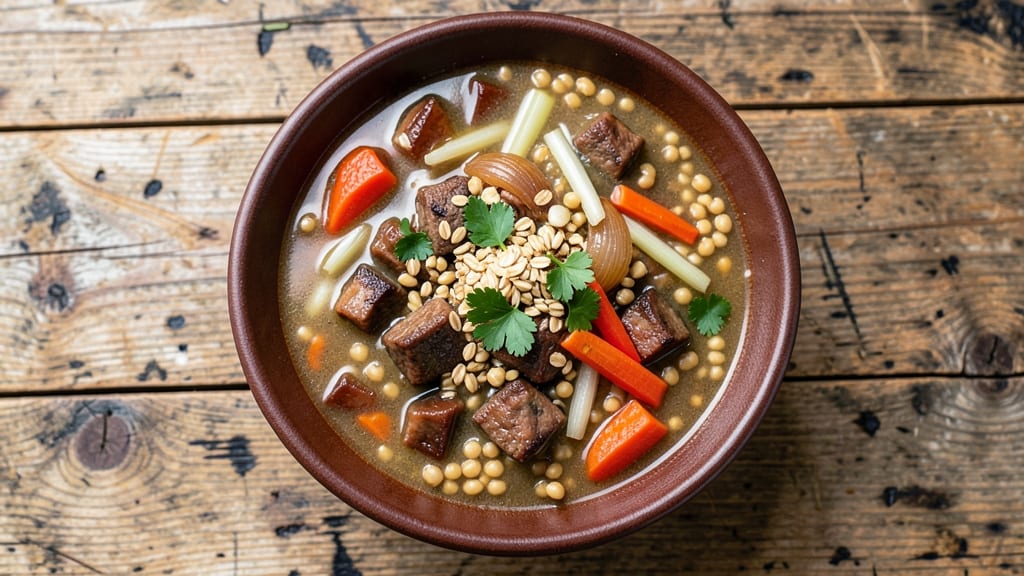
This beef barley soup recipe transforms simple ingredients into a thick, hearty masterpiece using Quaker oats as the secret weapon for depth and richness. The slow-simmered broth develops layers of flavor that turn this into a comforting classic, perfect for chilly evenings or meal prep.
What sets this version apart is the way the oats blend into the soup, creating a naturally thick texture without the need for heavy cream or roux.
The foundation of this soup lies in properly browning the beef and vegetables before adding liquid, which builds a rich, caramelized base that carries through the entire cooking process. Quaker oats are toasted lightly before being added to the soup, enhancing their nutty flavor and preventing them from turning mushy.
This method ensures every spoonful delivers both hearty texture and satisfying depth.
By the time you serve this soup, you'll have a steaming bowl of tender beef, perfectly cooked barley, and aromatic vegetables all swimming in a velvety broth that's rich enough to stand alone.
The oats create a subtle creaminess that rounds out the flavors, while the slow cooking process transforms tough cuts into melt-in-your-mouth pieces. This is the kind of soup that tastes even better the next day as the flavors meld together.
Serve with crusty bread or over buttered noodles to soak up every last drop of that flavorful broth. The recipe scales beautifully for feeding a crowd or making multiple servings for the week ahead. Let's get started on this comforting classic that brings warmth to any table.
Ingredients for beef barley soup quaker
Sixteen simple ingredients create a velvety, hearty beef barley soup with Quaker oats for natural thickness.
| Ingredient | Amount | Notes |
|---|---|---|
| Beef Chuck Roast 🥩 | 2 lb | Trimmed of fat, cut into 1-inch cubes |
| Yellow Onions 🧅 | 2 whole | Medium size, sliced into half-moons |
| Carrots 🥕 | 4 whole | Medium size, peeled and chopped |
| Celery Stalks 🌿 | 4 whole | Medium size, chopped |
| Garlic Cloves 🧄 | 4 cloves | Peeled and minced |
| Quaker Old Fashioned Oats 🍚 | ½ cup | Toasted lightly in dry pan |
| Barley (Pearl) 🌾 | 1 cup | Uncooked, rinsed before adding |
| Tomato Paste 🍅 | 2 tbsp | Squeeze tube or canned |
| Beef Broth 💧 | 6 cups | Low-sodium preferred, homemade or store-bought |
| Red Wine 🍷 | 1 cup | Dry red, like Cabernet Sauvignon |
| Bay Leaves 🍃 | 2 whole | Dried, removed before serving |
| Thyme Sprigs 🌿 | 2 whole | Fresh or 1 tsp dried |
| Salt 🧂 | 1 ½ tsp | Kosher or sea salt, adjust to taste |
| Black Peppercorns 🌶️ | 1 tsp | Freshly cracked, not pre-ground |
The beef is the backbone here. Chuck roast delivers the best flavor and texture—sirloin or round won’t cut it. Look for cuts with good marbling at Whole Foods or your local butcher shop. The vegetables should be fresh but firm; Trader Joe’s often has pre-chopped carrots and celery for convenience. Garlic? Freshly minced makes a world of difference over jarred minced garlic. For the oats, Quaker Old Fashioned is the gold standard—steel-cut won’t work here.
No red wine? Substitute an extra cup of beef broth with a splash of balsamic vinegar for depth. Fresh thyme unavailable? Dried works at half the amount, but toast it in the dry pan with the oats for extra flavor. Pre-chopped veggies from the store? Rinse and drain well to remove excess moisture. The tomato paste can be the squeeze-tube kind—Trader Joe’s carries them in convenient sizes. For the barley, pearled barley cooks faster than steel-cut, but if you prefer the latter, increase cooking time by 30-45 minutes.
This soup tastes even better the next day as flavors meld. Store in an airtight container in the fridge for up to 5 days or freeze for 3 months. For meal prep, portion into individual containers—each serving will have that perfect broth-to-beef ratio. The oats and barley thicken as they cool, so add a splash of broth if it seems too thick when reheating. Leftovers reheat beautifully on the stovetop or in the microwave.
Why You'll Love This Recipe
- One-Pot Magic: I swear by this recipe because it’s literally one pot—no chopping boards, no extra pans, just dump and simmer. The beef chuck roast practically melts into tender perfection while the onions, carrots, and celery soften into that sweet, savory base you crave.
- Garlic-Goat Cheese Twist: Here’s what sold me—the way the garlic cloves sear just enough to add depth, then mellow into the broth. Add a sprinkle of goat cheese at the end (trust me), and you’ve got a creamy, umami-packed finish that tastes like a hug in a bowl.
- Weeknight Workhorse: Between us, this is my go-to when I’ve got a house full of people or zero energy. It reheats like a dream, so I make a big batch on Sundays and eat it all week—sandwiches, salads, or straight from the pot. My roommate still steals my leftovers.
- Budget Beef Boost: A single chuck roast stretches into days of meals, and the veggies? Cheap as chips. I’ll be real: it’s not the fanciest soup, but it’s hearty, filling, and costs me half what takeout would. Plus, the barley turns it into a full meal—no side dishes needed.
Step-by-step instructions for beef barley soup with Quaker oats
Here's the method that transforms simple ingredients into a rich, velvety soup with perfect texture.
Sear the Beef and Build the Flavor Base
Heat a large Dutch oven over medium-high heat. Working in batches if needed, add the 2 lb beef chuck roast cut into 1-inch cubes and sear until deeply browned on all sides, about 8-10 minutes. This step develops the deep, meaty flavor that forms the soup's foundation.
Once the beef is browned, remove it from the pot and set aside. In the same pot, add 2 tablespoons tomato paste and cook for 1 minute until it darkens slightly. This creates a rich base that will deepen the soup's color and flavor. Add the 2 whole yellow onions sliced into half-moons, 4 whole carrots chopped, and 4 whole celery stalks chopped. Cook for 5 minutes until the vegetables begin to soften.
Toast the Oats and Barley for Depth of Flavor
In a dry skillet over medium heat, toast the 0.5 cup Quaker Old Fashioned Oats for 3-4 minutes until golden brown and fragrant. This toasting enhances their nutty flavor and prevents them from turning mushy. Transfer the toasted oats to a small bowl and set aside.
In the same skillet, toast the 1 cup pearl barley for 2 minutes until lightly golden and aromatic. Rinse the barley thoroughly under cold water to remove any excess starch, then add it to the Dutch oven with the vegetables. Stir in the 4 cloves minced garlic cloves and cook for 1 minute until fragrant.
Deglaze and Simmer the Soup
Pour in the 1 cup red wine and scrape up any browned bits from the bottom of the pot with a wooden spoon. This deglazing step captures all the rich flavors that have built up during searing. Let the wine simmer for 2-3 minutes until it reduces by half and the alcohol cooks off.
Add the seared beef back to the pot along with the 6 cups beef broth, 2 whole bay leaves, and 2 whole thyme sprigs. Bring the mixture to a boil, then reduce the heat to low and cover the pot. Let it simmer for 1.5 hours until the beef is fork-tender and the barley is fully cooked. Stir occasionally to prevent the barley from sticking to the bottom.
Finish with Oats and Season to Perfection
After the initial 1.5 hours of simmering, stir in the toasted 0.5 cup Quaker Old Fashioned Oats. These oats will thicken the soup slightly and add a subtle creaminess without the need for dairy. Simmer uncovered for another 15-20 minutes to allow the flavors to meld together and the soup to thicken to your desired consistency.
Season the soup with 1.5 teaspoons salt and 1 teaspoon freshly cracked black peppercorns, adjusting to taste. Remove the bay leaves and thyme sprigs before serving. The soup should be rich, hearty, and perfectly balanced with tender beef, chewy barley, and a velvety texture from the oats.
Rest and Serve for Maximum Flavor
Let the soup rest for 10 minutes before serving. This resting period allows the flavors to fully develop and the soup to thicken slightly as it cools. Taste the soup again and adjust the seasoning if needed—this is especially important after resting, as flavors can mellow.
Serve the soup hot in deep bowls, garnished with additional cracked black pepper if desired. Each spoonful should deliver a perfect balance of tender beef, hearty barley, and the subtle creaminess from the Quaker oats, all wrapped in a rich, savory broth. This soup tastes even better the next day, so consider making extra for leftovers.
Pro Tips For Making Beef Barley Soup Quaker
- SEAR THE ROAST FIRST: Brown that chuck roast in batches—don’t skip this. The Maillard reaction happening on the outside turns bland beef into rich, flavorful chunks, and it’s the foundation for the whole soup. Use a heavy pot and medium-high heat until deep brown, then remove and set aside. (Yes, even if it feels like extra work—it’s worth it.)
- CHOP ONIONS AND CELERY SMALL: Cut those yellow onions and celery into ¼-inch dice, not thick chunks. The Quaker recipe relies on their sweetness and texture to meld into the broth, and smaller pieces cook faster without turning mushy. (I used to leave them in big hunks, and the soup always tasted uneven.)
- SIMMER LOW AND SLOW: After adding the barley and broth, keep the heat at a bare simmer—no boiling. High heat turns barley mushy and makes the broth cloudy. Aim for 1.5–2 hours total, checking occasionally. (I learned this the hard way when my first batch looked like porridge.)
- USE COLD WATER FOR BARLEY: Rinse the pearl barley first, then add it to the pot with cold water or broth. Hot liquid cooks it too quickly, leading to a gummy texture. Start with cold to let it absorb flavors evenly. (Sounds weird, but it works—trust me.)
Common mistakes when making your beef barley soup quaker
Skipping the Sear
This is the biggest mistake I see—skipping the beef sear entirely. Those browned bits on the bottom of your pot, called fond, pack intense flavor that dissolves into the broth during simmering. Without searing, your soup will taste flat and one-dimensional.
Use a large Dutch oven and take your time—don’t rush the beef browning. If you’re short on time, at least brown the onions, carrots, and celery first to build some depth. 🔥
Undercooking the Beef
Tough, chewy beef ruins an otherwise perfect soup. The key is low-and-slow cooking—your chuck roast should reach an internal temperature of at least 203°F (or until fork-tender). I’ve seen people pull beef off the heat too soon, thinking it’ll finish cooking in the broth.
It won’t. Use a meat thermometer to avoid this pitfall. If the beef is still firm after 1.5 hours, add another 30 minutes of simmering.
Not Toasting the Oats
The Quaker oats are the secret weapon here, but many people skip toasting them—big mistake. Toasting for 3-4 minutes in a dry pan enhances their nutty flavor and prevents them from turning to mush in the soup.
If you forget, don’t toss them—they’ll still work, but the texture will be gummy. For extra flavor, toast them until they’re lightly golden and smell toasty. Pro tip: Toast the barley in the same pan afterward to save on cleanup. 🍚
Adding Oats Too Early
Adding the oats at the start of cooking will turn them into a paste. They need to be added after the beef and barley have already simmered for 1.5 hours, when the soup is nearly done.
This ensures they absorb just enough liquid to thicken the broth slightly without overpowering it. If you’re worried about them sticking, stir them in 15-20 minutes before serving—this gives them time to soften but not dissolve completely.
Ignoring the Wine Reduction
Pouring in the red wine and immediately adding broth is a common shortcut, but letting the wine simmer and reduce by half concentrates its flavors and cooks off the alcohol. This step adds depth that’s missing if you rush it.
If you’re avoiding alcohol, substitute with an extra ½ cup beef broth + 1 teaspoon balsamic vinegar for a similar depth of flavor. Don’t skip this—it’s what makes the soup taste restaurant-quality. 🍷
Overcrowding the Pot
Adding all the ingredients at once can lead to uneven cooking and a watery soup. Instead, sear the beef in batches if needed, and toast the oats and barley separately before adding them to the pot. Overcrowding also causes the vegetables to steam instead of caramelize, which dulls their flavor.
A large Dutch oven (like a Le Creuset 6-quart) gives you enough space to work without overfilling. If your pot is too small, cook in two batches and combine later.
Nutrition facts
Frequently asked questions
Why does this recipe use Quaker oats instead of flour or cornstarch?
The oats create a natural thickening while adding subtle nutty flavor and creaminess without dairy. Unlike flour or cornstarch, they blend seamlessly into the broth and provide fiber. Toasting them first enhances their flavor and prevents a gummy texture. This is the secret to that restaurant-quality mouthfeel!
Can I make this soup in an Instant Pot or slow cooker?
Yes! For an Instant Pot, sear the beef first, then add all ingredients (except oats) and cook on high pressure for 40 minutes. Release pressure naturally, stir in oats, and cook on sauté mode for 10 minutes. For a slow cooker, brown the beef separately, then combine everything and cook on low for 6-7 hours or high for 3-4 hours. Adjust liquid as needed.
What if I don't have red wine? Can I substitute?
Use ½ cup beef broth + 1 teaspoon balsamic vinegar for depth, or ½ cup apple cider for a slightly sweet note. The key is adding acidity and richness—just avoid skipping this step entirely, as it balances the soup's flavors. For a completely alcohol-free version, the broth/vinegar combo works perfectly.
How do I know when the barley is fully cooked?
Pearl barley should be tender with a slight bite—like al dente pasta. It typically takes 45-60 minutes of simmering, but check at 40 minutes by tasting a piece. If it's still firm, cook another 10-15 minutes. Steel-cut barley needs 30-45 minutes extra. Overcooked barley becomes mushy, so monitor closely toward the end.
Can I make this soup gluten-free?
Yes! Simply substitute the pearl barley with certified gluten-free barley or quinoa (use a 1:1 ratio). For a grain-free option, omit the barley entirely and use extra oats (½ cup total) or add chickpeas for texture. Always check labels on broth and wine to ensure they're gluten-free. The flavor remains rich and hearty with these swaps!