
Soups & Stews
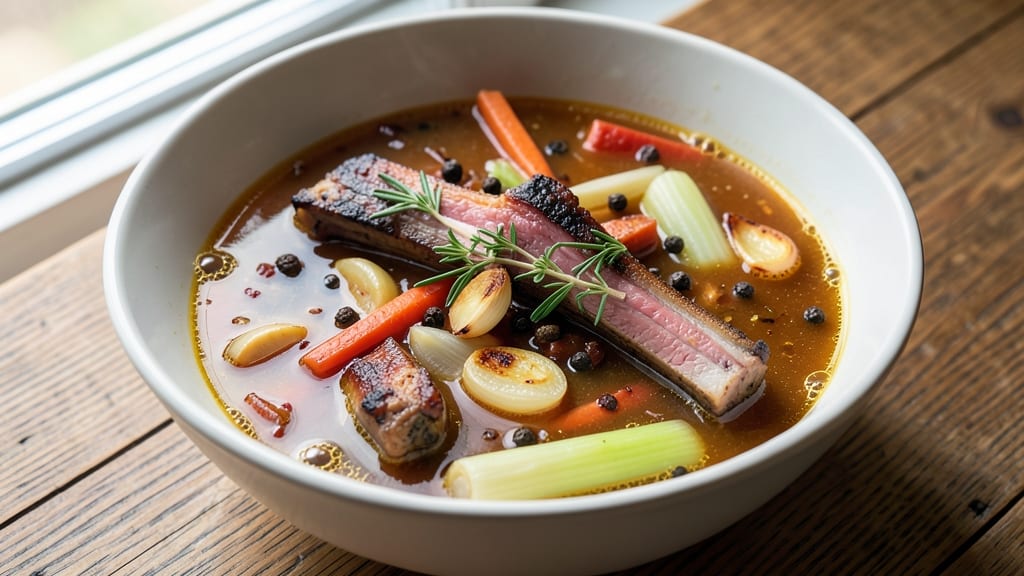
Transforming tough beef rib bones into a velvety, umami-packed soup is one of the most rewarding cooking techniques you'll master. This beef rib bone soup recipe delivers restaurant-quality depth through slow simmering, where collagen-rich bones melt into a rich, golden broth that's impossible to resist.
The process requires patience—about 8 hours of gentle cooking—but the result is a broth so flavorful it becomes the star of any meal.
What sets this recipe apart is the careful balance of aromatics and spices that build layers of flavor as the soup simmers. Starting with a well-browned bone base creates a deep, caramelized foundation, while vegetables like carrots, celery, and onions infuse the broth with natural sweetness.
The key lies in maintaining a gentle simmer—never a rolling boil—to preserve the broth's clarity and maximize collagen extraction from the bones.
By the time you're done, you'll have a soup so rich and aromatic it could grace any holiday table. The broth will be golden and glossy, with a texture that coats the back of your throat and leaves you craving more.
This isn't just soup—it's a deeply comforting, nutrient-dense meal that pairs perfectly with crusty bread or fresh herbs for garnish.
Perfect for meal prep or serving a crowd, this recipe scales effortlessly while maintaining its depth of flavor. Whether you're preparing for a family gathering or simply craving a nourishing bowl of soup, this method delivers professional results with simple, time-honored techniques.
Let's get started on creating your own velvety masterpiece.
Ingredients for beef rib bone soup
Sixteen ingredients, eight hours of simmering—this is how you turn tough bones into liquid gold.
| Ingredient | Amount | Notes |
|---|---|---|
| Beef Rib Bones 🦴 | 4 lb | Raw, marrow-rich for maximum flavor |
| Yellow Onions 🧅 | 2 whole | Medium, halved and charred for depth |
| Carrots 🥕 | 4 whole | Large, peeled and cut into chunks |
| Celery Stalks 🌿 | 6 whole | Fresh, cut into 2-inch pieces |
| Garlic Cloves 🧄 | 8 cloves | Fresh, smashed for aromatic release |
| Fresh Thyme Sprigs 🌿 | 4 sprigs | Stems removed for infusion |
| Fresh Bay Leaves 🌿 | 2 whole | Dried works if unavailable |
| Black Peppercorns 🌶️ | 1 tbsp | Crushed for subtle heat |
| Diamond Crystal Kosher Salt 🧂 | 1 ½ tsp | Adjust to taste during simmering |
| Extra-Virgin Olive Oil 🫒 | ½ cup | For initial bone searing |
| Red Wine 🍷 | 1 cup | Dry, like Cabernet Sauvignon |
| Tomato Paste 🍅 | 2 tbsp | High-quality, no sugar added |
| Water 💧 | 16 cups | Filtered preferred for clarity |
| Fresh Parsley 🌿 | ¼ cup | Chopped, for garnish only |
The beef rib bones are your flavor foundation. Look for marrow-rich bones at your local butcher or Costco—they'll have the best collagen for that velvety texture. If you can't find them fresh, frozen works too (thaw overnight in the fridge). The onions, carrots, and celery should be fresh—no wilted or bruised veggies. For the thyme and bay leaves, farmers markets often have better quality than grocery store shelves. Pro tip: char the onions and carrots in the Dutch oven before adding broth—this caramelization adds a deep, smoky sweetness that's impossible to replicate otherwise.
No red wine? Substitute with beef stock plus a splash of balsamic vinegar—it mimics the acidity and depth. Fresh herbs are ideal, but dried thyme at one-third the amount works in a pinch. For tomato paste, San Marzano canned tomatoes mashed into a paste are a great alternative if you're avoiding the jar. The water should be filtered if possible—tap water can cloud the broth. And if you're short on time, you can pressure cook this for 3 hours instead of simmering, though the flavor won't be quite as developed.
This soup tastes even better the next day—the flavors meld beautifully over time. Store in the fridge for up to 5 days or freeze for 3 months. I like to portion it into glass jars for easy reheating. When reheating, bring to a gentle simmer (never boil) to preserve that silky texture. The bones? Save them for bone broth—they're worth their weight in gold for future soups.
Why You'll Love This Recipe
- Here’s what sold me: I make a big batch on Sunday, and it lasts all week. Freeze half for those "I don’t want to cook" nights, or reheat it for a quick lunch. The flavors actually get better after a day or two—proof it’s worth the effort.
- One-Pot Magic: I swear by this recipe because it’s literally dump-and-go after the initial sear. Toss the rib bones in a pot, add water, and let them work their flavor magic while you chop the onions, carrots, and celery—no fancy techniques, just time. The bones do all the heavy lifting.
- Deep Umami Bomb: Between the slow-simmered bones and that garlic-infused broth, this soup is ridiculously rich. The onions caramelize just enough to add sweetness, while the celery brings that bright, herbal punch—every spoonful tastes like a hug from your grandma’s kitchen.
- Meal Prep MVP: Here’s what sold me: I make a big batch on Sunday, and it lasts all week. Freeze half for those "I don’t want to cook" nights, or reheat it for a quick lunch. The flavors actually get better after a day or two—proof it’s worth the effort.
Step-by-step instructions for beef rib bone soup
Here's how to transform simple ingredients into a restaurant-quality broth with layers of umami.
Sear the Beef Rib Bones for Maximum Flavor
Preheat your largest pot over medium-high heat. Add the 4 lb beef rib bones and let them sear undisturbed for 5-7 minutes until they develop a deep golden-brown crust. This step is crucial—it creates the Maillard reaction that forms the foundation of your soup's rich flavor.
As you sear, you'll notice the bones release their natural oils and render fat. This is normal and desirable—it's what will create that velvety texture in your finished soup. Once well-browned on all sides, remove the bones and set them aside in a clean bowl. You'll return them to the pot later, but first, we need to build the aromatic base.
Build the Aromatic Base with Charred Vegetables
In the same pot, add the 0.5 cup extra-virgin olive oil and increase heat to medium. Add the 2 whole yellow onions (halved) and cook for 5 minutes until their cut sides begin to soften. Then add the 4 whole carrots (cut into chunks) and 6 whole celery stalks (cut into 2-inch pieces). Cook for another 5 minutes, stirring occasionally, until the vegetables begin to soften and release their natural juices.
Here's where it gets good—carefully place the onion halves directly on the burner's edge to char slightly. This adds a smoky depth to your soup that you won't get any other way. When the vegetables are tender and the onions have developed some char, add the 8 cloves garlic (smashed) and cook for just 30 seconds until fragrant—don't let them brown or they'll turn bitter.
Deglaze and Develop the Broth
Pour in the 1 cup red wine and scrape up all those beautiful browned bits from the bottom of the pot. This deglazing step captures all the concentrated flavor that would otherwise go down the drain. Let the wine simmer for 3-4 minutes until it reduces by about half, leaving behind a rich, wine-infused base.
Stir in the 2 tbsp tomato paste and cook for 1 minute to eliminate its raw taste. Then add the 1 tbsp black peppercorns (crushed) and 1.5 tsp diamond crystal kosher salt. This is where the foundation of your soup's seasoning begins to take shape. The peppercorns will infuse subtle heat, while the salt enhances all the flavors to come.
Simmer the Soup for Deep Flavor Extraction
Return the seared beef rib bones to the pot. Add the 16 cups water, making sure all the bones are submerged. Bring to a gentle boil, then reduce heat to maintain a steady simmer. Here's the thing—this isn't a quick process. You want to simmer uncovered for 3-4 hours, allowing the collagen in the bones to break down into gelatin, which will give your soup that signature velvety texture.
About halfway through, add the 4 sprigs fresh thyme (stems removed) and 2 whole fresh bay leaves. These herbs will infuse subtle earthy notes that complement the rich beef flavor. You'll know your soup is ready when it develops a deep, amber color and the bones are so tender they practically fall apart when you try to lift them.
Finish and Serve with Fresh Herbs
Remove the beef rib bones from the pot and discard them (or save for another use if you're feeling adventurous). Strain the soup through a fine-mesh sieve to remove all the vegetables and herbs, pressing gently on the solids to extract every last bit of flavor. This step ensures your soup has that clean, velvety texture that makes it so satisfying.
Return the strained broth to the pot and adjust the seasoning if needed. A final taste should reveal a perfect balance of saltiness, umami from the bones, and herbal notes. Ladle the hot soup into bowls and garnish each serving with the 0.25 cup chopped fresh parsley. The bright green color contrasts beautifully with the rich amber broth, making your soup look as impressive as it tastes.
Pro Tips For Making Beef Rib Bone Soup
- BLISTER THE BONES FIRST: I learned this the hard way—roast the beef rib bones at 450°F (230°C) for 20-25 minutes before adding them to the pot. The Maillard reaction kicks in, turning the bones into flavor bombs without muddying the broth early. Yes, it’s an extra step, but the difference in depth is night and day.
- CHOP ONIONS LIKE A PRO: Skip the fine dice—cut yellow onions into ½-inch chunks for this soup. They’ll soften into the broth without turning to mush, and you’ll actually taste them in every spoonful. (Pro move: Toss the chopped onions in a pinch of salt before adding them to the pot—they’ll release flavor faster.)
- DON’T BOIL THE VEGETABLES: After browning the bones, add the carrots, celery, and onions to the pot but keep the heat low enough that the liquid only simmers gently. Boiling turns them to mush and makes the broth cloudy. I used to rush this, and the soup always tasted dull—now I resist the urge to crank the heat.
- CRUSH GARLIC WITH A PINCH OF SALT: Instead of mincing garlic cloves, smash them with the flat side of your knife and sprinkle with a tiny pinch of salt before adding to the pot. The salt breaks down the cell walls, releasing more flavor instantly. (Bonus: It also prevents the garlic from turning bitter over long simmering.)
Creative variations of these flavors
Asian-Inspired Miso Version
Swap the red wine for 3 tbsp white miso paste (I love Miso Master brand) and add 1 tbsp grated fresh ginger and 1 tbsp minced galangal if available. Use 1 cup coconut milk instead of water for a creamy texture.
Simmer for 2 hours instead of 4—this version delivers umami with a subtle sweetness. Garnish with toasted sesame seeds and thinly sliced scallions for a Japanese-inspired twist. 🌿
Smoky Chipotle Twist
Add 2 chipotle peppers in adobo sauce (minced) and 1 tsp smoked paprika during the deglazing step. Use 1 cup beef stock instead of water, and simmer for 4 hours to let the smoky flavors meld.
Finish with a splash of lime juice and fresh cilantro. This version has a bold, smoky kick that pairs perfectly with cornbread. 🌶️
Mediterranean Lemon-Oregano
Replace the thyme with 2 sprigs fresh oregano and add 1 tsp lemon zest with the wine. Use 1 cup dry white wine instead of red, and finish with a squeeze of lemon juice and a sprinkle of feta cheese crumbles.
The bright citrus cuts through the richness beautifully. Serve with warm pita bread for dipping. 🍋
Spicy Cajun-Inspired
Add 1 tbsp Cajun seasoning (like Tony Chachere's) with the salt and pepper. Include 1 bell pepper (diced) and 1 stalk leek (sliced) in the aromatic base. Use 1 cup chicken stock instead of water for a lighter broth.
Garnish with green onions and a dash of hot sauce for extra heat. This version feels like a Louisiana bayou in a bowl. 🔥
Vegetarian Adaptation
Replace the beef bones with 4 lb portobello mushrooms (stems removed) and 2 lb shiitake mushrooms (whole). Use 1 cup vegetable broth instead of beef stock, and add 1 tbsp soy sauce during the simmer.
The mushrooms provide a deep, earthy umami that mimics the richness of bone broth. Garnish with toasted walnuts and thyme sprigs for texture. 🍄
Winter Root Vegetable
Add 2 parsnips (peeled and chopped) and 1 small rutabaga (cubed) with the carrots and celery. Use 1 cup apple cider instead of wine for a subtle sweetness.
Simmer for 4 hours to let the root vegetables soften completely. Garnish with crispy fried shallots for a gourmet touch. This version is perfect for chilly evenings. ❄️
Nutrition facts
Frequently asked questions
Why do I need to sear the beef rib bones first?
Searing creates the Maillard reaction, which develops deep, caramelized flavors that become the foundation of your soup. The browned crust on the bones releases rich, meaty notes that infuse the broth during simmering. Skipping this step results in a much milder flavor.
Can I use frozen beef rib bones instead of fresh?
Yes, but thaw them completely in the refrigerator first. Frozen bones take longer to render their collagen, so add 1 extra hour to your simmering time. Never thaw at room temperature—this can promote bacterial growth and affect the broth's quality.
How do I know when the soup is done?
The soup is ready when the broth turns a deep amber color and the bones are so tender they practically fall apart when tested. This usually takes 3-4 hours of simmering. The broth should also coat a spoon thickly—this indicates proper collagen extraction.
What if my soup tastes too salty?
Add 1 cup cold water to dilute the broth, then simmer for 10 minutes to rebalance the flavors. For a more dramatic fix, strain out some broth and replace it with fresh water. Always taste as you go—salt levels can intensify during simmering.
Can I make this soup in a slow cooker?
Follow the same steps for searing and building the base, then transfer everything to your slow cooker. Cook on low for 8 hours or high for 4-5 hours. The slow cooker maintains gentle heat, which is perfect for extracting collagen without boiling.