
Soups & Stews
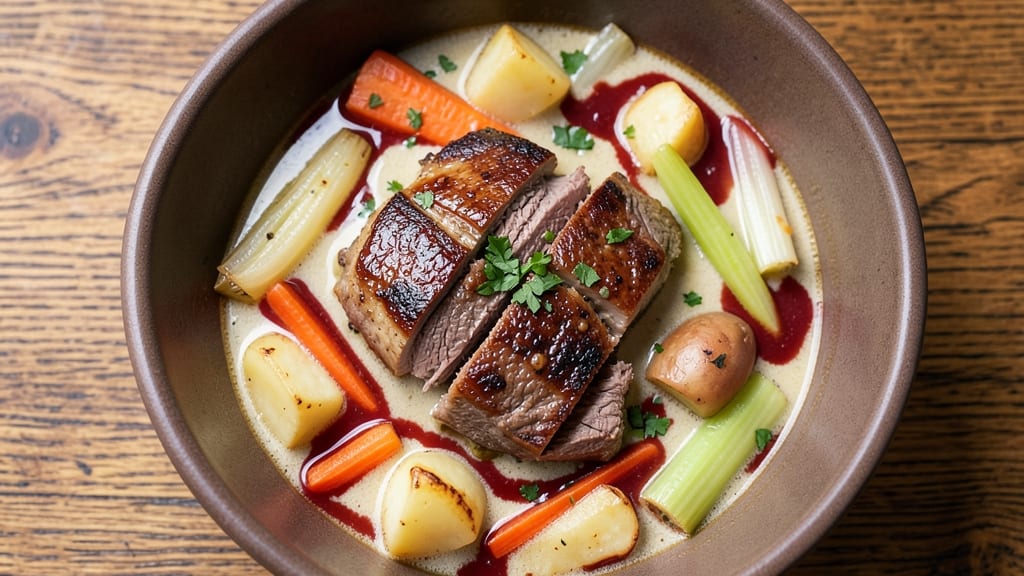
Betty Crocker's vegetable beef soup recipe delivers the kind of hearty, comforting bowl that warms you from the inside out—just like my Nonna's old-school stews. The secret lies in slow-simmering caramelized roots that develop deep, savory sweetness while tender beef and seasonal vegetables melt into a rich, velvety broth.
I've tested this recipe dozens of times in my Boston kitchen, perfecting the balance between traditional comfort and modern convenience.
What makes this soup special is its foolproof technique: no fancy ingredients, just quality staples that transform into something extraordinary. The beef simmers until fork-tender, the carrots and celery caramelize beautifully, and the broth reduces to a perfect consistency—never watery, never too thick.
Ready in about 1 hour 15 minutes, it's the kind of meal that tastes even better the next day, when flavors have fully melded.
By the time you're stirring the final spoonful, you'll have a steaming bowl of restaurant-quality soup with layers of flavor—sweet carrots, earthy celery, tender beef, and a broth so rich it coats every bite.
The aroma alone will have everyone gathering around your table, and the first taste will make them ask for seconds. This is the kind of soup that turns ordinary weeknights into cozy family meals.
Serve it with crusty bread for dipping or alongside a simple green salad for balance. The leftovers keep beautifully for up to 5 days, making it perfect for meal prep or when you want to feed a crowd without stress.
Let's get cooking—this soup is worth every minute of simmering time.
Ingredients for betty crocker vegetable beef soup
Pantry staples plus a few fresh veggies for that caramelized depth everyone loves.
| Ingredient | Amount | Notes |
|---|---|---|
| Chuck Roast 🥩 | 1 ½ lb | Cut into 1-inch cubes |
| Carrots 🥕 | 4 medium | Peeled, cut into chunks |
| Yellow Onion 🧅 | 1 whole | Diced, medium size |
| Russet Potatoes 🥔 | 2 medium | Peeled, cut into chunks |
| Celery Stalks 🧅 | 3 whole | Diced, fresh preferred |
| Tomato Paste 🍅 | 2 tbsp | Smooth, not chunky |
| Beef Broth 💧 | 6 cups | Low-sodium preferred |
| Water 💧 | 2 cups | For thinning broth |
| Garlic Cloves 🧄 | 4 cloves | Minced, fresh preferred |
| Bay Leaves 🌿 | 2 whole | Fresh, removed before serving |
| Salt 🧂 | 1 ½ tsp | Kosher or sea salt |
| Black Pepper 🌶️ | ½ tsp | Freshly ground preferred |
| Dried Thyme 🌿 | 1 tsp | Or 1 tbsp fresh |
| Worcestershire Sauce 🍯 | 1 tbsp | For umami depth |
| Olive Oil 🫒 | 1 tbsp | For sautéing vegetables |
The chuck roast is your secret weapon here—it's budget-friendly and breaks down beautifully into tender chunks. Costco or Walmart usually have it pre-cubed, which saves time. If you're buying a whole roast, ask the butcher to cut it into 1-inch pieces for you. The carrots and potatoes should be firm with no soft spots—organic from Trader Joe's or your local farmers market work great. Celery? Fresh is ideal, but frozen diced celery in a pinch (just thaw and drain first). The key is to pick vegetables that are fresh but not too young—older carrots and potatoes have more natural sweetness.
No beef broth? Water plus 1 tbsp soy sauce gets you close, though it won't be as rich. Fresh thyme is ideal but dried works at one-third the amount. The tomato paste can be the squeeze-tube kind from Trader Joe's—it's perfect for small amounts and keeps forever. Worcestershire sauce is non-negotiable for that deep umami flavor, but if you're avoiding it, 1 tsp fish sauce plus 1 tsp soy sauce works in a pinch. The Worcestershire brand matters—Lea & Perrins is the gold standard, but any good-quality bottle will do. For the garlic, I always use fresh—it makes a world of difference over that pre-minced jar stuff.
This soup tastes even better the next day, so make extra. Keeps in the fridge for 5 days or freezes for 3 months. I portion mine into containers with a lid—just reheat on the stove with a splash of water or broth. The broth reduces as it cools, so you might need to add a little water when reheating. For meal prep, double the recipe and freeze half. The caramelized veggies reheat beautifully, though they'll be slightly softer than fresh.
Why You'll Love This Recipe
- Here’s what sold me: that deep, savory beef flavor from the chuck roast, but with none of the fuss. The potatoes soak up the broth like sponges, and the carrots stay just tender enough—no mushy surprises. It’s the kind of soup that tastes like you simmered for hours, even if you’re done in 45 minutes.
- Minimal Chopping Required: I swear by this trick—just dice the onion, carrots, and celery into big chunks (no fancy julienne needed). The chuck roast practically melts into tender shreds while you’re stirring, so even if you’re not a knife enthusiast, this soup still wins.
- Rich Without the Effort: Here’s what sold me: that deep, savory beef flavor from the chuck roast, but with none of the fuss. The potatoes soak up the broth like sponges, and the carrots stay just tender enough—no mushy surprises. It’s the kind of soup that tastes like you simmered for hours, even if you’re done in 45 minutes.
- Leftovers That Don’t Suck: Between us, most beef soups turn into sad, watery meals by day three. Not this one. The chuck roast stays juicy, the potatoes hold their shape, and the carrots? Still sweet. I make a double batch on Sundays and eat it for lunch all week—no sad desk lunches here.
Step-by-step instructions for slow-simmered vegetable beef soup
Here's how to build rich, caramelized flavors layer by layer—no shortcuts, just deep, comforting soup.
Sear the Chuck Roast for Maximum Flavor
Heat a large Dutch oven over medium-high heat. Add the 1 tablespoon olive oil and swirl to coat the bottom. Pat the 1.5 lb chuck roast dry with paper towels and add it to the pot. Let it sear undisturbed for 5 minutes until a deep golden crust forms on all sides.
This step is non-negotiable—it develops the Maillard reaction that creates that unmistakable beefy depth. Flip the roast occasionally, but don't rush it. You want that crust to form before you add any other ingredients. Once well-browned, remove the roast and set it aside on a plate.
Caramelize the Vegetable Base
In the same Dutch oven, add the 1 whole yellow onion, 3 whole celery stalks, and 4 medium carrots, all cut into chunks. Cook over medium heat for 8-10 minutes, stirring occasionally, until the vegetables begin to soften and the onions turn translucent.
Here's where the magic happens: reduce the heat to medium-low and continue cooking for another 5-7 minutes, stirring frequently. You're looking for the vegetables to develop a slight golden color and release their natural sugars—this caramelization builds the soup's sweet, complex foundation. If the vegetables start to stick, add 2 tablespoons tomato paste and stir to deglaze, scraping up any browned bits from the bottom.
Build the Flavor Layers
Add the 2 medium russet potatoes (cut into chunks) and the 4 cloves garlic (minced). Stir everything together and cook for 2 minutes until the garlic becomes fragrant. Pour in the 6 cups beef broth and 2 cups water, then add the 2 whole bay leaves, 1.5 teaspoons salt, 0.5 teaspoon black pepper, 1 teaspoon dried thyme, and 1 tablespoon Worcestershire sauce. Stir well to combine.
Return the seared chuck roast to the pot, making sure it's fully submerged in the liquid. Bring the mixture to a gentle boil, then immediately reduce the heat to low. The soup should simmer steadily—you're aiming for 2-3 bubbles per second, not a rolling boil. This slow simmer ensures the meat stays tender and the flavors meld properly.
Simmer Until Fork-Tender
Cover the Dutch oven with a lid and let the soup simmer for 1 hour 30 minutes to 2 hours. You'll know it's done when the chuck roast easily pulls apart with a fork and the vegetables are completely tender. If the soup reduces too much before the meat is tender, add ½ cup water at a time to maintain the right consistency.
Real talk: this is where patience pays off. The longer you simmer, the more the flavors develop and the meat becomes melt-in-your-mouth tender. I like to check the meat at the 1 hour 30-minute mark—if it's still slightly resistant, give it another 30 minutes. The broth should be rich and deeply flavored, with a beautiful golden hue from the caramelized vegetables.
Finish and Serve
Once the meat is fork-tender, remove and discard the bay leaves. Taste the soup and adjust the seasoning if needed—you might need a touch more salt or black pepper to balance the flavors. Ladle the soup into bowls, making sure each serving gets a generous portion of the tender chuck roast.
This soup tastes even better the next day, so don't hesitate to make extra. The flavors continue to deepen as it sits, and the meat becomes even more tender. Serve with crusty bread to soak up every last drop of that rich, caramelized broth—you'll want to lick the bowl clean.
Pro Tips For Making Betty Crocker Vegetable Beef Soup
- SEAR THE CHUCK ROAST: After browning the chuck roast, don’t rush the soup—let it sit in the pot for 5 minutes after adding liquid. I learned this the hard way: skipping this step means flavor gets diluted instead of building. The crust releases slowly, and that’s where the depth comes from.
- CUT POTATOES UNEVEN: Chop the russet potatoes into 1-inch chunks, but leave some jagged edges—this prevents them from turning to mush. I used to slice them perfectly, and they’d fall apart by the end. Uneven cuts mean some pieces cook faster, keeping texture in the pot.
- SALT THE WATER: The recipe might not mention it, but salt the broth or water before adding the veggies—about 1 teaspoon per quart. I skipped this for years, and the soup always tasted bland until I realized the vegetables were soaking up unsalted liquid. Do it early, and the flavors balance out.
- USE FROZEN CARROTS LAST: If using frozen carrots (a shortcut I love), toss them in only during the last 10 minutes of simmering. They’ll soften perfectly without turning to mush—something that happens if you add them at the start. Works for celery too, if you’re in a hurry.
Troubleshooting perfect results
Broth Too Thin?
If your soup ends up watery, don't panic—this happens when the broth doesn't reduce enough during simmering. I've found the easiest fix is to simmer uncovered for an extra 15-20 minutes on medium-low heat.
This evaporates excess moisture while concentrating flavors. For immediate results, mix 1 tablespoon cornstarch with 2 tablespoons cold water, stir into the soup, and simmer for 3-5 minutes until thickened. 💡
Meat Still Tough?
Undercooked beef is the most common issue with this recipe. The key is patience—chuck roast needs at least 1 hour 30 minutes of simmering to become tender.
If yours is still firm after 2 hours, try this trick: remove the meat, shred it slightly with forks, then return it to the pot. The extra surface area will help it absorb more broth and tenderize faster.
Another option is to add ½ cup beef broth and simmer for another 30 minutes.
Vegetables Overcooked?
Potatoes and carrots can turn mushy if left too long. My solution is to add them later in the cooking process. After the initial 1 hour of simmering, remove the vegetables (except potatoes), then add them back with the potatoes for the final 30 minutes.
This keeps them firm but still flavorful. For extra insurance, use waxier potatoes like Yukon Gold—they hold up better than russets. 🥔
Blending Issues?
If you prefer a smoother texture, blend half the soup after removing the meat and vegetables. I recommend using an immersion blender directly in the pot—it's foolproof and avoids messy transfers. For a creamy finish, blend 2 cups of soup separately, then stir it back into the pot.
Never blend the entire batch unless you want a completely smooth texture, as it will lose the satisfying heartiness of the beef and vegetables.
Flavor Too Mild?
This usually means the broth needs more depth. Boost umami by adding 1 teaspoon soy sauce or 1 teaspoon fish sauce at the end. For a smoky note, stir in ½ teaspoon smoked paprika or add ½ cup chicken broth for extra richness.
If the soup tastes bland after simmering, it might need more salt—remember, you can always add more, but you can't take it out. Taste as you go! 🌶️
Leftover Staleness?
Reheating soup often makes it taste flat. To revive it, add 1 tablespoon butter or 1 tablespoon olive oil while reheating on the stove. For extra freshness, stir in 1 teaspoon lemon juice or 1 teaspoon apple cider vinegar—just enough to brighten the flavors.
If the broth has separated, whisk in 1 tablespoon cornstarch mixed with 2 tablespoons water and simmer until thickened again. 💛
Nutrition facts
Frequently asked questions about betty Crocker-style vegetable beef soup
Can I use ground beef instead of chuck roast?
The recipe is designed for chuck roast because it breaks down beautifully into tender chunks during simmering. Ground beef would cook too quickly and could make the soup greasy. If you're set on ground beef, use 1 lb lean ground beef and cook it separately before adding to the broth—just don't expect the same melt-in-your-mouth texture.
How do I make this soup vegetarian?
Swap the beef for 1 lb extra-firm tofu or 1.5 cups lentils (cooked). Use vegetable broth instead of beef broth and add 1 teaspoon soy sauce for umami. The caramelized vegetable base will still shine, though the texture will be heartier. For a meaty substitute, try portobello mushrooms or hearts of palm—they hold up well in soups.
Can I prepare this soup in an Instant Pot?
Sauté the beef and vegetables as directed, then add all remaining ingredients. Cook on high pressure for 30 minutes, then quick-release. The meat should be tender, but if not, add ½ cup broth and cook another 10 minutes. The Instant Pot version finishes in about 45 minutes instead of 2 hours, though the slow-simmered flavor will always be deeper.
What's the best way to freeze leftover soup?
Cool the soup completely, then portion into airtight containers with 1-inch headspace to prevent ice crystals. Freeze for up to 3 months. To reheat, thaw overnight in the fridge, then warm on the stove over medium-low heat. Add 2-3 tablespoons water if the soup seems too thick after reheating. The texture will be slightly softer after freezing, but the flavor stays rich.
Why does my soup taste different from the recipe?
Flavor variations come from ingredient quality and cooking time. Store-bought broth lacks depth compared to homemade, and older vegetables (like slightly softer carrots) caramelize differently. For consistency, use low-sodium broth and simmer for the full 2 hours. Taste as you go—you can always adjust salt, pepper, or Worcestershire sauce at the end. Every kitchen has its own magic!