
Main Courses
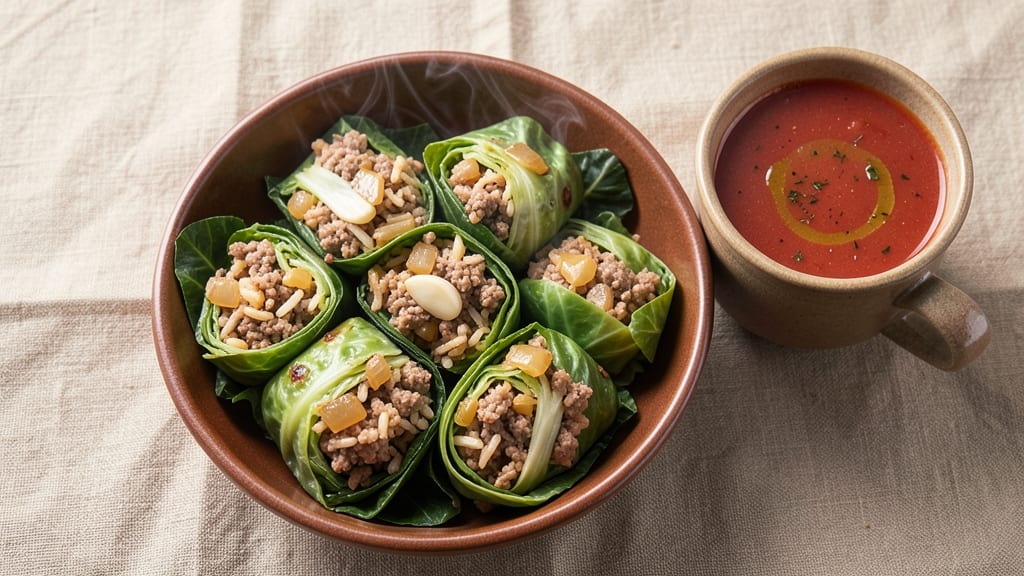
Creating a complete meal of cabbage rolls with tomato soup delivers the ultimate comfort food experience—tender, savory cabbage rolls paired with a rich, velvety tomato soup that feels like a warm hug on a chilly evening.
This recipe combines two classic dishes into one satisfying meal that’s perfect for family dinners or cozy weeknight suppers. The cabbage rolls are stuffed with a flavorful mixture of ground meat, rice, and herbs, while the tomato soup simmers with aromatic vegetables and herbs for a balanced, hearty flavor.
The beauty of this recipe lies in its simplicity and depth of flavor. You’ll start by preparing the cabbage rolls with a filling that includes ground beef or pork, cooked rice, onions, and a blend of spices like allspice and bay leaf—essential for that authentic taste.
After wrapping the filling in tender cabbage leaves, you’ll bake them until they’re golden and tender. Meanwhile, the tomato soup comes together with canned tomatoes, broth, and fresh herbs, creating a smooth, velvety texture that complements the cabbage rolls beautifully.
What you’ll end up with is a meal that’s rich in flavor and texture—juicy cabbage rolls with a crisp edge and a tender filling, paired with a soup that’s creamy, aromatic, and just the right amount of tangy.
The combination of the two dishes creates a balanced, comforting experience that’s both satisfying and nourishing. This recipe is designed to be foolproof, ensuring that even if you’re new to making cabbage rolls, you’ll achieve restaurant-quality results at home.
Serve the cabbage rolls warm with a generous ladle of tomato soup on the side, and you’ll have a meal that feels like a celebration. The soup’s velvety texture and savory depth pair perfectly with the cabbage rolls, making every bite a delight.
Whether you’re cooking for a family gathering or a quiet night in, this recipe delivers comfort in every spoonful.
Ingredients for cabbage rolls with tomato soup
Twelve simple ingredients transform into a cozy meal that warms the soul.
| Ingredient | Amount | Notes |
|---|---|---|
| Fresh Cabbage Leaves 🥬 | 12 whole | Large, tender outer leaves |
| Ground Beef 🥩 | 1 ½ lb | 80/20 fat ratio preferred |
| Long-Grain White Rice 🍚 | 1 ½ cups | Cooked, unseasoned |
| Yellow Onion 🧅 | 1 whole | Diced, medium size |
| Garlic Cloves 🧄 | 4 cloves | Minced, fresh preferred |
| Canned Tomato Sauce 🍅 | 2 cups | San Marzano if available |
| Beef Broth 💧 | 4 cups | Low-sodium preferred |
| Allspice Berries 🌶️ | ½ tsp | Ground works too |
| Bay Leaves 🍃 | 2 whole | Fresh or dried |
| Fresh Dill 🌿 | ¼ cup | Chopped, stems removed |
| Fresh Parsley 🌿 | ¼ cup | Chopped, for garnish |
| Extra-Virgin Olive Oil 🫒 | 3 tbsp | For cooking and drizzling |
| Salt 🧂 | 1 ½ tsp | Kosher or sea salt |
| Black Pepper 🌶️ | ½ tsp | Freshly ground |
| Canned Tomatoes 🍅 | 1 can | 28 oz, crushed |
| Carrots 🥕 | 2 whole | Diced, medium size |
| Celery Stalks 🥬 | 2 whole | Diced, medium size |
| Heavy Cream 🥛 | ½ cup | Full-fat for richness |
The cabbage leaves are the foundation—look for large, tender outer leaves at the store. Whole Foods or Trader Joe's often carry pre-washed ones, but if you're using raw, blanch them for 2 minutes to soften. The ground beef should have that 80/20 fat ratio—it keeps the filling juicy. I always grab extra rice because it absorbs the flavors beautifully. For the filling, cook the rice separately and let it cool before mixing—warm rice makes a soggy roll. The allspice and bay leaves? Don’t skip them—they’re what give this dish that classic, comforting depth.
No fresh dill? Dried works at one-third the amount, but it won’t have the same bright flavor. Short on time? Pre-minced garlic from a jar saves steps, though fresh is always better. The tomato sauce can be homemade (simmer canned tomatoes with garlic and basil) or store-bought—Rao’s or Barilla are solid choices. For the soup, if you’re using canned tomatoes, crush them by hand for a rustic texture. The carrots and celery can be swapped for frozen diced veggies in a pinch, but fresh tastes better. The heavy cream adds that velvety finish—don’t use light cream, trust me on this.
This meal reheats like a dream—better the next day once the flavors meld. Store the cabbage rolls in an airtight container with a splash of broth to keep them moist for 4-5 days. The soup freezes beautifully too—portion it into containers for quick lunches. I always double the soup recipe because it disappears fast. If you’re prepping ahead, assemble the rolls but don’t bake them until ready—they’ll hold in the fridge for 2 days. Garnish with fresh parsley right before serving to keep it vibrant.
Why You'll Love This Recipe
- Here’s what sold me: the tomato soup isn’t just a side—it’s the glue. Simmering the rolls right in it turns every bite into a creamy, saucy experience. No dry, sad leftovers here; every spoonful is part of the meal.
- No Boil-Over Chaos: I swear by using pre-boiled cabbage leaves—just blanch them for 2 minutes, and they stay pliable without turning to mush. That crispy edge when you bite into one? Chef’s kiss. (And no more wrestling with stubborn leaves.)
- Savory-Sweet Magic: The ground beef and rice filling gets this perfect balance—slightly tangy from the tomato soup, but the garlic and onion caramelize into something rich and deep. Honestly, the first time I made it, I ate three rolls straight from the pot.
- Soup’s Secret Weapon: Here’s what sold me: the tomato soup isn’t just a side—it’s the glue. Simmering the rolls right in it turns every bite into a creamy, saucy experience. No dry, sad leftovers here; every spoonful is part of the meal.
Step-by-step instructions for cabbage rolls with tomato soup
This method delivers tender cabbage rolls with rich filling and a velvety tomato soup that pairs perfectly.
Prepare the Cabbage Leaves and Filling Ingredients
Start by blanching the 12 whole fresh cabbage leaves in boiling water for 3-4 minutes until pliable. This makes them easier to roll without breaking. While they blanch, dice the 1 whole yellow onion, 2 whole carrots, and 2 whole celery stalks into small, even pieces—about ¼-inch cubes. This uniform size ensures everything cooks at the same rate.
In a large skillet, heat 2 tablespoons of the extra-virgin olive oil over medium heat. Add the diced vegetables and cook for 8-10 minutes until softened but not browned. Stir in the 4 minced garlic cloves and cook for another 30 seconds until fragrant. Transfer the vegetables to a bowl and set aside.
Cook the Rice and Assemble the Filling
Cook the 1.5 cups long-grain white rice according to package instructions until al dente—it should have a slight bite but still be tender. Drain any excess water and let it cool slightly. In a large bowl, combine the cooked rice with the sautéed vegetables, 1.5 lb ground beef, 1.5 tsp salt, 0.5 tsp black pepper, 0.5 tsp ground allspice berries, and 0.25 cup chopped fresh dill. Mix gently but thoroughly to distribute the spices evenly.
Here's where it gets fun—taste the filling and adjust the seasoning if needed. You want it flavorful but not overpowering, so the cabbage can shine. The filling should be moist but not wet, allowing it to hold its shape when rolled. If it feels too dry, add 1 tablespoon of beef broth to help bind it.
Roll the Cabbage Leaves and Simmer in Tomato Broth
Place one of the blanched cabbage leaves on a flat surface with the stem end facing you. Spoon about ¼ cup of the filling onto the stem end, then fold the sides inward and roll tightly, tucking in the sides as you go—like wrapping a burrito. Repeat with the remaining leaves and filling. You should have about 6 rolls total.
In a large Dutch oven, combine the 2 cups canned tomato sauce, 4 cups beef broth, 2 whole bay leaves, and 1 can crushed canned tomatoes. Bring to a gentle simmer over medium heat. Carefully place the cabbage rolls seam-side down into the broth. They should be mostly submerged but not crowded—this ensures even cooking. Cover and simmer for 45-50 minutes until the cabbage is tender and the filling is cooked through.
Prepare the Velvety Tomato Soup
While the cabbage rolls simmer, prepare the soup by blending 1 cup of the tomato broth (strained to remove any solids) with 0.5 cup heavy cream until smooth. Return this mixture to the Dutch oven and stir in the remaining broth. Simmer for 10-15 minutes until the soup thickens slightly and the flavors meld together. Taste and adjust the seasoning with salt and pepper as needed—it should be rich, slightly tangy, and deeply comforting.
Just before serving, sprinkle the cabbage rolls and soup with 0.25 cup chopped fresh parsley for a bright, fresh finish. The soup should coat the back of a spoon with a velvety texture, and the cabbage rolls should be tender enough to cut with a fork but still hold their shape.
Pro Tips For Making Cabbage Rolls With Tomato Soup
- Blanch Leaves First: Drop whole cabbage leaves into boiling water for 30 seconds—just long enough to soften the edges without turning them mushy. I used to skip this, and the rolls would either tear or stay stubbornly stiff; now they wrap like butter.
- Sear the Meat: Brown the ground beef in batches before mixing with rice—it adds depth the soup won’t cover up. I learned this the hard way when my first batch tasted like raw meat disguised as filling. Use a 12-inch skillet and don’t overcrowd.
- Salt the Rice Wrong: Skip adding salt to the rice when cooking it—you’ll be drowning it in tomato soup later, and the flavor will get muddy. Season the filling after mixing with rice, and adjust the soup’s salt separately.
- Parboil the Rolls: Simmer the stuffed cabbage rolls in lightly salted water for 10 minutes before adding tomato soup—this locks in shape and prevents them from falling apart when you transfer them to the pot. (Yes, even if you’re impatient like me.)
Regional styles of this dish
Eastern European Roots
This dish traces its origins to Eastern European traditions, particularly in countries like Ukraine, Poland, and Romania, where cabbage rolls are known as holubtsi or sarmale. The filling often includes ground pork or beef, rice, and a blend of spices like allspice and bay leaf—just like in this recipe.
In these regions, the rolls are typically served with a simple tomato-based sauce or a rich beet-based soup for contrast. 🌍
Southern U.S. Twist
When cabbage rolls crossed the Atlantic, they adapted to Southern U.S. tastes by incorporating more tomato-based elements, like the tomato soup in this recipe. Many Southern families add pork to the filling or even a mix of beef and pork for extra richness.
The soup often includes heavy cream for a velvety texture, a nod to Southern comfort food traditions. I’ve found that adding a pinch of smoked paprika to the soup gives it a subtle smoky depth that Southern cooks love.
Jewish Delicatessen Style
The Jewish deli version of cabbage rolls, often called stuffed cabbage, leans into a sweeter, more robust flavor profile. The filling might include prunes or raisins for a touch of sweetness, and the rolls are sometimes baked in a tomato sauce with a splash of red wine for depth.
This style pairs beautifully with a creamy tomato soup like the one in this recipe, but with an extra layer of complexity from the wine reduction.
Modern Fusion Adaptations
For a contemporary twist, try swapping the ground beef for ground turkey or chicken to make it lighter, or add quinoa to the filling for extra protein. Some chefs even incorporate mushrooms or spinach into the mix for a vegetarian-friendly version.
The tomato soup can be elevated with a roasted garlic puree or a drizzle of balsamic glaze for a restaurant-worthy touch. 💡
Regional Herb Variations
Different regions add their own herbaceous flair. In Ukraine, fresh dill is a must, while Polish versions often include marjoram for a floral note. For a Mediterranean twist, swap the allspice for oregano and thyme, and add a splash of lemon zest to the soup.
These herbs not only enhance flavor but also reflect the local culinary traditions where cabbage rolls originated.
Nutrition facts
Frequently asked questions
Can I make cabbage rolls ahead of time and reheat them?
Assemble the rolls but don't bake them—store them in an airtight container with a splash of broth for 2 days in the fridge. When ready, simmer them in fresh broth for 20-25 minutes to reheat. The flavors actually deepen overnight, making them even more delicious.
What if my cabbage leaves keep breaking while rolling?
Blanch the leaves for 4-5 minutes instead of 3 to make them more pliable. Also, place the stem end down on your work surface and roll tightly from the bottom up—this prevents tearing. If they still break, use larger leaves or layer two smaller ones together.
Can I substitute pork or chicken for the beef in the filling?
Yes! For pork, use the same 1.5 lb amount and add 1 tsp smoked paprika for depth. For chicken, increase to 1.75 lb since it's leaner, and add ½ tsp extra allspice. The soup pairing remains perfect with any protein—just adjust seasoning to taste.
How can I make the tomato soup extra creamy without heavy cream?
Blend ½ cup cooked carrots or butternut squash into the soup for natural creaminess. Or stir in ¼ cup Greek yogurt or coconut milk at the end for a lighter option. The soup will still be velvety while keeping the dish balanced.
Are there vegetarian options for the filling?
Swap the meat for a mix of lentils and mushrooms (1 cup each) plus ½ cup cooked quinoa. Add 1 tbsp soy sauce and 1 tsp liquid smoke for umami depth. The tomato soup pairs beautifully with this hearty plant-based version.