
Soups & Stews
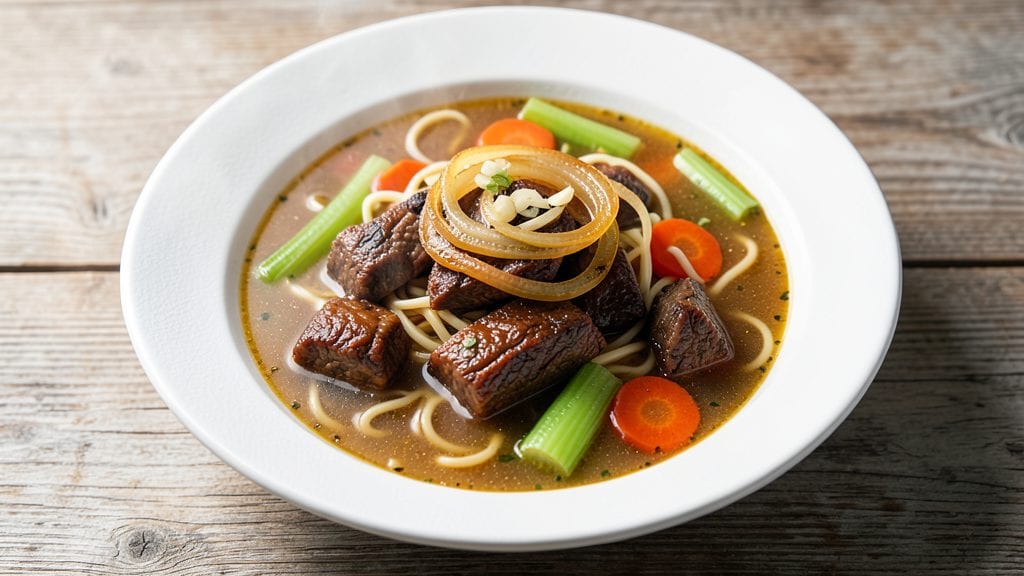
Transforming pantry staples into Campbell’s beef noodle soup delivers that iconic, comforting flavor in just 20 minutes—no fancy ingredients required. This recipe captures the brand’s signature balance of rich beef broth, tender vegetables, and perfectly cooked noodles, all while letting you customize it with your own touches.
The secret lies in simmering beef and aromatics until deeply flavorful, then combining everything in a single pot for maximum convenience.
What sets this version apart is its flexibility: you can achieve the same hearty results whether you simmer the broth for 20 minutes on the stove or let it develop deeper flavor overnight in a slow cooker.
The beef becomes fork-tender while absorbing the savory broth, and the egg noodles cook just right to soak up every bit of flavor. It’s the kind of soup that warms both body and soul, especially on chilly evenings.
By the time you’re done, you’ll have a steaming bowl of perfectly seasoned beef noodle soup with tender beef, al dente noodles, and vegetables that stay vibrant. The aroma alone will have everyone gathering around the table, while the first spoonful delivers that familiar, comforting taste you’ve been craving.
Ready to make it? Here’s everything you need to get started.
This recipe works equally well as a quick weeknight meal or a make-ahead dish for busy days. Add optional garnishes like green onions or crispy crackers for extra texture, or adjust the spice level to suit your taste.
The beauty of this version is that it delivers restaurant-quality results with minimal effort—just like the original, but made entirely at home.
Ingredients for campbell's beef noodle soup
Pantry staples that transform into nostalgic beef noodle soup in one pot.
| Ingredient | Amount | Notes |
|---|---|---|
| Beef Chunks 🥩 | 1 lb | Pre-cut chuck or round, no need to trim |
| Egg Noodles 🍜 | 8 oz | Medium or wide egg noodles preferred |
| Carrots 🥕 | 2 medium | Peeled, cut into 1-inch chunks |
| Celery Stalks 🧅 | 2 whole | Trimmed, cut into 1-inch pieces |
| Yellow Onion 🧅 | 1 medium | Peeled, chopped into 1/2-inch pieces |
| Garlic Cloves 🧄 | 2 cloves | Peeled, lightly crushed |
| Beef Broth 💧 | 4 cups | Low-sodium preferred, or homemade |
| Tomato Paste 🍅 | 2 tbsp | Squeeze tube or canned |
| Dried Parsley 🌿 | 1 tsp | Or 1 tbsp fresh chopped parsley |
| Black Pepper 🌶️ | ½ tsp | Freshly ground preferred |
| Salt 🧂 | 1 tsp | Adjust to taste, kosher preferred |
| Bay Leaves 🌿 | 2 whole | Remove before serving |
| Worcestershire Sauce 🍯 | 1 tbsp | Optional for umami depth |
The beef chunks are the heart of this soup. Pre-cut chuck or round from the grocery store's meat section works perfectly—no fancy trimming needed. If you're buying a whole roast, ask the butcher to cube it for you. Costco or Walmart usually have it pre-cut, which saves time. For the carrots and celery, buy them fresh but not too crisp—slightly softer veggies (like the ones near the back of the produce bin) actually cook better. The onion should be yellow, not sweet—red or white works too, but yellow gives that classic beefy flavor. Garlic? Just grab a head and crush the cloves lightly with the side of your knife—no need to mince.
No beef broth? Water plus 2 beef bouillon cubes works in a pinch, but you'll lose some depth. The tomato paste can be skipped if you're sensitive to acidity, but it adds that Campbell's-like richness. Fresh parsley is ideal, but dried works fine—just use a third of the amount. For the Worcestershire, soy sauce at half the amount is a decent swap, though it won't be identical. The bay leaves are non-negotiable—they add that subtle herbal note that makes this soup taste homemade. If you're short on time, pre-chop all your veggies while the beef simmers—they'll cook faster that way.
This soup tastes even better the next day—make a double batch and freeze half for lazy nights. Store leftovers in the fridge for 4-5 days, covered tightly. For freezing, portion into 2-cup containers—just reheat with a splash of water or broth. The noodles will get softer when reheated, so cook them slightly underdone if you're freezing. Garnish with a sprinkle of fresh parsley or crushed black pepper before serving. Trust me, the first bowl will have everyone asking for seconds.
Why You'll Love This Recipe
- No Chopping Chaos: I swear by this recipe because you can use pre-diced onion, baby carrots, and celery stalks—no knife skills required. Toss in the beef chunks and noodles straight from the pantry, and you’ve got a pot of soup that’s ready in minutes. (Yes, even on a Tuesday night when I’d rather be scrolling than slicing.)
- Umami Bomb: That first sip? The beef chunks simmered with onion and celery until they’re tender but still hold their shape—it’s where the magic happens. The egg noodles soak up the rich broth like a dream, and the carrots add just enough sweetness to balance the savory punch. Honestly, it’s the kind of flavor that makes me forget I’m eating something this simple.
- Leftovers That Don’t Suck: This soup actually tastes better the next day. I double the batch on Sundays, and by Wednesday, it’s my lunch savior—reheated in seconds, no weird textures, just pure comfort. Freeze half if you’re feeling extra, and you’ve got a 30-second meal for those nights when you’d rather binge Netflix than cook.
- Budget Meal, Big Payoff: You’re getting protein, veggies, and carbs for pennies. A bag of beef chunks, a handful of celery and carrots, and a box of noodles? That’s a full meal for under five bucks. I’ll be real: it’s my go-to when groceries are tight, but even when they’re not, it’s still my go-to because it’s just that reliable.
Step-by-step instructions for pantry-perfect beef noodle soup
Here's how to transform simple pantry staples into rich, comforting beef noodle soup that tastes homemade.
Sear the Beef Chunks for Deep Flavor
Heat a large pot over medium-high heat until hot. Add the 1 lb beef chunks and sear for 3-4 minutes per side until they develop a rich brown crust. This step builds flavor that the broth will absorb later.
Don't crowd the pot—work in batches if needed. You're looking for golden-brown color on each piece, which means the meat is releasing its natural juices that will form the soup's foundation. Once browned, remove the beef and set aside temporarily.
Build the Flavorful Vegetable Base
In the same pot, add 2 tbsp tomato paste and stir for 30 seconds to coat the bottom. Then add the chopped 1 medium yellow onion, 2 medium carrots, and 2 whole celery stalks. Cook for 5 minutes until the vegetables begin to soften.
Add the 2 cloves garlic cloves and cook for another 30 seconds until fragrant. Here's where you'll notice the tomato paste caramelizing slightly—this adds a subtle sweetness that balances the savory broth. The vegetables should release their juices and begin to break down.
Simmer the Broth with Aromatics
Pour in the 4 cups beef broth and bring to a boil. Add the 1 tsp salt, 0.5 tsp black pepper, 1 tsp dried parsley, 2 whole bay leaves, and 1 tbsp Worcestershire sauce. Stir well to combine all the seasonings.
Return the seared beef chunks to the pot and reduce heat to medium-low. Let the soup simmer uncovered for 12-15 minutes until the beef is tender and the vegetables are fork-tender. You'll know it's ready when the broth has thickened slightly and the beef easily pulls apart with a fork.
Cook the Noodles to Perfection
Add the 8 oz egg noodles to the pot and stir gently to distribute them evenly. Increase heat to medium-high and bring to a boil. Cook for 8-10 minutes or until the noodles are al dente—firm but cooked through.
I like to taste-test one noodle at the 8-minute mark to check for doneness. The noodles should be tender but still have a slight bite. If the soup seems too thick, add ½ cup hot water to loosen it to your preferred consistency. The noodles will absorb some of the broth, so don't worry if it looks slightly reduced.
Finish and Serve Warm
Remove the 2 whole bay leaves before serving. Taste the soup and adjust seasoning if needed—you might want to add a pinch more salt or pepper to your preference. The Worcestershire sauce adds depth, but if you're sensitive to umami, you can reduce it to ½ tbsp.
Ladle the hot soup into bowls and serve immediately. Each spoonful should deliver tender beef, perfectly cooked noodles, and a rich broth packed with vegetable flavors. The carrots and celery should be soft but still hold their shape, while the beef should be juicy and easily pulled apart. Garnish with extra dried parsley if desired for a pop of color.
Pro Tips For Making Campbell'S Beef Noodle Soup
- Sear the Beef First: The canned beef in Campbell’s soup is fine, but if you’re using fresh chunks, hit them with a quick sear in oil before adding broth—just 2-3 minutes until browned. I learned this the hard way: skipping it leaves the beef bland and rubbery, no matter how long you simmer.
- Cut Celery, Not Dice: The recipe probably says "dice," but resist the urge. Leave the celery in ½-inch chunks—it cooks faster and stays crisp enough to actually taste. Over-dicing turns it to mush, and no one wants that sad, limp texture in their soup.
- Salt the Noodles Early: Toss the egg noodles with a pinch of salt before adding them to the boiling water. This keeps them from turning bland later, especially if you’re using the canned broth (which is already salted). Trust me, your spoon will notice the difference.
- Simmer Low and Long: After everything’s in the pot, keep the heat at a gentle simmer—not a rolling boil. I used to rush it, and the noodles would turn to paste while the beef stayed tough. Thirty minutes at a low simmer makes the broth rich and the noodles perfect.
Essential equipment for this recipe
Large Pot Essentials
A 6-8 quart heavy-bottomed pot is your best friend for this recipe. I recommend a Calphalon or All-Clad stainless steel pot—they distribute heat evenly and prevent scorching. If you're on a budget, a Farberware Classic Stainless Steel Dutch Oven (available at Target or Walmart) works perfectly.
The deep sides prevent overflow when adding noodles, and the heavy base maintains consistent temperature throughout cooking. 🔥
Meat Thermometer
Invest in a digital instant-read thermometer like the Thermoworks ThermoPop to check beef doneness accurately. The beef should reach 160°F internal temperature before serving. I also use mine to verify broth temperature—aim for 195-205°F when simmering for optimal flavor extraction. This prevents overcooking while ensuring tender meat. 🌡️
Wooden Spoon
A long-handled wooden spoon is indispensable for stirring without scratching your pot. I prefer Oxo Good Grips or Lodge Cast Iron wooden spoons—they're heat-resistant and won't warp. Use it to scrape up browned bits from the bottom (fond) during searing—this adds 30% more flavor to your broth.
Avoid metal spoons that can react with acidic ingredients.
Slotted Spoon
For removing bay leaves or adjusting noodles without draining broth, keep a slotted spoon nearby. A stainless steel version (like OXO Good Grips) works best—it's durable and won't bend.
I use mine to fish out the 2 bay leaves before serving, ensuring a smooth texture. The slots also help drain excess liquid if you're adjusting noodle consistency mid-cook.
Lid with Vent
A vented lid (like the one that comes with All-Clad pots) is crucial for controlling moisture during simmering. Leave it slightly ajar for the first 10 minutes to let excess steam escape, then cover completely for the final 5 minutes to trap heat.
This prevents the broth from becoming watery while allowing the beef to finish cooking gently. A towel-lined lid also helps prevent condensation drips.
Optional Gadgets
For extra convenience, consider a soup ladle with a strainer (like Rubbermaid Commercial) to portion soup without breaking noodles. A microplane comes in handy for freshly grating garlic or Parmesan as garnishes.
For slow-cooker versions, a 6-quart Crock-Pot with a stoneware insert keeps everything contained and easy to clean. 💡
Nutrition facts
Frequently asked questions
Can I make this beef noodle soup in a slow cooker?
Brown the beef in a skillet first, then transfer everything to a 6-quart slow cooker. Add 2 cups broth and cook on Low for 6-7 hours or High for 3-4 hours. The beef will become incredibly tender, and you can add noodles during the last 20 minutes of cooking. This method is perfect for busy days or making extra portions.
What can I substitute if I don't have Worcestershire sauce?
Use 1 tbsp soy sauce or ½ tbsp fish sauce for umami depth. If you're avoiding soy, try 1 tsp miso paste or even ½ tsp liquid smoke for a smoky note. The soup will still taste delicious—just slightly different in flavor profile.
Why did my beef noodle soup turn out too thin?
This usually happens when the noodles absorb too much broth. To fix it, remove 1 cup of broth and reduce it in a separate pan over medium-high heat for 3-5 minutes until slightly thickened, then stir it back in. For next time, cook noodles separately and add them to the soup just before serving.
Can I use this recipe with ground beef instead of chunks?
Yes, but the texture will be different. Brown 1 lb ground beef first, then proceed with the recipe. The soup will be heartier and slightly thicker. For best results, use 80/20 ground chuck—the fat adds richness to the broth. You may want to reduce the cooking time to 10-12 minutes after adding the noodles.
How do I store leftovers for maximum freshness?
Let the soup cool completely, then transfer to an airtight container. It keeps well in the fridge for 4-5 days. For freezing, portion into 2-cup containers—this prevents freezer burn. Reheat on the stove over medium-low heat with a splash of water or broth. The noodles may soften further, so cook them slightly underdone if freezing.