
Soups & Stews
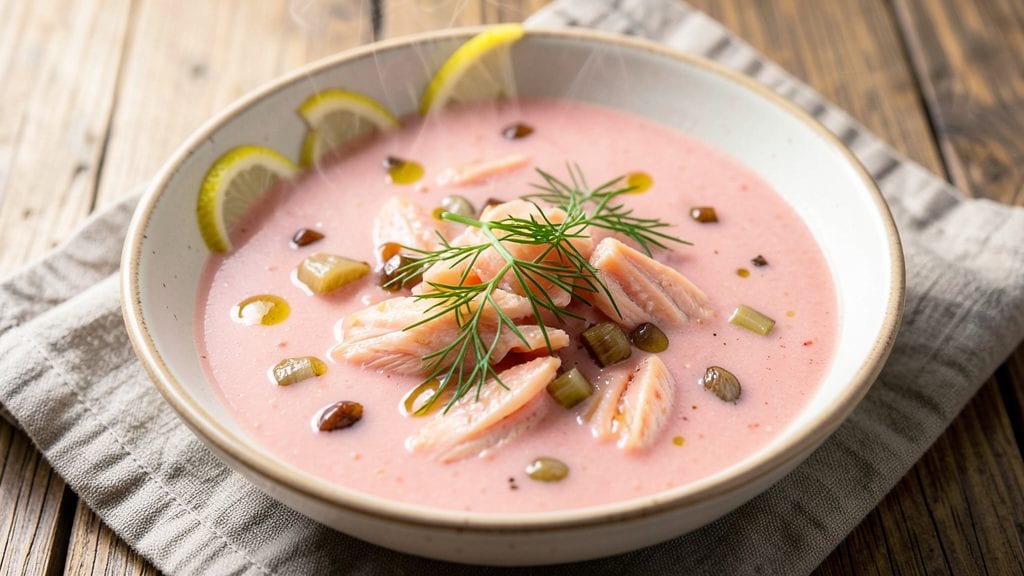
This canned pink salmon soup recipe transforms simple pantry staples into a restaurant-worthy bowl that’s ready in under 45 minutes—no fancy ingredients required.
The secret lies in balancing smoky dill, bright lemon zest, and a touch of creaminess from sour cream, which elevates the natural richness of canned salmon without overpowering its delicate flavor.
I developed this recipe during a busy week when fresh fish wasn’t an option, and it became a staple for quick yet satisfying meals.
The beauty of using canned pink salmon is its versatility and sustainability—it adds protein and depth without the hassle of filleting or cooking fresh fish.
You’ll start with sautéing onions and garlic until fragrant, then build layers of flavor with dill, lemon, and a splash of soy sauce for umami.
The broth simmers until the vegetables soften just enough to melt into the soup, while the salmon flakes apart effortlessly, creating a creamy yet light texture that’s impossible to resist.
What sets this soup apart is how the lemon zest and fresh dill cut through the richness, leaving you with a bowl that’s bright, aromatic, and perfectly balanced.
The optional swirl of sour cream adds a velvety finish, while a sprinkle of extra dill and a crack of black pepper elevate it to something truly special.
Serve it with crusty bread to soak up every last drop, or pair it with a simple green salad for a complete, well-rounded meal.
This recipe is ideal for weeknight dinners, meal prep, or even a cozy weekend lunch—it reheats beautifully and tastes even better the next day. The best part?
It proves that canned salmon isn’t just a shortcut; it’s a flavor powerhouse that can stand alongside fresh in any dish. Let’s get cooking!
Ingredients for canned pink salmon soup
Pantry staples meet ocean freshness—this soup proves canned salmon shines with bright dill and zesty lemon.
| Ingredient | Amount | Notes |
|---|---|---|
| Canned Pink Salmon 🐟 | 2 cans | Wild-caught preferred, drained |
| Yellow Onion 🧅 | 1 whole | Medium, thinly sliced |
| Garlic Cloves 🧄 | 3 cloves | Minced, fresh preferred |
| Dried Dill 🌿 | 1 ½ tbsp | Or 1 tbsp fresh chopped |
| Lemon Zest 🍋 | 1 tbsp | From 1 medium lemon |
| Lemon Juice 🍋 | 2 tbsp | Freshly squeezed |
| Light Soy Sauce 🥢 | 1 tbsp | For umami depth |
| Low-Sodium Chicken Broth 💧 | 4 cups | Homemade or high-quality |
| Sour Cream 🧀 | ¼ cup | Full-fat for creaminess |
| Fresh Dill 🌿 | ¼ cup | Chopped, for garnish |
| Black Pepper 🌶️ | ½ tsp | Freshly cracked |
| Extra-Virgin Olive Oil 🫒 | 2 tbsp | For sautéing |
| Salt 🧂 | 1 tsp | Adjust to taste |
| Potatoes 🥔 | 1 lb | Yukon gold, diced small |
| Celery Stalks 🥬 | 2 whole | Diced, fresh preferred |
The salmon is the star, so wild-caught brands like Wild Planet or Vital Choice deliver the best flavor. Look for cans with no added fillers or preservatives—they’re worth the extra 50 cents. Fresh dill is ideal, but dried works in a pinch (just triple the amount). For the broth, homemade or high-quality low-sodium brands like Pacific Foods prevent salt overload. The potatoes should be firm and free of sprouts—Yukon golds break down just right, giving the soup body without gumminess. If you can’t find fresh dill, dried dill from Penzeys adds that signature smoky depth without overpowering.
No fresh dill? Substitute with 1/4 cup chopped parsley plus 1/2 tsp dried tarragon for a similar bright note. Out of soy sauce? Miso paste or fish sauce work in a bind—start with 1 tsp and adjust. The lemon zest can’t be skipped (it’s what keeps this soup vibrant), but if you’re out, 1/2 tsp lemon extract in a pinch. For extra richness, stir in 2 tbsp crème fraîche at the end instead of sour cream. The celery can be swapped for 2 tbsp chopped fennel if you’re feeling fancy, but it’ll taste different. Always taste before serving—this soup needs salt, but the broth and soy sauce can sneak up on you.
This soup tastes even better the next day, so double the batch if you’re prepping for lunches. Store in airtight containers for 4-5 days in the fridge or freeze for 3 months. Reheat gently on the stove with a splash of broth to restore creaminess. The sour cream can be stirred in last minute, or swirled on top like a fancy restaurant touch. Garnish with extra dill and black pepper right before serving—that’s when the aroma really pops. Leftovers reheat beautifully, but add a splash of water or broth if it thickens too much.
Why You'll Love This Recipe
- Pantry to Plate: I swear, this soup starts with a can of salmon and ends with something that tastes like you simmered it all day. No fancy prep—just open, chop, and stir.
- Bright & Bold: That lemon zest cuts through the richness of the salmon while the dill and garlic make every spoonful sing. It’s the kind of flavor that sticks with you.
- Weeknight & Weekend: I make this for lazy nights when I don’t want to think, but it’s also the star of my potlucks. Serve it with crusty bread or over rice—no rules.
- Budget-Friendly Luxe: A single can of salmon stretches into three meals, and the rest of the ingredients cost pennies. Fancy enough for company, cheap enough for Tuesday.
Step-by-step instructions for canned pink salmon soup
This method delivers a rich, aromatic soup where tender salmon meets bright citrus and earthy dill.
Sauté Aromatics and Build the Base
Heat the 2 tablespoons extra-virgin olive oil in a large pot over medium heat. Add the 1 whole yellow onion and 2 whole celery stalks, both diced small, and cook for 5-6 minutes until softened and translucent. The vegetables should release their moisture and begin to caramelize slightly at the edges.
Add the 3 cloves minced garlic and cook for 30 seconds until fragrant. Here's the thing—garlic burns quickly, so keep an eye on it. Immediately add the 1.5 tablespoons dried dill and stir for 1 minute to toast the spices and deepen their flavor. This aromatic foundation forms the backbone of your soup.
Add Potatoes and Broth for Simmering
Add the 1 pound diced potatoes and stir to coat them in the aromatic oil. Pour in the 4 cups low-sodium chicken broth and bring the mixture to a boil. Once boiling, reduce heat to medium-low and let it simmer uncovered for 12-15 minutes until the potatoes are fork-tender.
You'll know they're ready when a knife slides in easily with minimal resistance. The potatoes should be soft but not falling apart—this ensures they'll hold their shape while absorbing the soup's flavors. Real talk: Skipping this step results in mushy potatoes that turn your soup into a thick mash.
Incorporate Salmon and Seasonings
Drain the 2 cans canned pink salmon (discard any bones if present) and add them to the pot. Stir gently to distribute the salmon throughout the soup. Add the 1 tablespoon lemon zest, 2 tablespoons lemon juice, 1 tablespoon light soy sauce, 1 teaspoon salt, and 0.5 teaspoon black pepper. Simmer for 5 minutes to allow the flavors to meld.
This is where the magic happens—the lemon zest brightens the dish while the soy sauce adds umami depth. The salmon should begin to flake slightly as it warms through. Taste the soup at this point and adjust seasoning if needed, adding more salt or lemon juice as necessary. The soup should taste balanced—bright from the citrus, savory from the salmon, and aromatic from the dill.
Finish with Cream and Fresh Dill
Remove the pot from heat and stir in the 0.25 cup sour cream. Let the soup sit for 2-3 minutes to allow the cream to gently thicken and meld with the other flavors. This step adds a velvety texture without overpowering the dish.
Stir in the 0.25 cup chopped fresh dill just before serving. The fresh dill provides a vibrant finish that contrasts beautifully with the smoky, citrusy flavors. Serve immediately while the soup is hot, garnished with additional fresh dill if desired. The contrast of warm soup and cool cream creates a truly satisfying dining experience.
Pro Tips For Making Canned Pink Salmon Soup
- Sweat the Onion Low: I learned this the hard way—sautéing onions on high heat turns them bitter before they even soften. Keep the heat at a steady medium and let them cook for 5-6 minutes until translucent, stirring occasionally. That slow cook releases their sweetness instead of burning it out.
- Drain and Rinse Salmon: Canned salmon comes packed in water or oil, and that liquid makes your soup greasy or watered down. Drain it first, then rinse the chunks under cold water to remove any residual brine or oil. Trust me, your soup’s texture will thank you.
- Toast the Dill First: Skip the dried dill straight from the jar—it tastes like sawdust. Lightly toast it in a dry pan for 10 seconds until fragrant, then add it to the soup. That quick step wakes up the flavor and cuts through the richness of the salmon.
- Simmer, Don’t Boil: After adding the salmon and broth, keep the heat at a gentle simmer (tiny bubbles, not rolling). Boiling breaks down the salmon’s delicate texture into mush, and you’ll end up with a gluey soup instead of a creamy one. Patience here makes all the difference.
Storing and reheating this recipe
Refrigerator Storage
Let your soup cool to room temperature for no more than 2 hours before transferring it to airtight glass containers—I prefer 4-cup Pyrex with snap-on lids for easy reheating. Store in the fridge at 40°F or below for up to 4-5 days.
The flavors actually deepen overnight as the dill and lemon meld together, creating a more complex taste profile. Honestly, this is when the soup hits its peak! 🥣
Freezer-Friendly Tips
For longer storage, freeze the soup in quart-sized freezer bags or silicone molds (like Stasher bags) to save space. Leave 1 inch of headspace for expansion and label with the date—it keeps well for 3 months without losing texture.
I like to freeze it in single-serving portions so I can grab a bowl whenever I need a quick meal. Just thaw overnight in the fridge before reheating. ❄️
Stovetop Reheating
My preferred method is reheating on the stove to preserve the creamy texture. Pour the soup into a pot and warm it over medium-low heat for 8-10 minutes, stirring occasionally. If it thickens too much, add 1-2 tablespoons of broth or water to restore consistency.
Stir in the sour cream and fresh dill just before serving—this keeps them bright and creamy. Real talk: Microwaving can turn the sour cream grainy, so skip that route. 🔥
Microwave Shortcuts
For a quick fix, transfer the soup to a microwave-safe bowl and heat on 50% power for 2-3 minutes, stirring halfway. Add a splash of broth if needed to loosen the texture. The key here is to avoid overcooking—just until it’s steaming hot.
I recommend stirring in the sour cream and fresh dill right after microwaving to keep them from breaking down. This method works best for single servings. ⏰
Reviving Leftovers
If your soup tastes a bit flat after reheating, boost the flavors with a squeeze of lemon juice or a pinch of salt. A sprinkle of extra dill or black pepper can also wake it up.
For extra richness, stir in 1 tablespoon of crème fraîche or a dollop of Greek yogurt at the end. The goal is to restore that bright, aromatic balance you loved the first time around. 💡
Nutrition facts
Frequently asked questions
Can I substitute canned salmon with fresh salmon in this recipe?
You can, but fresh salmon requires extra prep time. Poach or bake 8 oz fresh salmon until fully cooked (145°F internal temp), then flake it into the soup. Fresh salmon has a firmer texture, so you may need to simmer it slightly longer to break it down. The flavor will be richer, but canned salmon's convenience and consistent quality make it ideal for this quick recipe.
How can I make this soup spicier?
Add heat with 1/2 teaspoon red pepper flakes when sautéing the aromatics or stir in 1 teaspoon hot sauce at the end. For smoky depth, try 1/2 teaspoon smoked paprika with the dried dill. Start with small amounts—you can always add more, but you can't remove the burn! Balance the heat with extra lemon juice if needed.
What's the best way to serve this soup with crusty bread?
Pair it with toasted sourdough or rye bread for the perfect match. For extra flair, serve with pickled red onions or quick-pickled cucumbers to cut through the richness. The acidity from the pickles enhances the lemon and dill flavors, creating a restaurant-quality presentation that's simple to assemble.
Can I make this soup dairy-free?
Skip the sour cream and use 2 tablespoons coconut cream or cashew cream (blend soaked cashews with water) for richness. For extra body, stir in 1/4 cup unsweetened almond milk at the end. The lemon and dill will still shine, and the soup will maintain its creamy texture without dairy.
Why did my soup turn out too thin?
This usually happens when potatoes overcook or broth isn't reduced enough. For next time, simmer uncovered to thicken naturally, or mash 1/2 of the cooked potatoes before adding broth. If it's too thin now, stir in 1 tablespoon cornstarch mixed with cold water to thicken immediately. The ideal consistency should coat a spoon but still be ladle-friendly.