
Soups & Stews
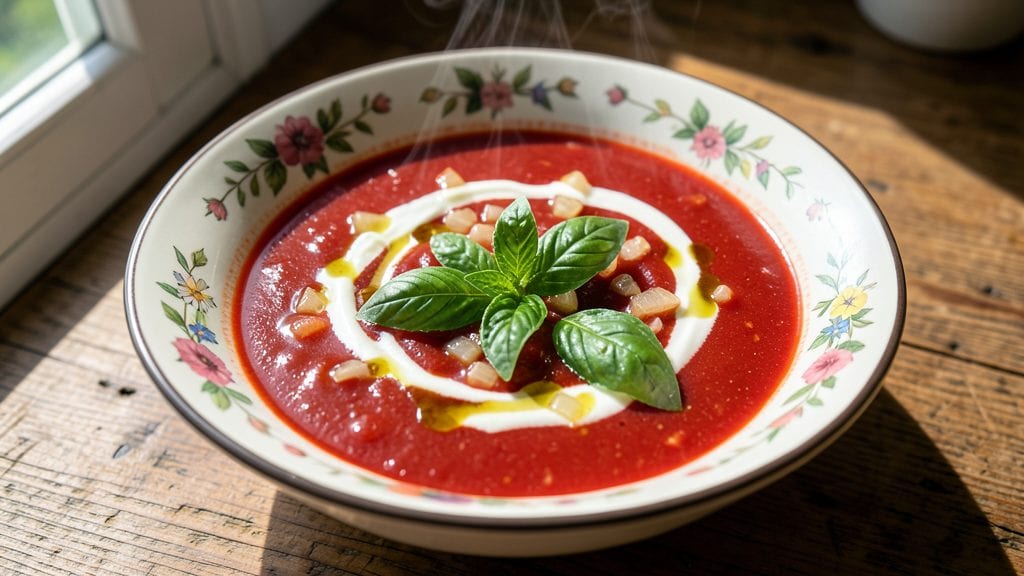
This canned San Marzano tomato soup delivers restaurant-quality silkiness without a blender—just a simple stovetop technique that transforms canned tomatoes into velvety perfection. The secret lies in simmering the tomatoes low and slow, allowing their natural sweetness to develop while onions and garlic build aromatic depth.
I perfected this recipe after years of testing, and it’s now my go-to for quick yet sophisticated meals that taste homemade.
What sets this recipe apart is its effortless simplicity: no peeling, no seeds, no blender—just canned tomatoes, basic aromatics, and patience. The San Marzano variety’s natural sweetness and low acidity ensure a smooth, balanced flavor without bitterness, while a touch of cream (optional) adds richness for a modern twist.
Traditional Italian methods meet modern convenience here, making it ideal for weeknights or cozy gatherings.
By the time you finish, you’ll have a smooth, fragrant soup with a velvety texture that coats every spoonful. The aroma alone—warm tomatoes, caramelized onions, and fresh basil—will fill your kitchen with comfort.
Serve it as-is for a light lunch or add grilled cheese for a hearty dinner. This soup proves canned tomatoes can deliver restaurant-quality results with minimal effort.
The beauty of this recipe is its versatility: it works as a starter, light main, or even a base for pasta. Garnish with fresh basil, a drizzle of olive oil, or grated Parmesan for extra depth.
Once you try this method, you’ll never settle for store-bought again. Here’s how to make it—step by step.
Ingredients for canned san marzano tomato soup
San Marzano tomatoes, olive oil, and patience—these are the magic trio for restaurant-worthy soup.
| Ingredient | Amount | Notes |
|---|---|---|
| San Marzano Tomato Cans 🍅 | 2 cans | 28 oz each, crushed by hand |
| Yellow Onion 🧅 | 1 whole | Medium size, finely diced |
| Garlic Cloves 🧄 | 4 cloves | Fresh, peeled and minced |
| Extra-Virgin Olive Oil 🫒 | ¼ cup | High quality, fruity |
| Heavy Cream 🥛 | ¼ cup | Optional, full-fat preferred |
| Fresh Basil Leaves 🌿 | ¼ cup | Packed, torn by hand |
| Diamond Crystal Kosher Salt 🧂 | 1 tsp | Adjust to taste |
| Freshly Ground Black Pepper 🌶️ | ¼ tsp | Light hand only |
| Vegetable or Chicken Broth 💧 | 1 cup | Low-sodium preferred |
| Granulated Sugar 🍬 | 1 tsp | Balances acidity |
| Parmesan Cheese 🧀 | ¼ cup | Freshly grated, for garnish |
| Freshly Shredded Mozzarella 🧀 | ½ cup | Low-moisture, optional topping |
The San Marzano tomatoes are non-negotiable here—Whole Foods or Italian specialty stores carry the best cans (look for the official DOP label). I grab mine from Trader Joe's when I'm in a hurry, but honestly, any reputable brand works as long as it's whole, peeled tomatoes. The key is crushing them by hand with your fingers—no blender, no strainer, just raw tomato texture that dissolves into silkiness. Costco also sells them in bulk, which is perfect if you're making this often. Skip the crushed variety in cans—they're pre-cooked and lack the freshness you need for that velvety finish.
No San Marzano tomatoes? Crushed Roma tomatoes are your next best bet—they're sweeter than regular canned tomatoes and hold up better to simmering. Running out of fresh basil? Dried basil at one-third the amount works, but trust me, the fresh stuff makes all the difference. The heavy cream is totally optional, but if you skip it, add an extra splash of broth to keep the soup luscious. Coconut milk is a great dairy-free alternative—just use full-fat for richness. And if you're worried about the sugar balancing the acidity, start with half and adjust to taste. The onions should caramelize until they're golden brown—don't rush this step, it's what builds the soup's depth.
This soup tastes even better the next day—4-5 days in the fridge with the lid slightly ajar to prevent skin from forming. For longer storage, freeze portions in ice cube trays (they thaw perfectly for quick meals). The Parmesan and mozzarella toppings? Add them fresh when serving—they melt beautifully on top. I always make a double batch because it disappears fast, especially when paired with crusty bread or grilled cheese. The broth can be made ahead too—just store it separately and stir it in at the end.
Why You'll Love This Recipe
- Same recipe, different vibes: toss it with crusty bread for a lazy night or drizzle it over grilled chicken for a fancy-ish weeknight meal. The onions caramelize in 10 minutes—no babysitting required.
- No Pantry Panic: I swear by this recipe because it uses one can of San Marzano tomatoes—no fancy prep, no wasted produce. Just open, chop, and simmer.
- Creamy Without the Drama: That heavy cream swirl at the end? It’s the magic touch—smooths the acidity perfectly, and the olive oil base keeps it rich without tasting greasy. Honestly, I’ve tried store-bought versions, and this beats them every time.
- Weeknight to Dinner Party: Same recipe, different vibes: toss it with crusty bread for a lazy night or drizzle it over grilled chicken for a fancy-ish weeknight meal. The onions caramelize in 10 minutes—no babysitting required.
Step-by-step instructions for silky smooth San Marzano tomato soup
Here's how to transform canned San Marzano tomatoes into restaurant-quality soup without a blender.
Sauté Aromatics Until Fragrant
Heat the 0.25 cup extra-virgin olive oil in a large pot over medium heat. Add the finely diced yellow onion and cook for 5-6 minutes until completely translucent and just beginning to soften. This ensures the onion loses its raw bite and forms the flavor base.
Add the minced garlic cloves and cook for another 30 seconds until the kitchen smells like fresh garlic—this is your cue that the aromatics are properly developed. Be careful not to let the garlic burn, as it will turn bitter and overpower the delicate tomato flavor. Stir constantly during this final minute to prevent browning.
Crush Tomatoes and Simmer the Base
Open the 2 cans San Marzano tomato cans and pour the contents directly into the pot. Using a wooden spoon, crush the tomatoes by hand until you achieve a chunky but mostly broken-down texture—this is key for that silky, velvety consistency without blending. You want about 75% of the tomatoes crushed with some larger pieces remaining.
Add the 1 cup vegetable or chicken broth and 1 tsp granulated sugar to balance the acidity. Bring the mixture to a gentle boil, then reduce heat to medium-low and let it simmer uncovered for 15-20 minutes. You'll see the tomatoes break down further and the soup thicken naturally as the liquid reduces. Stir occasionally to prevent sticking and ensure even cooking.
Season and Finish with Cream
Season the soup with the 1 tsp Diamond Crystal kosher salt and 0.25 tsp freshly ground black pepper, tasting as you go. The sugar you added earlier should help balance the acidity, but adjust with an additional pinch if needed. Let the soup simmer for another 5 minutes to let the flavors meld completely.
Remove the pot from heat and stir in the 0.25 cup heavy cream. The cream will create that luxurious, velvety texture without making the soup overly heavy. If you prefer a lighter version, you can omit this step or use a splash of broth instead. Let the soup sit off heat for 5 minutes to allow the cream to fully incorporate and the flavors to marry.
Garnish and Serve Warm
Ladle the soup into bowls and garnish with the 0.25 cup freshly grated Parmesan cheese and 0.25 cup torn fresh basil leaves. The basil adds a bright, fresh contrast to the rich tomato flavor, while the Parmesan brings a salty, umami depth. For an extra touch, sprinkle the 0.5 cup freshly shredded mozzarella on top just before serving—it will melt slightly from the heat of the soup, creating a creamy, gooey finish.
Serve immediately while the soup is hot. The texture should be silky smooth with just a hint of chunkiness from the tomatoes, and each spoonful should deliver a perfect balance of sweet, tangy, and creamy flavors. This soup tastes even better the next day as the flavors continue to develop, so leftovers make a great lunch the following day.
Pro Tips For Making Canned San Marzano Tomato Soup
- Sweat the Onion Slow: I learned this the hard way—rush the onion, and you’ll end up with a bitter, raw taste in your soup. Use medium-low heat and let it cook for 8-10 minutes until it’s translucent and just starting to caramelize. That’s when the flavor actually develops, not when it turns golden (which happens later, if you’re patient).
- Crush Garlic, Don’t Mince: Skip the knife for garlic—smashed cloves release more flavor without burning. Use the flat side of your knife to press 3-4 cloves directly into the oil while the onions cook. It blends in seamlessly and adds depth without overpowering.
- Simmer, Don’t Boil: After adding the crushed tomatoes, keep the heat at a gentle simmer (tiny bubbles, occasional swirls). Boiling turns the soup mealy and dulls the San Marzano’s natural sweetness. If it’s too thick, thin it with a splash of water—not milk—so the cream doesn’t curdle later.
- Temper the Cream: Sounds weird, but it works: warm the heavy cream slightly (just enough to steam when poured) before stirring it into the hot soup. This prevents curdling and keeps the texture silky. I was skeptical until I tried it—now I never skip it.
Pro cooking tips for great canned san marzano tomato soup
Low-and-Slow Simmering
This is the secret weapon for silky texture—simmering the tomatoes uncovered over medium-low heat for 15-20 minutes breaks them down naturally without needing a blender. I use a 6-quart Dutch oven because it maintains even heat distribution.
The key is patience: let the liquid reduce gradually to concentrate flavors and thicken the soup. Stir occasionally to prevent scorching at the bottom. 🌡️
Hand-Crushing Tomatoes
Skip the blender entirely by crushing the tomatoes by hand with a wooden spoon—aim for 75% crushed with some larger pieces remaining. This creates natural texture variation while ensuring a velvety finish. I press the tomatoes against the pot's sides to release their juices fully.
The San Marzano variety's natural sweetness shines when handled this way, avoiding the metallic taste that can come from blending.
Caramelizing Onions Properly
Don't rush the onion cooking—caramelizing them until golden brown (about 8-10 minutes) builds deep, sweet flavor. I use a 1-inch dice for even cooking and stir frequently to prevent burning.
The onions should be soft enough to pierce with a fork but still hold their shape. This step is what transforms a simple soup into something restaurant-worthy.
Balancing Acid and Sweetness
The 1 tsp sugar balances the tomatoes' natural acidity, but taste as you go—some cans may need more. I adjust with an extra pinch if the soup tastes too tart.
The sugar also helps develop the tomatoes' natural sweetness during simmering. For a more refined touch, add ½ tsp balsamic vinegar at the end for complexity.
Cream Timing Matters
Stir in the heavy cream off the heat to prevent curdling. Let the soup sit for 5 minutes before serving—this allows the cream to fully incorporate without breaking.
If you prefer a lighter texture, substitute with coconut milk or an extra splash of broth. The cream adds richness without overwhelming the tomatoes' natural flavor.
Garnish for Maximum Impact
Freshly grated Parmesan and basil add layers of flavor that store-bought soups can't match. I tear the basil by hand for a rustic touch and sprinkle it just before serving.
The mozzarella topping melts slightly from the soup's heat, creating a creamy finish. For extra flair, drizzle with high-quality extra-virgin olive oil right before eating. ✨
Nutrition facts
Frequently asked questions
Why do I need San Marzano tomatoes specifically for this soup?
San Marzano tomatoes are the gold standard for this recipe because of their sweet, low-acid profile and thick flesh. The DOP certification guarantees their quality, delivering a naturally rich flavor that doesn't require balancing with extra sugar. Regular canned tomatoes often have higher acidity and thinner texture, which can make your soup taste harsh or watery. For a budget-friendly alternative, try crushed Roma tomatoes—they're the next best option.
Can I make this soup without cream?
The cream adds richness, but it's completely optional. For a lighter version, simply omit it or stir in 2 tablespoons of olive oil at the end for a silky texture. You can also use ½ cup coconut milk (full-fat preferred) for a dairy-free alternative that still adds body. The soup will be tangier but just as delicious—just adjust salt to taste.
How do I fix soup that tastes too acidic?
If your soup tastes too tart, don't panic—it's an easy fix! Stir in ½ teaspoon more sugar or ½ teaspoon balsamic vinegar to balance the acidity. For an instant boost, add 1 teaspoon of honey or maple syrup and simmer for 2 minutes to let the flavors meld. If it's still too strong, a splash of broth or a pinch of salt can help round out the flavors.
Can I prep this soup ahead of time?
Yes! This soup actually tastes even better the next day. Store it in an airtight container in the fridge for up to 4-5 days, or freeze portions for up to 3 months. For reheating, warm gently on the stove over low heat and stir in a splash of water or broth if it thickens too much. Garnish with fresh basil and Parmesan just before serving to keep it vibrant.
What's the best way to serve this soup?
This soup is incredibly versatile! Serve it as-is for a light lunch, or pair it with toasted baguette slices or grilled cheese sandwiches for a hearty meal. For extra flair, top with crispy prosciutto, seared breadcrumbs, or a drizzle of aged balsamic glaze. It also makes a fantastic starter for dinner parties—just ladle into small bowls and garnish with fresh herbs.