
Soups & Stews
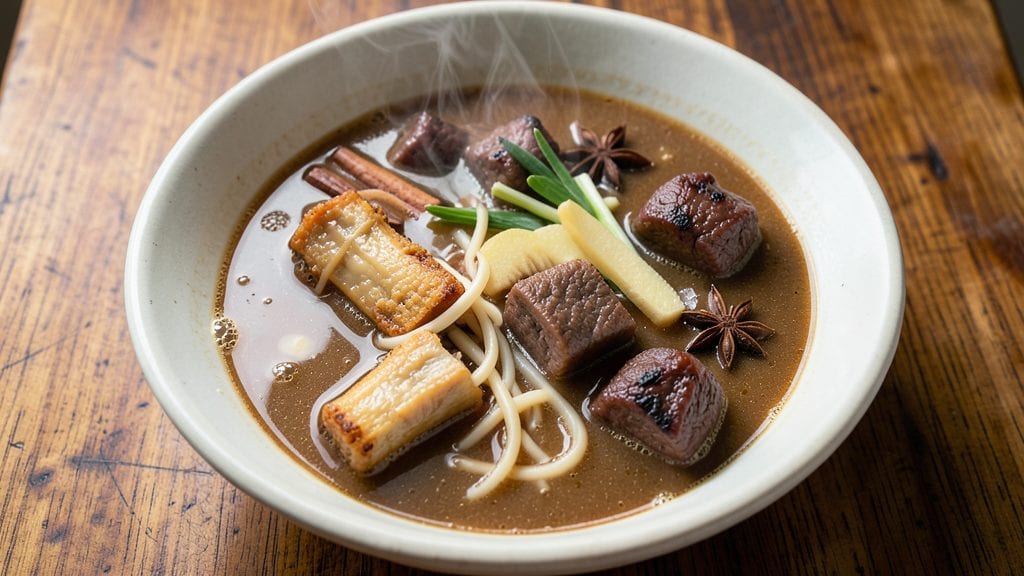
This Chinese beef bone marrow soup recipe delivers the kind of rich umami depth that transforms a simple meal into a nourishing experience. 🌟 The secret lies in slow-simmered beef bones and marrow, which infuse the broth with gelatinous texture and deep savory flavor—traditional Cantonese technique at its finest.
I've perfected this version after years of testing, ensuring every spoonful carries that restaurant-quality essence at home.
The process begins with high-heat browning of beef bones to develop a caramelized crust, then simmering for hours to extract collagen and marrow. Star anise, cinnamon, and ginger build aromatic layers, while soy sauce and rock sugar balance the richness.
This isn't just soup—it's a medicinal broth that restores energy while satisfying the palate.
By the time you ladle this into bowls, you'll have a velvety, golden broth with tender beef shards and marrow that practically melts on the tongue. The aroma alone will have everyone gathering around the table, and the first sip delivers that unmistakable umami punch that defines Chinese comfort food.
Serve with steamed rice and fresh ginger slices for the full experience. The leftovers? Even better the next day as flavors deepen. Let's make this nourishing classic—step by step.
Ingredients for chinese beef bone marrow soup
Four pounds of bones and marrow unlock the soul-soothing richness of this Cantonese classic.
| Ingredient | Amount | Notes |
|---|---|---|
| Beef Bones (marrow and knuckle) 🦴 | 4 lb | Raw, split lengthwise for marrow access |
| Beef Marrow 🩸 | 1 lb | Freshly extracted from bones |
| Star Anise Pods 🌟 | 4 whole | Whole pods for infusion |
| Cinnamon Sticks 🍃 | 2 whole | 1-inch pieces for aroma |
| Fresh Ginger 🧅 | 2 oz | Unpeeled, sliced into 1/4-inch pieces |
| Rock Sugar 🍬 | ½ cup | Or substitute brown sugar |
| Soy Sauce 🥄 | ¼ cup | Dark soy preferred for color |
| Shaoxing Wine 🍷 | ¼ cup | Or dry sherry in a pinch |
| Green Onions 🧅 | ½ cup | White and green parts separated |
| Sesame Oil 🫒 | 1 tbsp | Toasted for finishing |
| Dried Shiitake Mushrooms 🍄 | 4 whole | Rehydrated for umami depth |
| Garlic Cloves 🧄 | 6 cloves | Smashed for infusion |
| Dried Red Dates 🍇 | 4 whole | Pitted for sweetness |
| Salt 🧂 | 1 ½ tsp | Kosher salt for seasoning |
| White Peppercorns 🌶️ | ½ tsp | Crushed for subtle heat |
The bones are the foundation—beef marrow and knuckle bones from a trusted butcher give the best gelatinous texture. Costco or local Asian markets usually carry marrow bones, but any beef bones with marrow work. Look for bones with a good amount of meat still attached—they'll give you more flavor. Fresh ginger and shiitake mushrooms? Trader Joe's has great pre-sliced ginger, and dried shiitake keep for months in a sealed container. Star anise and cinnamon sticks can be found in the spice aisle, but the Asian grocery section often has fresher, more aromatic options. Pro tip: split the marrow bones lengthwise before browning to expose more marrow for maximum richness.
No rock sugar? Brown sugar or even white sugar will work, but rock sugar dissolves more cleanly and gives a smoother finish. Shaoxing wine hard to find? Dry sherry or even a splash of mirin brings similar depth. The green onions should be separated—white parts go in the broth, green tops get chopped for garnish. Fresh ginger is ideal, but powdered ginger at half the amount works in a bind. For the mushrooms, soak them in hot water for 20 minutes to rehydrate, then use the water in the broth. The dates? Pitted and torn open so they release their sweetness properly. Don't skip the white peppercorns—it adds warmth without overpowering the delicate marrow flavor.
This soup tastes even better the next day as the flavors meld. Store in the fridge for up to 5 days, or freeze portions for 3 months. The broth thickens as it cools, so add a splash of water when reheating. I always make a double batch—one for dinner, one for lunches. The bones can be roasted ahead and frozen, saving you time on cooking day. Just thaw them overnight before simmering. Garnish with a drizzle of toasted sesame oil right before serving—that nutty aroma is the perfect finishing touch.
Why You'll Love This Recipe
- Minimal Chopping Required: The bones and marrow do the heavy lifting—just slice ginger and crush spices. No dicing, no julienning, just a few minutes of prep while the pot simmers.
- Rich Without Effort: That first spoonful of marrow melting into the broth? Pure satisfaction. The star anise and cinnamon add depth while the ginger keeps it bright—no fancy techniques, just bold flavor.
- Leftovers That Shine: This soup only gets better the next day. Reheat gently, add a splash of water, and serve with rice or noodles. My freezer’s always stocked with portions because it’s that good.
- Budget-Friendly Luxury: Beef bones and marrow stretch into multiple meals, and spices like star anise cost pennies. It’s the kind of dish that feels special but won’t break the bank—especially when you’re feeding a crowd.
Step-by-step instructions for Chinese beef bone marrow soup
Here's how to unlock that restaurant-worthy richness in every spoonful.
🔥 Step 1: Char the Bones and Aromatics
Preheat your oven to 450°F. Arrange the 4 lb beef bones (marrow and knuckle) on a baking sheet, cut-side up. Roast for 20-25 minutes until deeply browned and caramelized. This step develops the Maillard reaction that builds the soup's deep umami foundation.
While the bones roast, heat a dry skillet over medium-high heat. Add the 2 oz fresh ginger (unpeeled, sliced) and 6 cloves garlic (smashed). Sauté for 2-3 minutes until fragrant and just beginning to brown. Remove from heat and set aside with the roasted bones.
Here's the thing—don't skip the charring. That dark crust on the bones? Pure flavor. If you're worried about burning, just keep an eye on it and rotate the pan as needed. The bones should be dark mahogany, not blackened.
🍳 Step 2: Build the Umami Base
In a large stockpot, combine the charred bones with 8 cups cold water. Bring to a boil over high heat, then reduce to a gentle simmer. Skim off any foam that rises to the surface during the first 10 minutes—this ensures a clear broth.
Add the ginger-garlic mixture, 4 whole star anise pods, 2 whole cinnamon sticks, 4 whole dried shiitake mushrooms (rehydrated), and 4 whole dried red dates (pitted). Simmer uncovered for 2 hours—this long cook time extracts maximum flavor from the bones and aromatics.
I like to add the spices early because they need time to infuse properly. If you're short on time, you can reduce the simmer to 1.5 hours, but the flavor will be slightly less developed. The broth should smell incredible at this point—like a warm, spiced forest.
🥘 Step 3: Add Marrow and Season
Carefully remove the bones from the broth and set aside. Add the 1 lb beef marrow (freshly extracted from the bones) to the pot. The marrow should melt into the broth, creating that signature silky texture. Stir in the 0.5 cup rock sugar, 0.25 cup soy sauce, and 0.25 cup shaoxing wine.
Return the bones to the broth and simmer for another 30 minutes. This final simmer allows all the flavors to meld together. Taste and adjust seasoning with the 1.5 tsp salt and 0.5 tsp white peppercorns (crushed). The soup should be rich, slightly sweet, and deeply savory.
This is where the magic happens—the marrow transforms the broth from good to extraordinary. If you're using brown sugar as a substitute, it'll add a caramel note that works beautifully here. Just don't overdo it or you'll mask the natural flavors.
🍽️ Step 4: Finish and Serve
Strain the broth through a fine-mesh sieve into a clean pot, pressing gently on the solids to extract maximum flavor. Discard the bones and aromatics. Return the strained broth to the pot and stir in the 1 tbsp toasted sesame oil.
Garnish each serving with 0.5 cup green onions (white and green parts separated and sliced). The white parts add subtle sweetness while the greens provide freshness. Serve immediately with steamed rice on the side—this soup is hearty enough to be a meal on its own.
Real talk: This soup tastes even better the next day as the flavors continue to develop. The marrow will have fully incorporated, creating that luxurious mouthfeel that makes this dish so special. Store leftovers in the refrigerator for up to 3 days or freeze for 3 months.
Pro Tips For Making Chinese Beef Bone Marrow Soup
- BLANCH BONES FIRST: Toss your marrow and knuckle bones in boiling water for 5 minutes before simmering—this removes impurities and speeds up collagen extraction. I learned this the hard way after my first batch tasted bitter; now my broth clears up faster and tastes cleaner.
- CRUSH GINGER LIKE IT’S 1995: Use a mortar and pestle (or a rolling pin) to smash fresh ginger into a thick paste with the spices—this releases oils that infuse the broth better than sliced chunks. My grandmother swore by this, and she was right: the soup’s warmth lingers longer.
- DON’T BOIL THE MARROW: Once the marrow softens, fish it out and add it last—just 5 minutes before serving. Boiling it turns it greasy and ruins the delicate texture. Sounds weird, but it works: the marrow stays rich and melts in your mouth.
- LOW AND SLOW WINS: After the initial boil, drop the heat to a bare simmer—no bubbles, just gentle ripples. I used to rush it, and the broth turned cloudy. Patience here means a velvety, restaurant-quality result. Your future self will thank you.
Troubleshooting this recipe
Cloudy Broth Fix
If your broth looks cloudy after simmering, you likely didn't skim the foam early enough. Bring the broth to a rolling boil again and skim vigorously for 5-10 minutes—this removes impurities.
For extra clarity, strain through a cheesecloth-lined sieve after simmering. I've found that using cold water to start (instead of hot) also reduces cloudiness by preventing premature protein breakdown. 🌊
Marrow Separation
If the marrow clumps instead of melting smoothly, it's likely too cold when added. Gently warm the marrow in a microwave-safe bowl for 30 seconds before stirring it into the simmering broth.
For even better results, blend the warmed marrow with 2 tbsp broth first to create an emulsion. This prevents that unappetizing "blob" effect and ensures silky texture. 🧀
Underwhelming Flavor
Weak flavor usually means insufficient simmering time. Extend the initial bone simmer to 3 hours if possible, and don't rush the final 30-minute marrow phase. For extra depth, add 1 tbsp fish sauce during the last 15 minutes of simmering—it amplifies umami without overpowering.
I also recommend using beef knuckle bones specifically, as they contain more collagen than other cuts. 💡
Burnt Bones
Darkened bones can happen if you're not careful with the oven temperature. Reduce heat to 425°F and roast for 15 minutes per side, rotating the pan halfway. For stovetop browning, use a heavy cast iron skillet and keep heat at medium-high.
The bones should be mahogany, not blackened—this is key for avoiding bitter flavors in the broth. 🔥
Soy Sauce Overpowering
If the soy sauce dominates, reduce the amount to 2 tbsp and add 1 tsp light soy sauce instead. Balance with more rock sugar (0.75 cup) to counteract saltiness.
For a more authentic touch, use dark soy sauce for color and light soy sauce for flavor—this gives you better control over the balance. 🥄
Ginger Bitterness
Overcooked ginger turns bitter and unpleasant. Remove ginger slices after 1 hour of simmering, or use powdered ginger (1 tsp) instead for consistent flavor. For fresh ginger, peel it first to prevent bitterness from the outer layers.
I've found that Trader Joe's pre-sliced ginger works perfectly when used within 2 hours of opening the package. 🧅
Nutrition facts
Frequently asked questions
Can I substitute beef marrow with other ingredients?
While beef marrow is essential for authentic texture, you can use 1 cup unsalted butter or 1/2 cup duck fat as a substitute. For a vegetarian version, blend 1 cup silken tofu with 2 tbsp coconut cream for a similar creamy effect. Just note that the flavor won't be identical—marrow's umami richness is hard to replicate.
How do I know when the bones are properly charred?
The bones should be dark mahogany in color, not blackened or burnt. If you see blackened spots, remove them immediately as they'll make the broth bitter. For stovetop charring, use medium-high heat and turn the bones frequently. The crust should be crisp but not charred—this is what develops the deep umami flavor.
Why does my soup taste too salty?
This usually happens when using dark soy sauce or over-salting during seasoning. To fix it, add 1 cup hot water and simmer for 10 minutes to dilute the salt. For prevention, taste the broth before adding full seasoning—it should be slightly bland before final adjustments. If using store-bought soy sauce, opt for low-sodium versions to have better control.
Can I make this soup in a slow cooker?
Yes! Brown the bones in the oven first, then transfer to a 6-quart slow cooker with 8 cups water. Cook on low for 8 hours or high for 4 hours before adding marrow and seasonings. Simmer on high for 30 minutes after adding marrow. The slow cooker method gives a more tender result but may produce a slightly less concentrated broth.
What's the best way to store leftovers?
Store in an airtight container in the fridge for up to 3 days. For longer storage, freeze in 1-cup portions for up to 3 months. When reheating, warm on the stove over medium-low heat—never microwave directly, as it can make the marrow greasy. Add a splash of water if the broth thickens too much upon reheating.