
Soups & Stews
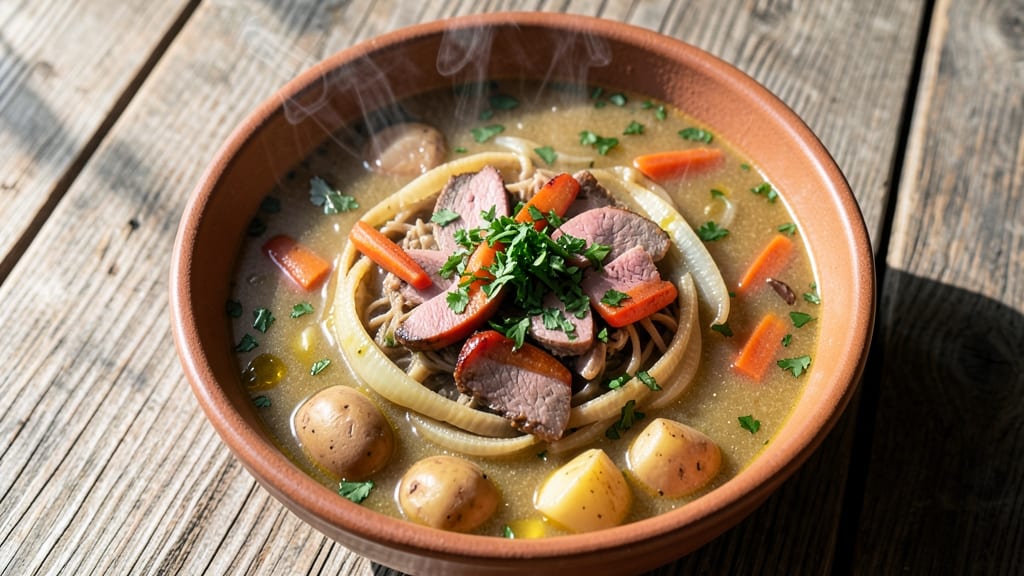
This Czech tripe soup recipe brings the hearty, umami-rich traditions of Central Europe to your kitchen, where slow-simmered flavors transform humble ingredients into a deeply satisfying dish.
The key lies in properly preparing the tripe—soaking, scraping, and boiling until tender—while layering in liver, vegetables, and spices that create that signature depth.
I first discovered this recipe during a trip to Prague, where it was served in rustic taverns as both comfort food and a celebration of Czech craftsmanship.
The beauty of this soup lies in its balance: tender tripe and liver provide protein and iron, while carrots, celery, and potatoes add natural sweetness and texture. A splash of vinegar brightens the broth, and a final touch of horseradish delivers that signature tangy kick that makes it unforgettable.
What sets this version apart is the slow-simmering technique, which develops complex flavors over hours rather than minutes.
By the time you serve it, you'll have a steaming bowl of soup with a rich, velvety broth that coats every spoonful, tender tripe that melts in your mouth, and vegetables that've absorbed all the savory essence.
The aroma alone—warm spices mingling with caramelized onions—will have everyone gathering around the table. This is the kind of dish that feels like a hug in a bowl, perfect for chilly evenings or family gatherings.
Serve it with a slice of dark rye bread to soak up every last drop, or offer a small dish of fresh horseradish for those who crave extra heat. The leftovers, if there are any, reheat beautifully the next day—though I can't promise they'll last that long.
Let's get cooking and bring a taste of Czech tradition to your kitchen.
Ingredients for czech tripe soup
Tripe, liver, and vegetables—simple ingredients for a soup that tastes like Czech tradition.
| Ingredient | Amount | Notes |
|---|---|---|
| Beef Tripe 🥩 | 1 ½ lb | Honeycomb or blanketed cut preferred |
| Beef Liver 🍖 | ¾ lb | Fresh, trimmed of connective tissue |
| Yellow Onions 🧅 | 2 whole | Medium, peeled and sliced |
| Carrots 🥕 | 4 whole | Medium, peeled and chopped |
| Celery Stalk 🥬 | 3 whole | Peeled and chopped, leafy parts removed |
| Russet Potatoes 🥔 | 2 lb | Peeled and cubed, 1-inch pieces |
| Tomatoes 🍅 | 2 whole | Ripe, peeled and crushed |
| White Vinegar 💧 | ¼ cup | For brightening broth |
| Bay Leaves 🌿 | 2 whole | Dried, for depth of flavor |
| Allspice Berries 🌶️ | ½ tsp | Crushed, for warmth |
| Black Peppercorns 🌶️ | 1 tsp | Crushed, for finishing |
| Salt 🧂 | 2 tbsp | Kosher or sea salt |
| Fresh Horseradish Root 🌿 | ½ cup | Grated, for serving |
| Dark Rye Bread 🍞 | 2 slices | For serving, crusty preferred |
| Vegetable Oil 🫒 | ½ cup | For initial searing |
Tripe is the star, so don't skimp. Look for honeycomb or blanketed cuts at your butcher—they're more tender. Costco often carries it pre-cleaned, which saves time. If you're buying whole, soak it in cold water with vinegar for 24 hours to remove impurities. The liver should be fresh and bright red—ask your butcher to trim off any connective tissue. For the vegetables, organic carrots and celery are worth it—they're sweeter and cleaner. I always grab extra potatoes, since they'll shrink during cooking.
No tripe? Pork shoulder or beef chuck can stand in, though the texture won't be identical. Short on liver? Mushrooms add umami depth—cremini or shiitake work best. The allspice berries are key for that signature Czech warmth, but cinnamon or cloves at half the amount will do in a pinch. Fresh horseradish is ideal, but pre-made works too—just make sure it's not too vinegary. The tomatoes can be canned (San Marzano if you're fancy), but fresh is better if you've got them. And if you're worried about the vinegar making the soup too sharp, add it gradually while tasting.
This soup tastes even better the next day—plan ahead. The tripe and liver can be prepped a day ahead and stored in the fridge. The broth keeps for 4-5 days in the fridge, or 3 months frozen. For serving, toast the rye bread until it's crispy—it soaks up the broth beautifully. The horseradish keeps in the fridge for up to 2 weeks if wrapped tightly. Double the batch if you can—it's that good.
Why You'll Love This Recipe
- Here’s what sold me: this soup costs me pennies per serving but feels like a restaurant dish. Tripe and liver stretch into gallons of broth, and the veggies? Basic, cheap, and always on hand. My wallet and my taste buds win.
- One-Pot Magic: Honestly, I love how this soup barely needs more than a big pot and 30 minutes of hands-off simmering. The tripe and liver practically melt into flavor while you chop veggies—no fancy techniques, just a deep, savory broth that builds itself.
- Umami Bomb: Between us, that beef liver and tripe combo? It’s like a flavor explosion wrapped in a cozy bowl. The liver mellows into richness, while the tripe adds that satisfying chew—every spoonful tastes like a hug from your grandma’s kitchen.
- Weeknight Workhorse: I make this when I’m feeding a crowd or just need something hearty for lunch all week. The leftovers actually improve overnight—more tender, more flavorful. Add a splash of vinegar or fresh parsley, and it’s a new meal.
Step-by-step instructions for Czech tripe soup
Here's how to transform humble ingredients into a hearty Czech classic with deep umami flavors.
Prepare and Blanch the Tripe and Liver
Start by rinsing the 1.5 lb beef tripe thoroughly under cold water to remove any impurities. Cut it into 1-inch strips and place in a large pot. Cover with cold water and bring to a boil. Once boiling, reduce heat to a gentle simmer and cook for 10 minutes. This first blanch removes any remaining blood and toughens the tripe slightly for better texture.
Drain the tripe and repeat the blanching process one more time. Meanwhile, rinse the 0.75 lb beef liver and cut it into ½-inch cubes. Blanch the liver separately for 3 minutes in boiling water, then drain. Both meats should be blanched to remove impurities and prepare them for the long simmer ahead.
Sear the Vegetables and Meat
Heat the 0.5 cup vegetable oil in a large Dutch oven over medium-high heat. Add the 2 whole yellow onions, 4 whole carrots, and 3 whole celery stalks, all chopped into ¼-inch pieces. Sauté for 8-10 minutes until the vegetables soften and begin to caramelize slightly. Remove them with a slotted spoon and set aside.
In the same pot, add the blanched tripe and liver. Sear for 5 minutes, stirring occasionally, until the pieces develop a golden-brown crust. This step adds depth of flavor that simmering alone can't achieve. Return the sautéed vegetables to the pot and stir to combine.
Build the Broth and Simmer
Add 8 cups of water to the Dutch oven and bring to a boil. Stir in the 2 whole bay leaves, 0.5 tsp crushed allspice berries, 1 tsp crushed black peppercorns, and 2 tbsp salt. The broth should taste rich but not overly salty at this stage—you can always adjust later.
Reduce heat to low and let the soup simmer uncovered for 2 hours. Skim off any foam or impurities that rise to the surface during the first 30 minutes of simmering. This slow cook transforms the tough tripe into tender, flavorful bites while developing a deeply aromatic broth.
Add Potatoes and Tomatoes
After 2 hours of simmering, add the 2 lb russet potatoes, peeled and cut into 1-inch cubes, and the 2 whole tomatoes, peeled and crushed. Stir in the 0.25 cup white vinegar to brighten the broth. Return to a simmer and cook for another 30-40 minutes until the potatoes are fork-tender and the broth has thickened slightly.
Taste the broth and adjust seasoning if needed. The soup should be rich with umami but balanced. The vinegar adds a subtle tang that cuts through the richness of the tripe and liver, creating the signature Czech flavor profile.
Finish and Serve
Remove the soup from heat and let it cool slightly. Ladle into bowls and serve with 2 slices dark rye bread on the side. Grate 0.5 cup fresh horseradish root over each serving for a traditional kick. The horseradish adds a sharp contrast to the creamy, hearty soup, balancing the rich flavors perfectly.
This soup tastes even better the next day as the flavors meld further. Store leftovers in the refrigerator for up to 3 days or freeze for 3 months. The slow-simmered process makes it a comforting dish that only improves with time.
Pro Tips For Making Czech Tripe Soup
- Sear the Tripe Twice: First, blanch the tripe in boiling water for 2 minutes to loosen the membrane, then rinse and pat dry. After browning the onions and liver, pull the pan out for 30 seconds—this lets you sear the tripe in batches without steaming it, giving the soup a deeper, meatier flavor instead of a watery one.
- Dice Onions Like Dice: Small, even pieces (about ¼-inch) caramelize faster and sweeten the soup without burning. I used to chop them roughly, and the soup always tasted underdeveloped—now I take the extra 2 minutes to make them uniform. (Yes, even if you’re impatient like me.)
- Don’t Rush the Liver: The liver should just reach 145°F (63°C) and turn a bright red—any hotter, and it’ll turn rubbery. Pull it out early, slice it thin, and let it finish cooking in the simmering broth. I learned this the hard way after serving a batch that tasted like leather.
- Simmer Low and Long: Czech tripe soup isn’t a quick meal—aim for 2 to 2.5 hours of gentle simmering (180–190°F/82–88°C). The longer it cooks, the more the collagen breaks down, turning the broth rich and velvety. Skipping this step leaves you with a tough, flavorless mess.
Make-ahead tips for leftovers
Prep Ahead Strategy
Start by blanching the tripe and liver up to 24 hours ahead—this removes impurities and saves time later. Store them in an airtight container in the fridge. The blanched meats keep well for 2 days, making this a perfect make-ahead step.
I always prep mine the night before so the cooking day is stress-free. 💡
Broth Prep Shortcut
Simmer the broth base (tripe, liver, vegetables, and spices) for 2 hours on the stove, then transfer it to a slow cooker. Set it to low heat for 6-8 hours to finish cooking while you're out.
This hands-off method ensures tender tripe without constant monitoring. Just reheat gently before adding potatoes and tomatoes.
Freezer-Friendly Components
Freeze the blanched tripe and liver separately in quart-sized freezer bags with 1 inch headspace for up to 3 months. Thaw overnight in the fridge before cooking.
The vegetables can also be prepped and stored in a separate bag. This lets you assemble the soup directly from frozen—just add water and simmer. ❄️
Potato Prep Trick
Peel and cube the potatoes in advance and store them in cold water in the fridge for up to 2 days. This prevents browning and keeps them crisp. Drain and pat dry just before adding them to the simmering broth. Prepped potatoes cook faster and maintain better texture.
Horseradish Prep
Grate the horseradish root up to 1 week ahead and store it in an airtight container with 1 tbsp vinegar to preserve freshness. The vinegar mellows the heat slightly, making it more approachable for guests.
Keep it refrigerated until ready to serve—it adds a bright, tangy finish that elevates the soup. 🌿
Slow Cooker Adaptation
For a truly hands-off approach, combine all ingredients (except potatoes and tomatoes) in a 6-quart slow cooker and cook on low for 8 hours. Add potatoes and tomatoes in the last 2 hours of cooking.
This method is ideal for busy days—just dump, cook, and serve. The slow cooker maintains even heat, ensuring tender tripe without monitoring. 🔥
Nutrition facts
Frequently asked questions
Why does Czech tripe soup require blanching the meat twice?
The double blanching removes impurities and blood from the tripe and liver, ensuring a cleaner-tasting broth. The first boil loosens surface debris, while the second rinse eliminates any remaining residue before slow cooking. This step is crucial for that authentic, rich flavor without bitterness.
Can I substitute pork tripe for beef tripe in this recipe?
Yes, but expect a slightly different texture and flavor. Pork tripe is leaner and more tender, while beef tripe has a firmer bite. The cooking time remains the same, but pork tripe may require 10-15 fewer minutes of simmering. Adjust seasoning as pork tripe can be milder.
What’s the secret to getting the tripe truly tender?
The key is the slow simmer (2+ hours) at low heat. Never rush it—tripe needs time to break down. Skim the broth regularly during the first 30 minutes to remove scum, and avoid boiling after adding potatoes. Patience pays off with melt-in-your-mouth texture.
Is this soup suitable for vegetarians or vegans?
No, this recipe relies on tripe and liver for its signature umami and iron-rich profile. For a vegetarian version, swap the meats for extra mushrooms, lentils, and hearty vegetables like eggplant or butternut squash. The broth can still be rich, but the texture and depth will differ.
How do I store leftovers to keep them tasting fresh?
Cool the soup completely before refrigerating in an airtight container for up to 3 days. For longer storage, freeze portions for 3 months. Reheat gently on the stove with a splash of water or broth to restore richness. The flavors actually improve overnight!