
Soups & Stews
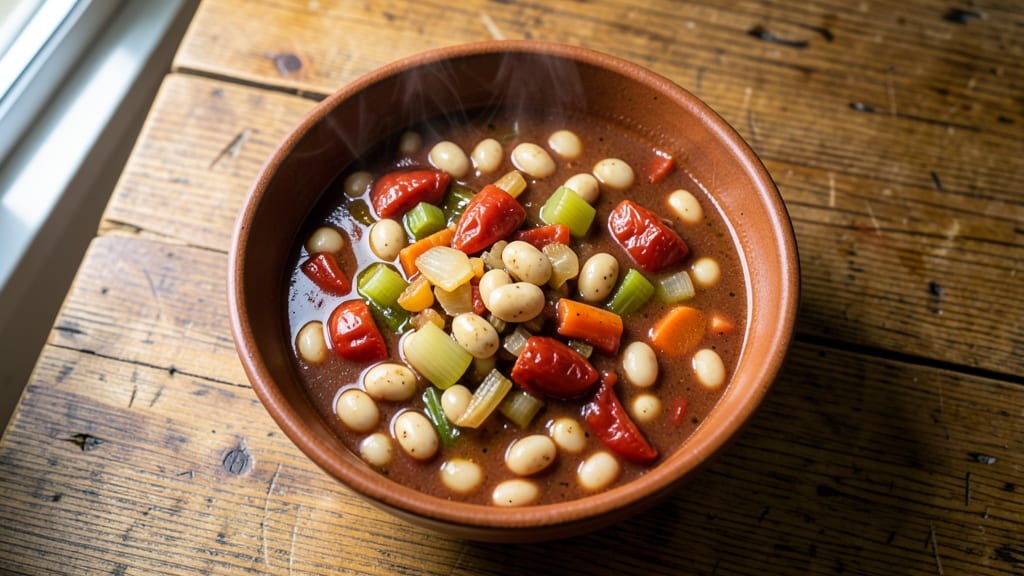
This fasolada soup recipe delivers the hearty, comforting flavors of Greece using just pantry staples—white beans, tomatoes, and aromatic vegetables. A traditional vegetarian dish, it's Greece's national soup, perfect for chilly evenings or when you crave something simple yet deeply satisfying.
The slow simmer transforms tough beans into tender, flavorful bites while building a rich, tomato-based broth.
What makes fasolada special is its ability to transform humble ingredients into something extraordinary. With just olive oil, onions, carrots, celery, garlic, and a bay leaf, you create a flavor foundation that's both rustic and refined.
The key lies in simmering the soup for at least two hours, allowing the beans to soften and absorb the surrounding flavors until the broth becomes velvety and aromatic.
By the time you're done, you'll have a steaming bowl of white bean and tomato soup with tender vegetables and a broth so rich it feels like a hug in a bowl.
The addition of fresh parsley and a drizzle of olive oil just before serving elevates it from simple to spectacular—simple enough for weeknights but impressive enough for guests.
This recipe serves as both a comforting meal and a cultural experience, bringing the flavors of Greece to your kitchen with minimal effort. Perfect for vegetarians or anyone looking for a hearty, plant-based dish that's packed with warmth and tradition. Let's get cooking!
Ingredients for fasolada soup
Pantry staples transform into Greece's beloved white bean and tomato soup.
| Ingredient | Amount | Notes |
|---|---|---|
| Great Northern White Beans 🍲 | 1 ½ cups | Dried, soaked overnight |
| Canned San Marzano Tomatoes 🍅 | 2 cups | Crushed by hand |
| Extra-Virgin Olive Oil 🫒 | ½ cup | High-quality, fruity |
| Yellow Onions 🧅 | 1 whole | Medium size, diced |
| Carrots 🥕 | 2 medium | Peeled, diced small |
| Celery Stalks 🌿 | 3 whole | Trimmed, diced |
| Garlic Cloves 🧄 | 4 cloves | Peeled, minced |
| Fresh Parsley 🌿 | ¼ cup | Chopped for garnish |
| Bay Leaves 🌿 | 2 whole | Fresh preferred |
| Diamond Crystal Kosher Salt 🧂 | 1 ½ tsp | Adjust to taste |
| Freshly Ground Black Pepper 🌶️ | ½ tsp | Freshly cracked |
| Red Wine Vinegar 🍷 | 1 tbsp | For brightness |
| Fresh Lemon Juice 🍋 | 1 tbsp | Brightens flavors |
The white beans are the soul of this dish—Great Northern beans work best, but any white bean will do. Soak them overnight for tender results, or use canned beans in a pinch (though the flavor isn't quite the same). San Marzano tomatoes are the gold standard for sweetness and acidity, but any high-quality canned tomatoes will work. For the vegetables, Trader Joe's or Whole Foods often have pre-diced sets, but chopping your own ensures freshness. The bay leaves should be fresh if possible—they add an herbal depth that dried leaves can't match. If you're using dried, double the amount, but fresh is always better.
No San Marzano tomatoes? Any crushed tomatoes will work, but add a pinch of sugar to balance the acidity. Short on carrots or celery? Substitute with zucchini or bell peppers for a different twist. The red wine vinegar can be swapped for lemon juice if you prefer, though the vinegar adds a subtle tang that's traditional. For extra richness, stir in 1 tablespoon of tomato paste at the beginning. And if you're feeling lazy, pre-chopped frozen vegetables save time without sacrificing much flavor—just thaw them first.
This soup tastes even better the next day as the flavors meld. Store leftovers in the fridge for up to 5 days, covered tightly. For longer storage, freeze portions for up to 3 months. I like to portion it into containers so I can grab a bowl for lunch all week. The beans soften more with time, so reheat gently on the stove with a splash of water or broth to restore the perfect consistency.
Why You'll Love This Recipe
- One-Pot Magic: I swear by this recipe—just dump the beans, tomatoes, and veggies into a pot, add olive oil, and let it simmer. No fancy techniques, no last-minute grocery runs. The San Marzano tomatoes alone do half the work for you.
- Rich Without Effort: That first spoonful? Chef’s kiss. The Great Northern beans soak up the sweetness of the tomatoes while the onions and carrots caramelize into a deep, savory base—no heavy cream or complicated spices needed. Honestly, it tastes like a hug in a bowl.
- Weeknight to Potluck: Make a double batch on Sunday and reheat it all week—it’s that good. Or bring it to a gathering (yes, even a fancy dinner) because it’s hearty enough to feel special, but simple enough to let the flavors shine.
- Pantry Staple Power: Between us, this soup is my budget secret weapon. Canned beans and tomatoes cut costs, and the olive oil stretches further than you’d think. Leftovers? Even better the next day—if they last that long.
Step-by-step instructions for fasolada soup
This classic Greek white bean soup comes together effortlessly with pantry staples and delivers deep, comforting flavors.
Sauté the Vegetable Base
Heat the 0.5 cup extra-virgin olive oil in a large pot over medium heat. Add the 1 whole yellow onion, 2 medium carrots, and 3 whole celery stalks, all diced, and cook for 8-10 minutes until the vegetables soften and the onion becomes translucent. This foundational step builds the soup's aromatic depth.
Add the 4 cloves minced garlic and cook for another 30 seconds until fragrant. Here's the thing—don't let the garlic brown, or it will turn bitter. Stir constantly to prevent burning while developing that essential savory base for the soup.
Build the Tomato and Bean Foundation
Pour in the 2 cups crushed canned San Marzano tomatoes and stir to combine with the vegetables. Let the mixture simmer for 10 minutes until the tomatoes break down and thicken slightly. This step develops the soup's signature rich, tomatoey flavor profile.
Add the 1.5 cups soaked great northern white beans, 2 whole bay leaves, 1.5 teaspoons diamond crystal kosher salt, and 0.5 teaspoon freshly ground black pepper. Pour in 4 cups water (the beans will absorb liquid as they cook) and bring to a gentle boil. Reduce heat to low and let it simmer uncovered for 45 minutes, stirring occasionally.
Finish with Bright Acidic Notes
After 45 minutes, taste the soup and adjust seasoning if needed. Add 1 tablespoon red wine vinegar and 1 tablespoon fresh lemon juice—this brightens the flavors and cuts through the richness of the tomatoes and beans. Let the soup simmer for another 10 minutes to allow these acidic elements to meld.
Remove the 2 whole bay leaves before serving. The soup should have a thick, hearty consistency with tender beans and a balance of tomato acidity and herbal notes. If it's too thick, add a splash of water to reach your preferred texture.
Garnish and Serve Warm
Ladle the soup into bowls and garnish each serving with 0.25 cup chopped fresh parsley. The parsley adds a fresh, vibrant contrast to the deep flavors of the soup. Serve immediately with crusty bread to soak up every comforting drop.
This fasolada delivers that perfect balance of rustic simplicity and rich flavor—ideal for chilly days or as a nourishing meal any time of year. The beans become tender yet maintain their shape, while the tomatoes create a velvety base that feels like a warm embrace in a bowl.
Pro Tips For Making Fasolada Soup
- SOAK BEANS OVERNIGHT: I learned this the hard way—rushing the soak with Great Northerns leaves them tough no matter how long you simmer. Use 3 parts water to 1 part beans, cover, and let them sit at least 12 hours (or quick-soak 2 hours with boiling water). The longer they soak, the creamier your fasolada will be.
- SAUTÉ ONIONS LOW AND SLOW: Skip the high heat—it burns before the onions caramelize properly. Cook them on medium-low with a splash of water, stirring occasionally, until deeply golden (about 20 minutes). This builds flavor that cuts through the acidity of the tomatoes.
- CRUSH TOMATOES BY HAND: Draining and crushing San Marzano tomatoes with your fingers removes excess water and skins, which makes your soup thicker and brighter. (Yes, it’s messy—use a bowl and your knuckles.) This is the thing that matters most for that authentic, velvety texture.
- ADD CARROTS LATE: I used to toss them in with the onions, but they end up mushy and lose their sweetness. Instead, add chopped carrots (about 1/2-inch pieces) with the tomatoes and simmer just 10 minutes before serving—crisp-tender, not sad.
Flavor customization for this recipe
Herb-Infused Variations
Swap the bay leaves for 1 sprig fresh oregano or ½ teaspoon dried oregano to add a Mediterranean twist. The oregano brightens the tomato base while complementing the beans. For a more complex flavor, add 1 teaspoon dried thyme alongside the bay leaves—it pairs beautifully with the celery and carrots.
I find that thyme adds an earthy depth that makes the soup feel even more hearty. 🌿
If you love fresh herbs, try adding 1 tablespoon chopped fresh dill at the end of cooking. The dill brings a bright, almost citrusy note that cuts through the richness.
For a Greek taverna feel, garnish with ¼ cup chopped fresh mint—it’s unusual but adds a refreshing contrast to the tomato and bean flavors.
Spicy Kick Options
For heat lovers, stir in ½ teaspoon red pepper flakes with the tomatoes. The flakes mellow during simmering but leave a subtle warmth. I also like adding 1-2 slices of fresh jalapeño (seeds removed) to the pot—it infuses the broth with a gentle spiciness without overpowering the dish.
Remove the jalapeño slices before serving if you prefer no visible heat. 🌶️
For a smoky depth, add ½ teaspoon smoked paprika when sautéing the vegetables. It enhances the caramelization of the onions and carrots, giving the soup a subtle campfire aroma. Pair this with a pinch of cayenne for a slow-building heat that lingers on the palate.
Umami Boosters
Add 1 tablespoon tomato paste to the sautéed vegetables for a deeper, richer flavor. The paste intensifies the tomato base and adds a subtle sweetness that balances the acidity.
For extra umami, stir in 1 teaspoon soy sauce or ½ teaspoon fish sauce** (traditional in some Greek versions) after the beans have softened. It’s a secret weapon for adding complexity. 💫
Another trick? Sauté 2 tablespoons chopped sun-dried tomatoes with the onions and garlic. Their concentrated flavor elevates the entire dish, giving it a Mediterranean vacation vibe. Just be sure to drain them well first to avoid excess moisture.
Acidity Adjustments
If you prefer more tang, increase the red wine vinegar to 2 tablespoons or add ½ teaspoon citric acid (found in baking aisles). The acidity brightens the tomatoes and balances the beans’ earthiness.
I also like adding 1 teaspoon apple cider vinegar for a fruity depth that’s less sharp than wine vinegar. 🍋
For a sweeter contrast, stir in 1 teaspoon honey or maple syrup during the final 10 minutes of simmering. It mellows the acidity and adds a subtle caramel note that rounds out the flavors. This works especially well if your tomatoes are particularly tart.
Nutrition facts
Frequently asked questions
Can I use canned beans instead of dried for fasolada?
Yes, but there's a trade-off. Canned beans will save you 8+ hours of soaking time, but they won't develop the same rich, earthy flavor as dried beans. If using canned, drain and rinse them well, then simmer in the soup for at least 30 minutes to absorb the flavors. For best results, use high-quality canned white beans like cannellini or great northern.
Why does my fasolada taste too acidic?
This usually happens when the tomatoes are too tart or the vinegar/lemon juice wasn't balanced properly. Fix it by adding 1 teaspoon honey or maple syrup and simmer for 5 minutes to mellow the acidity. For future batches, reduce vinegar to ½ tablespoon or use apple cider vinegar which is milder than red wine vinegar.
How do I make fasolada thicker or thinner?
For a thicker consistency, simmer uncovered for 10-15 extra minutes to reduce the broth. If it's too thick, add ½ cup hot water or vegetable broth at a time until reaching your desired texture. Pro tip: The soup will thicken further as it cools, so adjust slightly before serving. For extra creaminess, stir in 1 tablespoon tomato paste at the end.
What's the best way to reheat fasolada?
Reheat gently on the stove over low heat with 2-3 tablespoons water or broth to prevent scorching. Stir frequently and add more liquid if needed. Microwaving works too—heat for 2-3 minutes at 50% power, stirring halfway. Never reheat in the microwave without stirring, as beans can get unevenly hot and potentially burst. The soup tastes even better reheated as flavors meld further!
Can I make fasolada in an Instant Pot?
Sauté the vegetables as directed, then add all ingredients except herbs. Cook on high pressure for 15 minutes, then natural release for 10 minutes. Finish with fresh parsley and lemon juice. The Instant Pot version cooks in about 45 minutes total, but the flavor develops differently—expect a slightly more intense tomato taste. Adjust seasoning after pressure cooking.