
Soups & Stews
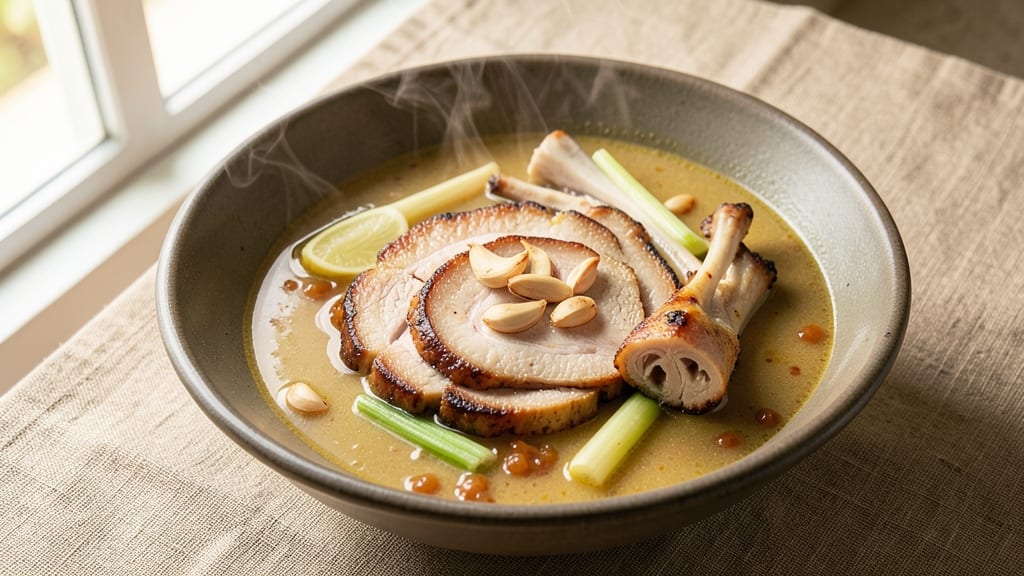
This Filipino soup recipe delivers the bold, aromatic flavors that make comfort food unforgettable—ginger, lemongrass, and pork simmered into a rich, umami-packed broth that tastes like home.
The secret lies in slow-cooked pork bones and aromatic spices that infuse the broth with layers of depth, creating a dish that’s both hearty and deeply satisfying. I’ve perfected this recipe to balance traditional techniques with modern convenience, ensuring you get restaurant-quality results in your own kitchen.
What sets this soup apart is the harmonious blend of sour, spicy, and savory elements that define Filipino cuisine. The broth starts with a fragrant base of ginger, lemongrass, and garlic, then builds complexity with pork, shrimp paste (bagoong), and a touch of vinegar for brightness.
Each component plays a role—crispy pork belly adds richness, while silky shrimp and tender vegetables round out the texture. The result is a soup that’s visibly vibrant, aromatic, and impossible to resist.
This recipe is designed to be foolproof yet customizable, whether you’re feeding a family or meal prepping for the week. The broth can be made ahead and reheated, while the toppings—like crispy garlic, chopped green onions, or a squeeze of calamansi—let you adjust to taste.
It’s the kind of dish that warms the soul and fills the house with an inviting aroma, making every spoonful feel like a hug in bowl form.
Perfect for chilly evenings, potlucks, or as a starter for a Filipino feast, this soup proves that homemade can rival even the most beloved restaurant versions. Ready to create something that tastes like nostalgia? Let’s get cooking.
Ingredients for filipino soup
These aromatic ingredients transform simple pantry staples into a restaurant-worthy Filipino soup.
| Ingredient | Amount | Notes |
|---|---|---|
| Pork Bones 🍖 | 2 lb | Marrow bones preferred for richness |
| Pork Belly 🥓 | 1 lb | Skin-on for crispy topping |
| Fresh Ginger 🧅 | 2 inches | Thinly sliced, peeled |
| Lemongrass Stalks 🌿 | 4 whole | Bruised and cut into 2-inch pieces |
| Garlic Cloves 🧄 | 8 cloves | Smashed, not minced |
| Shrimp Paste (Bagoong) 🦐 | 1 tbsp | Filipino shrimp paste, not fish sauce |
| Canned Tomatoes 🍅 | 14 ½ oz | San Marzano preferred, crushed by hand |
| Canned Tomato Sauce 🍅 | 6 oz | No sugar added, smooth consistency |
| Coconut Milk 🥥 | 1 can (13.5 oz) | Full-fat for creaminess |
| Green Onions 🧅 | ½ cup | Chopped, white and green parts |
| Fresh Thai Basil 🌿 | ¼ cup | Or regular basil in a pinch |
| Calamansi or Lime Juice 🍋 | 2 tbsp | Freshly squeezed, brightens flavor |
| Cane Vinegar 💧 | 1 tbsp | White vinegar substitute |
| Salt 🧂 | 1 ½ tsp | Diamond Crystal preferred |
| Black Peppercorns 🌶️ | ½ tsp | Freshly cracked |
The pork bones are non-negotiable—look for marrow bones at Asian markets or your butcher's meat counter. They're worth the hunt for that deep, gelatinous richness. Costco often carries them pre-packaged, but if you're buying whole, ask for the knuckle ends too. Fresh ginger and lemongrass should smell vibrant and alive—no shriveled stems or dull aromas. The shrimp paste (bagoong) is the soul of this dish; Filipino brands like La Victoria are your best bet, but avoid the fish sauce lookalikes. For the tomatoes, San Marzano cans from Italy make all the difference—they're sweeter and less acidic, which balances the umami perfectly.
No shrimp paste? Fish sauce plus a pinch of sugar gets you close, though it won't have that exact funk. Swap Thai basil for regular basil, but double the amount since it's milder. Coconut milk too thick? Thin it with warm broth before adding. The pork belly can be pre-cooked and sliced into thin strips for topping, or you can crisp it fresh right before serving. For the garlic, smashing the cloves releases more flavor than mincing—just don't overdo it or it'll turn bitter. Vinegar substitutes? Rice vinegar works in a pinch, but cane vinegar has that authentic tang.
This broth tastes even better the next day—make a double batch and freeze half. Store it in glass jars for up to 5 days in the fridge, or 3 months frozen. I like to portion it into meal prep containers with the pork belly slices on top. The basil and green onions can be added fresh when reheating, or stored separately in the fridge for 3 days. For extra convenience, freeze the broth without the toppings—just thaw, heat, and add fresh ingredients when ready.
Why You'll Love This Recipe
- One-Pot Magic: The pork bones and belly practically cook themselves—just simmer, skim, and let the broth work its magic. No chopping mountains of veggies or fussing with multiple pans here.
- Umami Bomb: That first sip? Pure deep, savory satisfaction from the pork bones rendering into rich, velvety broth, while the ginger and lemongrass add a bright, herbal punch. Honestly, it’s the kind of flavor that makes you pause mid-spoonful.
- Leftovers That Shine: This soup only gets better the next day—thicker, more concentrated, and perfect for quick lunches or reheating over rice. I’ll be real: my freezer is always stocked with portions because it’s that reliable.
- Budget-Buster Win: Pork bones and belly stretch into gallons of broth, turning a few cheap cuts into meals that feed the whole family. Plus, the aromatics (garlic, ginger, lemongrass) are pantry staples that pack serious flavor without breaking the bank.
Step-by-Step instructions for Filipino soup with pork and lemongrass
Here's the method that delivers layers of umami and aromatic depth in every spoonful.
Prepare the Base with Pork Bones and Belly
In a large Dutch oven, combine the 2 lb pork bones and 1 lb pork belly skin-side down. Add 8 cups water and bring to a boil over high heat. Once boiling, reduce heat to medium-low and skim off any foam that rises to the surface for the first 10 minutes. This ensures a clean broth foundation.
Simmer uncovered for 2 hours, maintaining a gentle simmer—not a rolling boil. You'll know it's ready when the pork bones are easily separated from the meat and the broth has deepened in color. The pork belly skin should be crispy and golden—this is where the magic happens. Strain the broth through a fine-mesh sieve, pressing gently on the solids to extract maximum flavor. Discard the bones and reserve the meat for later use.
Build the Aromatic Base with Ginger and Lemongrass
Return the strained broth to the Dutch oven and add the 2 inches fresh ginger (thinly sliced), 4 whole lemongrass stalks (bruised and cut into 2-inch pieces), and 8 cloves garlic cloves (smashed). Bring to a gentle simmer over medium heat and let cook for 15 minutes, allowing the aromatics to infuse the broth. You'll notice the ginger softening and the lemongrass releasing its citrusy aroma—this is the soul of the soup.
Stir in the 1 tbsp shrimp paste (bagoong) and cook for an additional 5 minutes. The shrimp paste will dissolve and deepen the umami profile, giving the broth that unmistakable Filipino character. Remove from heat and let the aromatics steep for 10 minutes before straining them out. Discard the solids—you've extracted all their essence into the broth.
Develop the Tomato-Coconut Sauce
In the same pot, add the 14.5 oz canned tomatoes (crushed by hand) and 6 oz canned tomato sauce. Simmer over medium heat for 10 minutes, stirring occasionally, until the tomatoes break down and the mixture thickens slightly. This step reduces the acidity while concentrating the tomato flavor.
Stir in the 1 can (13.5 oz) coconut milk and 1 tbsp cane vinegar, then simmer for another 5 minutes. The vinegar brightens the coconut's richness, creating a perfect balance. Taste and adjust seasoning with 1 tsp salt and 0.25 tsp black peppercorns (freshly cracked). The sauce should be velvety and cohesive, with a subtle tang.
Finish with Pork and Fresh Herbs
Shred the reserved pork meat from the bones and add it to the pot along with the 2 tbsp calamansi or lime juice. Simmer gently for 10 minutes to meld the flavors. The acidity from the citrus will tenderize the pork slightly and cut through the richness of the coconut.
Stir in the 0.5 cup green onions (chopped) and 0.25 cup fresh Thai basil, then simmer for an additional 2 minutes. Remove from heat and let the soup rest for 5 minutes to allow the basil to release its aroma. Taste again and adjust with the remaining 0.5 tsp salt if needed. The final touch is a sprinkle of extra basil on top—this adds freshness and visual appeal.
Serve with Crispy Pork Belly
While the soup simmers, crisp the pork belly skin in a separate skillet over medium heat for 3-4 minutes until golden and crackling. Serve the soup hot, topped with the crispy pork belly pieces. The contrast of textures—silky broth, tender pork, and crispy skin—makes every bite unforgettable.
This soup is best enjoyed immediately, but it keeps well in the refrigerator for 3 days and freezes beautifully for up to 3 months. The flavors only deepen over time as the aromatics continue to infuse.
Pro Tips For Making Filipino Soup
- BLISTER THE BELLY FIRST: Pork belly won’t render its fat properly if you brown it gently—get it screaming hot in a dry pot until the edges turn deep golden. I learned this the hard way when my soup stayed greasy and underwhelming. Once it’s crispy in spots, add the bones and aromatics to lock in that rich flavor from the start.
- SMASH THE GINGER: Don’t just chop the ginger—pound it with the flat side of your knife until it’s bruised and releasing juices. This releases more heat and aroma, which is the thing that matters most when you’re simmering for hours. (Yes, even if you’re impatient like me.)
- STRAIN THE BROTH TWICE: After the first simmer, strain out the pork belly and bones, then return the broth to the pot for a second pass with fresh aromatics. The first extraction gets the fat and sediment; the second pulls out deeper flavor. Skip this, and your soup tastes like it’s missing something—it is.
- USE LEMONGRASS STALKS, NOT JUICE: Tossing in chopped stalks instead of bottled juice gives the broth a bright, herbal lift that lasts through the whole cooking process. I was skeptical until I tried it—now I can’t go back. Just bruise the stalks lightly with your palm before adding to release oils without turning the broth bitter.
Creative variations of these flavors
Sour Sinigang Style
Transform this rich soup into a tangy sinigang by adding 1 cup tamarind paste (or 2 tbsp tamarind pulp) to the broth during Step 2. For extra sourness, stir in ½ cup green mango slices or ¼ cup guava at the end.
Use 1 lb shrimp instead of pork for a lighter version, or keep the pork and add 1 cup water spinach or kangkong for a classic touch. The tamarind’s bright acidity will cut through the coconut’s creaminess beautifully. 🍋
Spicy Bagoong-Based Twist
For a spicy, funky variation, increase the shrimp paste (bagoong) to 2 tbsp and add 1 tbsp sambal oelek with the aromatics in Step 2. Stir in ½ cup chopped siling labuyo (bird’s eye chilies) at the end for heat.
Top with crushed garlic chips and fried shallots for crunch. This version is a crowd-pleaser at Filipino gatherings—just warn guests it’s spicy! 🌶️
Coconut Milk-Free Version
Skip the coconut milk entirely and replace it with 1 cup extra broth in Step 3. Add 1 tbsp fish sauce and 1 tsp sugar to balance flavors. This lighter broth works well with chicken or shrimp, and you can finish it with 1 tbsp soy sauce for depth.
It’s a great option if you’re avoiding dairy or want a clearer, more broth-forward soup. 🥗
Vegetarian Adaptation
Swap the pork for 1 lb firm tofu (pressed and cubed) or mushrooms (shiitake or oyster). Use 1 tbsp miso paste instead of shrimp paste for umami, and add 1 cup bok choy or long beans in Step 4.
Boost the ginger to 3 inches and lemongrass to 6 stalks to compensate for the missing meaty depth. A squeeze of lime juice at the end brightens the dish. 🌱
Regional Tagalog Style
For a Tagalog-inspired take, add 1 tbsp patis (fish sauce) and 1 tsp sugar to the broth in Step 2. Include 1 cup string beans and ½ cup corn kernels in Step 4.
Top with crispy garlic and chopped calamansi leaves (if available) for an authentic touch. This version is lighter but still packed with bold flavors. 🗺️
Slow-Cooker Shortcut
Simplify the process by using a slow cooker for the broth. Combine all ingredients except fresh herbs and pork belly in the slow cooker, cook on low for 6 hours, then add the pork belly and crisp it separately.
The slow cooker deepens the flavors with minimal effort—perfect for busy weeknights. Just remember to skim foam in the first hour. ⏰
Nutrition facts
Frequently asked questions
Can I make this Filipino soup without shrimp paste?
The shrimp paste (bagoong) is key for authentic umami, but you can substitute 1 tbsp fish sauce plus ½ tsp sugar for a similar savory depth. For a vegetarian option, use 1 tbsp miso paste instead—it adds that fermented richness without seafood. Just reduce the salt slightly since miso is salty.
How do I make the broth more flavorful?
For deeper flavor, parboil the pork bones first for 10 minutes to remove impurities, then rinse thoroughly. Use marrow bones for extra gelatin, and add 1 tbsp soy sauce or 1 piece star anise while simmering. Skim foam aggressively in the first 15 minutes to ensure clarity. The longer you simmer (up to 3 hours), the richer it gets!
Can I use chicken instead of pork?
Replace pork bones with 2 lb chicken bones (back or neck) and use 1 lb chicken thighs instead of pork belly. Simmer the chicken bones for 1.5 hours instead of 2—they cook faster. For extra depth, add 1 tbsp chicken fat or 1 piece bay leaf to the broth. The result will be lighter but still packed with flavor.
What’s the best way to store leftovers?
Store the broth (without toppings) in glass jars for up to 5 days in the fridge, or freeze for 3 months. Reheat gently on the stove—never microwave, as it dulls the aromatics. Keep fresh herbs and crispy toppings separate until reheating. For meal prep, portion into meal prep containers with broth, pork, and a splash of lime juice to preserve freshness.
Why does my soup taste bland?
Blandness usually means insufficient umami or overcooking the aromatics. Boost flavor by adding 1 extra tbsp shrimp paste or 1 tsp soy sauce. If the broth tastes flat, reduce it by 25% on the stove to concentrate flavors. For freshness, finish with extra lime juice and fresh basil—acidity and herbs brighten dull dishes instantly.