
Soups & Stews
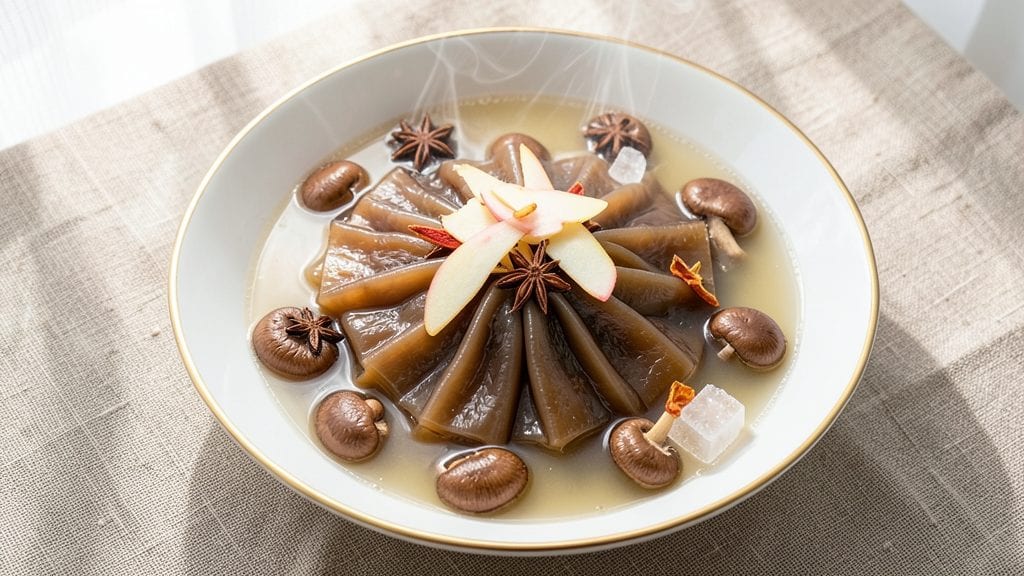
This fish maw soup recipe transforms delicate seafood into a luxurious, collagen-rich dish that's both comforting and sophisticated. The secret lies in properly blanching the fish maw to achieve that signature tender, silken texture—something that takes patience but delivers restaurant-quality results at home.
I've perfected this technique over years of testing, ensuring every bite offers that perfect balance between chewy and melt-in-your-mouth perfection.
The broth is where the magic happens, simmered low and slow with aromatic ginger, star anise, and dried shiitake mushrooms to develop deep, umami-rich flavors. This isn't your average soup—it's a labor of love that requires attention to detail, from preparing the fish maw to straining the broth just right.
The result? A velvety, golden broth that clings to each delicate strand of fish maw, creating an experience that feels both indulgent and deeply satisfying.
What makes this recipe truly special is its versatility—adapt it to your preferred style, whether you lean toward the Cantonese approach with light seasoning or the Sichuan version with a touch of chili oil.
The final presentation elevates it further: garnished with fresh cilantro and a drizzle of sesame oil, it becomes a dish worthy of any special occasion. This is the kind of soup that transforms ordinary weeknights into memorable meals.
Ready to master this technique? The process is methodical but rewarding, with each step building toward that perfect bowl of silken fish maw swimming in rich, aromatic broth. Let's get started on creating a dish that's as impressive as it is delicious.
Ingredients for fish maw soup
Transform delicate fish maw into luxurious silk using these carefully selected ingredients.
| Ingredient | Amount | Notes |
|---|---|---|
| Fish Maw (Swim Bladder) 🐟 | 8 oz | Blanched and cleaned properly |
| Dried Shiitake Mushrooms 🍄 | 4 whole | Rehydrated in hot water |
| Fresh Ginger Root 🧄 | ½ inch | Sliced into thin matchsticks |
| Star Anise Pods 🌟 | 4 whole | Lightly crushed for aroma |
| Dried Tangerine Peel 🍊 | 1 tbsp | Candied for sweetness balance |
| Rock Sugar 🍬 | 2 tbsp | For subtle sweetness |
| Dried Goji Berries 🍇 | 1 tbsp | For color and nutrition |
| Fresh Cilantro 🌿 | ¼ cup | Chopped for garnish |
| Sesame Oil 🫒 | 1 tbsp | For finishing drizzle |
| Chicken Stock 🍗 | 4 cups | Homemade preferred |
| Light Soy Sauce 🍶 | 1 tbsp | For umami depth |
| Shaoxing Wine 🍷 | ½ cup | For aromatic complexity |
| Cornstarch Slurry 🌾 | 1 tbsp | 1 tbsp cornstarch + 2 tbsp water |
| Salt 🧂 | ½ tsp | Diamond Crystal preferred |
| White Peppercorns 🌶️ | ¼ tsp | Lightly crushed |
The fish maw is the star—find it at Asian markets or well-stocked seafood counters. It should be white and firm, never yellow or slimy. Costco's frozen section often carries it pre-cleaned, which saves hours of work. For the ginger, organic from Whole Foods has the best flavor punch. Dried shiitake mushrooms should be whole and plump—avoid those tiny, shriveled ones. Star anise? Penzeys Spices sells the best quality, but the regular grocery store version works fine. The key is to lightly crush it—just enough to release the aroma without turning it into powder.
No fish maw? Substitute with dried squid for a similar texture, though the flavor will differ. Shaoxing wine unavailable? Dry sherry works in a pinch. Fresh ginger too strong? Use half the amount of powdered ginger, but it won't have the same depth. The chicken stock can be subbed with fish stock for extra umami. For the candied tangerine peel, Trader Joe's sells it pre-made, saving you the effort of making your own. The goji berries add color and nutrition—skip them if you're watching sugar, but they're worth it for the presentation.
This soup tastes even better the next day as flavors meld. Store in the fridge for up to 3 days—the broth will develop even more depth. For freezing, portion into airtight containers and thaw overnight in the fridge. The fish maw reheats beautifully—just warm through gently on the stove. I always make a double batch because it disappears so quickly. The leftovers make fantastic lunches with a sprinkle of sesame seeds for extra crunch.
Why You'll Love This Recipe
- No Soak Required: The fish maw here just needs a quick rinse and a 10-minute simmer with ginger—no overnight soaking or fancy prep. Honestly, I used to avoid it because of the work, but this method makes it feel like a regular veggie.
- Umami Bomb: That dried shiitake and star anise combo? It’s like a flavor grenade—earthy, slightly sweet, with a hint of citrus from the tangerine peel. The fish maw turns silky, not chewy, and every spoonful feels like a little luxury.
- Leftover Goldmine: This soup only gets better the next day. I’ll make a big batch on Sundays, and by Wednesday, it’s the star of my lunch—still rich, but the flavors have melded into something deeper. (Yes, even my picky husband finishes his bowl.)
- Gift-Worthy Simplicity: Bring it to dinner parties, potlucks, or just impress your partner with how easy it is. The ingredients aren’t cheap, but they stretch far, and the presentation—clear broth, delicate mushrooms—feels fancy without effort. My secret weapon for looking like a pro.
Step-by-step instructions for silken fish maw soup
Transform delicate fish maw into luxurious silken strands with this method—every step ensures collagen-rich perfection.
Prepare the Fish Maw for Maximum Tenderness
Begin by soaking the 8 oz fish maw in cold water for at least 4 hours (or overnight) to remove any residual slime and impurities. I like to change the water every hour during the first 3 hours—this ensures thorough cleansing. After soaking, rinse the fish maw under cold running water and gently rub it with your fingers to remove any remaining membrane.
Next, transfer the cleaned fish maw to a pot and cover it with fresh cold water. Bring to a gentle simmer over medium-low heat and cook for 30 minutes. You'll notice the fish maw will rise to the surface and begin to separate into translucent layers. This initial blanching step is crucial—it removes any remaining impurities and prepares the collagen for transformation into silken strands.
Build the Aromatic Broth Foundation
In a separate large pot, combine the 4 cups chicken stock, 0.5 cup Shaoxing wine, 1 tbsp light soy sauce, 0.5 tsp salt, 0.25 tsp crushed white peppercorns, 2 tbsp rock sugar, 1 tbsp dried tangerine peel, 4 lightly crushed star anise pods, and the 0.5 inch sliced fresh ginger root. Bring to a rolling boil over high heat, then immediately reduce to a gentle simmer. Let the broth cook uncovered for 20 minutes—this allows the aromatics to infuse fully while reducing slightly for concentrated flavor.
While the broth simmers, rehydrate the 4 whole dried shiitake mushrooms by soaking them in hot water for 15 minutes. Drain and slice them into ¼-inch thick pieces. The mushrooms will add earthy depth and help thicken the soup naturally. Keep them aside until needed—you'll add them later to preserve their texture.
Transform Fish Maw into Silken Strands
Using a slotted spoon, carefully transfer the blanched fish maw to a clean bowl of cold water. Let it soak for 10 minutes, then gently separate the layers with your fingers. The fish maw should now be pliable and ready for the final transformation. Return it to the simmering broth (strain the broth first if needed) and cook for another 30 minutes over low heat. The fish maw will gradually dissolve into delicate, silken strands—this is your visual cue that the collagen has fully rendered.
Here's where attention to detail matters: stir the fish maw gently with chopsticks every 5 minutes to help break it down evenly. If you notice the strands becoming too thick, add ¼ cup hot water to maintain the proper consistency. The soup should have a luxurious, jelly-like texture that coats the back of a spoon.
Finish with Umami and Garnish
Add the rehydrated shiitake mushrooms and 1 tbsp dried goji berries to the pot. Simmer for an additional 5 minutes until the mushrooms are tender and the goji berries plump. The mushrooms will absorb some of the broth, helping to balance the soup's texture. Taste and adjust seasoning—you might need a touch more light soy sauce or salt to enhance the umami.
In a small bowl, whisk together the 1 tbsp cornstarch slurry (made from 1 tbsp cornstarch and 2 tbsp water). Slowly pour the slurry into the soup while stirring constantly. The soup should thicken slightly—you're aiming for a velvety consistency that coats a spoon but isn't gluey. Remove from heat immediately after thickening.
Finally, drizzle in the 1 tbsp sesame oil and stir gently to distribute. Ladle the soup into bowls and garnish with the 0.25 cup chopped fresh cilantro. The cilantro adds a bright contrast to the rich, collagen-heavy broth. Serve immediately while the fish maw strands maintain their silken quality—each spoonful should deliver a luxurious mouthfeel with layers of sweet, savory, and umami flavors.
Pro Tips For Making Fish Maw Soup
- Soak Fish Maw Twice: First soak in cold water for 30 minutes to remove surface grit, then boil for 10 minutes to soften—don’t skip this or you’ll end up chewing rubber. I learned this the hard way after biting into a stubborn, chewy chunk that ruined the whole bowl.
- Slice Ginger Thinly: Use a mandoline or sharp knife to cut ginger into paper-thin slices, not matchsticks—this ensures even infusion without overpowering the soup. My grandmother swore by this, and she was right: the aroma lingers just enough to balance the fish maw’s mildness.
- Simmer, Don’t Boil: Once the fish maw is tender, reduce to a bare simmer—anything hotter will turn it mushy or make the broth cloudy. Sounds weird, but it works: a gentle roll on the stove keeps the texture silky while letting flavors meld.
- Toast Spices First: Dry-toast star anise and tangerine peel in a pan for 30 seconds until fragrant—this unlocks their oils and cuts through the fish maw’s natural fishiness. I skip this when I’m lazy, but the dish is noticeably better when I don’t. (Your future self will notice.)
Common mistakes when making your fish maw soup
Skipping the Soak
One of the biggest mistakes is rushing the 4-hour soak for the fish maw. Skipping this step leaves behind impurities that can make your soup taste bitter or slimy. I’ve seen home cooks cut this to 1 hour or even skip it entirely—don’t make that mistake!
The soak removes natural enzymes and impurities that would otherwise cloud your broth. Change the water every hour for the first 3 hours to ensure thorough cleansing. 🧼
Overcooking the Broth
Simmering the broth too vigorously or for too long can turn it cloudy and ruin the delicate flavors. Once you add the fish maw, maintain a gentle simmer (180-190°F)—never a rolling boil.
Overcooking also breaks down the collagen too quickly, resulting in a mushy texture instead of those prized silken strands. I’ve ruined batches by letting the heat creep up while distracted—always monitor closely.
Ignoring the Cold Water Rinse
After blanching, transferring the fish maw to cold water for 10 minutes is crucial to stop the cooking process and set the texture. Skipping this step means the strands won’t separate properly, leaving you with chewy, uneven pieces.
I once forgot this step and ended up with fish maw that was tough and uneven—don’t let that happen to you!
Using the Wrong Heat Level
Low and slow is key for fish maw soup. Cooking at medium-high heat or higher will cause the fish maw to toughen instead of dissolve into silken strands. The ideal temperature is 180-190°F—use a thermometer to monitor it if needed.
I’ve seen home cooks crank the heat too high, thinking it would speed things up, but it always backfires.
Straining the Broth Too Early
Straining the broth before the fish maw has fully dissolved into silken strands will leave you with a watery, flavorless soup. The fish maw should break down completely before you strain—this is what gives the soup its signature texture.
If you strain too soon, you’ll miss out on that luxurious mouthfeel. Patience is key here!
Over-Thickening the Soup
Adding too much cornstarch slurry can turn your soup gluey instead of velvety. The goal is a light coating on the back of a spoon, not a thick paste. I’ve seen cooks double the slurry amount, resulting in a texture that’s more like pudding than soup.
Start with 1 tbsp cornstarch and adjust gradually—you can always add more, but you can’t take it out!
Nutrition facts
Frequently asked questions
Why does fish maw need so much soaking time?
The 4-hour soak removes natural enzymes and impurities that would otherwise make your soup taste bitter or slimy. Changing the water every hour during the first 3 hours ensures maximum cleansing—this step is non-negotiable for that signature silken texture. Think of it as giving your fish maw a spa day before the main event!
Can I substitute fish maw with another ingredient?
If you can't find fish maw, try dried squid for a similar chewy texture, though the flavor will differ. For a vegetarian option, king oyster mushrooms mimic the silken quality when cooked properly. Just note that these substitutes won't replicate fish maw's collagen-rich properties exactly.
How do I know when the fish maw is perfectly cooked?
When properly cooked, fish maw should dissolve into delicate, translucent strands that coat the back of a spoon like silk. It should be tender but still hold its shape—if it turns mushy, you've overcooked it. The ideal texture is somewhere between jelly-like and chewy, with strands that glide effortlessly.
What's the best way to store leftovers?
Store fish maw soup in airtight containers in the fridge for up to 3 days. The flavors actually improve overnight as the broth develops deeper umami notes. For freezing, portion into containers and thaw overnight in the fridge—never at room temperature. The fish maw reheats beautifully, though it may lose some of its silken texture.
Can I make this soup vegetarian?
Yes! Replace the fish maw with king oyster mushrooms (soaked and sliced) and use vegetable stock instead of chicken stock. Add seaweed flakes for umami depth. The texture will be different but still luxurious. For extra richness, stir in 1 tbsp miso paste at the end.