
Soups & Stews
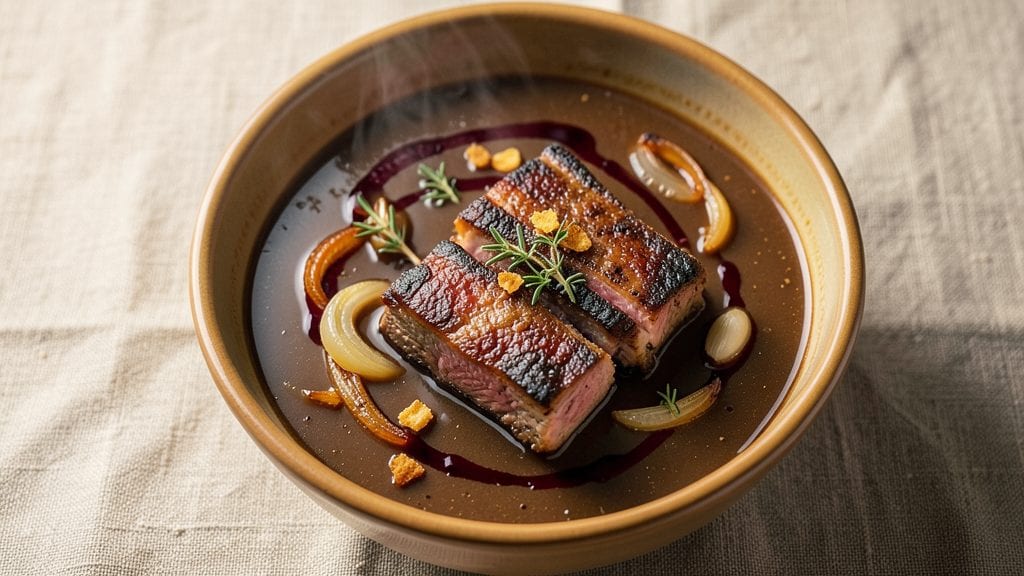
Creating a French onion beef short rib soup that delivers restaurant-quality depth without an overnight wait is entirely possible with the right technique. The key lies in slow-roasting onions until they're caramelized to perfection while simultaneously braising beef short ribs for maximum tenderness—both achieved in a single pot.
This method preserves all those rich, savory flavors that make French onion soup legendary, but with the added richness of fall-off-the-bone beef.
The secret to this soup's velvety texture and layered flavor begins with patience—allowing onions to develop deep, sweet caramelization over 45 minutes while the ribs simmer in their own juices. Unlike traditional recipes that require hours of simmering, this approach builds complexity through controlled cooking times and precise ingredient layering.
The result is a soup where each spoonful delivers a perfect balance of sweet, savory, and umami notes.
What you'll end up with is a deeply aromatic soup where tender beef short ribs melt in your mouth, surrounded by a glossy, caramelized onion broth that's rich yet not overly heavy. The technique ensures the broth stays velvety without requiring reduction, making it both foolproof and restaurant-worthy.
This is comfort food at its finest—warm, satisfying, and packed with restaurant-quality flavor in under 3 hours of active and passive time.
Perfect for chilly evenings or special occasions, this soup scales beautifully for gatherings while still impressing when served one-on-one. The method also allows for creative variations, from adding a touch of brandy for depth to incorporating fresh thyme for brightness.
Let's get started on creating your own bowl of this hearty masterpiece.
Ingredients for french onion beef short rib soup
Restaurant-quality depth begins with these carefully selected ingredients designed to build rich, layered flavors.
| Ingredient | Amount | Notes |
|---|---|---|
| Beef Short Ribs 🥩 | 3 lb | Bone-in, cut into 2-inch pieces |
| Yellow Onions 🧅 | 4 large | Peeled, halved lengthwise, root intact |
| Yellow Onions 🧅 | 2 cups | Finely chopped for caramelization |
| Garlic Cloves 🧄 | 8 cloves | Peeled, smashed for infusion |
| Beef Broth 💧 | 6 cups | Homemade or high-quality store-bought |
| Dry Red Wine 🍷 | 1 cup | Cabernet Sauvignon or Merlot |
| Tomato Paste 🍅 | 2 tbsp | Smooth, no sugar added |
| Fresh Thyme 🌿 | 2 sprigs | Stems removed, leaves only |
| Fresh Bay Leaves 🌿 | 2 whole | For subtle aromatic depth |
| Extra-Virgin Olive Oil 🫒 | ½ cup | High-quality, fruity variety |
| Diamond Crystal Kosher Salt 🧂 | 1 ½ tsp | For seasoning and caramelization |
| Freshly Ground Black Pepper 🌶️ | 1 tsp | Coarsely cracked |
| Brandy 🍶 | 2 tbsp | Optional, for depth of flavor |
| Swiss Gruyère Cheese 🧀 | 1 cup | Shredded, for topping |
| Baguette 🍞 | 1 loaf | For serving, crusty preferred |
The beef short ribs are the foundation of this soup, so prioritize bone-in cuts with good marbling—they yield the most flavorful broth. Most butchers will trim and portion them for you, but if buying whole, look for chuck or plate cuts with visible fat. Costco or Whole Foods typically carry high-quality short ribs, though local butchers often provide superior product. Avoid pre-cut ribs that appear dry or lack marbling, as these will yield less tender meat and weaker broth. For the onions, yellow varieties with firm texture caramelize best—avoid any with soft spots or sprouting.
No red wine on hand? Substitute with an extra cup of beef broth and a splash of balsamic vinegar for acidity. Fresh thyme can be swapped for dried thyme at one-third the amount, though the flavor profile will differ slightly. For the tomato paste, Trader Joe's or Muir Glen brands offer smooth, no-sugar-added options that won't overpower the dish. The brandy, while optional, adds a sophisticated depth—Korbel or Christian Brothers are reliable choices. Gruyère can be substituted with Comté or Emmental, though the flavor will vary. For the baguette, Brioche or sourdough work equally well if Gruyère is unavailable.
Store the beef short ribs in the coldest part of your fridge for up to 3 days before use to maximize tenderness. Caramelized onions keep for 5 days in the refrigerator, though their texture softens over time. The finished soup reheats beautifully—simmer gently for 10-15 minutes to restore its velvety texture. For meal prep, portion the soup into airtight containers and freeze for up to 3 months. The cheese topping should be added fresh before serving to maintain its melt and flavor.
Why You'll Love This Recipe
- One-Pot Magic: I swear by this—just toss the ribs, onions, and broth in one pot, and let it do all the work. No chopping mountains of veggies, no last-minute prep. The onions caramelize right in the broth while the ribs melt into tender perfection.
- Rich & Deep Umami: That first sip? Chef’s kiss. The beef broth reduces into a velvety base, the short ribs fall apart with a single fork, and the caramelized onions add a sweet, savory punch. It’s the kind of flavor that makes you forget about takeout.
- Weeknight to Dinner Party: Honestly, this is my go-to for lazy Mondays and Sunday suppers. For a crowd, just double the batch—it’s still unfussy. Add a crusty baguette, a sprinkle of thyme, and suddenly you’ve got restaurant-worthy vibes without the fuss.
- Leftovers That Don’t Suck: Between us, most soups turn sad after day two. Not this one. The flavors actually deepened in my fridge—better the next day, even. Freeze half for when you’re too tired to cook, and reheat it straight from frozen. No compromise.
Step-by-step instructions for French onion beef short rib soup
Transform humble ingredients into a restaurant-worthy soup with this method—rich, caramelized flavors developed through precise technique.
Deep-Roast the Beef Short Ribs and Onions
Preheat your oven to 400°F. In a large Dutch oven, combine the 3 lb beef short ribs and 4 large yellow onions (halved lengthwise). Drizzle with 0.5 cup extra-virgin olive oil and season generously with 1.5 tsp diamond crystal kosher salt and 1 tsp freshly ground black pepper.
Roast uncovered for 45 minutes, stirring once halfway through. The onions should begin to soften and caramelize slightly at the edges, while the beef will develop a deep mahogany crust. This initial roasting builds the foundational flavors that separate this soup from ordinary versions.
Build the Caramelized Base
Remove the Dutch oven from the oven and carefully transfer the roasted beef and onions to a plate. Increase heat to medium-high on the stovetop. Add 2 cups finely chopped yellow onions and cook for 8-10 minutes, stirring frequently, until deeply golden brown and sweet-smelling.
Here's where the magic happens: the onions should transform into a thick, caramelized paste. If they begin to stick, add a splash of dry red wine to deglaze. Stir in the 8 cloves smashed garlic cloves and 2 tbsp tomato paste, cooking for another 2 minutes until fragrant. This aromatic base forms the soul of your soup.
Develop the Rich Broth
Return the beef and roasted onions to the Dutch oven. Pour in the 1 cup dry red wine, scraping up any browned bits from the bottom. Add the 6 cups beef broth, 2 sprigs fresh thyme, and 2 whole fresh bay leaves. Bring to a simmer, then reduce heat to low and cover partially.
Simmer gently for 2 hours, maintaining a barely-there bubble. The beef should become fork-tender, falling apart easily when probed. If the liquid reduces too much, add hot water 1 cup at a time until you reach your desired consistency. This slow cooking transforms tough short ribs into melt-in-your-mouth perfection.
Finish with Brandy and Cheese
Remove the beef from the broth and strain the liquid through a fine-mesh sieve into a clean pot. Discard the solids. Return the strained broth to the Dutch oven over medium heat. Add the 2 tbsp brandy and simmer for 3 minutes to allow the alcohol to cook off and deepen the flavor.
Return the beef to the broth and stir in the 1 cup shredded Swiss Gruyère cheese until melted and fully incorporated. Taste and adjust seasoning with additional diamond crystal kosher salt or freshly ground black pepper as needed. The cheese should create a velvety finish that ties all the flavors together.
Serve with Crusty Baguette
Ladle the soup into bowls, ensuring each serving contains generous pieces of beef. Serve immediately with 1 loaf baguette (cut into thick slices) on the side for dipping. The contrast between the rich, savory soup and the crispy bread creates the ultimate textural experience.
For maximum enjoyment, serve this soup while still steaming hot. The aroma alone will transport you to a Parisian bistro, while the first spoonful delivers layers of caramelized onion, tender beef, and that unmistakable French comfort that defines this classic dish.
Pro Tips For Making French Onion Beef Short Rib Soup
- Sear the Ribs Twice: I learned this the hard way—skipping the second sear means flavor gets lost in the broth. After browning them once, let the ribs cool slightly, then hit them with a quick sear again after adding the onions. That extra crust locks in the meaty goodness.
- Slice Onions Thin, Evenly: I used to chop onions haphazardly, and they’d either burn or turn to mush. Grab a sharp knife and cut them into paper-thin, uniform slices—about 1/8-inch thick. They’ll caramelize faster and sweeten the soup without turning bitter.
- Deglaze with Broth, Not Water: That browned-on fond is pure flavor, but water just dilutes it. After searing the ribs and onions, immediately pour in a cup of beef broth instead of water to scrape up every last bit of goodness. It’s the difference between good soup and great soup.
- Simmer Low and Long: Short ribs need patience—don’t rush them. Cover the pot and simmer at a gentle bubble (not a rolling boil) for at least 2.5 hours. The meat will fall off the bone, and the broth will turn rich and velvety. Skim any foam that rises, or it’ll make the soup cloudy.
Wine and beer pairings for this french onion beef short rib soup
Red Wine Harmony
A bold, medium-bodied Cabernet Sauvignon from Bordeaux or Napa Valley is my go-to pairing for this rich soup. The wine's tannins and dark fruit notes stand up to the beef's intensity while balancing the caramelized onions' sweetness.
Look for a 2018 or newer vintage with 12-14% ABV—just enough body to complement without overpowering. 🍷
For a lighter option, try a Pinot Noir from Burgundy or Oregon—its earthy undertones and red fruit flavors create beautiful contrast. Avoid heavy Syrah or Zinfandel, as their boldness can clash with the soup's delicate cheese finish.
Serve the wine slightly chilled (60-62°F) to enhance its brightness alongside the warm soup.
Beer Complements
A Belgian-style Dubbel like Westmalle Trappist offers the perfect balance—its caramel and spice notes mirror the soup's caramelized onions while the malty backbone stands up to the beef.
The alcohol content (7-8% ABV) won't overpower the dish. For a lighter option, try a German Märzen—its toasted malt sweetness enhances the Gruyère's nutty flavor.
Avoid heavy stouts or IPAs, as their bitterness can compete with the soup's richness. Instead, opt for a crisp German Helles or French Saison—both provide refreshing acidity that cuts through the fat. Serve beer at 45-50°F to preserve its crispness and highlight its malt profile. 🍺
Brandy Elevation
The 2 tbsp brandy in the recipe isn't just for flavor—it's a subtle nod to French bistro traditions. If you want to enhance the wine pairing, serve a Cognac or Armagnac alongside.
Their oak and vanilla notes complement the caramelized onions and beef's umami depth. A small glass (1-2 oz) as an aperitif before the meal builds anticipation.
For beer lovers, a Belgian-style Quadrupel like Westvleteren 12 pairs wonderfully with the brandy's warmth. The beer's dark fruit and spice notes create a symphony with the soup's rich layers.
Just remember: the brandy in the soup should be cooked off—the pairing is about the wine or beer you serve, not the alcohol in the dish itself.
Non-Alcoholic Options
For a non-alcoholic pairing, try a sparkling apple cider like Martinelli's—its bright acidity cleanses the palate between spoonfuls. The honey notes in dry cider also complement the caramelized onions beautifully. Serve chilled (40-45°F) for maximum refreshment.
A ginger beer like Feather's adds a zesty contrast that cuts through the soup's richness. The spicy ginger enhances the beef's savory depth while providing a refreshing finish. For a more sophisticated option, try a sparkling hibiscus tea—its tart, floral notes provide an unexpected but harmonious pairing. 💫
Nutrition facts
Frequently asked questions
Why do the onions need to caramelize for 45 minutes?
Slow-roasting the onions for 45 minutes at 400°F develops deep, complex sweetness that transforms ordinary onions into a rich, flavorful base. This extended time allows natural sugars to break down gradually, creating that signature caramelized depth that defines French onion soup. Skipping this step results in a broth that tastes more like cooked onions than the velvety, sweet-savory profile you want.
Can I substitute beef short ribs with another cut of beef?
While short ribs are ideal for their marbling and tenderness, you can use chuck roast or beef shank as substitutes. These cuts will need the full 2-hour simmering time to become fork-tender. Avoid leaner cuts like sirloin or flank steak—they won't yield the same rich broth or melt-in-your-mouth texture. For best results, choose a cut with visible fat and connective tissue.
How do I prevent the soup from becoming too thick?
Add hot water in 1-cup increments to maintain the desired consistency while simmering. The soup should have a velvety texture, not a heavy paste. If it thickens too much later, simply stir in 1/4 cup broth or water. Avoid over-reducing the broth during the initial cooking—this is where the magic happens, but patience is key.
Can I make this soup ahead of time?
Yes! The soup actually tastes better the next day as flavors meld. Store it in airtight containers in the fridge for up to 3 days or freeze for 3 months. Reheat gently on the stove over medium-low heat for 10-15 minutes, stirring occasionally, until warmed through. The cheese topping should be added fresh before serving to maintain its melt and flavor.
What's the best way to reheat leftovers?
Reheat leftovers on the stove over medium-low heat—never microwave, as it can make the broth grainy. Stir occasionally and add 1-2 tbsp broth or water if the soup thickens too much. For extra richness, stir in a splash of red wine or beef broth while reheating. This method preserves the velvety texture and prevents the cheese from separating.