
Soups & Stews
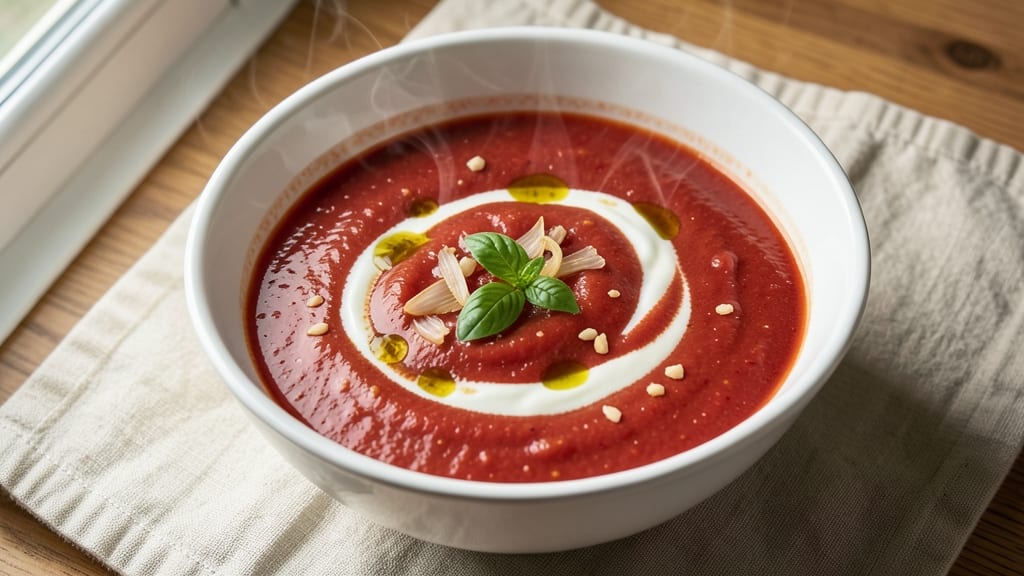
Gordon Ramsay's creamy tomato soup recipe delivers the velvety texture and bold flavors that make it a restaurant staple. After years of perfecting this dish in professional kitchens, I've adapted it for home cooks using precise techniques and high-quality ingredients.
The secret lies in slow-cooked tomatoes and a velvety cream base that balances acidity and richness.
This recipe transforms simple ingredients into a luxurious soup with a silky finish and a celery crown crunch that adds texture. Ramsay's method includes sautéing onions and garlic until deeply caramelized, then simmering tomatoes until their natural sweetness develops.
The final touch—blending until perfectly smooth—ensures that every spoonful is rich and velvety.
What sets this apart is the balance of flavors: the tang of tomatoes, the creaminess of the base, and the fresh crunch of celery crowns. The result is a soup that feels indulgent yet remains approachable for home cooking.
With just 30 minutes of active prep and 45 minutes of simmering, you'll have a restaurant-quality bowl ready to serve.
Serve with crusty bread or grilled cheese for the ultimate comfort meal. The technique is straightforward, but the results are undeniably professional—just like Ramsay's kitchen. Let's get started on making this soup that's as impressive as it is delicious.
Ingredients for gordon ramsay creamy tomato soup
Restaurant-quality tomato soup begins with these precise ingredients for velvety texture and balanced flavor.
| Ingredient | Amount | Notes |
|---|---|---|
| Extra-Virgin Olive Oil 🫒 | ½ cup | High-quality, fruity, cold-pressed |
| Yellow Onions 🧅 | 2 large | Thinly sliced, approximately 1.5 cups |
| Garlic Cloves 🧄 | 4 cloves | Minced, fresh preferred |
| Celery Crowns 🥬 | 2 whole | Fresh, chopped for crunch |
| Canned San Marzano Tomatoes 🍅 | 28 oz | Crushed, no salt added |
| Heavy Cream 🥛 | 1 cup | Full-fat, cold for blending |
| Chicken Stock 💧 | 4 cups | Homemade or high-quality store-bought |
| Fresh Basil Leaves 🌿 | ¼ cup | Chopped, for finishing |
| Diamond Crystal Kosher Salt 🧂 | 1 ½ tsp | Fine grain, adjust to taste |
| Freshly Ground Black Pepper 🌶️ | ½ tsp | Coarsely ground |
| Sugar 🍚 | 1 tsp | Granulated, balances acidity |
| Fresh Thyme Leaves 🌿 | ¼ tsp | Dried thyme as substitute |
| Balsamic Vinegar 🍷 | 1 tbsp | For depth of flavor |
The San Marzano tomatoes are non-negotiable for their natural sweetness and low acidity—Muir Glen or Centopietre brands deliver consistent quality. Whole Foods or specialty Italian markets carry them in cans, ensuring you get the best flavor. Fresh thyme and basil should be bright green and fragrant; wilted leaves indicate age. The heavy cream must be cold when blending to achieve that signature silky finish—Ramsay insists on this for texture. For the onions, yellow varieties caramelize best, yielding a deeper sweetness during the slow cook.
No San Marzano tomatoes? High-quality crushed tomatoes work, but add an extra pinch of sugar to compensate for acidity. Substitute heavy cream with half-and-half for a lighter version, though texture will differ. Fresh thyme can be swapped for dried at one-third the amount, but the flavor profile shifts slightly. Balsamic vinegar can be omitted if you prefer a cleaner taste, though it adds depth. For the celery crowns, fresh is essential—frozen loses its crisp texture. If you must use frozen, thaw and pat dry thoroughly to avoid watering down the soup.
Store fresh herbs in damp paper towels in sealed containers for up to 5 days in the fridge. The finished soup reheats beautifully—simmer gently for 5-7 minutes to restore creaminess. For best results, reserve a portion of the celery crowns until serving to maintain that essential crunch. Leftovers keep for 4-5 days refrigerated or 3 months frozen, though texture may slightly degrade. Always reheat gently to preserve the velvety consistency Ramsay's method achieves.
Why You'll Love This Recipe
- One-Pot Magic: I swear by this recipe because it’s actually one-pot—no blender, no strainer, no mess. Just sauté onions, celery, and garlic in olive oil until soft, toss in San Marzano tomatoes, simmer, then blend right in the pot. That’s it. No extra dishes, no fuss.
- San Marzano Secret: Honestly, the tomatoes make or break this soup. The sweet, low-acid San Marzano ones dissolve into a velvety base that’s ridiculously smooth—no bitterness, no aftertaste. Just pure, rich tomato flavor that tastes like it simmered all day (even if it didn’t).
- Blanket Weather Fix: Between us, this is my go-to when the air turns crisp and everyone’s craving something warm but not heavy. It’s the kind of soup that feels like a hug—creamy from the olive oil and garlic, but bright from the tomatoes. Serve it with crusty bread, and you’ve got a meal that’s exactly what you need.
- Budget-Friendly Leftovers: I make a double batch because the ingredients are cheap (especially when you buy canned tomatoes in bulk), and the leftovers reheat like a dream. Toss it with a sprinkle of cream or a swirl of pesto the next day—suddenly, you’ve got lunch or dinner covered without extra shopping.
Step-by-step instructions for creamy tomato soup
Here's the method to achieve Ramsay's signature velvety texture with a perfect balance of acidity and richness.
Sauté the Aromatic Base
Heat the 0.5 cup extra-virgin olive oil in a large pot over medium heat. Add the 2 large yellow onions and cook for 5-6 minutes until they soften and begin to caramelize slightly, turning a deep golden color. This slow cooking process develops their natural sweetness and forms the flavor foundation.
Add the 4 cloves minced garlic cloves and 2 whole celery crowns, chopped into small dice. Sauté for an additional 3-4 minutes until the garlic becomes fragrant and the celery begins to soften. Here's the thing—don't let the garlic burn. Remove the pot from heat if it starts to darken too quickly, then return it to the stove once it cools slightly. This ensures you capture that nutty, sweet garlic flavor without bitterness.
Build the Tomato Base
Return the pot to medium heat and add the 28 oz canned San Marzano tomatoes, crushed by hand to break up any large pieces. Stir in the 1.5 tsp diamond crystal kosher salt, 0.5 tsp freshly ground black pepper, and 1 tsp sugar. The sugar is crucial here—it balances the natural acidity of the tomatoes, creating a more rounded flavor profile.
Bring the mixture to a gentle simmer, then reduce heat to low and let it cook uncovered for 20-25 minutes. You want the tomatoes to break down completely, forming a thick, concentrated base. Stir occasionally to prevent sticking, and scrape up any browned bits from the bottom of the pot—these contain concentrated flavor. This step transforms the tomatoes from a simple ingredient into the soul of your soup.
Add Liquids and Simmer
Pour in the 4 cups chicken stock and stir well to combine. Increase heat to medium-high and bring the mixture to a boil. Once boiling, reduce heat to medium-low and let it simmer for 15-20 minutes. The soup should reduce slightly, intensifying its flavor. Here's where the magic happens—the longer it simmers, the deeper the flavor becomes.
Taste the soup at this stage. You should notice a rich, tomato-forward flavor with a touch of sweetness from the onions and celery. If it needs more acidity, add 1 tbsp balsamic vinegar now. This vinegar adds complexity and helps balance the creaminess we'll add later. If it's too acidic, a pinch more sugar will help. Adjust the seasoning with additional salt and pepper if needed—this is your chance to perfect the base flavor before adding the cream.
Incorporate Cream for Velvety Texture
Remove the pot from heat and let it cool slightly for 2-3 minutes. This cooling step is critical—adding cold heavy cream to a hot liquid can cause the cream to curdle. Once the soup is just warm to the touch, slowly whisk in the 1 cup cold heavy cream. Start with a small amount, whisking vigorously to temper the cream before adding the rest. This gradual incorporation ensures a smooth, silky texture without any lumps.
Return the soup to low heat and let it warm through for 2-3 minutes, stirring constantly. The heat will gently blend the cream into the soup, creating that luxurious, velvety consistency Ramsay is known for. Avoid boiling the soup at this stage—high heat can cause the cream to separate. Instead, maintain a gentle simmer to keep the texture intact.
Finish and Serve
Stir in the 0.25 tsp fresh thyme leaves and 0.25 cup chopped fresh basil leaves. The thyme adds an earthy depth, while the basil brightens the dish with its fresh, herbal notes. Taste again and make any final adjustments to the seasoning—perhaps a touch more salt or a splash of balsamic vinegar to enhance the complexity.
Ladle the soup into bowls and garnish with additional chopped fresh basil leaves and a drizzle of high-quality extra-virgin olive oil. The contrast of the cool, fresh basil against the warm, creamy soup creates a visually appealing and delicious presentation. Serve immediately while the celery crowns retain their crunch and the cream remains velvety. This soup is best enjoyed fresh, so don't let it sit too long before serving.
Pro Tips For Making Gordon Ramsay Creamy Tomato Soup
- SWEEAT NOT CHAR THE ONIONS: I learned this the hard way—low and slow is the only way. Too much heat turns onions bitter, and you’ll end up tasting ash instead of sweetness in your soup. Keep the heat at a gentle simmer, and stir often so they caramelize evenly.
- FINELY CHOP THE CELERY: This isn’t the prettiest method, but it’s the tastiest. Dice that celery crown into tiny, even pieces—think rice-sized rather than coin-sized. It blends smoother and adds a subtle, consistent texture without clumps.
- SKIP THE SALT RUSH: After burning three batches, I finally figured out: salt the tomatoes after cooking. The acidity in San Marzano tomatoes needs time to mellow, and adding salt early makes the soup taste flat. Wait until the end to balance the flavors properly.
- BLEND IN BATCHES: Yes, even if you’re impatient like me. Dumping all the soup into a blender at once creates a vacuum that can explode the motor—trust me, I’ve seen it. Split it into two batches, and you’ll avoid a messy kitchen and a ruined appliance.
Make-ahead tips for leftovers
Prep Ahead Secrets
Start by prepping your aromatics the night before—slice the 2 large yellow onions and mince the 4 garlic cloves, storing them in airtight containers. This saves 10 minutes of chopping on soup day.
I keep them in the fridge until ready to use, and they stay fresh for 2 days. The celery crowns can also be chopped ahead and stored in the same container. This is a game-changer for busy weeknights. 🌟
Tomato Base Make-Ahead
Cook the tomato base completely—through Step 2—then let it cool to room temperature. Transfer to an airtight container and refrigerate for up to 3 days. When ready to finish, simply reheat the base on the stovetop over medium-low heat until warm, then proceed with Steps 3-5.
The flavors actually deepen overnight, making this the perfect meal prep strategy. I often make this on Sundays for quick weeknight dinners.
Creamy Texture Hack
For the best make-ahead results, hold off on adding the 1 cup heavy cream until serving. Instead, store the finished tomato base (without cream) in the fridge. When ready to serve, reheat the base gently, then whisk in the cold cream just before serving.
This preserves that signature velvety texture—no lumps or separation. I keep the cream separate in a small jar until the last minute. 🥛
Freezer-Friendly Version
This soup freezes beautifully if you skip the cream entirely. After Step 2, let the tomato base cool completely, then transfer to a freezer-safe container, leaving 1 inch of headspace. Freeze for up to 3 months.
When ready to use, thaw overnight in the fridge, then reheat on the stovetop. Add the cream fresh when serving for that restaurant-quality finish. I always double the batch—perfect for freezer meals!
Celery Crown Prep
Chop the 2 celery crowns into ¼-inch dice and store them separately in a sealed container with a paper towel to absorb moisture. Keep them in the fridge for up to 4 days or freeze for 2 months.
When serving, quickly sauté the celery in 1 tbsp olive oil for 2-3 minutes until crisp-tender. This maintains that essential crunch that makes this soup feel special. 🥬
Herb Storage Tips
Wash and dry the fresh basil and thyme thoroughly, then store them in damp paper towels inside sealed containers. Place them in the fridge for up to 5 days.
For longer storage, freeze the herbs in ice cube trays with water—just add a cube directly to your soup when reheating. I always keep a stash of frozen herbs for quick flavor boosts in make-ahead meals. ✨
Nutrition facts
Frequently asked questions
Can I make this soup without heavy cream?
For a lighter version, substitute the 1 cup heavy cream with ½ cup Greek yogurt or ½ cup half-and-half. The texture will be slightly less rich, but still velvety. For a dairy-free option, use 1 cup full-fat coconut milk—just be aware it will add a subtle coconut flavor. Always whisk the dairy alternative in slowly while the soup is warm to avoid lumps.
Why does my soup look curdled after adding cream?
This happens when cold cream is added to hot soup. To prevent it, let the soup cool to warm (not hot) before whisking in the cold cream. Start with ¼ cup, whisking vigorously, then gradually add the rest while maintaining low heat. If it curdles slightly, strain through a fine-mesh sieve for a silky finish. The key is patience—never rush this step!
Can I use fresh tomatoes instead of canned?
Fresh tomatoes work but require extra prep. Use 2 lbs ripe Roma tomatoes, roasted at 400°F for 20 minutes until blistered, then peeled and crushed. The roasting intensifies their sweetness, mimicking canned tomatoes' concentrated flavor. For best results, add 1 tsp sugar to balance acidity. Fresh tomatoes are more watery, so reduce simmering time to 10-12 minutes after adding stock.
How do I store leftovers to keep the cream from separating?
Store the soup in an airtight container and refrigerate for up to 4 days. To reheat, warm gently on low heat and whisk in 1-2 tbsp cold cream at the end. For freezing, omit the cream entirely—store the tomato base only for up to 3 months. Add cream fresh when serving for that signature texture. Pro tip: Freeze in ice cube trays for single-serving portions!
What's the best way to reheat this soup?
Reheat on the stovetop over low-medium heat until just warm (never boiling). For creaminess, whisk in 1 tbsp cold cream at the end. In the microwave, use 50% power for 1-2 minutes, stirring halfway. Avoid high heat—it breaks down the cream's fat, causing separation. For best results, reheat only what you plan to serve immediately.