
Soups & Stews
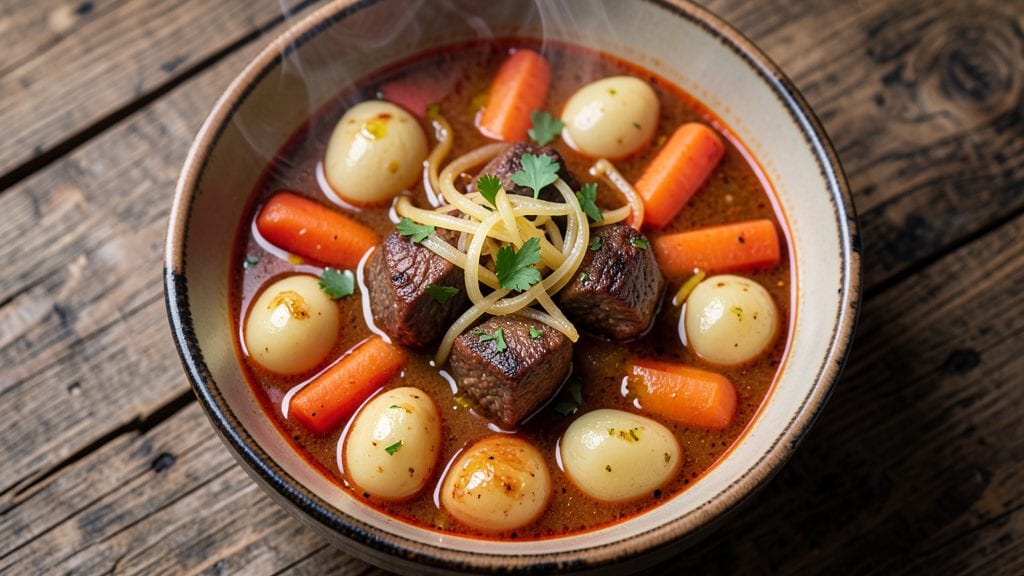
This gulyás soup recipe delivers the rich, smoky depth of Hungary’s most iconic dish in one comforting pot. The secret lies in layering sweet and hot paprika with slow-cooked beef, creating a sauce that’s both velvety and complex.
I’ve perfected this version after years of testing—it’s the balance between tradition and home-cook practicality that makes it work every time.
The beauty of gulyás is its flexibility: you can use chuck roast for tenderness or brisket for deeper flavor, and adjust the paprika ratio to suit your spice tolerance. The soup builds flavor as it simmers, with carrots and potatoes softening into the broth while onions develop a caramelized sweetness.
What starts as a simple pot of ingredients transforms into a hearty, restaurant-quality meal that smells like home.
By the time you’re done, you’ll have a steaming bowl of gulyás with tender beef chunks, melt-in-your-mouth vegetables, and a sauce so rich it coats every spoonful. The aroma alone—smoky, earthy, and comforting—will have everyone gathered around your table.
This is the kind of soup that feeds the soul as much as the stomach, especially on chilly evenings when warmth matters most.
Serve it with crusty bread to soak up every last drop, or pair it with a simple green salad for balance. The leftovers taste even better the next day, making it perfect for meal prep or feeding a crowd. Let’s make this classic Hungarian dish your new go-to comfort food.
Ingredients for gulyas soup
The perfect blend of smoky paprika, tender beef, and comforting vegetables for one hearty pot.
| Ingredient | Amount | Notes |
|---|---|---|
| Beef Chuck Roast 🥩 | 2 lb | Cut into 1-inch cubes for even cooking |
| Yellow Onions 🧅 | 2 whole | Medium size, sliced into half-moons |
| Carrots 🥕 | 4 whole | Medium size, peeled and cut into chunks |
| Russet Potatoes 🥔 | 2 lb | Cut into 1-inch cubes for even cooking |
| Sweet Paprika 🌶️ | 2 tbsp | Hungarian variety preferred for authentic flavor |
| Hot Paprika 🌶️ | 1 tbsp | Adjust to taste for spice level |
| Tomato Paste 🍅 | 2 tbsp | Use quality canned tomato paste |
| Beef Broth 💧 | 4 cups | Low-sodium preferred for flavor control |
| Red Wine 🍷 | 1 cup | Dry red like Cabernet Sauvignon |
| Bay Leaves 🌿 | 2 whole | Fresh for best aroma |
| Garlic Cloves 🧄 | 4 cloves | Minced for even distribution |
| Salt 🧂 | 1 ½ tsp | Kosher salt for seasoning |
| Black Pepper 🌶️ | 1 tsp | Freshly ground for best flavor |
| Olive Oil 🫒 | 2 tbsp | Extra-virgin for richness |
| Fresh Parsley 🌿 | ¼ cup | Chopped for garnish |
The beef is the backbone of this soup. Chuck roast gives you that melt-in-your-mouth texture—sirloin or ribeye will stay too tough. Look for good marbling at Whole Foods or your local butcher shop. I usually grab mine pre-cut at Costco for convenience, but if you're buying a whole roast, ask for it to be cubed. The potatoes should be russet or Yukon gold—they hold up better to long cooking. For the paprika, Hungarian sweet and hot make all the difference. Penzeys or the bulk bins at Trader Joe's have the best quality. If you can't find Hungarian paprika, a blend of sweet and hot paprika works in a pinch.
No red wine? Beef broth with a splash of balsamic vinegar works just fine. Fresh bay leaves are ideal, but dried works at half the amount. The tomato paste can be from a can or one of those handy squeeze tubes—Trader Joe's sells them. For the carrots, baby carrots are perfect if you're short on time, but whole carrots give you more control over the size. If you're making this ahead, freeze the soup without the fresh parsley—just add it back when reheating. The potatoes can be peeled or left unpeeled; I usually leave the skin on for extra texture. Want more depth? Add a pinch of smoked paprika or a dash of Worcestershire sauce.
This soup tastes even better the next day—honestly, that's when all the flavors meld together perfectly. Keeps in the fridge for 4-5 days and freezes beautifully for 3 months. I like to portion it into containers with a layer of bread on top—freezes like that and becomes a quick meal later. The beef gets even more tender after the first day of refrigeration. If you're serving a crowd, double the recipe—it's that good.
Why You'll Love This Recipe
- One-Pot Magic: I swear by this—just chop, brown, and simmer. No fancy steps, no extra pots. That beef chuck roast practically melts into the broth, and the onions caramelize right in the pot while you stir. Honestly, the only mess is the good kind.
- Paprika Powerhouse: That sweet paprika isn’t just a spice—it’s the soul of this soup. It gives it this deep, smoky warmth that wraps around you like a hug. Plus, it balances the richness of the beef so perfectly, you won’t believe how simple the ingredients are.
- Leftovers That Shine: Between us, this soup only gets better the next day. The flavors meld, the potatoes soak up all the goodness, and it’s still hearty enough for lunch. I make a double batch on Sundays—my freezer’s full, my wallet’s happy, and I’m not stressing about dinner.
- Budget Beef Win: A chuck roast is cheap, but it tastes like a steak. The onions and carrots bulk it up without breaking the bank, and those russet potatoes? They turn creamy without needing fancy ingredients. It’s the kind of meal that makes you feel like you’re feeding a crowd without the grocery bill to prove it.
Step-by-step instructions for gulyas soup
Here's how to build deep, smoky flavor layer by layer in one pot.
Sear the Beef Chuck Roast Until Deeply Browned
Heat the 2 tablespoons olive oil in a large Dutch oven over medium-high heat until shimmering. Working in batches if needed, add the 2 lb beef chuck roast cut into 1-inch cubes, arranging them in a single layer. Let each piece sear undisturbed for 3-4 minutes until developing a deep brown crust on all sides.
Here's the thing—this searing step creates the rich, caramelized foundation for your gulyas. Don't rush it; you want that Maillard reaction happening properly. Once all pieces are browned, transfer them to a plate and set aside. You'll notice the oil will darken slightly from the beef's rendered fat—this is flavor you want to keep in your pot.
Build the Flavor Base with Onions and Paprika
In the same Dutch oven, add the 2 whole yellow onions sliced into half-moons and the 4 whole carrots cut into chunks. Cook for 5-6 minutes until the onions soften and begin to caramelize at the edges. Stir occasionally to prevent sticking.
Now it's time for the paprika magic. Reduce heat to medium, then add 2 tablespoons sweet paprika and 1 tablespoon hot paprika. Stir constantly for 1-2 minutes until the spices bloom and fill your kitchen with that unmistakable smoky aroma. This is where the authentic gulyas character begins to develop. Don't let the paprika burn—keep it moving in the pot.
Develop Depth with Wine, Tomato Paste and Broth
Pour in the 1 cup red wine and scrape up any browned bits from the bottom of the pot with a wooden spoon. Let it simmer for 3-4 minutes until reduced by half. This step concentrates the wine's flavors and removes the alcohol.
Add the 2 tablespoons tomato paste, stirring to combine completely. The paste will darken slightly as it incorporates. Pour in the 4 cups beef broth and add the 2 whole bay leaves and 4 cloves minced garlic. Bring to a gentle simmer, then return the browned beef to the pot. Here's where the flavors start coming together—let everything simmer uncovered for 30 minutes to allow the meat to tenderize and the broth to develop its base.
Add Potatoes and Season to Perfection
Add the 2 lb russet potatoes cut into 1-inch cubes to the pot. Stir gently to distribute them evenly throughout the broth. Increase heat to medium-high and bring to a boil. Once boiling, reduce heat to medium-low, cover partially, and let simmer for 45-50 minutes until the potatoes are fork-tender and the beef is easily shreddable with a fork.
Season with 1.5 teaspoons salt and 1 teaspoon freshly ground black pepper. Taste the broth and adjust seasoning if needed—this is where you ensure the balance between smoky, sweet, and savory flavors. The potatoes should be soft enough to pierce with a fork but still hold their shape slightly. If the soup seems too thick, add ½ cup water to reach your desired consistency.
Finish and Garnish for Maximum Appeal
Remove the 2 whole bay leaves from the pot. Stir in the 0.25 cup chopped fresh parsley just before serving. This final garnish adds freshness that cuts through the richness of the paprika and beef. Ladle the gulyas into bowls, making sure each serving gets a generous portion of tender beef and potatoes.
Serve immediately with crusty bread to soak up every last drop of that smoky, paprika-rich broth. The key to great gulyas is letting the flavors develop slowly, so don't rush this process. The longer it simmers, the more complex and delicious it becomes. Enjoy your hearty, one-pot masterpiece!
Pro Tips For Making Gulyas Soup
- CRISP THE ONIONS FIRST: Toss sliced onions in 1 tablespoon oil and cook them until deep golden—almost caramelized—before adding anything else. I learned this the hard way: skipping this step means your gulyás will taste flat, not rich. (Yes, it takes 10 minutes, but it’s worth it.)
- CUT POTATOES UNIFORM: Chop russet potatoes into 1-inch cubes so they cook evenly. I used to leave them irregular, and some ended up mushy while others stayed hard. Uniform size = consistent texture—no one wants a soup with two different textures.
- BROWN THE BEEF CHUCK: Sear the beef chuck roast in batches over medium-high heat until deeply browned on all sides. This isn’t just for looks—it locks in flavor and prevents the soup from tasting like stewed beef. (Low and slow later, but high heat first.)
- ADD PAPRIKA IN TWO STEPS: Stir in half the sweet paprika with the onions, then save the rest for later. This builds depth—some burns slightly, adding smoky complexity, while the rest keeps the color bright. (Trust me, it’s not a mistake; it’s the magic.)
Regional styles of this gulyas soup
Hungarian Heartland
The gulyás we know today originated in Hungary’s Great Plains region, where herdsmen needed hearty, portable meals.
The original version was called "gulyásleves" (gulyás soup) and featured beef, potatoes, and paprika—a spice that became Hungary’s national treasure after the Ottoman Empire introduced it in the 16th century. 🌶️ The dish evolved from nomadic cowboy cuisine to a national symbol, often served at family gatherings and festivals.
Transylvanian Twist
In Romania’s Transylvania region, gulyás takes on a richer, slightly sweeter profile thanks to local ingredients. Here, cooks often add sour cherries or plums to balance the paprika’s heat, creating a unique sweet-savory contrast.
The Romanian version also incorporates more bell peppers for extra depth. I’ve made this variation using Hungarian sweet paprika with a splash of Port wine instead of red wine for a deeper fruitiness.
Austrian-Inspired Adaptation
When gulyás crossed into Austria, it became more refined with the addition of cream and sometimes even linguica sausage. The Austrian version, called "Gulasch," often includes a touch of mustard and is served with buttered egg noodles rather than bread.
For a fusion approach, I’ve combined this technique with traditional gulyás by stirring in 2 tablespoons heavy cream at the end and serving over wide egg noodles for a luxurious twist.
Modern Urban Take
Today’s city dwellers are reimagining gulyás with global flavors. I’ve seen versions with kimchi for tang, miso paste for umami, and even coconut milk for a Thai-inspired twist. For a quick weeknight version, I swap beef for lentils and use smoked paprika with beer instead of wine.
The key is keeping that essential paprika-forward flavor while adapting to modern tastes.
Paprika Variations
Hungarian paprika comes in different colors and heat levels, each transforming the soup’s character. Sweet paprika gives a mild, earthy flavor, while hot paprika adds a fiery kick.
For a balanced approach, I use 2 tablespoons sweet and 1 tablespoon hot in my recipe. Smoked paprika adds depth without heat, perfect for a subtler version. Penzeys or Trader Joe’s carry excellent Hungarian paprika blends for authentic results.
Vegetarian Version
For a meat-free adaptation, replace beef with mushrooms and lentils, using 2 cups each for texture. I’ve also experimented with jackfruit shredded to mimic beef’s texture. Boost umami with 1 tablespoon soy sauce or miso paste, and don’t skimp on the paprika—it’s the star!
This version works beautifully with cashew cream stirred in at the end for richness. 💛
Nutrition facts
Frequently asked questions
Can I make gulyás without red wine?
Use 1 cup beef broth plus 2 tablespoons balsamic vinegar for depth, or substitute with ½ cup apple cider and ½ cup extra beef broth. The key is maintaining acidity to balance the paprika's richness. The flavor will be slightly different but still delicious.
What's the best cut of beef for gulyás?
Chuck roast is ideal because it stays tender during long cooking. Brisket or short ribs also work well for extra flavor. Avoid lean cuts like sirloin—they'll dry out. Look for well-marbled meat with visible fat for maximum juiciness.
How do I adjust the spice level?
Start with 1 tbsp hot paprika for mild heat. For medium spice, use 1.5 tbsp hot paprika. If you love heat, add ½ tsp cayenne pepper or 1-2 fresh red pepper flakes when simmering. Always taste before serving and adjust gradually.
Can I make this in a slow cooker?
Yes! Brown the beef first in a skillet, then transfer everything to the slow cooker. Cook on low for 7-8 hours or high for 4-5 hours. The slow cooker method actually enhances tenderness. Add potatoes during the last 1 hour of cooking to prevent them from turning mushy.
Why does my gulyás taste bitter?
Bitterness usually comes from burning the paprika or overcooking the onions. Always stir the spices constantly and keep heat at medium when adding paprika. For extra insurance, add 1 tsp sugar when you add the wine to balance any bitterness. Freshly ground black pepper also helps mask bitter notes.