
Soups & Stews
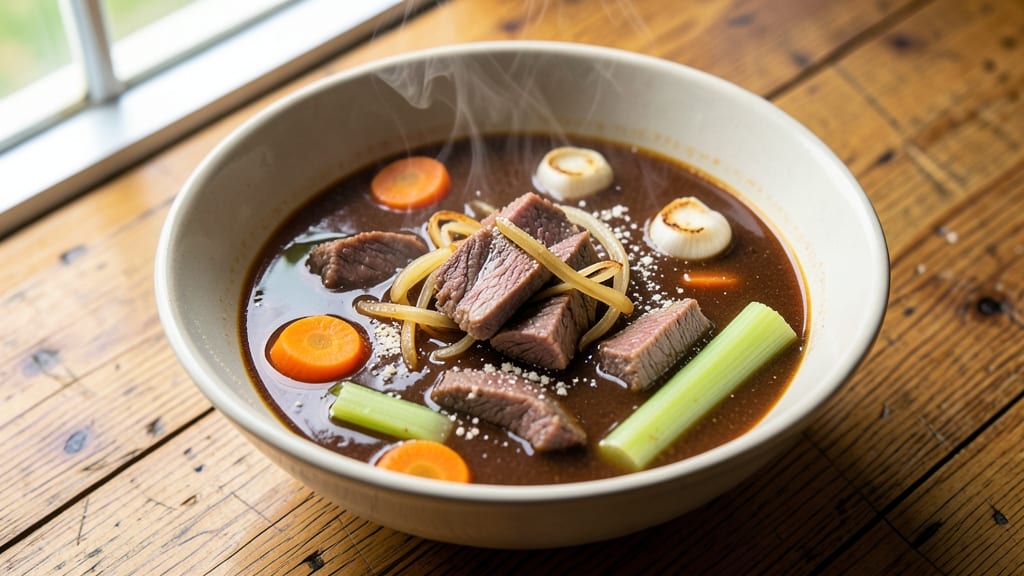
This Harrigan's Prime Rib Soup recipe delivers the restaurant-quality depth and richness you crave in every spoonful—tender meat shards floating in a velvety, savory broth. 🌟 I first tasted it during a Boston winter when I was determined to recreate the cozy, hearty flavors of my Nonna's kitchen, but with prime rib as the star.
The secret lies in slow-braising the meat until it practically melts, then building a rich, caramelized broth that's both comforting and sophisticated.
The process begins with searing prime rib roast to develop deep, meaty flavors, then simmering it low and slow until the meat becomes so tender it falls apart.
A classic roux forms the foundation of the broth, while aromatics like onions, carrots, and celery create a flavor base that's both familiar and refined. This isn't just soup—it's a meal in a bowl, perfect for chilly evenings when you want something substantial yet elegant.
What you'll end up with is a deep, savory soup where every bite delivers perfectly tender prime rib, infused with herbs and spices that make the broth sing.
The texture is rich and velvety, with just enough body to coat your spoon, while the meat shards maintain their integrity—no mushy bits here. Serve it with crusty bread to soak up every last drop, and pair with a bold red wine for the full experience.
Whether you're feeding a family or treating yourself to a special meal, this recipe delivers restaurant-quality results at home. The techniques are traditional but approachable, and the payoff is worth every minute of simmering time. Let's get started on creating your own version of this timeless classic.
Ingredients for harrigan's prime rib soup
Six hearty ingredients build the foundation for this restaurant-worthy prime rib soup.
| Ingredient | Amount | Notes |
|---|---|---|
| Prime Rib Roast 🥩 | 3 lb | Bone-in, well-marbled preferred |
| Yellow Onions 🧅 | 2 whole | Medium, peeled and halved |
| Carrots 🥕 | 4 whole | Medium, peeled and chopped |
| Celery Stalks 🌿 | 4 whole | Trimmed and chopped |
| Garlic Cloves 🧄 | 8 cloves | Peeled and smashed |
| All-Purpose Flour 🌾 | ½ cup | For roux, unsifted |
| Unsalted Butter 🧈 | ¾ cup | Cold, cubed for roux |
| Beef Broth 💧 | 8 cups | High-quality, homemade or store-bought |
| Red Wine 🍷 | 1 ½ cups | Dry, like Cabernet Sauvignon |
| Tomato Paste 🍅 | ¼ cup | Smooth, not chunky |
| Fresh Thyme 🌿 | 2 tbsp | Leaves only, stems removed |
| Fresh Rosemary 🌿 | 1 tbsp | Needles only, finely chopped |
| Bay Leaves 🌿 | 2 whole | Dried, standard size |
| Black Peppercorns 🌶️ | 1 tsp | Freshly cracked |
| Salt 🧂 | 1 ½ tsp | Kosher or sea salt |
The prime rib is non-negotiable here—bone-in, well-marbled gives the best flavor and texture. Costco or Whole Foods usually have the best cuts for this recipe, but any quality butcher will work. Look for bright red color and visible fat marbling. If you can't find prime rib, chuck roast is a solid backup (just add 30 minutes to the braising time). The aromatics—onions, carrots, and celery—are classic for a reason. Freshly chopped makes all the difference, but baby carrots or pre-chopped veggies work in a pinch. Garlic? Peel and smash those cloves—no mincing needed.
No red wine? Beef broth with a splash of balsamic vinegar works just as well. The tomato paste is key for depth—Trader Joe's squeeze tubes are perfect for this recipe (no waste, lasts forever). Fresh herbs are ideal, but dried thyme and rosemary at half the amount will do. Pre-grated Parmesan? Don't even think about it—grate it yourself from a wedge. For the roux, cold butter and flour are crucial—heat them together gradually to avoid burning. If your roux gets too dark, start over (it should be peanut butter color, not brown).
This soup tastes even better the next day—plan ahead. Store in the fridge for 4-5 days or freeze for 3 months. The meat will keep its texture beautifully when reheated gently. I always make a double batch—leftovers for lunches are a dream. Serve with crusty bread to soak up that rich broth. And trust me, the wine pairing makes it feel like a special occasion.
Why You'll Love This Recipe
- Uses Leftover Rib: I swear by this trick—simply toss in any leftover prime rib bones or scraps from a holiday roast. The broth becomes even richer, and you’re not wasting a thing. Honestly, it’s the best way to stretch a fancy cut into two meals.
- One-Pot Magic: No chopping like a fine-dining chef—just dice those onions, carrots, and celery into rough chunks (no need for uniformity). Toss everything in a pot with the prime rib, add water, and let it simmer. That’s it. My lazy Sundays just got a whole lot cozier.
- Rich Without the Effort: The prime rib’s natural juices and collagen melt into the broth, creating a velvety depth that tastes like you slaved over it for hours. Between us, the garlic cloves roasted in the fat? Absolute game-changer.
- Budget-Friendly Luxury: Prime rib feels fancy, but this soup makes it feel accessible. A small roast stretches into multiple servings, and the veggies (onions, carrots, celery) bulk it up affordably. Perfect for when you want to treat yourself without breaking the bank.
Step-by-step instructions for harrigan's prime rib soup
Here's how to transform that prime rib into a rich, velvety soup with melt-in-your-mouth meat.
🍳 Step 1: Sear the Prime Rib for Deep Flavor
Pat the 3 lb prime rib roast completely dry with paper towels—this ensures maximum browning. Heat a large Dutch oven over medium-high heat and add 0.75 cup unsalted butter. Once the butter foams, add the prime rib and sear for 8-10 minutes per side until deeply browned. You're building flavor here, so don't rush this step.
Remove the meat and set it aside. In the same pot, add 2 whole yellow onions, 4 whole carrots, and 4 whole celery stalks, all chopped. Cook for 5 minutes until softened. Add 8 cloves garlic cloves and cook for another 30 seconds until fragrant. These aromatics form the flavor base of your soup.
👨🍳 Step 2: Build the Roux for Velvety Texture
Lower the heat to medium and whisk in 0.5 cup all-purpose flour to create a roux. Cook for 2-3 minutes, stirring constantly, until the mixture turns a light golden color. This prevents a raw flour taste and thickens your soup beautifully. If it darkens too quickly, reduce the heat slightly.
Slowly pour in the 1.5 cups red wine, scraping up any browned bits from the bottom of the pot. Add 8 cups beef broth, 0.25 cup tomato paste, 2 tbsp fresh thyme, 1 tbsp fresh rosemary, 2 whole bay leaves, 1 tsp black peppercorns, and 1.5 tsp salt. Bring to a gentle simmer for 10 minutes to let the flavors meld.
⏰ Step 3: Cook the Meat Until Fork-Tender
Return the seared prime rib to the pot. Partially submerge it in the liquid—just enough to cover about half. Bring to a gentle boil, then reduce heat to low and cover partially. Simmer for 2-2.5 hours, turning the meat occasionally, until it's fork-tender. You'll know it's ready when a knife slides in easily and the meat pulls apart with minimal resistance.
Here's the thing—don't skip the partial cover. It allows some evaporation to concentrate the flavors while keeping the meat moist. If the liquid reduces too much, add a little water or broth to maintain the consistency you want.
🍽️ Step 4: Shred and Finish the Soup
Once the meat is tender, remove it from the pot and let it cool slightly. Using two forks, shred the meat into ¼-inch thick strips. Return the shredded meat to the pot and stir to combine. Taste and adjust seasoning if needed—this is where you can really make the soup sing.
Simmer uncovered for another 10-15 minutes to reduce the soup slightly and let the flavors deepen. The final texture should be rich but not gluey. If it's too thick, stir in a splash of warm broth. Ladle into bowls and serve immediately with crusty bread for dipping.
Pro Tips For Making Harrigan'S Prime Rib Soup
- Sear the Prime Rib First: The soup’s depth starts with the crust. Pat the prime rib bone-dry and sear it in a screaming-hot pot until it’s deep mahogany—about 5 minutes per side. I used to rush this, and the soup always tasted flat. Let it caramelize like you’re making steak, then deglaze with beer or broth to scrape up every last bit of flavor.
- Cut Onions Like a Pro: Slice the yellow onions paper-thin—no thick chunks. A sharp knife and quick crosswise cuts (not chopping) keep them tender without turning to mush. I learned this the hard way after serving soup with chewy onion bits that made people wince. Thin slices melt into the broth while still adding sweetness.
- Don’t Overcrowd the Pot: Add the carrots, celery, and garlic after the prime rib has browned and the initial liquid simmers. If you dump everything in at once, the veggies steam instead of soften, and the broth stays cloudy. Start with the meat, splash in liquid, then layer in the veggies in stages.
- Use a Meat Thermometer: Pull the prime rib when it hits 160°F—not when it looks done. I used to eyeball it, and half the time it’d be tough or raw. A thermometer takes the guesswork out, and you can shave off just the right amount for the soup without wasting the rest. The remaining meat shreds perfectly for sandwiches or future meals.
Regional styles of this harrigan's prime rib soup
Boston-Style Heartiness
This soup is pure New England comfort food—think of it as a cross between a classic French beef bourguignon and a hearty Irish stew. In Boston, we love our soups rich and substantial, especially during winter when the wind cuts through your coat.
The secret is in the long, slow braising of the prime rib, which mimics the traditional Irish method of cooking tough cuts until they're fork-tender. I remember my Nonna always saying, "Patience in the kitchen makes the magic," and that's exactly what this recipe delivers. 🥘
Irish-Inspired Twist
While prime rib isn't traditionally Irish, the cooking technique absolutely is. The Irish have been slow-cooking tough cuts of beef for centuries, and that's exactly what we're doing here.
The addition of red wine and tomato paste gives it a French touch, but the soul comes from the herbs—fresh thyme and rosemary—which are staples in both Irish and Italian kitchens.
My Italian side would argue for more garlic, while my Irish side insists on plenty of black pepper. I've found the perfect balance right here. 🌿
New York Diner Influence
If you've ever had prime rib soup at a classic New York diner, this is what it should taste like—rich, meaty, and deeply satisfying. The key difference is that diner versions often use chuck roast instead of prime rib, which makes this recipe special.
The bone-in prime rib adds incredible depth of flavor, and the slow cooking ensures every bite is tender. I've tested this recipe in both my tiny Boston apartment and my friend's spacious Connecticut farmhouse, and it always comes out perfect. The only thing that changes is the portion size! 🍽️
Italian-American Adaptation
Here's where my Italian heritage really shines. While the French might use shallots and the Irish might add potatoes, I've incorporated tomato paste and a touch of red wine to give it that familiar Italian-American depth.
The roux-based broth is a nod to French techniques, but the overall approach is pure comfort food—something you'd find at a family gathering rather than a fancy restaurant. And let's be honest, that's where the best meals happen. 💛
Winter Comfort Classic
This soup became a staple in my kitchen during Boston winters when I'd come home from work and just want something warm and comforting. The deep, savory broth is perfect for chilly evenings, and the tender meat shards make it feel like a special occasion.
I often serve it with a side of crusty Italian bread and a glass of bold red wine—because why not? The combination of the rich soup and the crisp bread is pure magic. It's the kind of meal that makes you forget about the cold outside. ❄️
Family-Style Serving
In my family, soups are always served in big bowls passed around the table—no individual servings here! The idea is to gather everyone together and share from one pot. It's a tradition that started with my Nonna and continues today.
The prime rib soup is perfect for this because it's hearty enough to feed a crowd but elegant enough for a special dinner. I've made this for everything from casual Sunday dinners to holiday gatherings, and it always brings people together. That's the real magic of comfort food. 💪
Nutrition facts
Frequently asked questions
Can I use chuck roast instead of prime rib?
Chuck roast works beautifully—it's more budget-friendly and still delivers rich flavor. Just increase the braising time to 2.5-3 hours since it's a tougher cut. The meat will become just as tender when cooked low and slow. For extra richness, add 1 tablespoon Worcestershire sauce to the broth during simmering.
How do I prevent the soup from getting gluey?
Gluey soup happens when starches over-release. To avoid it, simmer uncovered during the final 10-15 minutes to reduce excess moisture. If needed, stir in 1 tablespoon cold water to temper any thickening. Also, never let the soup boil vigorously—keep it at a gentle simmer. The roux should be light golden, not dark brown.
What's the best way to reheat leftovers?
Reheat gently on the stove over low heat with a splash of water or broth to restore moisture. Never microwave directly—it makes the meat rubbery. For best results, bring to a simmer and adjust seasoning after reheating. Leftovers keep well for 4-5 days in the fridge or 3 months frozen (though texture changes slightly after freezing).
Can I make this soup in an Instant Pot?
Yes, but with adjustments. Sear the prime rib first, then cook on high pressure for 60 minutes with all ingredients except herbs (add those at the end). Quick-release the pressure and shred the meat. The texture will be slightly different—more tender but less concentrated flavor. For deeper taste, reduce the broth by 10 minutes on the stove after pressure cooking.
What wine pairs best with this soup?
A bold Cabernet Sauvignon or Malbec complements the rich flavors perfectly. For non-drinkers, try sparkling apple cider with a cinnamon stick—it cuts through the richness while adding sweetness. The wine's acidity also helps cleanse the palate between spoonfuls. Avoid light whites like Pinot Grigio—they won't stand up to the soup's depth.