
Soups & Stews
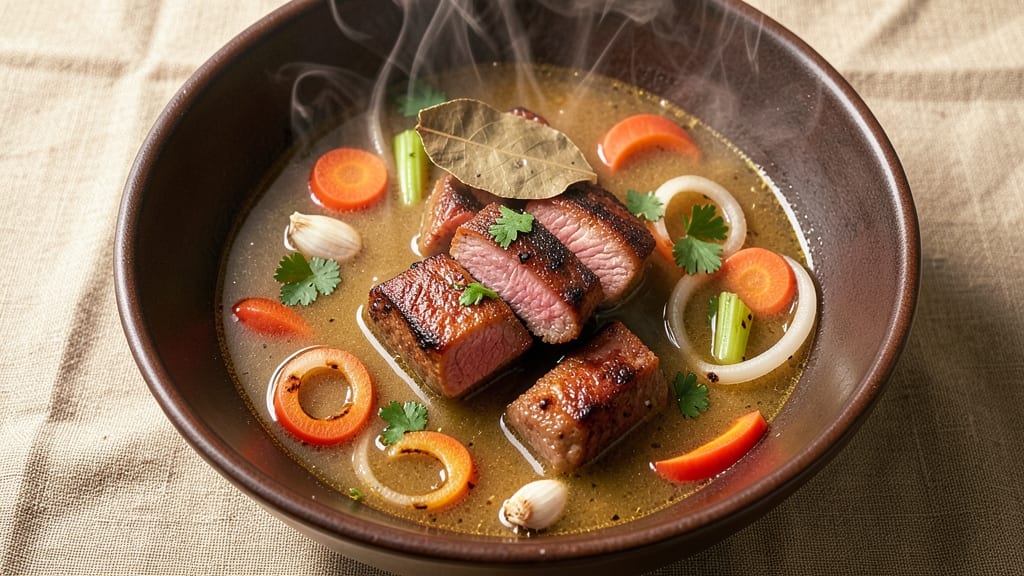
Slow-simmered heart soup delivers the kind of rich, comforting depth that transforms a simple meal into a memorable experience. This recipe draws from traditional Eastern European techniques, where hearts were once a staple protein—tender, flavorful, and packed with iron. My grandmother used to make a version of this when I was young, though her method was more instinct than recipe, relying on the slow simmer to melt all the flavors together.
The key to this dish lies in the preparation of the heart itself, which requires careful cleaning and blanching before simmering for hours in a deeply seasoned broth. You'll work with beef heart, carrots, onions, and celery to create a broth so robust it could stand alone as a meal.
The slow cooking ensures the meat becomes fork-tender while absorbing the aromatic flavors of garlic, bay leaves, and a splash of vinegar for brightness.
By the time it's done, you'll have a soup that's velvety, deeply savory, and rich with the natural umami of the heart and vegetables. The broth will be thick enough to coat a spoon, yet light enough to let the flavors shine through.
Serve it with crusty bread to soak up every last drop, or garnish with fresh parsley for a touch of color and freshness.
This recipe bridges tradition and modern home cooking—no need for fancy techniques, just patience and attention to detail. Whether you're exploring Eastern European flavors or simply looking for a hearty, protein-rich soup, this method delivers results that feel both rustic and refined.
Ingredients for heart soup
Traditional Eastern European flavors meet modern home cooking in this deeply satisfying heart soup.
| Ingredient | Amount | Notes |
|---|---|---|
| Beef Heart 🥩 | 1 ½ lb | Fresh, cleaned and blanched |
| Carrots 🥕 | 2 medium | Peeled and chopped into chunks |
| Onions 🧅 | 1 whole | Yellow or red, chopped |
| Celery Stalks 🌿 | 3 whole | Chopped into bite-sized pieces |
| Garlic Cloves 🧄 | 4 cloves | Minced for aromatic depth |
| Bay Leaves 🍃 | 2 whole | Fresh or dried |
| White Wine Vinegar 🍶 | ¼ cup | For brightness and acidity |
| Vegetable Broth 💧 | 6 cups | Low-sodium preferred |
| Tomato Paste 🍅 | ¼ cup | For rich depth of flavor |
| Olive Oil 🫒 | 2 tbsp | Extra-virgin for richness |
| Salt 🧂 | 1 ½ tsp | Kosher or sea salt |
| Black Pepper 🌶️ | ½ tsp | Freshly ground for heat |
| Crusty Bread 🍞 | 1 loaf | For serving, sliced |
| Fresh Parsley 🌿 | ¼ cup | Chopped for garnish |
The beef heart is the foundation—look for fresh, whole hearts at specialty butchers or well-stocked grocery stores like Whole Foods or Costco. If you can't find fresh, frozen hearts work well too, just thaw them overnight in the fridge. The key is proper cleaning and blanching before cooking: trim off any silver skin, slice into manageable pieces, and blanch for 5 minutes to remove impurities. Organic Farms often carry high-quality beef hearts if conventional options aren't available. For vegetables, organic carrots and celery reduce pesticide exposure, though conventional is perfectly fine.
No beef heart? Substitute with beef shank (though texture will differ) or extra mushrooms for umami depth. Short on vinegar? Lemon juice at half the amount works in a pinch. The tomato paste can be swapped for 1 cup crushed tomatoes if you prefer. For the broth, homemade vegetable stock elevates the dish, but low-sodium store-bought is a solid shortcut. If using dried bay leaves, crush them lightly between your fingers before adding to release more flavor. The parsley garnish is optional but adds bright freshness—skip it if you're short on herbs.
This soup tastes even better the next day as flavors meld. Store in an airtight container in the fridge for up to 5 days. For longer storage, portion into freezer-safe containers and freeze for up to 3 months. Reheat gently on the stove, adding a splash of water or broth if it thickens too much. The crusty bread pairs perfectly—sourdough or a good baguette both work. For extra richness, stir in a dollop of crème fraîche before serving, though it's not traditional.
Why You'll Love This Recipe
- One-Pot Magic: I swear by this recipe when I’m too tired to dirty extra dishes. Just toss everything—beef heart, carrots, onions, celery, and garlic—into one pot, simmer, and walk away. The flavors meld beautifully without any fuss, and I’m left with a pot that’s already clean(er) than my kitchen counter.
- Deep Umami Love: That beef heart? It’s the secret weapon here. When seared just right, it adds this rich, meaty depth that turns a simple soup into something ridiculously satisfying. The garlic and onions caramelize into something almost sweet, balancing the heart’s earthy punch—trust me, it’s a flavor combo you’ll reach for again.
- Meal Prep MVP: This soup tastes just as good reheated as it does fresh. I make a big batch on Sundays, portion it out, and freeze half for those nights when I’m too wiped to cook. It’s my go-to for busy weeks, and honestly? The leftovers often disappear faster than the first batch.
- Budget Booster: Beef heart is cheaper than steak but packs just as much flavor—here’s a way to stretch your grocery budget without sacrificing taste. A single heart feeds four, and the veggies (carrots, onions, celery) are pantry staples that won’t break the bank. It’s how I make hearty meals feel guilt-free.
Step-by-step instructions for slow-simmered beef and vegetable soup
Transform the rich, meaty beef heart into a deeply flavorful, comforting soup with this method.
Blanch and Prepare the Beef Heart
Begin by rinsing the 1.5 lb beef heart under cold water and patting it thoroughly dry with paper towels. This step removes any surface blood and prevents cloudiness in the broth. Cut the heart into 1-inch cubes, discarding any large silver skin or connective tissue.
Place the beef heart cubes in a large pot and cover with cold water by about 2 inches. Bring to a boil over high heat, then immediately reduce to a gentle simmer for 5 minutes. This blanching step removes any remaining impurities and prepares the meat for cooking. Drain the beef heart and set it aside.
Sauté the Vegetable Base
In the same pot, heat 2 tablespoons olive oil over medium heat. Add the chopped onions, carrots, and 3 whole celery stalks, cooking for 5-7 minutes until the vegetables soften and the onions become translucent. This foundational step builds flavor by caramelizing the vegetables.
Add the 4 cloves minced garlic and 2 whole bay leaves, cooking for an additional 1 minute until the garlic is fragrant but not browned. Stir in 0.25 cup tomato paste and cook for 2 minutes, allowing it to deepen in color and blend with the vegetables. This creates a rich, concentrated base for the soup.
Simmer the Soup to Perfection
Pour in 6 cups vegetable broth and the blanched beef heart cubes, bringing the mixture to a boil. Once boiling, reduce the heat to low and cover the pot, allowing the soup to simmer uncovered for 1.5 hours. This slow cooking ensures the beef heart becomes fork-tender while infusing the broth with deep, savory flavor.
After 1 hour, taste the soup and adjust seasoning with 1.5 teaspoons salt and 0.5 teaspoon black pepper. Add 0.25 cup white wine vinegar during the last 30 minutes of cooking to brighten the flavors and balance the richness of the beef heart. The soup is ready when the beef heart easily pulls apart with a fork.
Finish and Serve
Strain the soup through a fine-mesh sieve into a clean pot, pressing gently on the solids to extract maximum flavor. Return the broth to medium heat and stir in a ladle of the strained solids for added depth. Discard the remaining solids or reserve them for another use.
Ladle the finished soup into bowls and garnish each serving with 0.25 cup chopped fresh parsley. Serve immediately with slices of crusty bread on the side for dipping. The soup should have a rich, velvety texture with a balance of hearty beef and bright, aromatic vegetables.
Pro Tips For Making Heart Soup
- Trim the Heart First: Slice the beef heart before browning—thin strips (¼-inch thick) cook faster and stay tender. I used to toss whole chunks in, and they’d turn rubbery by the time the carrots softened. Cut against the grain for extra tenderness.
- Sweat the Aromatics Low: Cook onions, celery, and garlic at medium-low until onions are translucent but not browned—this builds flavor without burning. After burning two batches of veggies, I learned: patience here means depth later.
- Deglaze with Red Wine: After browning the heart, hit the pot with ½ cup red wine (or broth) and scrape aggressively—this lifts the fond (browned bits) that make soup taste rich. Skip this, and you’re missing half the flavor. (Yes, even if you’re not a wine drinker.)
- Simmer with a Lid: Cover the pot for the first 20 minutes of simmering to break down collagen faster—this turns the heart into melt-in-your-mouth texture. I was skeptical until I tried it: the soup thickens noticeably, and the heart shreds like butter.
Pro cooking tips for heart soup
Blanching Mastery
Blanching the beef heart is non-negotiable—it removes impurities and prevents a metallic broth. Rinse the heart under cold water, then cut into 1-inch cubes and blanch in boiling water for exactly 5 minutes. I use a large stainless steel pot because it heats evenly.
After blanching, drain thoroughly and rinse again under cold water to stop cooking. This step is where most home cooks trip up—don’t skip it! 🌡️
Vegetable Caramelization
The secret to depth lies in properly caramelizing your vegetables. Cook onions, carrots, and celery in 2 tbsp olive oil over medium heat for 7-10 minutes until they’re golden—not brown. This builds a flavor foundation that transforms a simple soup into something extraordinary.
I like to use a heavy-bottomed Dutch oven for even heat distribution. Add garlic and bay leaves just before the tomato paste to preserve their freshness.
Simmering Precision
Low and slow is the golden rule here. After adding broth and heart, maintain a gentle simmer (small bubbles, not rolling). Cover the pot for the first 1 hour, then uncover to reduce slightly.
This controlled cooking breaks down collagen in the heart for maximum tenderness. I set a timer to check every 30 minutes—the broth should reduce slightly but never boil vigorously.
Acid Balance
The vinegar is your flavor anchor—add it during the last 30 minutes to brighten the soup without overpowering. I use white wine vinegar for its clean acidity, but apple cider vinegar works too.
Taste as you go: the broth should be rich but not heavy. If it tastes flat, a pinch of smoked paprika adds depth without overhauling the flavor profile. 💡
Straining Technique
Use a fine-mesh sieve or cheesecloth to strain the broth—this captures all the meaty goodness. Press the solids gently with a spoon to extract maximum flavor, but don’t force it or you’ll get a gritty texture.
Return a ladle of strained solids to the broth for body and richness. I always reserve some solids for a quick stir-in at the end—it makes a noticeable difference in texture and flavor.
Serving Like a Pro
Garnish with fresh parsley just before serving—it adds color and freshness that cuts through the richness. For extra drama, drizzle with high-quality olive oil and a sprinkle of flaky sea salt. Serve with crusty bread on the side, but warn guests it’s the star of the show.
The first time I served this at a dinner party, my guests asked for seconds before the bowls were empty—proof that patience pays off! 🍞
Nutrition facts
Frequently asked questions
Why do I need to blanch the beef heart before cooking?
Blanching removes surface impurities and blood that can make the broth cloudy or metallic-tasting. The 5-minute boil also helps tenderize the meat slightly—skipping this step risks a tougher final texture and less flavorful soup.
Can I use lamb heart instead of beef heart?
Lamb heart works beautifully and has a slightly sweeter flavor. Just adjust cooking time to 2 hours instead of 1.5 hours—lamb heart can be more fibrous. The preparation method remains identical.
What if I don't have white wine vinegar?
Use lemon juice (half the amount) or apple cider vinegar as substitutes. The acidity brightens the soup, but if you're completely fresh out, a pinch of citric acid or even a splash of tomato juice will help balance richness.
How do I know when the beef heart is fully cooked?
The heart is done when it easily pulls apart with a fork and the broth has reduced slightly (about 1.5 hours total). For extra assurance, cut into a piece—the center should be light pink, not red. Overcooking can make it dry.
Can I make this soup in a slow cooker?
Yes! After blanching, sauté the vegetables as directed, then transfer everything to your slow cooker. Cook on low for 6-8 hours or high for 4-5 hours. The texture will be slightly creamier, but taste frequently to avoid overcooking.