
Soups & Stews
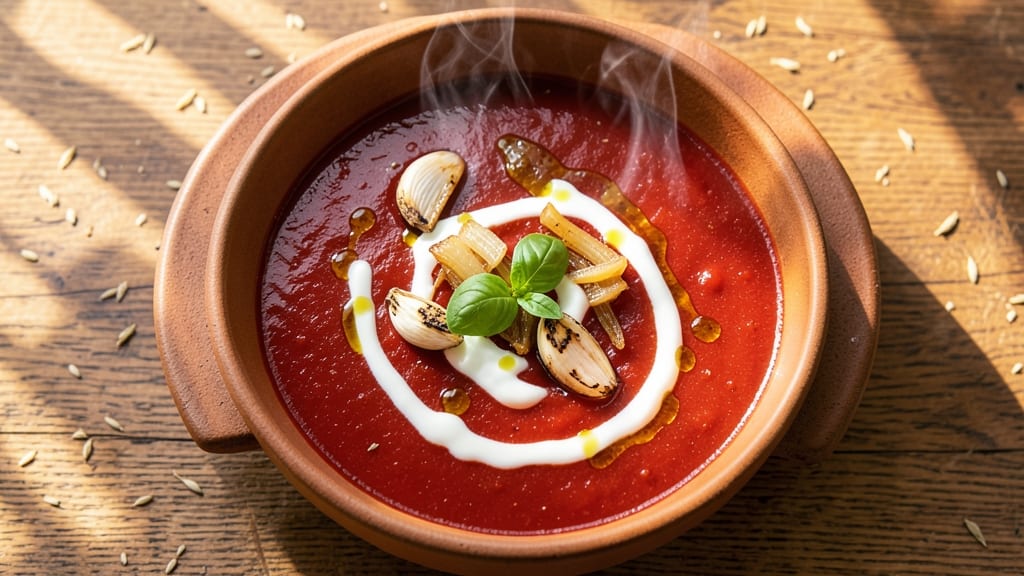
This homemade tomato soup recipe with canned tomatoes proves you don’t need fresh tomatoes to create restaurant-quality flavor—just a few pantry staples and 25 minutes of focused cooking. Growing up in Nana Mae’s Atlanta diner, I learned that canned tomatoes, when cooked with care, develop depth that rivals fresh.
The secret lies in sautéing aromatics until fragrant and simmering the sauce just long enough to meld flavors without losing brightness.
What makes this recipe work is the balance of acidity and richness—canned tomatoes provide convenience while herbs like basil and thyme add complexity. A splash of broth controls thickness, and a swirl of cream (or coconut milk for a lighter version) rounds out the texture.
My husband David, our official taste-tester, always requests seconds, and I’ve perfected it to handle different equipment—whether your pot is stainless steel or cast iron.
By the time you stir in your final ingredients, you’ll have a velvety soup with just the right balance of tangy, sweet, and savory notes. The aroma alone will have everyone gathered around the table, and the smooth texture makes it perfect for chilly evenings.
Garnish with fresh basil or a sprinkle of parmesan for an extra layer of flavor that feels indulgent yet simple.
This soup scales beautifully—double the batch for leftovers or serve it as-is for a cozy weeknight dinner. The technique is foolproof, and the results consistently impress, proving that pantry ingredients can deliver restaurant-quality comfort food. Let’s get cooking!
Ingredients for homemade tomato soup recipe with canned tomatoes
Pantry staples and one special ingredient—San Marzano tomatoes—transform into velvety soup in minutes.
| Ingredient | Amount | Notes |
|---|---|---|
| Canned San Marzano Tomatoes 🍅 | 2 cans | 28 oz each, crushed by hand |
| Yellow Onion 🧅 | 1 whole | Medium size, diced small |
| Garlic Cloves 🧄 | 4 cloves | Fresh, minced fine |
| Extra-Virgin Olive Oil 🫒 | ½ cup | High quality, fruity |
| Vegetable Broth 💧 | 1 ½ cups | Low-sodium preferred |
| Heavy Cream 🥛 | ½ cup | Full-fat for richness |
| Fresh Basil Leaves 🌿 | ¼ cup | Packed, chopped fine |
| Dried Thyme 🍃 | 1 tsp | Or 1 tbsp fresh thyme |
| Salt 🧂 | 1 ½ tsp | Kosher or sea salt |
| Black Pepper 🌶️ | ½ tsp | Freshly ground preferred |
| Granulated Sugar 🍯 | 1 tbsp | Balances acidity |
| Red Wine Vinegar 🍷 | 1 tbsp | Brightens flavor |
| Parmesan Cheese 🧀 | ¼ cup | Freshly grated, for garnish |
San Marzano tomatoes are the star here. Look for the 28 oz cans at Whole Foods or Trader Joe's—they're sweeter and less acidic than regular canned tomatoes. Crush them by hand for better texture control (no blender needed). Fresh basil is ideal, but dried basil at one-third the amount works in a pinch. The thyme? Penzeys has the best dried varieties, but any good-quality dried works. For the broth, low-sodium is key—you don't want to over-salt your soup later. I usually grab the Pacific Foods brand for its clean flavor.
No fresh basil? Dried works fine, but taste it first—some brands are saltier than others. Ran out of heavy cream? Coconut milk gives a lighter version (use full-fat for best texture). The red wine vinegar can be swapped for lemon juice at double the amount, but it'll taste different. For the sugar, honey works too—just use the same amount. The Parmesan? Grate it yourself—pre-grated has anti-caking agents that make it taste funny. And if you're making this for a crowd, double the batch—it reheats beautifully.
This soup tastes even better the next day once flavors meld. Store leftovers in airtight containers for up to 5 days in the fridge. For freezing, portion into single-serving containers—it thickens when reheated, so leave a little room at the top. I always make a double batch on Sundays so we have soup for the week. The aroma alone will have your whole house smelling like Nana Mae's diner—worth every minute.
Why You'll Love This Recipe
- No-Chop Nightmare: I swear, the only knife work here is slicing that onion—and even then, you can cry a little. San Marzano tomatoes handle the heavy lifting, so I’m not stuck peeling or chopping fresh ones while dinner burns. Honestly, the can opener does more work than I do.
- Garlic Bomb Depth: That first sizzle of garlic in olive oil? It’s like flavor crack. The San Marzanos soak it up, turning this into a soup with layers—sweet, tangy, and a whisper of charred garlic that sticks with you. (Yes, even on a Tuesday night.)
- Leftovers That Lie: This soup tastes better the next day. I’ll make a double batch, freeze half, and pretend I’m some kind of meal-prep genius. The broth thickens just enough to feel hearty, and reheating it is basically zero effort—just a splash of water, a stir, and suddenly you’re the hero of tomorrow’s lunch.
- Budget Win, Crowd Pleaser: A single can of San Marzanos and a cheap onion stretch to feed four for under $3. It’s the kind of dish where picky eaters dip bread, toddlers slurp it straight from the bowl, and your partner asks for seconds without you having to "enhance" it with fancy add-ins. (Though, between us, a sprinkle of Parmesan makes it even better.)
Step-by-step instructions for homemade tomato soup
Here's how to transform simple pantry staples into velvety tomato soup that rivals restaurant versions.
Sauté Onion and Garlic Until Transparent
Heat the 0.5 cup extra-virgin olive oil in a large pot over medium heat. Add the 1 whole yellow onion (diced small) and cook for 5-6 minutes until the onions become soft and translucent. This foundational step builds flavor—don't rush it.
Add the 4 cloves garlic (minced fine) and cook for 30 seconds until fragrant. You'll smell the garlic release its sweet aroma—this is your cue it's ready. Remove the pot from heat for just a moment if the garlic starts to brown too quickly, but don't let it burn completely.
Build the Tomato Base with Crushed Cans
Return the pot to medium heat and add the 2 cans canned San Marzano tomatoes (crushed by hand). Stir well to combine with the onion mixture. Let it simmer uncovered for 5 minutes to allow the tomatoes to break down slightly and release their natural sweetness.
Add the 1.5 teaspoons salt, 0.5 teaspoon black pepper, 1 teaspoon dried thyme, 1 tablespoon granulated sugar, and 1 tablespoon red wine vinegar. The sugar balances the acidity while the vinegar brightens the flavors. Stir everything together and let it cook uncovered for another 5 minutes to meld the flavors.
Simmer with Broth for Depth of Flavor
Pour in the 1.5 cups vegetable broth and bring the mixture to a gentle boil. Reduce heat to low and let it simmer uncovered for 10 minutes. This slow cooking allows the flavors to develop fully and the soup to thicken naturally. Stir occasionally to prevent sticking.
Here's the thing—this is where patience pays off. You want the soup to reduce just enough so it coats the back of a spoon but still has a pleasant, drinkable consistency. If it gets too thick, you can always add a splash of water or broth later.
Finish with Cream and Fresh Herbs
Reduce the heat to low and stir in the 0.5 cup heavy cream. Let it warm through for 2-3 minutes, stirring constantly to prevent curdling. The cream adds richness and smooths out the soup's texture. You'll notice the soup immediately become velvety—this is the moment that matters.
Remove the pot from heat and stir in the 0.25 cup fresh basil leaves (chopped fine). The basil adds a fresh, bright note that cuts through the richness of the cream. Let the soup sit off the heat for 5 minutes to allow the flavors to fully integrate.
Serve Warm with Grated Parmesan
Ladle the soup into bowls and top each serving immediately with 0.25 cup freshly grated Parmesan cheese. The cheese adds a salty, umami finish that elevates the entire dish. Serve with crusty bread or grilled cheese sandwiches for the ultimate comfort meal.
This soup keeps well in the refrigerator for 3-4 days and tastes even better the next day as the flavors continue to develop. If you prefer a smoother texture, you can blend it briefly with an immersion blender before serving—just be sure to blend in short bursts to avoid breaking down the cream too much.
Pro Tips For Making Homemade Tomato Soup Recipe With Canned Tomatoes
- Sweat the Onion First: I learned this the hard way—skipping the sweat step and just sautéing onions with garlic leads to a bitter, raw taste in the soup. Cook the diced onion in olive oil over medium-low heat for 8-10 minutes until it’s soft and translucent, with just a hint of golden color. This builds flavor that won’t disappear when the tomatoes take over.
- Crush Tomatoes by Hand: Yes, even if you’re impatient like me, resist the urge to just dump in whole canned tomatoes. Use your hands to break them up—this releases more juice and prevents a watery soup. Press the tomatoes through a sieve if you’re feeling fancy, but at minimum, crush them against the side of the pot with a wooden spoon. The texture makes a real difference.
- Simmer Low and Slow: After burning three batches of soup by boiling it aggressively, I finally figured out that low heat is the way to go. Once the tomatoes are in the pot, reduce the heat to a gentle simmer (small bubbles, occasional swirls) for at least 20 minutes. This deepens the flavor without turning the soup into a sad, thin mess.
- Salt the Broth Early: My grandmother swore by this, and she was right: season the vegetable broth before adding it to the soup. Taste it first—if it’s bland, add salt now. The broth carries the soup’s base flavor, and you can’t fix it later without over-salting the whole dish. Trust me, your future self will notice the difference.
Flavor customization for this dish
Creamy vs. Rustic
The original recipe delivers a luscious, creamy texture thanks to ½ cup heavy cream, but I’ve learned that’s not the only way to make it special.
For a lighter option, swap the cream for ½ cup full-fat coconut milk—it adds richness without the dairy, and my kids Emma and Jack love it when we’re doing a vegan week.
If you prefer a rustic, broth-heavy version, reduce the cream to ¼ cup and add ½ cup extra broth to keep it hearty and satisfying. 🥛
Spicy Kick Variations
Add heat with 1 teaspoon red pepper flakes or ½ teaspoon cayenne pepper when sautéing the onions. For a smoky twist, stir in ½ teaspoon smoked paprika with the thyme.
My neighbor’s convection oven mishap taught me to always taste as you go—add the spice gradually so you don’t overpower the tomatoes. A dash of hot honey at the end balances the heat beautifully. 🌶️
Herb Swaps for Depth
Fresh basil is classic, but don’t be afraid to experiment. Try ½ cup chopped parsley for a brighter finish or 1 teaspoon dried oregano for a Mediterranean touch. I once used thyme + rosemary for a rustic French-inspired version—it worked surprisingly well.
If you’re feeling adventurous, add a few sprigs of fresh thyme while simmering and remove them before blending. 🌿
Umami Boosters
For a deeper, savory profile, stir in 1 tablespoon soy sauce or 1 teaspoon fish sauce (trust me, it blends in perfectly) when adding the broth. A splash of Worcestershire sauce (1 teaspoon) adds complexity too.
If you’re using canned tomatoes with added salt, reduce the overall salt by ½ teaspoon. The Austin farmers market sells amazing local tomatoes, but canned San Marzano still wins for consistency. 🧂
Sweet-Tart Balance
The original recipe uses 1 tablespoon sugar to balance acidity, but you can play with this. For a caramelized depth, add 2 tablespoons brown sugar and simmer the onions for an extra 2 minutes before adding tomatoes.
A splash of orange juice (2 tablespoons) brightens the flavor with a citrusy twist. My first cookbook editor always said, “Sarah, less is more”—but with tomato soup, I’ve found that a little sweetness makes all the difference. 🍯
Texture Twists
Want a chunkier soup? Skip blending and leave the tomatoes slightly crushed for texture. For a silky version, blend briefly with an immersion blender—just 5-10 seconds—to keep some bite. If you’re serving it with grilled cheese, I recommend the chunkier version so there’s something to hold onto.
The key is to taste as you go—every pot and stove behaves differently, so adjust to your equipment. 🥣
Nutrition facts
Frequently asked questions
Can I use regular canned tomatoes instead of San Marzano?
Yes, but expect a slightly different flavor profile. San Marzano tomatoes are sweeter and less acidic, which makes them ideal for this recipe. If using regular canned tomatoes, you may need to adjust the sugar to 1.5 tablespoons to balance the acidity better. Also, be mindful of added salt in store-brand cans and reduce the overall salt by ½ teaspoon.
How do I make this soup dairy-free?
Replace the ½ cup heavy cream with ½ cup full-fat coconut milk for a creamy texture without dairy. For extra richness, add 1 tablespoon nutritional yeast when serving. The coconut milk adds a subtle sweetness that pairs beautifully with the tomatoes. My kids love this version when we're doing vegan weeks!
Why does my soup taste too acidic?
Acidity often comes from using too many canned tomatoes with added salt or vinegar. Balance it by adding ½ teaspoon more sugar or 1 teaspoon honey to sweeten. A splash of ½ cup extra broth also dilutes the acidity. Always taste as you go—this soup is very forgiving when adjusted gradually.
Can I make this soup in an Instant Pot?
Sauté the onions and garlic as directed, then add all ingredients except the cream and basil. Seal the lid and cook on high pressure for 5 minutes. Quick-release the pressure, stir in the cream, and finish with fresh basil. The Instant Pot cuts cooking time to about 15 minutes total. Just be careful not to overcook—you want the tomatoes to soften, not break down completely.
What's the best way to reheat leftovers?
Gently reheat on the stovetop over low heat with a splash of water or broth to prevent curdling. Avoid microwaving—it can make the soup watery. If using the microwave, cover with a damp paper towel and heat in 30-second intervals, stirring between each. The soup tastes even better the next day as flavors meld further. Store in airtight containers for up to 5 days.