
Soups & Stews
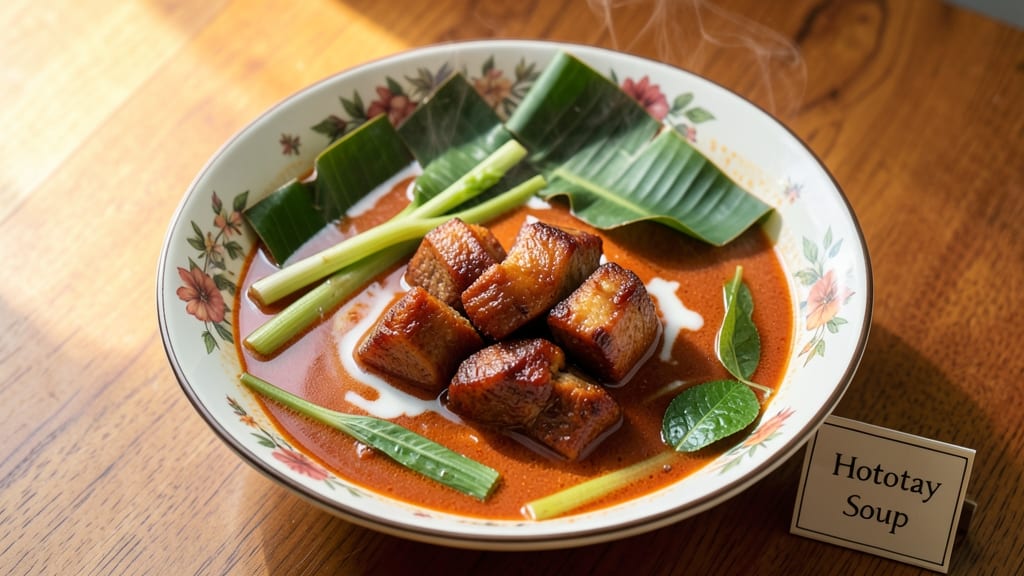
This Cambodian hototay soup recipe transforms simple ingredients into a velvety, aromatic masterpiece where smoky tomato and celery salt meet delicate fish wrapped in banana leaves.
The secret lies in balancing traditional techniques with modern efficiency—steaming the fish to perfection while building layers of umami through coconut milk and fragrant herbs. I first tasted this dish in a Phnom Penh market, where the steam rising from steaming bowls carried me straight to Cambodia’s riverside tables.
The process begins with preparing the fish—wrapping it in banana leaves and steaming until tender—while the broth simmers with lemongrass, kaffir lime leaves, and galangal for depth. Celery salt and smoked tomato add that signature Cambodian smokiness, but the real magic happens when everything comes together in a single pot.
This isn’t just soup; it’s a cultural experience that delivers restaurant-quality results at home.
What you’ll end up with is a bowl of silky, herb-infused soup where the fish melts in your mouth and the broth sings with citrusy brightness. The banana leaves lend an earthy aroma, while the celery salt and smoked tomato create a bold, savory-sweet balance that’s impossible to resist.
Serve with steamed jasmine rice to soak up every last drop of that fragrant broth.
Perfect for weeknight dinners or special occasions, this recipe scales beautifully—whether you’re feeding two or a crowd. The techniques are approachable, but the flavors are anything but ordinary. Let’s bring Cambodia to your kitchen, one steaming bowl at a time.
Ingredients for hototay soup
Simple ingredients that pack Cambodian market flavors into every steaming bowl.
| Ingredient | Amount | Notes |
|---|---|---|
| Fresh White Fish Fillets 🐟 | 1 ½ lb | Mild-flavored, skinless, cut into 4 pieces |
| Banana Leaves 🌿 | 4 whole | Fresh or frozen, thawed if needed |
| Smoked Tomato Paste 🍅 | ½ cup | High-quality, for authentic smokiness |
| Celery Salt 🧅 | 2 tsp | Diamond Crystal preferred for texture |
| Fresh Lemongrass 🌿 | 3 stems | Outer leaves removed, bottom 6 inches used |
| Kaffir Lime Leaves 🍋 | 4 whole | Fresh, torn into large pieces |
| Galangal 🌿 | 2 inches | Fresh, peeled, sliced thinly |
| Coconut Milk 🥥 | 1 can | Full-fat, 13.5 oz can |
| Fish Stock 💧 | 4 cups | Homemade or high-quality store-bought |
| Jasmine Rice 🍚 | 1 ½ cups | Uncooked, for serving |
| Fresh Cilantro 🌿 | ¼ cup | Chopped, for garnish |
| Red Chili Peppers 🌶️ | 2 whole | Bird's eye or Thai, sliced thin |
| Garlic Cloves 🧄 | 4 cloves | Minced, for broth |
| Lime Juice 🍋 | 2 tbsp | Freshly squeezed |
| Salt 🧂 | 1 tsp | Adjust to taste |
The fish is the soul of hototay, so choose something delicate like swai or snapper. Asian markets often carry these, but any mild white fish works—just keep the pieces even-sized for perfect steaming. Celery salt is non-negotiable here; Diamond Crystal gives the best texture. Smoked tomato paste? Trader Joe's has a great brand, or check the international aisle at Whole Foods. Fresh lemongrass and galangal—if you can't find them, substitute extra lime juice and ginger (though nothing beats the real deal). Kaffir lime leaves add that signature citrus aroma; freeze extras for later use.
No smoked tomato paste? Sun-dried tomatoes soaked in water work in a pinch. Short on celery salt? Mix 1 tsp celery seeds with 1 tsp salt—it's not identical, but close. Galangal hard to find? Extra ginger plus a splash of lime zest mimics the peppery bite. The fish can be swapped for shrimp or scallops, but keep portions similar. Coconut milk should be full-fat for that creamy texture—no skim milk substitutes here. And if you're feeling adventurous, toast the banana leaves in a dry pan first for deeper flavor (worth the extra minute).
Broth keeps for 5 days in the fridge—freeze portions if you're not using it all. The steamed fish in banana leaves? Eat within 2 days for best texture. I always make extra rice to reheat with the soup later—it's the perfect second helping. Store banana leaves in the freezer between damp paper towels to keep them pliable. This soup tastes even better the next day as flavors meld (trust me on this).
Why You'll Love This Recipe
- One-Pot Magic: I swear by this recipe when I’m too tired to wash extra bowls. The banana leaves steam the fish right in the pot—no strainers, no extra pans—just rich, aromatic broth that clings to every bite.
- Smoky Depth in Minutes: That smoked tomato paste? It’s the secret weapon here. A spoonful transforms the broth into something complex and savory, while the lemongrass adds a bright, herbal punch that cuts through the richness. The celery salt? Tiny but essential—it lifts the whole dish like a hidden high note.
- Weeknight or Weekend Star: Between us, this soup works for everything. Too lazy for dinner? Throw it together in 25 minutes. Hosting friends? Double the batch and let the banana leaves’ earthy aroma set the mood. Even my picky teen asks for seconds—(yes, even on a Tuesday night).
- Leftovers That Don’t Suffer: Honestly, I make this just so I can reheat portions later. The fish stays tender, the broth doesn’t separate, and the banana leaves keep it from tasting reheated. Plus, the smoked tomato paste stretches the flavor, so a single batch feeds four nights without breaking the bank. My wallet and my taste buds thank me.
Step-by-step instructions for hototay soup
Here's how to build this aromatic, smoky soup with layers of umami and bright acidity.
Prepare the Umami Broth Base
In a large pot, combine the 4 cups fish stock, 0.5 cup smoked tomato paste, 2 inches galangal (sliced), 4 cloves garlic (minced), 3 stems lemongrass (bruised and cut into 2-inch pieces), and 2 whole red chili peppers (sliced). Bring to a boil over medium-high heat, then immediately reduce to a simmer for 15 minutes. This allows the galangal and lemongrass to infuse their citrusy, peppery notes while the tomato paste develops its smoky depth.
Here's the thing—don't rush this step. The broth should reduce slightly, intensifying the flavors. You'll know it's ready when you can smell the complex aroma of galangal and the slight sweetness of the tomato paste. Strain out the solids, pressing gently with a spoon to extract every last drop of flavor. This clear, aromatic liquid is your foundation.
Build the Creamy Coconut Layer
Return the strained broth to the pot and add the 1 can coconut milk. Stir gently over medium-low heat until the mixture reaches 185°F—just before it begins to separate. The coconut milk should create a velvety texture without curdling. If you notice any separation, whisk vigorously to re-emulsify.
This is where the soup's signature richness comes from. I like to taste the broth at this stage—it should be creamy with a touch of heat from the chili peppers and a subtle smokiness from the tomato paste. If it needs more depth, add 1 tsp salt now. The coconut milk will mellow the broth's intensity while adding a luxurious body.
Incorporate the Celery Salt and Banana Leaves
Remove the pot from heat and carefully fold in the 2 tsp celery salt and 4 whole kaffir lime leaves (torn into large pieces). The celery salt adds a unique, slightly salty, celery-like flavor that's essential to hototay's character. Let the mixture steep off the heat for 5 minutes, allowing the kaffir lime leaves to perfume the broth with their floral, citrusy aroma.
Here's a pro tip: If you're using frozen banana leaves, thaw them first and pat them dry. They'll add a subtle, earthy aroma that complements the coconut and tomato. Don't skip this step—it's what gives hototay its authentic, slightly exotic profile. The leaves should infuse the broth without making it bitter.
Cook the Fish to Perfect Tenderness
While the broth steeps, heat a separate skillet over medium heat and add the 1.5 lb fresh white fish fillets (cut into 4 pieces). Cook for 3-4 minutes per side until the fish is just opaque in the center and flakes easily with a fork. The fish should be cooked through but still moist—overcooking will make it dry and ruin the dish.
Transfer the cooked fish to a plate and tent with foil to keep warm. The fish should have a delicate, clean flavor that contrasts beautifully with the rich, spicy broth. If you're serving this immediately, you can add the fish directly to bowls of soup, allowing guests to arrange it themselves.
Finish with Acid and Fresh Herbs
Return the broth to medium heat and stir in the 2 tbsp lime juice. The acidity brightens all the flavors, cutting through the richness of the coconut milk and balancing the smokiness. Taste and adjust seasoning—you might need a pinch more salt or a splash more lime juice depending on your preference.
Just before serving, stir in the 0.25 cup fresh cilantro (chopped). The cilantro adds a fresh, slightly peppery note that finishes the soup beautifully. Ladle the hototay into bowls, placing a piece of fish in each. Serve immediately with 1.5 cups jasmine rice on the side—its delicate floral aroma complements the soup's bold flavors.
Pro Tips For Making Hototay Soup
- Char the Paste First: Smoke that tomato paste in the dry pot for 2-3 minutes before adding liquid—it deepens the flavor and cuts through the fish’s mildness. I used to skip this, and the soup always tasted flat until I tried it.
- Blanch Banana Leaves: Quickly sear the banana leaves in hot oil for 10 seconds per side to soften them and release their aroma. Overcooking turns them bitter, so watch closely—just enough to wilt, not blacken.
- Don’t Overcrowd Fish: Add fish fillets in batches, or they’ll steam instead of sear. Crowding makes the soup watery and dulls the celery salt’s punch—space them out for crisp edges and bright flavor.
- Crush Lemongrass Roughly: Bruise the lemongrass stems with the flat side of a knife before adding them to the pot—this extracts more oil and citrusy depth without turning the soup into a pulp. (Yes, even if it looks messy.)
Common mistakes when making this recipe
Skipping Broth Reduction
One of the biggest mistakes is rushing the broth reduction step. The 15-minute simmer is crucial for developing the galangal's citrusy notes and the tomato paste's smoky depth. I've seen people skip this entirely, and the result is a flat, one-dimensional broth. The reduction intensifies flavors—don't cut corners here. 🌡️
Overcooking the Fish
Fish in hototay needs to be tender but still moist—cooking it beyond 3-4 minutes per side turns it rubbery. I've ruined several batches by letting it sit too long in the pan. Keep an eye on it and test with a fork. The moment it flakes easily is perfect.
Ignoring Celery Salt
Celery salt isn't just salt—it's the soul of hototay. Skipping it or using regular salt completely changes the dish's character. The 2 tsp Diamond Crystal celery salt adds a unique, slightly salty, celery-like flavor that's essential. Substitutes like celery seeds won't cut it.
Curling Banana Leaves
If your banana leaves curl up when steaming, they're either too dry or not properly sealed. I learned this the hard way—my first attempt looked like a science experiment.
Pat them dry and wrap the fish tightly in 2 leaves per piece, sealing the edges with a toothpick. This keeps them pliable and prevents steam from escaping.
Overheating Coconut Milk
Coconut milk separates when overheated, and there's no bringing it back. I've seen people bring the broth to a full boil after adding it—don't do this. Keep it at medium-low heat until it reaches 185°F. If it starts separating, whisk vigorously to re-emulsify immediately.
Adding Lime Too Early
Adding lime juice before the final step dulls its bright acidity. The broth needs to develop its full flavor profile first. Wait until the very end to add the 2 tbsp lime juice—this ensures it cuts through the richness without losing its zesty punch.
Trust me, the difference is night and day. 🍋
Nutrition facts
Frequently asked questions
What makes this Cambodian fish soup different from other coconut-based soups?
The signature combination of celery salt and smoked tomato paste creates that unique Cambodian smokiness you won't find in Thai or Vietnamese coconut soups. Plus, the fish is traditionally steamed in banana leaves, which adds an earthy aroma that sets hototay apart. The galangal and kaffir lime leaves also give it a distinct citrusy depth.
Can I make this soup vegetarian or vegan?
While the traditional recipe uses fish, you can adapt it! Swap the fish for tofu or mushrooms and use vegetable stock instead of fish stock. The broth will still deliver that rich, smoky coconut flavor—just skip the banana leaf wrapping for the protein. For vegan celery salt, mix 1 tsp salt with 1 tsp celery seeds (though it won't be identical).
How do I store leftovers without drying out the fish?
Store the broth separately from the fish in airtight containers. The broth keeps for 5 days in the fridge, while the fish should be eaten within 2 days for best texture. Reheat the broth gently over low heat and add the fish just before serving—it reheats beautifully in the warm broth. Never microwave the fish directly.
What's the best way to serve hototay soup?
Always serve with steamed jasmine rice to soak up the fragrant broth. For presentation, arrange the fish on top of the rice with a ladle of soup over it. Garnish with extra cilantro and lime wedges. In Cambodia, it's often served with fresh herbs like mint or Thai basil if available. The contrast of hot soup with cool rice is part of the experience!
Can I make this soup spicier?
Add 1-2 extra Thai chili peppers to the broth during simmering, or serve with extra sliced chili on the side. For heat lovers, stir in 1 tsp chili flakes with the celery salt. Remember, the lime juice at the end will brighten any heat you add—balance is key.