
Soups & Stews
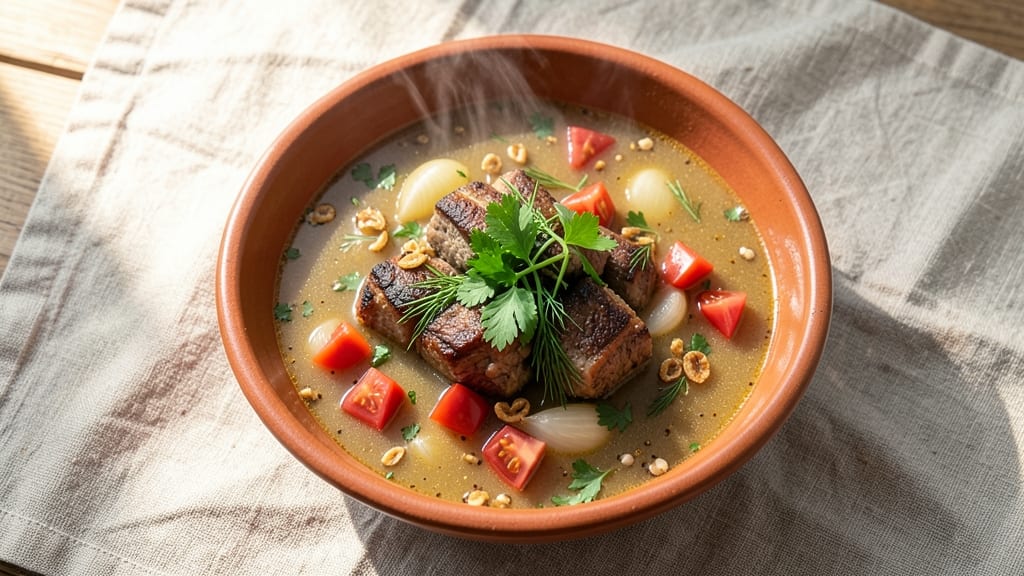
Iranian Ash Reshteh soup delivers a symphony of textures and flavors that transport you straight to Tehran with its fragrant saffron broth, tender noodles, and signature crispy lentils. This recipe captures the heart of Persian comfort food—where delicate herbs meet hearty proteins in a single bowl. I first discovered Ash Reshteh during a trip to Iran, where it became my go-to dish for chilly evenings, and now it’s the one recipe I make whenever I crave something both nourishing and sophisticated.
The secret to authentic Ash Reshteh lies in its layered preparation: a rich broth simmers with lamb or chicken, infused with saffron and herbs, while the noodles and lentils cook separately to achieve their signature textures.
The crispy lentils are the star—lightly fried until golden—adding a satisfying crunch that contrasts beautifully with the silky broth and tender noodles. This soup is more than a meal; it’s a celebration of Iranian hospitality, where every spoonful tells a story.
What makes this recipe truly special is how it balances simplicity with depth. The broth develops its signature aroma from slow-cooked meat and warm spices, while the fresh herbs add brightness just before serving.
By the time you’re done, you’ll have a bowl of soup that’s impossibly comforting yet elegant—perfect for family dinners or when you need a taste of home. The crispy lentils alone make it worth the effort, but the harmony of flavors keeps you coming back for more.
This recipe serves four and can be made ahead, allowing the flavors to meld even deeper. Pair it with warm flatbread and a side of pickled vegetables for the full Persian dining experience. Let’s bring this classic to your kitchen—where every ingredient plays its part in creating something truly memorable.
Ingredients for iranian soup
Fresh herbs, fragrant saffron, and tender lamb make this Persian comfort soup unforgettable.
| Ingredient | Amount | Notes |
|---|---|---|
| Lamb Shoulder 🥩 | 1 ½ lb | Bone-in for richer flavor |
| Yellow Onion 🧅 | 1 whole | Medium, chopped |
| Garlic Cloves 🧄 | 6 cloves | Peeled, smashed |
| Fresh Parsley 🌿 | ½ cup | Chopped, stems removed |
| Fresh Dill 🌿 | ¼ cup | Chopped, stems removed |
| Fresh Cilantro 🌿 | ¼ cup | Chopped, stems removed |
| Saffron Threads 🌼 | ¼ tsp | High-quality, soaked in 2 tbsp warm water |
| Green Lentils 🌱 | 1 cup | Rinsed, dry |
| Egg Noodles 🍝 | 8 oz | Fresh or dried, cut into 1-inch pieces |
| Vegetable Oil 🫒 | ¼ cup | For frying lentils |
| Salt 🧂 | 1 ½ tsp | Adjust to taste |
| Ground Black Pepper 🌶️ | ½ tsp | Freshly ground |
| Turmeric Powder 🌶️ | ¼ tsp | For color and warmth |
| Ground Cumin 🌿 | ½ tsp | Toasted for depth |
| Chicken or Vegetable Broth 💧 | 6 cups | Low-sodium preferred |
The lamb is the foundation—bone-in shoulder gives the broth incredible depth, but chicken thighs work too if you're keeping it lighter. Look for lamb with good marbling at Middle Eastern markets or your butcher's counter. If you can't find fresh herbs, dried parsley and dill at half the amount will do in a pinch, but fresh is where the magic happens. The saffron? Don't skimp—this is the soul of the dish. Soak those threads in warm water first so they release their color and flavor fully. For the lentils, green or brown both work, but green holds its shape better when fried.
No lamb? Chicken thighs or even beef shank can stand in—just add an extra 30 minutes to the cooking time. Short on fresh herbs? Dried works at one-third the amount, but the flavor won't be quite the same. The noodles can be any egg noodle, but fresh pasta adds a lovely chew. For the crispy lentils, don't overcrowd the pan—they need room to crisp, not steam. If you're making this ahead, fry the lentils last so they stay crispy. The broth can be made a day in advance and reheated gently—it only gets better with time.
This soup tastes even better the next day as the flavors meld. Store the broth separately from the noodles and lentils in the fridge for up to 3 days. The fried lentils? Keep them in a paper towel-lined container to stay crispy for 2 days. Freeze the broth for 3 months—just thaw and reheat before adding the noodles and lentils. Serve with warm Persian flatbread or crusty bread to soak up every last drop of that saffron-infused goodness.
Why You'll Love This Recipe
- One-Pot Wonder: I swear by this recipe—just dump everything in one pot and let the lamb and onions caramelize slowly. No chopping boards to wash, no extra pans, and honestly? That deep, savory aroma alone makes cleanup feel like a bonus.
- Herb-Packed Punch: Between the bright parsley and dill cutting through the rich lamb, this soup has layers I can’t get enough of. The garlic? Oh, it’s there in the best way—warm, aromatic, and lingering just enough to make every spoonful feel like a hug.
- Budget-Friendly Feast: Lamb shoulder stretches farther than you’d think, and onions/garlic/herbs are cheap staples. I’ve fed six people for under $20 with leftovers that taste even better the next day—reheated or cold, no complaints.
- Weeknight Workhorse: This is my go-to when I’m exhausted but still want something special. Throw it in the slow cooker in the morning, come home to a meal that’s already done, and serve it with crusty bread. (Yes, even on a Tuesday night.)
Step-by-step instructions for Iranian Ash Reshteh soup
This hearty Persian soup delivers rich lamb flavor, crispy lentils, and fragrant herbs in every spoonful.
Prepare the Lamb and Aromatics
Pat the 1.5 lb lamb shoulder dry with paper towels and cut it into 1-inch cubes. Heat 2 tablespoons of the 0.25 cup vegetable oil in a large pot over medium-high heat. Add the lamb and brown on all sides for 5-6 minutes until deeply golden. This step develops the rich, caramelized flavor that forms the soup's foundation.
While the lamb browns, peel and smash the 6 cloves garlic. Chop the 1 whole yellow onion into ¼-inch pieces. When the lamb is browned, remove it from the pot and set aside. In the same pot, add the chopped onion and cook for 5 minutes until softened and translucent. Add the smashed garlic and cook for 30 seconds until fragrant—this prevents the garlic from burning while releasing its sweet aroma.
Build the Spiced Broth
Add the 0.25 tsp saffron threads (previously soaked in 2 tablespoons warm water) to the pot with the onions and garlic. Stir for 30 seconds to distribute the saffron's golden hue. Sprinkle in the 0.25 tsp turmeric powder and 0.5 tsp ground cumin, stirring continuously for 1 minute until the spices bloom and fill the kitchen with their warm, earthy scent.
Pour in the 6 cups chicken or vegetable broth and bring to a gentle boil. Return the browned lamb to the pot, reduce heat to medium-low, and simmer uncovered for 1 hour. This slow cooking time ensures the lamb becomes fork-tender while infusing the broth with deep, savory flavor. Skim off any foam that rises to the surface during the first 15 minutes for a cleaner broth.
Cook the Lentils and Noodles
Heat the remaining 3 tablespoons vegetable oil in a separate skillet over medium heat. Add the 1 cup green lentils and cook for 8-10 minutes, stirring frequently, until they develop a golden-brown crust in spots. This crispy texture is key to Ash Reshteh's signature bite. Transfer the lentils to a plate and set aside.
Return the pot of lamb broth to a simmer. Add the crispy lentils and cook for 5 minutes to warm through. Meanwhile, bring a separate pot of water to a boil and cook the 8 oz egg noodles according to package instructions until al dente. Drain and set aside.
Finish with Herbs and Season
Stir the 0.5 cup fresh parsley, 0.25 cup fresh dill, and 0.25 cup fresh cilantro into the soup along with the 1.5 tsp salt and 0.5 tsp ground black pepper. Taste and adjust seasoning—this is where the soup comes together. The herbs should brighten the rich lamb and spice flavors while adding freshness.
Add the cooked egg noodles to the soup and simmer for 2-3 minutes to heat through. Ladle into bowls, garnishing each serving with additional fresh herbs. The soup should be aromatic, with tender lamb, crispy lentils, and silky noodles in every bite. Serve immediately while the lentils maintain their crispy edges.
Pro Tips For Making Iranian Soup
- BROWN THE LAMB FIRST: Skip the slow start—sear the lamb shoulder in chunks over medium-high heat until deep golden, about 5-6 minutes per side. I learned this the hard way: skipping the crust means your soup will taste more like stewed meat than rich, caramelized flavor. Use a heavy pot and don’t crowd the pan, or you’ll steam instead of brown.
- CHOP ONIONS FINE AND SOAK: Dice the yellow onion into tiny, even pieces—think rice-sized—and let them sit in cold water for 10 minutes before cooking. This removes the sharp bite and keeps the soup from tasting bitter. (Yes, even if you’re impatient like me, drain them well first.)
- SIMMER LOW AND LONG: After the initial sear, reduce heat to a bare simmer—just enough to see tiny bubbles at the edges—and cover loosely. Iranian soups need 2-3 hours to develop depth; rushing it turns the lamb tough. I used to walk away, but now I set a timer and check the broth consistency instead.
- ADD HERBS LATE: Toss the fresh parsley and dill into the soup only in the last 15-20 minutes, or they’ll turn to mush. I was skeptical until I tried it—now I swear by it. If you’re using dried herbs, halve the amount and add them with the onions.
Regional styles of this dish
Tehran Classic Style
In Tehran, Ash Reshteh is traditionally made with lamb shoulder for its rich, deep flavor that infuses the broth over hours of simmering.
The key difference here is the use of bone-in lamb—those marrow-filled bones melt into the broth, creating a velvety texture that's impossible to replicate with boneless cuts. I always ask my butcher for the shoulder with the most marbling, as that fat renders slowly and keeps the broth luxurious.
Serve it with warm sangak bread (Persian flatbread) to soak up every last drop of that saffron-infused gold. 🌟
Isfahan Spiced Variation
Isfahan's version of Ash Reshteh takes boldness to another level by adding a pinch of cardamom (about ¼ tsp) to the spice blend alongside the cumin and turmeric. The floral notes from the cardamom complement the saffron beautifully, creating a fragrance that fills your kitchen.
I also like to add a splash of rosewater (just ½ tsp) when finishing the soup—it's subtle but adds that signature Persian touch. This variation works especially well with chicken thighs instead of lamb for a lighter but equally flavorful broth. 💫
Tabriz Hearty Version
In the colder Tabriz region, Ash Reshteh becomes a true winter warmer by incorporating chickpeas (about ½ cup, cooked) alongside the lentils. The chickpeas add a satisfying heartiness that balances the delicate noodles and crispy lentils.
I also recommend doubling the fresh herbs in this version—Tabriz cooks often use more dill than parsley to reflect the region's agricultural abundance. The result is a soup that feels substantial enough for a full meal, perfect for chilly mountain evenings. 🌡️
Yazd Vegetarian Adaptation
For a vegetarian version inspired by Yazd's plant-based traditions, replace the lamb with mushrooms (about 1 lb cremini or shiitake) and smoked paprika (about ½ tsp) for depth. The mushrooms should be sliced and sautéed until deeply browned before building the broth.
I also add a pinch of sumac (about ¼ tsp) to the spice blend for a tangy brightness that mimics the lamb's umami. This version keeps all the signature textures—crispy lentils, silky noodles—while making it completely plant-forward. 🌱
Shiraz Lightened-Up Style
Shiraz's version focuses on brightness and freshness, using lemon zest (from 1 lemon) in the broth and finishing with a squeeze of fresh lemon juice before serving. The citrus cuts through the richness beautifully, making it perfect for spring or summer.
I also reduce the lamb to 1 lb and replace 2 cups of broth with vegetable broth to lighten the overall dish. Garnish with extra lemon slices and a sprinkle of sumac for that signature Persian tang. 🍋
Modern Fusion Twist
For a contemporary take, try adding a handful of baby spinach (about 1 cup) to the soup just before serving—it wilts beautifully in the hot broth.
I also like to swap the traditional egg noodles for rice noodles (about 8 oz) for a gluten-free option that still holds up to the rich broth. The crispy lentils remain the star, but this fusion version feels fresh while staying true to Ash Reshteh's soul.
Perfect for modern palates who want tradition with a twist. ✨
Nutrition facts
Frequently asked questions
Can I make Ash Reshteh with chicken instead of lamb?
Use 1.5 lbs chicken thighs (bone-in for best flavor) and extend the simmering time to 45-50 minutes until the meat is tender. The broth will be lighter but still rich, especially when infused with saffron and herbs. For extra depth, add ½ tsp smoked paprika to the spice blend.
Why do the lentils need to be fried separately?
Frying the lentils creates their signature crispy texture that contrasts beautifully with the silky broth. If you skip this step, they'll turn mushy when added to the soup. For best results, cook them in small batches over medium heat until golden brown in spots. They'll stay crispy for up to 2 days if stored in an airtight container.
What's the best way to store leftovers?
Store the broth (without noodles or lentils) in the fridge for up to 3 days—it only gets better with time. Keep the fried lentils in a paper towel-lined container to maintain crispness. Reheat the broth separately, then add the noodles and lentils just before serving. For longer storage, freeze the broth for 3 months.
Can I make this soup vegetarian?
Yes! Replace the lamb with 1 lb mushrooms (cremini or shiitake) and add ½ tsp smoked paprika plus ¼ tsp sumac to the spice blend. The mushrooms should be browned first to develop deep flavor. Keep all other ingredients the same for that authentic Persian texture.
How do I know when the lamb is fully cooked?
The lamb is done when it reaches an internal temperature of 165°F and easily shreds with a fork. For bone-in cuts, check the thickest part near the bone. If using chicken, the meat should pull away from the bone cleanly. Always let the meat rest for 5 minutes after removing from heat before adding to the broth.