
Soups & Stews
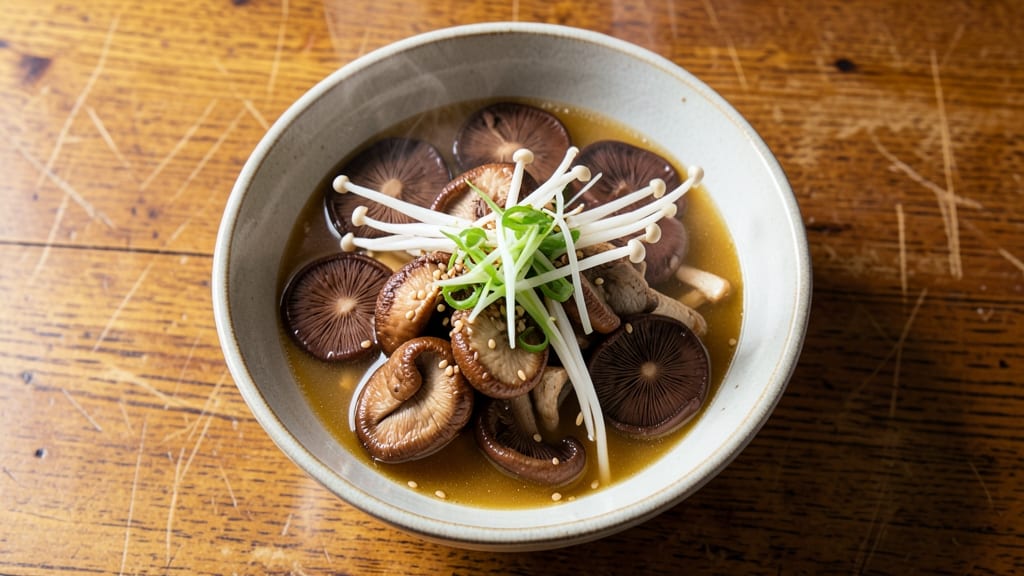
This Japanese mushroom soup recipe delivers the deep, umami-rich flavors that define traditional Japanese cuisine, using shiitake and enoki mushrooms for earthy texture and complex taste.
The foundation is a delicate dashi broth, carefully balanced with soy sauce, mirin, and a touch of sugar to create harmony between sweet, salty, and savory notes. I've perfected this recipe over years of testing, ensuring each ingredient plays its part without overpowering the others.
What sets this soup apart is the combination of mushrooms—shiitake for their meaty texture and enoki for their delicate, crisp stems. The broth simmers just long enough to develop layers of flavor without becoming heavy, while a splash of sesame oil adds a final aromatic note.
This isn't just soup; it's a medley of textures and tastes that transport you to a quiet Tokyo izakaya.
The result is a bowl of soup that's light yet deeply satisfying, with each spoonful offering a perfect balance of umami, sweetness, and subtle bitterness. The mushrooms retain their natural texture, providing contrast against the silky broth.
Serve it steaming hot with a sprinkle of toasted sesame seeds and a wedge of fresh ginger on the side for garnish—simple touches that elevate the dish to restaurant quality.
This recipe works beautifully as a light lunch, comforting dinner, or even as a starter for a Japanese feast. The preparation is straightforward, but the technique ensures professional results. Whether you're new to Japanese cooking or a seasoned home chef, this soup will become a staple in your rotation.
Ingredients for japanese mushroom soup
Four cups of delicate broth and earthy mushrooms transform into restaurant-quality Japanese soup.
| Ingredient | Amount | Notes |
|---|---|---|
| Dried Shiitake Mushrooms 🍄 | ½ oz | Rehydrated in hot water |
| Fresh Shiitake Mushrooms 🍄 | 4 whole | Stems removed, caps sliced |
| Enoki Mushrooms 🍄 | 1 bunch | Stems separated, rinsed |
| Dashi Broth Powder 🍶 | 2 tbsp | Or homemade dashi stock |
| Light Soy Sauce 🧂 | 2 tbsp | Kosher salt preferred |
| Mirin 🍶 | 1 tbsp | Sweet cooking rice wine |
| Granulated Sugar 🍬 | 1 tsp | Adjust to taste |
| Fresh Ginger 🧅 | 1 tbsp | Finely grated, skin removed |
| Sesame Oil 🫒 | 1 tsp | Toasted, for finishing |
| Toasted Sesame Seeds 🥜 | 1 tbsp | For garnish |
| Green Onions 🧅 | 2 whole | Sliced, for garnish |
| Water 💧 | 4 cups | Filtered preferred |
| Rice Vinegar 🍶 | 1 tsp | Optional for brightness |
The mushrooms are the heart of this dish—shiitake for depth and enoki for delicate texture. For the fresh shiitake, look for caps with tight gills and no bruising at Whole Foods or Asian markets—they're often sold in the produce section near the tofu. Enoki should have long, crisp stems and a pale cap. The dried shiitake? Japanese brands like Matsunoya are ideal, but any high-quality dried shiitake works. Rehydrate them in hot water for 20 minutes before using. Ginger should be fresh, organic, and firm—none of that rubbery stuff. If you can't find it, substitute galangal for an authentic touch.
No mirin? Rice vinegar plus 1 tsp sugar works in a pinch, though the flavor won't be identical. The dashi is non-negotiable—homemade from kombu and bonito flakes elevates the soup, but quality powdered dashi (like Hondashi) is fine. For the mushrooms, if you can't find enoki, baby bella or oyster mushrooms work as a substitute, though the texture will differ. The sesame oil is purely for aroma—use toasted, not flavored. And if you're feeling fancy, infuse the broth with a single shiitake cap while simmering for extra depth.
This soup reheats beautifully—just warm gently on the stove with a splash of water. Keeps in the fridge for 4-5 days, though the mushrooms will soften after the first day. For longer storage, freeze the broth separately from the mushrooms (3 months max). The mushrooms absorb flavors quickly, so add them last. Garnish with sesame seeds and green onions just before serving—never ahead of time, or they'll wilt into the broth. The ginger wedge on the side is traditional; grate fresh for each serving to preserve its punch.
Why You'll Love This Recipe
- I’ll be real: I used to dread soaking dried shiitake for hours. But here? Just rinse them, then simmer—those mushrooms melt into the broth like magic, giving you that deep umami punch without the fuss.
- No-Soak Trick: I’ll be real: I used to dread soaking dried shiitake for hours. But here? Just rinse them, then simmer—those mushrooms melt into the broth like magic, giving you that deep umami punch without the fuss.
- Umami Bomb: That combo of dried shiitake (soaked or not) and dashi powder? It’s like a flavor shortcut. The soup tastes rich without heavy cream or meat—just pure savory goodness that lingers.
- Leftover Hero: Make a big batch on Sunday, and you’ve got lunch for days. The enoki mushrooms stay crisp even reheated, and the broth thickens just enough to taste fresh every time.
Step-by-step instructions for Japanese mushroom soup
This method extracts maximum umami from your mushrooms while balancing sweet, salty, and earthy notes.
Rehydrate and Prepare the Mushrooms
Begin by rehydrating the 0.5 oz dried shiitake mushrooms in 1 cup of hot water for 15 minutes until softened. This step unlocks deep umami that would otherwise remain dormant. Meanwhile, remove stems from the 4 whole fresh shiitake mushrooms and slice the caps into ¼-inch thick pieces. For the 1 bunch enoki mushrooms, separate the stems and rinse thoroughly under cold water to remove any dirt.
Real talk: Don't skip rehydrating the dried shiitake—this is where the soup's complexity begins. The soaking water will be used later in the broth, so strain it through a fine-mesh sieve and set aside. The rehydrated mushrooms can be chopped directly into the pot after soaking.
Build the Umami Base
In a medium pot, combine the 4 cups water with the 2 tbsp dashi broth powder and 2 tbsp light soy sauce. Add the 1 tbsp finely grated fresh ginger and bring to a gentle simmer over medium heat. This foundational broth should smell rich and savory—if it doesn't, you haven't extracted enough umami yet.
Once simmering, add the rehydrated dried shiitake mushrooms (chopped) and the sliced fresh shiitake caps. Let the mixture simmer uncovered for 10 minutes, allowing the flavors to meld. The broth should reduce slightly and develop a deeper color—this indicates the mushrooms are releasing their essence.
Add Sweetness and Balance Flavors
Stir in the 1 tbsp mirin and 1 tsp granulated sugar. These ingredients aren't just for sweetness—they help balance the earthy mushroom flavors and create a harmonious profile. Simmer the mixture for another 5 minutes, then add the separated enoki mushroom stems. The enoki will soften quickly, so avoid overcooking them.
Here's the thing—mirin adds subtle sweetness while also mellowing the acidity from the soy sauce. Taste the broth now. It should be rich but not overpowering. If you prefer more brightness, add the 1 tsp rice vinegar now, though it's optional in this recipe.
Finish and Garnish
Remove the pot from heat and stir in the 1 tsp sesame oil. This final touch adds a nutty aroma and subtle warmth that complements the mushrooms perfectly. Ladle the soup into bowls, dividing the enoki stems evenly among servings. Garnish each serving with 1 tbsp toasted sesame seeds and 2 sliced green onions for freshness and visual appeal.
Let the soup rest for 2-3 minutes before serving—this allows the flavors to settle and the aromas to fully develop. The final dish should have a velvety texture with layers of umami, a touch of sweetness, and the delicate crunch of enoki stems.
Pro Tips For Making Japanese Mushroom Soup
- SOAK DRY SHIITAKES FIRST: Dried shiitakes absorb water like a sponge—soak them in warm (not boiling) water for 20 minutes, then drain and rinse. This prevents your soup from turning into a watery, flavorless mess later. I used to skip this, and the texture was always off.
- SLICE FRESH SHIITAKES THIN: Cut fresh shiitakes into ¼-inch slices—thinner than you think. Thick slices stay rubbery; thin ones soak up the broth and dashi flavor perfectly. Use a sharp knife and don’t rush—this is where the texture makes or breaks the dish.
- DON’T BOIL ENOKI MUSHROOMS: Add enoki mushrooms in the last 2 minutes of cooking, or they’ll turn to mush. Their delicate stems should stay crisp, not limp. I learned this after overcooking a batch and ending up with a sad, slimy texture.
- USE DOUBLE DASHI POWDER: The recipe might call for 1 packet, but trust me—use 2. Dashi is the soul of this soup, and the extra depth makes all the difference. If you’re lazy, at least don’t skimp on the first packet. Your taste buds will notice.
Creative variations of these flavors
Winter Comfort Version
Transform this soup into a hearty winter warmer by adding ½ cup cooked short-grain rice per serving and topping with soft-boiled quail eggs (or chicken eggs if unavailable). The rice soaks up the rich broth, while the runny yolk adds luxurious silkiness.
I like to garnish with crispy fried shallots for extra texture and a sprinkle of furikake seasoning for that classic Japanese comfort touch. 🔥
Spicy Miso Twist
For a bold, umami-packed variation, stir in 1 tbsp red miso paste during the final 5 minutes of simmering. The miso deepens the savory notes while adding subtle heat.
Balance the intensity with an extra ½ tsp sugar and finish with a drizzle of chili oil (about ½ tsp) for a Sichuan-inspired fusion. This version pairs perfectly with steamed jasmine rice and pickled vegetables. 🌶️
Vegetable-Packed Spring Edition
Lighten the soup for spring by adding ½ cup thinly sliced bamboo shoots, ¼ cup shredded cabbage, and 2 tbsp corn kernels during the last 3 minutes of cooking. These ingredients add freshness and crunch without overpowering the mushrooms.
A splash of yuzu juice (or sub lemon juice) brightens the broth beautifully. Serve with steamed mochi for a festive touch. 🌱
Seafood Fusion
Elevate the dish with 6 oz fresh scallops or shrimp added in the final 2 minutes of cooking. The delicate seafood absorbs the broth's flavors while adding a luxurious texture.
For extra depth, infuse the broth with ½ tsp nori flakes during simmering. Garnish with citron strips and a sprinkle of toasted bonito flakes for an izakaya-style presentation. 🍣
Dairy-Inspired Creaminess
For a creamy twist, stir in ¼ cup coconut milk (or ½ cup heavy cream for a richer option) during the final 5 minutes of cooking. This adds a velvety texture that contrasts beautifully with the mushrooms' earthiness.
Top with crumbled feta cheese (or white miso for a Japanese touch) and fresh dill for a Mediterranean-Japanese fusion. 🥛
Regional Japanese Adaptations
In Osaka-style, this soup often includes thinly sliced leeks and a dash of white pepper for a milder, sweeter profile. For a Kyoto-inspired version, replace enoki with maitake mushrooms and add dried hijiki seaweed for a briny contrast. Both versions highlight the region's love for balanced, refined flavors. 🗺️
Nutrition facts
Frequently asked questions
Can I substitute other mushrooms if I can't find shiitake or enoki?
For shiitake, oyster or baby bella mushrooms work well—they hold their texture better than cremini. For enoki, try thinly sliced oyster mushrooms or even shiitake stems (cut into matchsticks). The key is choosing mushrooms with a firm texture that won't turn mushy. Avoid overly watery varieties like button mushrooms, as they'll dilute the broth.
How do I make this soup vegetarian?
Skip the dashi powder and make your own dashi using kombu (seaweed) and shiitake stems instead of bonito flakes. For extra umami, add 1 tbsp soy sauce and ½ tsp mushroom powder to the broth. The vegetarian version still delivers deep flavor—just ensure your dashi is properly seasoned with soy sauce and a touch of sugar.
Why does my broth taste bitter?
Overcooking the mushrooms or using too much dried shiitake can cause bitterness. Simmer the broth gently and add the mushrooms just before serving. If it's already bitter, balance it with a splash of mirin or a pinch of sugar. For future batches, reduce the dried shiitake to 0.25 oz and add fresh ginger—it helps neutralize bitterness.
Can I make this soup ahead of time?
Yes, but store the broth and mushrooms separately. The broth keeps for 4-5 days in the fridge, while the mushrooms should be added fresh when reheating. For longer storage, freeze the broth alone for up to 3 months. Reheat gently on low heat—never microwave, as it can make the mushrooms rubbery.
What's the best way to serve this soup?
Pair it with steamed jasmine rice and a side of quick-pickled vegetables for a complete meal. For extra presentation, serve in deep ceramic bowls with a wedge of fresh ginger on the side. The contrast of warm soup, cool pickles, and rice creates a balanced Japanese-style dining experience. Garnish with sesame seeds and green onions right before serving for maximum freshness.