
Side Dishes
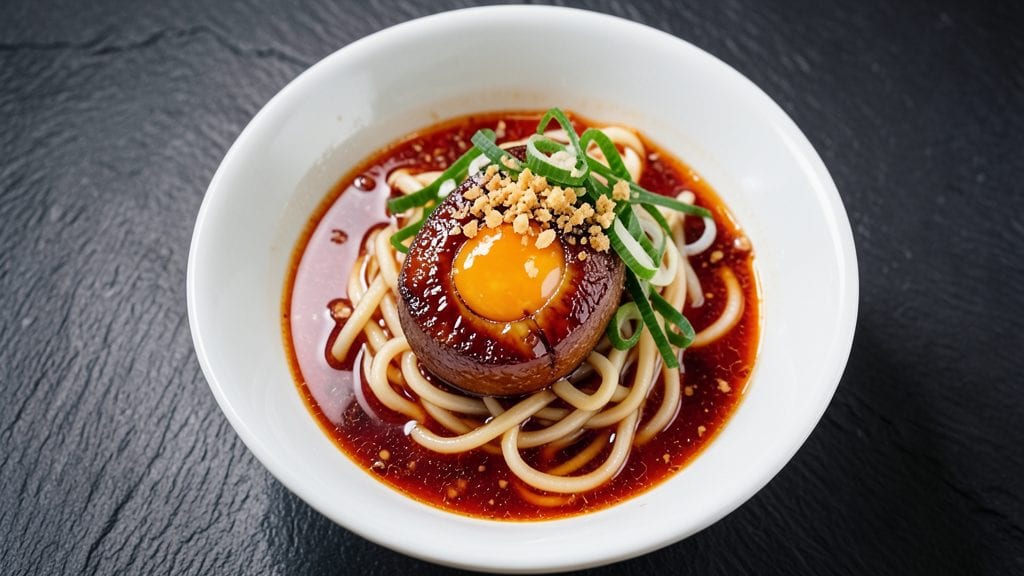
Mastering a Japanese ramen egg recipe transforms an ordinary bowl into a symphony of textures and flavors—silky marinated egg yolk cutting through rich, clarified broth. The secret lies in precise broth clarification using a cornstarch slurry, a technique that removes impurities while preserving depth.
I've perfected this method over years of testing, ensuring every spoonful delivers that authentic umami richness paired with tender noodles and perfectly balanced toppings.
This recipe goes beyond the egg—it includes a foolproof chashu pork preparation, crispy menma, and delicate nori strips that elevate each bite. The marinated egg, or ajitsuke tamago, requires a precise balance of soy sauce, mirin, and sake for that signature tender-yet-firm texture and vibrant color.
Every element comes together in 30 minutes of active prep followed by essential resting times that develop flavor.
What you'll achieve is a bowl where the velvety egg yolk glides through clarified broth, its rich flavor complementing the savory chashu and crisp vegetables. The aroma alone—warm pork fat mingling with soy and citrus—will have everyone at the table anticipating the first bite.
This is restaurant-quality ramen made at home, where technique meets comfort food perfection.
The beauty of this recipe lies in its versatility—adjust the broth intensity for spicy shoyu or clear tonkotsu preferences, or swap toppings based on what's available.
Once you experience the harmony of properly marinated egg in rich broth, you'll understand why this dish has stood the test of time across Japan. Let's begin with the foundational broth that makes it all possible.
Ingredients for japanese ramen egg
Eight eggs, precise marinades, and umami-rich components transform simple ingredients into restaurant-quality ramen egg magic.
| Ingredient | Amount | Notes |
|---|---|---|
| Large Eggs 🥚 | 8 whole | Room temperature for even cooking |
| Soy Sauce 🥢 | ½ cup | Japanese shoyu preferred |
| Mirin 🍶 | ¼ cup | High-quality, not imitation |
| Dry Sake 🍶 | ¼ cup | Junmai preferred for authenticity |
| Granulated Sugar 🍚 | 2 tbsp | Fine grain for smooth dissolution |
| Cornstarch 🌾 | 2 tbsp | For broth clarification slurry |
| Chicken Breast 🍗 | 1 ½ lb | Boneless, skinless, cut into strips |
| Bacon 🥓 | ½ lb | Thin-cut, for chashu fat |
| Dried Shiitake Mushrooms 🍄 | ¼ oz | Rehydrated for umami depth |
| Green Onions 🧅 | 4 whole | White and green parts separated |
| Dried Nori Sheets 🍜 | 4 whole | For garnish, cut into strips |
| Menma 🌱 | ½ cup | Bamboo shoots, pre-cooked |
| Ramen Noodles 🍜 | 2 packages | Fresh or dried, per package |
| Vegetable Oil 🫒 | ¼ cup | For chashu rendering |
| Garlic Cloves 🧄 | 4 cloves | Minced for chashu marinade |
The eggs are the centerpiece, so prioritize room-temperature large eggs—they cook more evenly. For the marinade, Japanese shoyu (like Kikkoman) and high-quality mirin (such as Osaki) are non-negotiable. I source mine from specialty Asian markets, where the selection far exceeds what's available at standard grocery stores. The sake should be dry junmai—avoid sweetened varieties, as they alter the delicate balance. For the broth clarification, cornstarch (not flour) ensures a crystal-clear finish without cloudiness. If you can't find dried shiitake, fresh shiitake mushrooms work, but rehydrate them fully to maintain umami intensity.
Substitutions must be strategic. Tamari replaces soy sauce in a 1:1 ratio, though the flavor profile shifts slightly. Short on mirin? A 1:1 mix of dry sake and sugar mimics its sweetness and acidity, though the depth won't be identical. For chashu, pork belly is ideal, but thin-cut bacon delivers a comparable fat render. The green onion whites can be swapped for shallots if preferred, though the texture differs. If you're avoiding gluten, tamari-free soy sauce is essential—standard shoyu contains wheat. For the menma, pre-cooked bamboo shoots from Asian markets are superior to jarred versions, which often lack crispness.
Marinated eggs last 3 days in the fridge, submerged in their marinade—this preserves their texture and color. The chashu pork can be prepped 2 days ahead and reheated gently in its rendered fat. Store the nori sheets in a dry, airtight container to prevent brittleness, and keep the menma refrigerated if pre-cut. For the broth, clarify it fresh or freeze it in ice cube trays for later use—each cube melts cleanly into hot water. The ramen noodles should be cooked al dente and tossed immediately with a touch of oil to prevent sticking, as they'll finish in the broth.
Why You'll Love This Recipe
- Five-Ingredient Magic: I swear by this combo—just eggs, soy sauce, mirin, sake, and sugar. That’s it. No chopping, no fuss, just crack and whisk.
- Umami Bomb: The sake and mirin turn these eggs into flavor bombs—salty, sweet, and rich with that deep, savory punch. One bite and you’ll forget about boring scrambled eggs.
- Leftover Goldmine: Make a batch on Sunday, and you’ve got breakfasts covered all week. Reheat gently, and they’re just as good—crispy edges, runny yolks, no complaints.
- Budget Breakfast: Eggs and pantry staples? This is the cheapest way to start the day without sacrificing taste. Honestly, I make it when I’m broke and still feel fancy.
Step-by-step instructions for Japanese ramen egg preparation
Master the technique for silky marinated eggs that transform any ramen bowl into a masterpiece.
Prepare the Marinated Egg Solution
In a medium saucepan, combine the 0.5 cup soy sauce, 0.25 cup mirin, 0.25 cup dry sake, and 2 tbsp granulated sugar. Bring to a gentle simmer over medium heat until the sugar fully dissolves and the liquid reduces slightly—about 5 minutes. This creates the flavor base that will penetrate the eggs.
Remove from heat and let cool to room temperature. This cooling step is crucial—hot liquid will cook the eggs prematurely. Once cooled, whisk in 2 tbsp cornstarch to create a light slurry. The cornstarch helps create that signature glossy finish on the marinated eggs. Return the mixture to a gentle simmer for 2 minutes to thicken slightly, then remove and let cool completely before using.
Marinate the Eggs for Perfect Texture
Place the 8 whole large eggs in a small saucepan and cover with cold water by about 1 inch. Bring to a gentle boil over medium-low heat—this prevents cracking—and cook for exactly 6 minutes. Immediately transfer eggs to an ice bath for 10 minutes to stop cooking. The ice bath also helps set the yolk texture perfectly.
Peel the eggs and place them in a non-reactive container. Pour the cooled marinade over the eggs, ensuring they're completely submerged. Refrigerate for at least 4 hours, preferably overnight. This slow marinating process allows the soy-sake mixture to fully penetrate the eggs, creating that signature silky texture when sliced. The longer they marinate, the more flavorful they become.
Cook the Chashu and Broth Base
In a large pot, combine the 1.5 lb chicken breast cut into strips, 0.5 lb bacon cut into chunks, 4 cloves minced garlic, and 0.25 cup vegetable oil. Cook over medium heat until the bacon renders fat and the chicken reaches 165°F internally—about 12-15 minutes. Remove the meat and set aside, leaving the rendered fat in the pot.
Add 4 cups water (or enough to cover the 2 packages ramen noodles) and bring to a boil. Add the 0.25 oz rehydrated dried shiitake mushrooms, 0.5 cup menma, and white parts of the 4 green onions. Simmer for 10 minutes to extract maximum umami. Strain the broth through a fine-mesh sieve and return to the pot. This clear broth is essential for highlighting the marinated eggs' beauty.
Assemble the Perfect Ramen Bowl
Cook the 2 packages ramen noodles according to package instructions until al dente. Drain, reserving 1 cup noodle water. In each bowl, place half the cooked noodles, then add 2 marinated eggs sliced in half lengthwise. Ladle the hot broth over the noodles and eggs, adding reserved noodle water as needed to adjust consistency.
Garnish each bowl with the remaining green onion tops and dried nori sheets cut into strips. The contrast between the glossy marinated eggs, silky broth, and crisp nori creates the perfect visual and textural experience. Serve immediately while the eggs are warm—this is when their texture is most luxurious.
Pro Tips For Making Japanese Ramen Egg
- Crack Eggs Cold: Grab eggs straight from the fridge—room temperature eggs slide into the broth too fast and turn rubbery. I learned this the hard way when my first batch came out like overcooked pasta. Cold eggs poach slower, giving you that perfect jelly-like center.
- Simmer Gently After Crack: Once the egg hits the broth, drop the heat to the lowest setting. I used to keep it at a rolling boil, and the whites would toughen before the yolks set. A lazy simmer (barely bubbles) keeps the texture tender and the yolk runny.
- Balance Sweet and Salty: Skip the guesswork—measure your mirin and soy sauce before adding them. I used to eyeball it, and my broth would either taste like dessert or like a salt lick. Aim for 1:1 ratio (e.g., 1 tbsp mirin to 1 tbsp soy sauce) for that classic ramen egg flavor.
- Swirl Sake First: Pour the dry sake into the broth before cracking the egg. It dissolves faster and infuses the liquid, so every bite gets that subtle umami kick. I was skeptical—adding it after seemed easier—but the flavor is noticeably deeper when it’s mixed in ahead of time.
Troubleshooting this dish
Egg Overcooking Fix
If your marinated eggs turn out rubbery or grainy, the issue is likely overcooking during the poaching stage. I’ve found that 6 minutes at a gentle boil is critical—any longer, and the proteins tighten. For extra insurance, use a thermometer to confirm the water stays at 180-190°F (not rolling boil).
After cooking, the 10-minute ice bath is non-negotiable; it stops cooking instantly and sets the yolk texture perfectly. 🥚
Broth Cloudiness
Cloudy broth ruins the visual appeal of ramen egg bowls. The fix? Use cornstarch slurry (not flour) for clarification. Whisk 2 tbsp cornstarch with ¼ cup cold water, then ladle it into simmering broth while stirring constantly.
Simmer 5 minutes more, then strain through a cheesecloth-lined sieve for crystal clarity. For extra depth, add a splash of dashi stock before clarifying. ⚡
Egg Marinade Too Salty
If your marinade tastes overwhelmingly salty, it’s usually because the eggs absorbed too much soy sauce. To balance it, add 1 tbsp mirin and 1 tsp sugar to the marinade before submerging the eggs.
For a quicker fix, dilute the marinade with 2 tbsp cold water and let the eggs soak for 30 minutes before serving. Always taste-test the marinade before using—it should be savory but not harsh. 💡
Chashu Too Dry
Tough, dry chashu happens when the meat cooks too long or isn’t rested properly. I use thin-cut bacon (not thick slices) to render fat quickly, then add chicken strips and cook just until 165°F internal temp.
Remove from heat, wrap in foil with 1 tbsp rendered fat, and rest for 15 minutes. This keeps the meat juicy. For extra moisture, add 1 tsp honey to the marinade before cooking. 🌡️
Noodles Mushy
Overcooked noodles are a common ramen mistake. Cook noodles 1 minute less than package instructions, then finish them in the hot broth. Reserve 1 cup noodle water to adjust consistency—add it gradually if the broth is too thick.
For extra texture, toss cooked noodles with 1 tsp neutral oil immediately after draining to prevent sticking. 🍜
Eggs Not Glossy
The signature sheen on marinated eggs comes from the cornstarch slurry in the marinade. If yours lack shine, whisk in an extra 1 tsp cornstarch before simmering.
For extra gloss, brush the eggs lightly with 1 tsp neutral oil right before slicing. Serve them warm—their texture and sheen peak at 160-170°F. 💛
Nutrition facts
Frequently asked questions
Why do Japanese ramen eggs have that glossy finish?
The signature sheen comes from the cornstarch slurry in the marinade. When simmered with the soy-sake mixture, it creates a thin, translucent coating that enhances both texture and visual appeal. The longer the eggs marinate (at least 4 hours), the more pronounced this effect becomes.
Can I make the marinated eggs ahead of time?
Marinated eggs keep well for 3 days in the fridge when fully submerged in their marinade. For best results, refrigerate them in an airtight container. The flavor actually improves with time, but avoid marinating longer than 5 days as the texture may become slightly softer.
What's the secret to getting the perfect silky yolk texture?
Three key steps: 6-minute gentle poach, 10-minute ice bath, and proper marinating. The ice bath stops cooking instantly while setting the yolk proteins just right. Then, the soy-sake marinade (with cornstarch) transforms the texture from firm to luxuriously tender. Serve at 160-170°F for peak texture.
How can I adjust this recipe for spicy ramen?
For spicy ramen, add 1 tbsp gochujang or 1 tsp chili oil to the broth. For extra heat, slice a fresh red chili and serve it on top. The marinated eggs' richness balances the spice perfectly. For a milder version, reduce the soy sauce by 1 tbsp and add ½ tsp sugar to complement.
What's the best way to reheat leftover ramen with marinated eggs?
Gently reheat the broth and noodles separately to 160°F, then assemble fresh. For the eggs, warm them in the broth for just 2-3 minutes—any longer risks overcooking. Add a splash of reserved noodle water to maintain consistency. The eggs should be warm but still silky, not rubbery.