
Soups & Stews
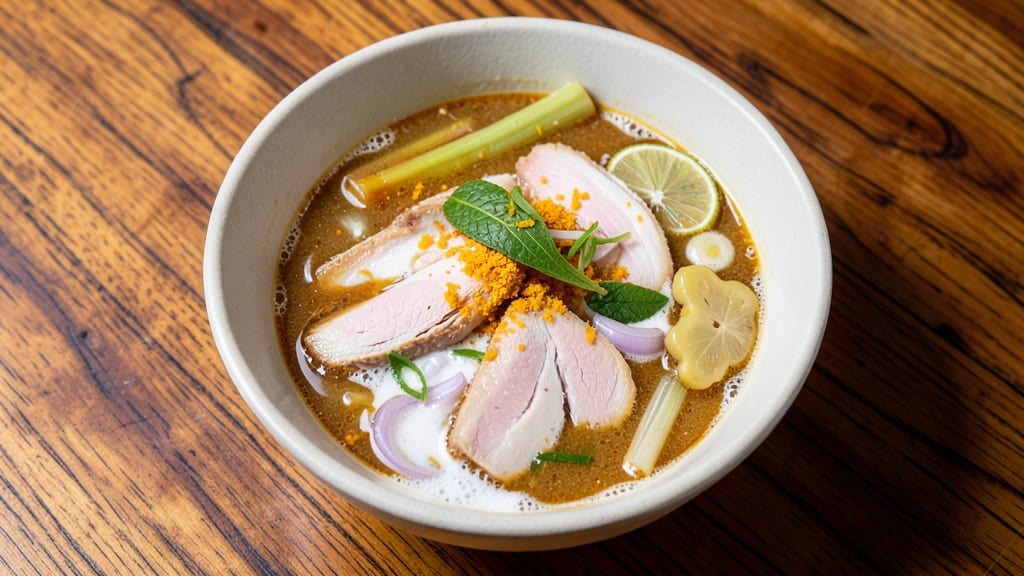
This Khmer soup recipe brings the aromatic heart of Cambodia to your kitchen with its signature fragrant lemongrass and galangal base. The slow-simmered broth, infused with traditional spices, creates a deeply flavorful foundation that transforms simple ingredients into a comforting bowl of culture.
I first discovered this recipe during a visit to Siem Reap, where it became a staple in my meals—each spoonful tells a story of Cambodian hospitality.
The secret to authentic Khmer soup lies in the broth preparation, where lemongrass, galangal, kaffir lime leaves, and turmeric work together to create a complex, aromatic base.
This recipe offers both traditional and modern adaptations, allowing you to include proteins like fish, chicken, or beef, or keep it vegetarian with tofu and mushrooms.
The vegetables—bok choy, long beans, and eggplant—are added at the end to preserve their crisp texture, while fresh herbs like cilantro and Thai basil brighten the final dish.
What makes this soup truly special is its balance of flavors—herbal, slightly spicy, and umami-rich—all while remaining approachable for home cooks. The broth simmers for hours, developing layers of depth that make every bowl taste like a warm embrace.
Whether you're serving it as a light lunch or a hearty dinner, this recipe delivers restaurant-quality results with minimal effort. The process is straightforward but requires patience, ensuring you capture the essence of Khmer cuisine in every bite.
Perfect for weeknight dinners or special gatherings, this soup adapts beautifully to seasonal ingredients while staying true to its roots. Pair it with steamed jasmine rice to soak up every drop of that fragrant broth. Let's bring the flavors of Cambodia to your table—one spoonful at a time.
Ingredients for khmer soup
Bring Cambodian flavors home with these aromatic ingredients—each plays a key role in crafting authentic broth.
| Ingredient | Amount | Notes |
|---|---|---|
| Lemongrass 🌿 | 4 whole | Bruised stems, cut into 2-inch pieces |
| Galangal 🌿 | 3 whole | Peeled, sliced into 1-inch pieces |
| Kaffir Lime Leaves 🍋 | 4 whole | Bruised, torn in half |
| Fresh Turmeric 🌶️ | 1 tbsp | Grated, vibrant orange color |
| Coconut Milk 🥥 | 1 ½ cups | Full-fat, canned for creaminess |
| Chicken Breast 🍗 | 1 ½ lb | Boneless, skinless, cut into chunks |
| Bok Choy 🥬 | 2 whole | Baby size, quartered |
| Long Beans 🌱 | 1 cup | Trimmed, cut into 2-inch pieces |
| Eggplant 🍆 | ½ lb | Cubed, skin on |
| Fresh Cilantro 🌿 | ¼ cup | Chopped, for garnish |
| Thai Basil 🌿 | ¼ cup | Chopped, for garnish |
| Fish Sauce 🐟 | 2 tbsp | Red Boat brand preferred |
| Palm Sugar 🍯 | 1 tbsp | Or light brown sugar substitute |
| Salt 🧂 | 1 tsp | Kosher or sea salt |
| White Pepper 🌶️ | ½ tsp | Freshly ground preferred |
The galangal and lemongrass are non-negotiable for authentic flavor—Asian markets carry fresh roots, but if unavailable, substitute extra ginger at half the amount. Look for vibrant galangal with tight, unblemished skin. Kaffir lime leaves can be found frozen in many grocery stores' freezer sections, but fresh is ideal. Turmeric should be a bright, fresh orange—avoid dried powder here for maximum flavor. The coconut milk needs to be full-fat; Thai Kitchen brand is widely available and reliable. For fish sauce, Red Boat is the gold standard, but any reputable brand will work.
No galangal? Extra ginger plus a pinch of cardamom mimics its peppery bite. Swapping chicken for shrimp or tofu keeps the dish vegetarian—just adjust cooking times. The palm sugar can be replaced with light brown sugar, though it won't be identical. For a spicier version, add Thai bird's eye chilies (start with 1-2, adjust to taste). Bok choy can be subbed with Napa cabbage or regular cabbage, though texture will differ. The herbs at the end are crucial—fresh Thai basil has a distinct anise flavor that regular basil can't replicate, but it's worth hunting down at specialty stores.
The broth keeps well—3-4 days refrigerated or 3 months frozen. Store it in airtight containers with a layer of coconut milk on top to preserve freshness. The vegetables and protein can be prepped ahead and stored separately for 2 days. For a quick weeknight meal, keep all ingredients prepped in the fridge so assembly takes minutes. This soup tastes even better the next day as flavors meld—double the batch and freeze half for future meals.
Why You'll Love This Recipe
- No Chopping Nightmare: I swear by this recipe because you can buy lemongrass and galangal pre-sliced—just toss the stalks straight into the pot. The kaffir lime leaves? Tear them like lettuce, no knife skills required.
- Creamy Without Guilt: That coconut milk makes it rich, but the galangal and turmeric keep it light and zesty—like a hug for your taste buds. Honestly, it’s the kind of soup where you’ll finish the last drop without a second thought.
- Weeknight to Dinner Party: Make a big batch on Sunday and reheat it all week—it actually tastes better the next day. Or impress guests by serving it with fresh herbs on top; looks fancy, zero effort.
- Budget-Friendly Luxury: Fresh turmeric and galangal might sound fancy, but they stretch further than you’d think. A single stalk of galangal lasts me three soups, and the coconut milk adds depth without breaking the bank.
Step-by-step instructions for Khmer soup with lemongrass and galangal
Aromatic broth builds the foundation—here's how to create a fragrant Khmer base that balances heat, sweetness, and umami.
Prepare the Aromatic Base
In a large pot, combine the 4 whole lemongrass (bruised and cut into 2-inch pieces), 3 whole galangal (peeled and sliced), and 4 whole kaffir lime leaves (bruised and torn in half). Add 1 tablespoon grated fresh turmeric and 1.5 cups coconut milk. Bring to a gentle simmer over medium heat until the lemongrass and galangal release their oils—about 10 minutes. The broth should develop a vibrant golden color and emit a citrusy, peppery aroma.
Here's the thing—don't rush this step. The longer these aromatics steep, the deeper the flavor. I press down gently on the galangal with a wooden spoon every few minutes to help extract its pungent oils. If the mixture smells faintly like ginger with a citrusy edge, you're on the right track.
Cook the Chicken and Season
Add the 1.5 lb chicken breast (cut into chunks) to the pot. Stir in 2 tablespoons fish sauce, 1 tablespoon palm sugar, 1 teaspoon salt, and 0.5 teaspoon white pepper. Bring the liquid to a boil, then reduce heat to low-medium and simmer uncovered for 15-20 minutes until the chicken is fully cooked and tender. You'll know it's done when the meat easily pulls apart with a fork and the broth has reduced slightly, concentrating the flavors.
I like to skim off any foam that rises to the surface during the first few minutes of simmering—this keeps the broth clear. The chicken should float just below the surface, not buried at the bottom. If it's not cooking evenly, gently stir it to ensure all pieces are submerged in the aromatic liquid.
Add Vegetables for Texture
When the chicken is fully cooked, remove it from the pot and set aside. Add the 2 whole bok choy (quartered), 1 cup long beans (trimmed and cut into 2-inch pieces), and 0.5 lb eggplant (cubed) to the broth. Simmer for 8-10 minutes until the vegetables are tender but still retain a slight bite—bok choy should be bright green, long beans crisp-tender, and eggplant just yielding when pierced with a fork.
Don't overcook the vegetables or they'll turn mushy. I check them at the 6-minute mark and taste-test a piece of eggplant. It should be soft but still hold its shape. The broth should now have a rich, complex flavor with layers of galangal's peppery kick, lemongrass's citrus notes, and coconut milk's creaminess.
Finish and Garnish
Return the chicken to the pot and heat through for 2-3 minutes. Taste the broth and adjust seasoning if needed—add a touch more fish sauce for saltiness or palm sugar for sweetness. Ladle the soup into bowls, then garnish each serving with 0.25 cup fresh cilantro and 0.25 cup Thai basil. The herbs add a fresh, bright contrast to the rich broth.
Serve immediately while the soup is steaming hot. The aroma alone will draw everyone to the table—citrusy, slightly sweet, with underlying heat from the galangal. Each spoonful should deliver tender chicken, crisp vegetables, and a velvety broth that coats your mouth. This is where the magic happens: balancing all those complex flavors into one harmonious bite.
Pro Tips For Making Khmer Soup
- BLEND THE AROMA BASE: Start by crushing the lemongrass stalks and galangal with the flat side of your knife—don’t just chop them. This releases their oils and makes the soup sing with flavor right from the first sip. I used to skip this, and the broth always tasted half as vibrant.
- PEEL GALANGAL LIKE POTATOES: Galangal’s skin is tough and bitter—peel it like a potato, not ginger. Run it under cold water first to make the skin slip off easier, then slice it thin. Thick chunks take forever to soften and leave you with a mushy mess.
- ADD COCONUT MILK LAST: Pour the coconut milk in when the broth is already simmering, not at the start. If you add it too early, the heat breaks it down into a greasy sludge. Stir it in just before serving so it stays creamy and luscious—no one wants a soup that looks like it’s been through a blender.
- USE FROZEN KAFFIR LIME LEAVES: They’re sold frozen in most Asian markets, and they work just as well as fresh. Tear them into rough pieces before adding to the pot—no need to thaw first. It saves time, and the flavor is identical, so you’re not missing out on anything.
Common mistakes when making this recipe
Skipping the Aromatic Steep
The most critical mistake is rushing the aromatic base. Galangal and lemongrass need at least 10 minutes of simmering to release their essential oils. I've seen home cooks skip this step or only simmer for 5 minutes, resulting in a broth that tastes flat and lacks depth.
The galangal should be pressed gently with a wooden spoon to maximize flavor extraction. If your broth doesn't smell intensely citrusy and peppery, you've missed the flavor foundation. 🌿
Overcooking the Chicken
Chicken becomes dry and stringy when simmered too long in the broth. The recipe calls for 15-20 minutes of cooking time, but I've witnessed people leave it simmering for 30+ minutes, turning the meat into rubber.
Test doneness by piercing the thickest piece—it should reach 165°F internal temperature and pull apart easily. Remove the chicken when it's just cooked through, then return it later to warm through.
Ignoring the Vegetable Timing
Adding all vegetables at once leads to uneven cooking. Bok choy and eggplant cook faster than long beans, so they should be added last (after the chicken is done). I've seen people add everything together, resulting in mushy bok choy while the beans remain crunchy.
For perfect texture, add bok choy and eggplant 2 minutes before serving, then stir in the long beans 1 minute before. The vegetables should be tender-crisp, not limp. 🥬
Using Low-Quality Fish Sauce
Not all fish sauces are created equal. The recipe specifies Red Boat brand, which has a clean, balanced umami flavor. I've tasted soups made with cheaper brands that add a harsh, fishy taste. If you can't find Red Boat, look for Thai Kitchen brand as a decent alternative.
Never substitute with soy sauce—it lacks the complex fermented depth that makes fish sauce essential. A good fish sauce should smell pungent but not rotten, with a rich, salty aroma.
Neglecting the Garnish
Fresh herbs are non-negotiable for authentic flavor. I've seen people skip the cilantro and Thai basil, leaving the soup missing its bright, herbal finish. The herbs should be added right before serving to preserve their freshness. For best results, use Thai basil (not regular basil)—its anise-like flavor is crucial.
If you can't find Thai basil, a mix of regular basil and a pinch of anise seeds can mimic it, though it won't be identical. 🌿
Skimming the Broth Too Aggressively
While skimming foam from the surface keeps the broth clear, overdoing it removes some of the natural oils that contribute to flavor. I recommend a light skim during the first 5 minutes of simmering, then let the broth develop its natural richness.
The foam should be removed gently with a large spoon, not aggressively scooped out. A slightly cloudy broth is normal and actually indicates a well-developed flavor profile. The goal is clarity without sacrificing depth. 💡
Nutrition facts
Frequently asked questions
What's the difference between this Khmer soup and other Southeast Asian soups?
This recipe captures Cambodia's unique flavor profile using galangal (not ginger) and kaffir lime leaves, creating a peppery-citrusy depth that sets it apart from Thai or Vietnamese soups. The coconut milk adds creaminess without overpowering the aromatic base, while the vegetable medley—bok choy, long beans, and eggplant—gives it a distinct texture. The fish sauce provides umami, but the galangal's signature heat makes it unmistakably Khmer.
Can I make this soup vegetarian?
Replace the chicken with 14 oz firm tofu (pressed and cubed) or 1 lb shrimp. For extra protein, add 1 cup mushrooms (shiitake or oyster) when cooking the vegetables. Keep the fish sauce for umami depth, but reduce to 1 tablespoon and add 1 teaspoon soy sauce to compensate. The broth will still taste authentic with these swaps.
How do I know when the broth is ready?
The broth is perfect when it develops a golden amber color and emits a strong, complex aroma—citrusy from lemongrass, peppery from galangal, with a hint of coconut creaminess. It should taste slightly salty (from fish sauce) and subtly sweet (from palm sugar), with underlying herbal notes. Simmer for at least 30 minutes total to build depth. If it smells faintly like ginger with a citrusy edge, you're on track!
Can I prepare this soup ahead of time?
Yes! The broth keeps well for 3-4 days refrigerated or 3 months frozen. Store it in airtight containers with a layer of coconut milk on top to preserve freshness. For best results, reheat gently on low heat—never boil—to avoid breaking down the aromatics. The vegetables and protein can be prepped separately and added fresh when serving. The soup actually tastes better the next day as flavors meld!
What if I can't find galangal?
Substitute with extra ginger (double the amount) plus ½ teaspoon ground cardamom to mimic galangal's peppery bite. For authenticity, look for fresh galangal in Asian markets—it has a wrinkled, pale brown skin and tastes like a mix of ginger and citrus. If using powdered galangal, reduce to ½ teaspoon and add 1 teaspoon lime zest for brightness. The flavor won't be identical, but it'll still be delicious!