
Soups & Stews
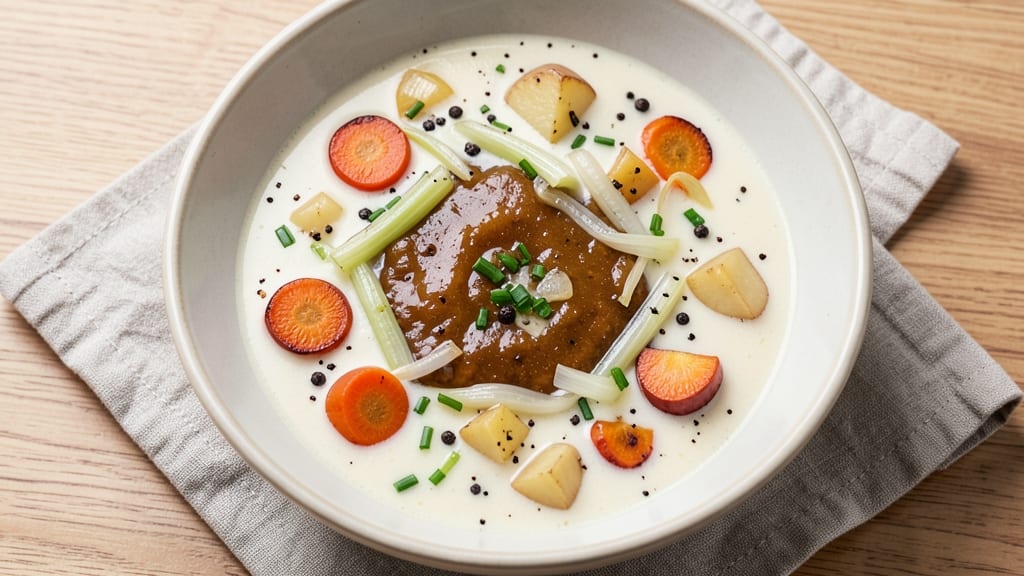
This leek, carrot, and potato soup recipe delivers the kind of velvety smoothness and earthy depth that makes it a year-round comfort classic. The secret lies in properly sweating the leeks—slow-cooking them in butter until they’re soft and golden—before adding the potatoes and carrots for a naturally sweet, caramelized base.
I’ve perfected this method over countless batches, ensuring every spoonful is rich without being heavy, and the texture is silky rather than gluey.
The beauty of this soup is its versatility—it works as a light vegetarian meal or a hearty starter, depending on how you finish it.
A splash of heavy cream or coconut milk (for a vegan version) adds luxurious body, while a sprinkle of fresh herbs or a swirl of olive oil at the end brightens the flavors.
What makes it stand out is the balance: the leeks provide subtle sweetness, the carrots add natural depth, and the potatoes create a satisfying, thick consistency that doesn’t require heavy thickening agents.
What you’ll end up with is a soup so smooth and flavorful it feels like a hug in a bowl—warm, comforting, and packed with seasonal vegetables. The slow simmering process develops complex flavors, while the blending technique ensures a velvety finish that’s impossible to resist.
This isn’t just soup; it’s a dish that transforms simple ingredients into something extraordinary with minimal effort.
Serve it with crusty bread for dipping or a sprinkle of toasted nuts for crunch, and you’ve got a meal that’s both impressive and foolproof. Ready to make it? Let’s get started with the ingredients—where every component plays a crucial role in building that perfect bowl of soup.
Ingredients for leek carrot and potato soup
Simple vegetables and rich dairy create this velvety soup with earthy depth.
| Ingredient | Amount | Notes |
|---|---|---|
| Unsalted Butter 🧈 | ½ cup | Cold, cut into small pieces |
| Leeks 🧅 | 3 medium | White and light green parts |
| Carrots 🥕 | 1 ½ lb | Peeled, cut into chunks |
| Russet Potatoes 🥔 | 2 lb | Peeled, cut into chunks |
| Yellow Onion 🧅 | 1 whole | Peeled, roughly chopped |
| Vegetable Broth 💧 | 4 cups | Low-sodium preferred |
| Heavy Cream 🥛 | ½ cup | Full-fat for richness |
| Fresh Thyme 🌿 | 2 sprigs | Or 1 tsp dried thyme |
| Garlic Cloves 🧄 | 4 cloves | Peeled, smashed |
| Sea Salt 🧂 | 1 tsp | Adjust to taste |
| Black Pepper 🌶️ | ½ tsp | Freshly ground preferred |
| Fresh Parsley 🌿 | ¼ cup | Chopped, for garnish |
The leeks are the flavor foundation—look for fresh, firm stalks with minimal yellowing. Whole Foods or local farmers markets often carry the best quality, but grocery store leeks work fine if they're crisp. Trim off the dark green tops and slice only the white and light green parts—this prevents bitterness. For the carrots and potatoes, organic is ideal to avoid soil residue, but conventional works too. The potatoes should be firm with no sprouts, and the carrots should snap when bent. If you're using baby carrots, you'll need about 3 cups instead of 1.5 lbs.
No heavy cream? Coconut milk or cashew cream works beautifully for a vegan version—just add a splash of lemon juice to balance. Swap thyme for rosemary or sage if you prefer, but thyme's earthy notes complement the leeks perfectly. The vegetable broth is crucial—avoid anything with added salt, and brands like Pacific Foods or Imagine are great choices. For extra depth, add a pinch of nutmeg or smoked paprika to the broth before simmering. The garlic can be roasted for a sweeter flavor—wrap the whole cloves in foil and bake at 400°F for 20 minutes before adding.
This soup tastes even better the next day as flavors meld. Store in an airtight container in the fridge for up to 5 days, or freeze for 3 months—portion into ice cube trays for single servings. For a quick reheat, warm gently on the stove with a splash of broth or water. Garnish with fresh parsley or a drizzle of truffle oil for an elevated touch. The texture will be smoothest if you blend it thoroughly, but leave it slightly chunky if you prefer rustic bites.
Why You'll Love This Recipe
- Here’s what sold me: that silky texture comes from the potatoes breaking down, not heavy cream. A splash of milk at the end? Optional. The leeks add this subtle, almost sweet depth—like a hug in a bowl—while the carrots keep it bright and fresh.
- No-Fuss Mise En Place: I swear by this one—just chop the leeks and carrots while the butter melts in the pot. No peeling potatoes (just scrub them!), no fancy techniques. The onions caramelize right there, so you’re basically set-and-forget until the soup’s velvety smooth.
- Creamy Without Cream: Here’s what sold me: that silky texture comes from the potatoes breaking down, not heavy cream. A splash of milk at the end? Optional. The leeks add this subtle, almost sweet depth—like a hug in a bowl—while the carrots keep it bright and fresh.
- Lunchbox Magic: Between us, this soup is my go-to for meal prep. Make a big batch, and it’s still perfect the next day—even better, actually. Pack it in jars for work or school; the flavors only get richer. (Yes, even on a Tuesday night when you’re craving something warm but don’t want to slave over it.)
Step-by-step instructions for leek, carrot, and potato soup
The secret to velvety smoothness lies in patience and proper technique—follow these steps closely.
Sauté the Vegetables in Butter Until Soft
In a large Dutch oven, melt the 0.5 cup unsalted butter over medium heat. Add the 3 medium leeks, sliced into ¼-inch rings, and the 1 whole yellow onion, cut into ½-inch pieces. Cook for 8-10 minutes, stirring occasionally, until the leeks become translucent and the onion softens.
Here's the thing—leeks can be sandy, so rinse them thoroughly before slicing to remove any grit. If the vegetables start to brown too quickly, reduce the heat slightly. You want them tender but not caramelized at this stage. Add the 1.5 lb carrots, peeled and cut into 1-inch chunks, and continue cooking for another 5 minutes until everything is uniformly soft.
Add Potatoes, Broth, and Seasonings
Increase the heat to medium-high and add the 2 lb russet potatoes, peeled and cut into 1-inch chunks. Pour in the 4 cups vegetable broth and bring the mixture to a boil. Once boiling, reduce the heat to low, add the 2 sprigs fresh thyme, 4 cloves garlic cloves (smashed), 1 tsp sea salt, and 0.5 tsp black pepper. Stir gently to combine.
Let the soup simmer uncovered for 20-25 minutes until the potatoes are fork-tender. You'll know it's ready when the potatoes collapse easily under gentle pressure. If the soup looks too thin, add a splash of water, but aim for a thick, creamy consistency at this stage. Skim off any foam that rises to the surface to keep the soup smooth.
Blend Until Silky Smooth
Remove the soup from heat and let it cool for 5 minutes. Working in batches, carefully transfer the soup to a blender or use an immersion blender directly in the pot. Blend until completely smooth, scraping down the sides as needed. This step is critical for that restaurant-quality texture—don’t rush it.
Once fully blended, return the soup to the pot and stir in the 0.5 cup heavy cream. Taste and adjust the seasoning with additional sea salt or black pepper if needed. The soup should be rich, earthy, and perfectly balanced. If it’s too thick, thin it with a little vegetable broth to reach your desired consistency.
Finish with Fresh Herbs and Serve
Return the soup to low heat and let it simmer gently for 5-7 minutes to warm through. Stir in the 0.25 cup chopped fresh parsley just before serving. The parsley adds a bright, fresh finish that cuts through the richness of the cream and butter.
Ladle the soup into bowls and serve immediately. For extra depth, garnish with a drizzle of heavy cream or a sprinkle of black pepper. This soup tastes even better the next day, so leftovers reheat beautifully—just stir in a splash of broth if it thickens too much.
Pro Tips For Making Leek Carrot And Potato Soup
- Sweat the Leeks: Cut leeks in half lengthwise, then slice into ¼-inch pieces—no need to peel the white parts. Cook them in butter over medium-low heat for 10 minutes until translucent but not browned. I learned this the hard way: rushing them turns the soup bitter, and skipping the sweat makes the flavor too sharp.
- Cube Potatoes Evenly: Russets break easily, so cut them into 1.5-inch cubes (no smaller) for even cooking. If you’re short on time, leave the skins on—they add texture and nutrients. I skip peeling unless I’m feeling fancy, and the soup still turns out creamy.
- Salt the Butter First: Melt the unsalted butter in the pot, then add ½ teaspoon salt before tossing in the onions. This seasons the butter itself, which carries flavor into every bite. I was skeptical until I tried it—now I can’t imagine making soup without this step.
- Simmer Covered, Uncovered: After adding broth, bring to a boil, then reduce to a low simmer, cover, and cook for 15 minutes. Uncover for the last 10 minutes to let excess liquid evaporate—this thickens the soup naturally. Sounds weird, but it works: no need for cornstarch, and the texture is perfect.
Pro cooking tips for great leek carrot and potato soup
Sweating Leeks Properly
This is where the magic starts—sweating leeks in butter until they’re soft and translucent, not browned. I use medium heat and stir frequently to prevent burning, which adds bitterness. If your leeks are particularly sandy, rinse them thoroughly before slicing to avoid gritty soup.
The goal is to develop their natural sweetness, so don’t rush this step. A large Dutch oven works best for even heat distribution. 🧅
Potato Cooking Time
Russet potatoes break down differently than waxy varieties, so they need 20-25 minutes of simmering to achieve that creamy texture. Test doneness by piercing a chunk with a fork—it should collapse easily. If they’re still firm, cover and simmer 5 more minutes.
Overcooking turns them mushy, so keep an eye on them. I like to add the potatoes after the leeks and carrots have softened to prevent them from absorbing too much liquid early. 🥔
Blending Techniques
For the smoothest texture, use an immersion blender directly in the pot—it’s faster and eliminates transfer mess. If using a countertop blender, work in batches and never overfill beyond the max line. Pulse first, then blend continuously until no lumps remain.
For extra richness, strain the soup through a fine-mesh sieve to remove any fibrous bits. This step makes all the difference between homemade and restaurant-quality soup. 💫
Creaming Without Curdling
When adding heavy cream, stir it in off the heat and return the pot to low heat to warm through. Direct high heat can cause the cream to curdle. If the soup separates, whisk vigorously or add 1 tsp cornstarch mixed with water to stabilize it.
For a vegan version, coconut milk works beautifully—just add a pinch of nutmeg to mimic the creaminess. 🥛
Seasoning Adjustments
Taste your soup before adding cream, as it mutes flavors. Adjust with sea salt and black pepper gradually—it’s easier to add more than fix oversalting. A splash of lemon juice or apple cider vinegar brightens flavors if the soup tastes flat.
For depth, add a pinch of smoked paprika or fresh thyme while simmering. Trust your palate, but don’t overcomplicate it. 🌶️
Equipment Shortcuts
No immersion blender? Use a high-powered blender like the Ninja BN601—it handles hot liquids better than basic models. For extra flavor, roast the carrots and potatoes at 400°F for 20 minutes before simmering.
This caramelizes their sugars naturally, reducing the need for added salt. A fine-mesh strainer removes any remaining bits for a silky finish. 🔥
Nutrition facts
Frequently asked questions
Can I make this soup without dairy?
Swap the heavy cream for ½ cup coconut milk or cashew cream to keep it vegan. For extra richness, add a pinch of nutmeg to mimic dairy's warmth. The soup will still be creamy—just stir in the coconut milk at the end while warming through.
Why does my soup turn out lumpy?
Lumpy texture usually means incomplete blending. Use an immersion blender for best results, or blend in batches with a countertop blender, scraping down sides as needed. For extra smoothness, strain through a fine-mesh sieve after blending. Never overfill the blender—leave at least 2 inches of space at the top.
How can I make this soup spicier?
Add ½ tsp smoked paprika or ½ tsp cayenne pepper while simmering, or stir in 1 tsp hot sauce at the end. For depth without heat, try fresh ginger (¼-inch slice) or garlic (extra clove). Always taste first—spices intensify as the soup cools.
Can I prep ingredients ahead of time?
Yes! Chop all vegetables and store in airtight containers in the fridge for 2 days. For longer prep, freeze chopped veggies on a tray before transferring to bags (lasts 3 months). Thaw overnight in the fridge before cooking. The broth can also be pre-made and stored separately.
What’s the best way to reheat leftovers?
Gently reheat on the stove over low heat with a splash of vegetable broth to restore creaminess. Avoid microwaving—it can make the soup watery. For extra flavor, add a pat of butter or 1 tsp cream cheese while warming. Stir frequently to prevent scorching.