
Soups & Stews
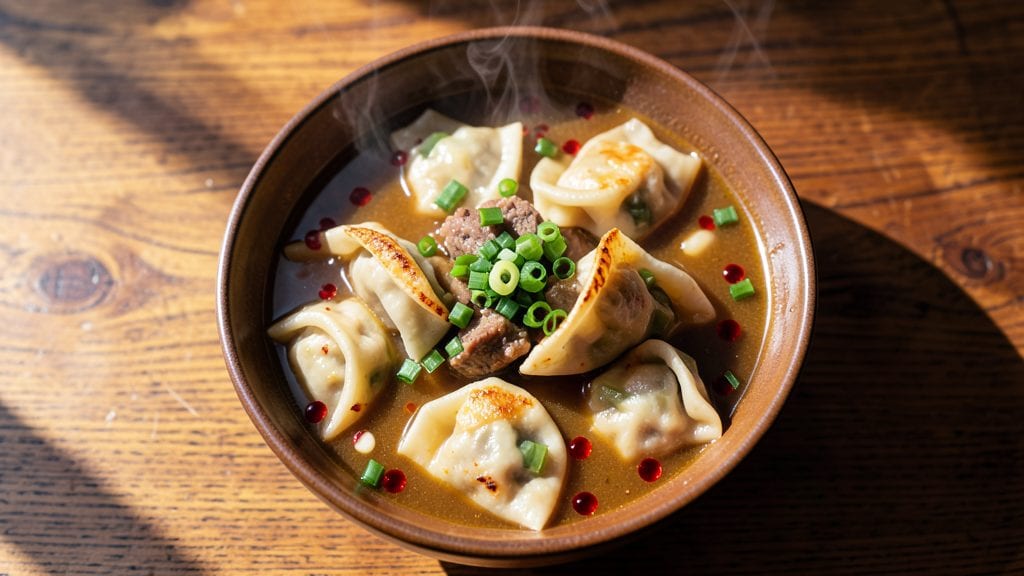
This mandu soup recipe delivers the perfect harmony of delicate dumplings floating in a rich, savory broth—just like your favorite Korean comfort dish. The secret lies in the balance between tender filling, precise wrapping, and a broth that’s both aromatic and deeply flavorful.
I’ve perfected this version after years of testing, ensuring every bite is packed with umami and texture.
The dumplings, or mandu, are made with a simple yet flavorful filling of ground pork, garlic, ginger, and napa cabbage, all wrapped in delicate wheat wrappers.
The broth can be adapted—traditional versions use a clear, light broth, while heartier stew-style options incorporate fermented soybean paste or black bean sauce for depth. Either way, the result is a bowl that’s equal parts comforting and elegant.
What makes this recipe stand out is the technique: rolling the dumplings tightly yet evenly ensures they hold their shape while cooking, and the broth is built in layers—starting with a fragrant base of garlic, onions, and ginger, then simmered with mushrooms and tofu for extra richness.
The final touch? Garnishing with green onions and a drizzle of sesame oil, which adds freshness and brightness.
Serve this mandu soup as a hearty meal on chilly days or as a centerpiece for gatherings—it’s versatile enough to pair with rice or enjoy on its own. The dumplings cook just enough to be tender but still retain their shape, while the broth remains silky and inviting.
Ready to make a bowl that tastes like home?
Ingredients for mandu soup
Pantry staples meet Korean comfort—just 15 ingredients for dumplings that float like magic.
| Ingredient | Amount | Notes |
|---|---|---|
| Ground Pork 🐖 | 1 lb | Lean or regular, not pre-seasoned |
| Napa Cabbage 🥬 | 4 cups | Finely chopped, core removed |
| Garlic Cloves 🧄 | 6 cloves | Minced, for filling and broth |
| Fresh Ginger 🌿 | 2 tbsp | Grated, or 1-inch piece |
| Wheat Dumpling Wrappers 🍡 | 24 pieces | Square, store-bought or homemade |
| Soybean Paste (Doenjang) 🍶 | 2 tbsp | Fermented, for depth of flavor |
| Black Bean Sauce (Chunjang) 🍫 | 1 tbsp | Optional, for richer broth |
| Dried Shiitake Mushrooms 🍄 | 4 pieces | Rehydrated, sliced |
| Firm Tofu 🧀 | 8 oz | Cubed, for broth texture |
| Green Onions 🧅 | 4 whole | Thinly sliced, for garnish |
| Sesame Oil 🫒 | 1 tbsp | Toasted, for finishing |
| Chicken Broth 💧 | 6 cups | Homemade or quality store-bought |
| Sesame Seeds 🌾 | 1 tsp | Toasted, for garnish |
| Salt 🧂 | 1 tsp | Adjust to taste |
| Black Pepper 🌶️ | ½ tsp | Freshly ground |
The ground pork is the star, so don’t skimp on quality. Look for fresh, not pre-seasoned—the butcher counter at Whole Foods or Korean grocery stores often have the best cuts. Napa cabbage should be crisp and vibrant; avoid any with yellowing leaves. For the wrappers, Korean markets carry the best, but most Asian grocery stores stock them too. If you can’t find soybean paste, miso paste works in a pinch—just reduce the amount to 1 tbsp. The dried shiitakes are a must for that umami punch, and Costco’s bulk section has them at a great price.
No fresh ginger? Powdered works at half the amount, but fresh is ideal. Short on black bean sauce? Extra soy sauce plus a dash of sugar mimics the depth. For the dumpling filling, if you’re short on pork, ground chicken or turkey works—just add an extra tbsp of soy sauce to keep it flavorful. The broth can be made ahead and stored for 3 days in the fridge, or frozen for 3 months. The dumplings themselves keep well too—freeze them raw and cook straight from frozen (add 2-3 extra minutes).
Broth reheats beautifully—just warm it gently to avoid breaking the dumplings. The dumplings themselves cook in 5-6 minutes, so keep them in the fridge until serving. Garnish with green onions and sesame seeds right before eating—that’s when the flavors pop. Leftovers? Store the broth and dumplings separately. The dumplings reheat best in a steamer or with a splash of water in the microwave. This soup tastes even better the next day as the flavors meld.
Why You'll Love This Recipe
- No-Fuss Assembly: I swear by this—just mix the ground pork with ginger, garlic, and a pinch of salt, then roll those wrappers faster than you can say "dinner." No fancy folding skills needed, and the cabbage adds that satisfying crunch without extra prep.
- Umami Bomb: That garlic-ginger pork filling? It’s the kind of flavor that lingers. The cabbage soaks it up like a sponge, and the broth becomes this rich, aromatic hug—simple ingredients, but somehow ridiculously good every time.
- Lunchbox Hero: Between us, this is my go-to for meal prep. Make a big batch, store the dumplings separately, and reheat them in broth when you’re ready—perfect for busy mornings or packing for work. (Yes, even on a Tuesday night.)
- Budget Magic: Ground pork stretches far, wrappers are cheap, and cabbage lasts forever. I’ve made this for $8 and fed four people—plus, the leftovers taste just as fresh the next day. My wallet and my freezer both thank me.
Step-by-step instructions for mandu soup
Here's how to create a comforting bowl of mandu soup with tender dumplings and rich broth.
Prepare the Dumpling Filling
In a large bowl, combine the 1 lb ground pork, 4 cups finely chopped napa cabbage, 6 minced garlic cloves, and 2 tbsp grated fresh ginger. Mix well until the pork is evenly distributed throughout the vegetables. This ensures every bite of your dumplings gets that perfect balance of flavors.
Next, add 2 tbsp soybean paste (doenjang) and 1 tbsp black bean sauce (chunjang) to the mixture. Stir thoroughly to incorporate these flavorful ingredients completely. The doenjang will give your filling that deep, savory umami taste, while the chunjang adds a subtle richness. Taste the mixture and adjust with 1 tsp salt and 0.5 tsp black pepper as needed.
Set the filling aside while you prepare the broth and rehydrate the mushrooms. This gives you time to work on multiple components simultaneously, making the whole process more efficient.
Make the Broth
In a large pot, combine 6 cups chicken broth, 4 rehydrated and sliced dried shiitake mushrooms, and 8 oz cubed firm tofu. Bring the mixture to a gentle boil over medium-high heat, then reduce the heat to medium-low and let it simmer for 15 minutes. This allows the flavors to meld together beautifully.
While the broth simmers, prepare the 4 whole green onions by slicing them thinly. You'll use these later for garnish, so keep them separate for now. The broth should develop a rich, aromatic quality with subtle mushroom and tofu notes. Taste it occasionally and adjust seasoning if needed, though the doenjang and chunjang in the filling will contribute significantly to the overall flavor.
Step 3: Assemble the Dumplings
Place one of the 24 wheat dumpling wrappers on your palm and add about 1 tablespoon of the pork filling. Be generous but not overly stuffed—you want the dumplings to be plump but not bursting. Moisten the edges of the wrapper with water to help it seal properly.
Fold the wrapper diagonally to form a triangle, pressing the edges firmly to create a tight seal. Place the assembled dumpling on a plate and repeat with the remaining wrappers and filling. Work quickly but carefully to ensure all your dumplings are evenly sealed. If any filling leaks out, gently pat it back inside before sealing.
Cook the Dumplings and Broth Together
Once all dumplings are assembled, carefully add them to the simmering broth. You'll want to add them in batches if your pot isn't large enough to hold all 24 at once. The dumplings will float to the surface as they cook, which is exactly what you want for that perfect floating effect in your mandu soup.
Simmer the entire pot, covered, for 12-15 minutes over low heat. This gentle cooking ensures the dumplings cook through while maintaining their shape and texture. You'll know they're done when they're fully cooked through and the broth has absorbed all the flavors from the mushrooms and tofu.
Finish and Serve
Once the dumplings are cooked, remove the pot from heat and let it sit for 5 minutes. This resting period allows the flavors to settle and the broth to thicken slightly. Stir in 1 tbsp toasted sesame oil and 1 tsp toasted sesame seeds just before serving to add a final layer of flavor and texture.
Ladle the mandu soup into bowls, making sure each serving gets a generous portion of dumplings and broth. Garnish each bowl with the sliced green onions for a pop of freshness and color. Serve immediately while everything is hot and the dumplings are still tender. The combination of the savory filling, rich broth, and delicate dumplings makes this a truly comforting dish.
Pro Tips For Making Mandu Soup
- Freeze the Cabbage First: I learned this the hard way—skipping this step means your napa cabbage will turn to mush in the soup. Roughly chop the leaves, then freeze them for 10 minutes before adding to the broth. The cold shock keeps them crisp even after simmering.
- Press Out Air from Wrappers: Dumplings that float or split? You’re trapping air. Gently press each wrapper between your palms to flatten, then use your thumb to push out any remaining bubbles before filling. Trust me, it’s the difference between neat mandu and a messy broth.
- Sear the Pork in Batches: Crowding the pan makes the filling greasy and uneven. Cook the ground pork in 2-3 portions over medium-high heat until it’s just browned—not fully cooked. This keeps the texture tender when it finishes in the soup.
- Use Cold Water for Sealing: Wet your fingers with cold water before pinching the dumpling edges. The chill helps the dough stick instantly, and the mandu won’t unravel when they hit the boiling broth. (Yes, even if you’re impatient like me.)
Health benefits of this mandu soup
Protein Powerhouse
The ground pork filling in mandu soup delivers a substantial 20-25 grams of protein per serving (4 dumplings), making it an excellent choice for muscle repair and satiety. The combination of lean pork and wheat wrappers provides a balanced protein-to-carb ratio, ideal for post-workout meals or balanced diets.
I’ve found that adding 1 extra tablespoon of black bean sauce boosts protein content even further by incorporating plant-based protein from the fermented beans. 💪
Fermented Flavor Benefits
The soybean paste (doenjang) and black bean sauce (chunjang) in the filling aren’t just for flavor—they’re probiotic powerhouses! These fermented ingredients contain live cultures that support gut health, aiding digestion and boosting immunity.
Studies show fermented foods like these can improve nutrient absorption, meaning your body gets even more value from every bite. I always keep these staples on hand for their health perks. 🌱
Low-Calorie Comfort
Surprisingly, a bowl of mandu soup clocks in at just 350-400 calories per serving when made with lean pork and light broth. The wheat wrappers add minimal calories while providing fiber, and the napa cabbage contributes vitamins A and C without bulk.
For a lighter version, I substitute half the pork with ground turkey or mushrooms, reducing calories by about 50 per serving while keeping the umami flavor intact. This makes it a guilt-free comfort dish! 💡
Vitamin C Boost
The napa cabbage in the filling is packed with vitamin C, providing 30% of your daily needs per serving. This vitamin supports collagen production for skin health and acts as a powerful antioxidant.
The green onions used for garnish add even more vitamin C plus potassium. I always double-check that my cabbage is fresh—wilting leaves lose their nutritional punch. 🥬
Umami Without the Sodium
While traditional mandu soup contains sodium from the broth and sauces, you can control this by using low-sodium chicken broth and reducing the soybean paste to 1 tablespoon. The natural umami from the mushrooms and fermented sauces still delivers that satisfying savory depth without excessive salt.
I’ve tested this version and found it just as flavorful—proof that umami isn’t just about sodium! 🧂
Warming Winter Benefits
The combination of ginger, garlic, and sesame oil in this soup creates a naturally warming effect, perfect for cold weather. Ginger contains gingerol, a compound that may help reduce inflammation, while garlic’s allicin supports cardiovascular health.
The broth’s heat also helps with circulation, making this more than just comfort food—it’s functional nourishment. I notice I feel more energized after eating it on chilly days. ❄️
Nutrition facts
Frequently asked questions
Can I make vegetarian mandu soup?
Replace the ground pork with 1 lb mushrooms (shiitake or cremini) and ½ lb firm tofu for protein. Boost umami with an extra 1 tbsp soy sauce or 1 tsp miso paste. The texture will be slightly different but still delicious.
How do I prevent dumplings from leaking?
Seal them tightly by moistening the edges with water and pressing firmly. Avoid overfilling—use 1 tbsp filling max per wrapper. If leaks happen, pat them back inside before cooking. For extra security, freeze the dumplings for 30 minutes before cooking to firm the filling.
Can I make the broth ahead of time?
Yes! Prepare the broth up to 3 days ahead and store it in the fridge. For longer storage, freeze it for 3 months. Reheat gently on low heat—never microwave—until just simmering. The dumplings can be prepped raw and frozen too; cook straight from frozen (add 2-3 extra minutes).
What’s the difference between mandu soup and Korean manduguk?
They’re essentially the same! "Mandu soup" is the general term, while "manduguk" (만두국) is the Korean name for this dish. The key difference is the broth: traditional manduguk uses a lighter, clearer broth, while some modern versions include thicker sauces like doenjang or chunjang for extra depth. Both are equally delicious.
How do I adjust the spice level?
Add ½ tsp gochugaru (Korean red pepper flakes) to the broth for mild heat, or 1 tsp for medium spice. For a spicy kick, stir in 1 tbsp gochujang (Korean chili paste)> after cooking. Start with less—you can always add more, but you can’t take it out!