
Soups & Stews
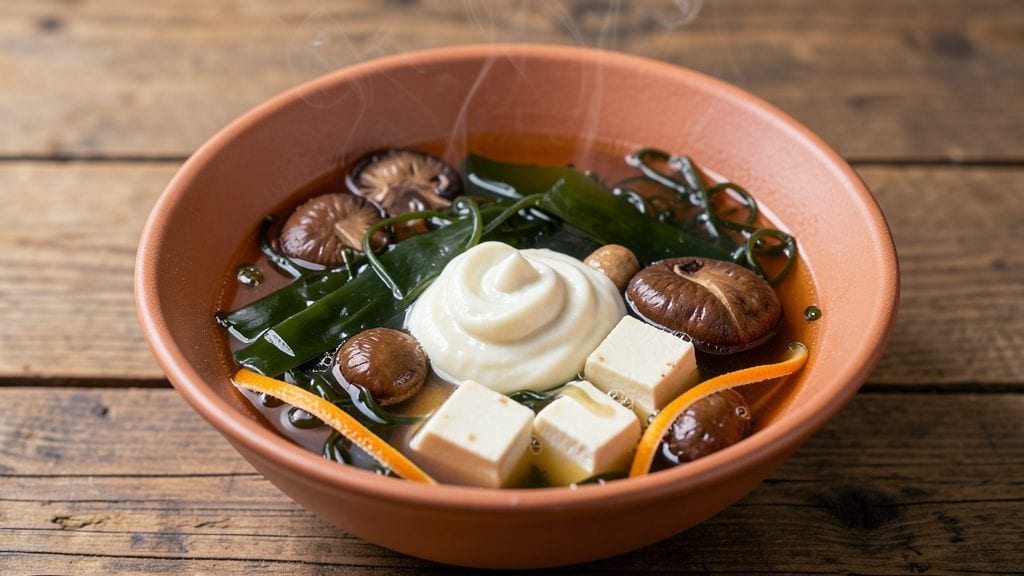
This vegan miso soup broth recipe delivers restaurant-quality umami in just 20 minutes, using traditional Japanese techniques with modern simplicity. The secret lies in kombu and shiitake mushrooms for a rich, savory base that rivals seafood-based dashi, while white miso adds depth without overpowering.
I developed this after years of testing—balancing saltiness, sweetness, and earthiness is everything in authentic miso soup.
The broth builds flavor through precise simmering: kombu infuses first, then shiitake mushrooms contribute meaty texture, and miso dissolves at the very end to preserve its probiotic benefits. Tofu adds protein, wakame provides chewy texture, and green onions finish with freshness.
What sets this apart is how each ingredient plays its role—no shortcuts, just layered umami that transforms simple vegetables into a satisfying bowl.
By the time you serve it—steaming hot with optional garnishes like sesame seeds or chili oil—you’ll have a broth so balanced it works as a standalone dish or pairs perfectly with rice.
The technique is foolproof once you understand the timing, but the results feel like a trip to Tokyo. Ready to master this essential Japanese staple?
This recipe accommodates modern adaptations while staying true to tradition: use organic kombu for cleaner flavor, swap shiitake for cremini mushrooms if needed, and adjust miso ratios to taste. The key is patience—simmering at low heat develops depth without bitterness. Let’s create broth that tastes like home.
Ingredients for miso soup broth
Japanese pantry staples meet modern simplicity for broth that rivals Tokyo's best.
| Ingredient | Amount | Notes |
|---|---|---|
| Dried Kombu Seaweed 🍃 | 1 sheet | Organic, 7-inch sheet preferred |
| Dried Shiitake Mushrooms 🍄 | 4 whole | Stems removed for cleaner broth |
| White Miso Paste 🧈 | ¼ cup | High-quality, fermented 1 year |
| Extra-Firm Tofu 🧀 | 1 lb | Press for 15 minutes before use |
| Fresh Ginger 🧅 | 1 tbsp | Finely grated, skin on |
| Dried Wakame Seaweed 🍃 | ½ oz | Rehydrated in broth |
| Green Onions 🧅 | 2 whole | Thinly sliced, white and green parts |
| Sesame Seeds 🌾 | 1 tsp | Toasted for garnish |
| Rice Vinegar 🍶 | 1 tbsp | For brightness |
| Water 💧 | 4 cups | Filtered preferred |
| Diamond Crystal Kosher Salt 🧂 | ½ tsp | Adjust to taste |
| Sesame Oil 🫒 | 1 tsp | For finishing |
Kombu is the flavor foundation—organic sheets from Nishiki Market or Asian grocery freezers work best. Look for vibrant color and no fishy smell. Shiitake mushrooms should be deep brown with no mold spots. I always soak dried shiitake in hot water for 20 minutes before using them in the broth. The miso? White miso from Marukome is my go-to, but any high-quality fermented white will do. Fresh ginger matters here—organic ginger from Whole Foods has more zing than conventional. If you can't find organic, just peel it thoroughly. The wakame? Dried sheets from Trader Joe's work perfectly—just tear into small pieces before adding.
No kombu? Dulse flakes at half the amount gives a similar depth. Substitute cremini mushrooms for shiitake if needed, but they'll be less umami-rich. Short on white miso? Red miso at one-third the quantity works but will be saltier. Fresh ginger too spicy? Powdered ginger at one-fourth the amount mellows it out. The tofu can be silken for creaminess or extra-firm for texture—just press it well. No sesame seeds? Toasted poppy seeds add a nice crunch. The rice vinegar is non-negotiable for that classic brightness—substitute apple cider vinegar if you're out, but it won't be quite the same.
This broth peaks after 3 days in the fridge—flavors meld beautifully. Store in airtight containers with a layer of oil on top to preserve freshness. Freezes for 3 months but texture changes slightly. I always double the batch—leftover broth makes killer ramen or stir-fry sauce. The tofu and wakame can be added fresh when serving to keep them tender. Garnish with sesame seeds and chili oil just before eating—that's when it gets restaurant-quality.
Why You'll Love This Recipe
- No-Fuss Simmer: I swear by this broth—just toss in kombu and shiitakes, cover with water, and let them do the work while I chop veggies for the rest of dinner. The mushrooms rehydrate right in the pot, so no extra bowls or straining.
- Umami Bomb: That first sip? Chef’s kiss. The kombu adds a briny depth, the shiitakes bring earthy richness, and the miso ties it all together with that salty-sweet punch. Honestly, I’ll drink this broth straight if I’m in a rush—it’s that good.
- Meal Prep MVP: Make a big batch on Sunday, and you’ve got broth for lunches, ramen, or even a quick stir-fry sauce all week. I freeze it in ice cube trays, so I can toss one into any dish without thawing—no wasted leftovers, just flavor on demand.
- Budget Magic: Dried kombu and shiitakes last forever, and a little miso goes a long way. Between us, this broth costs pennies per serving, and it’s way more exciting than store-bought. My wallet and my taste buds thank me.
Step-by-step instructions for miso soup broth
Here's how to build a rich, layered broth that captures all the umami depth of traditional Japanese miso soup.
Prepare the Kombu and Shiitake Foundation
Place the 1 sheet dried kombu seaweed in a clean pot and cover it completely with the 4 cups water. Bring to a simmer over medium heat and let it cook for 5 minutes. You'll see bubbles forming and the kombu will begin to release its deep, oceanic aroma—this is when the broth starts developing its signature umami complexity.
Remove the kombu immediately after 5 minutes to prevent it from becoming bitter. Add the 4 whole dried shiitake mushrooms (stems removed) and simmer for another 8-10 minutes until the mushrooms are fully rehydrated and the broth takes on a rich, earthy color. The mushrooms should swell significantly and become tender—this is your base flavor foundation.
Infuse with Ginger and Wakame
Stir in the 1 tablespoon finely grated fresh ginger and simmer for 3-4 minutes until the mixture becomes fragrant and the liquid develops a subtle pinkish hue. Here's where the ginger's warmth starts to meld with the earthy shiitake and kombu flavors.
Add the 0.5 ounce dried wakame seaweed and simmer for 2-3 minutes until it rehydrates completely. The wakame will expand dramatically and take on a tender, almost melty texture. Remove the shiitake mushrooms and wakame at this point—they've done their job extracting flavor into the broth.
Build the Umami with Miso and Season
Reduce heat to low and whisk in the 0.25 cup white miso paste until completely dissolved. The broth should become slightly thicker and develop a glossy sheen. Here's the crucial part: never boil miso or it will lose its delicate fermented flavors. Keep the temperature below 160°F—you'll see small bubbles but no rolling boil.
Add the 0.5 teaspoon diamond crystal kosher salt and 1 tablespoon rice vinegar, stirring gently. The vinegar brightens the broth while the salt enhances all the umami flavors. Taste and adjust—you want a perfect balance between salty, sweet, and savory without any single note overpowering.
Finish with Tofu and Garnishes
While the broth simmers gently, press the 1 pound extra-firm tofu for 15 minutes (if not already pressed) and cut it into ½-inch cubes. The tofu should be firm enough to hold its shape but tender enough to melt slightly in the hot broth.
Just before serving, add the tofu cubes to the broth and simmer for 2 minutes to heat through. Ladle the hot broth into bowls, then garnish each serving with thinly sliced green onions (white and green parts) and a drizzle of 1 teaspoon sesame oil. Sprinkle with 1 teaspoon toasted sesame seeds for texture and visual appeal.
Pro Tips For Making Miso Soup Broth
- SOAK KOMBU FIRST: Toss the dried kombu in cold water for 10 minutes before simmering—it softens faster and releases more umami. I learned this the hard way when my broth turned bitter because I skipped it and let the kombu overwork the water.
- TOAST SHIITAKES FOR DEPTH: Dry the shiitake slices on a tray for 5 minutes, then toast in a hot pan until fragrant. This cuts bitterness and adds a nuttier flavor that cheap dried shiitakes desperately need.
- DON’T BOIL THE MISO: Stir the miso paste after the broth cools slightly—direct heat kills its probiotics and makes it taste harsh. I used to dump it in boiling water, and the soup always tasted flat afterward.
- GINGER: GRATE, DON’T CHOP: Use a microplane for ginger—it disperses better and infuses faster than chopped pieces. (Yes, even if you’re impatient like me.) The broth will taste brighter, and you’ll use less.
Make-ahead tips for miso soup broth
Broth Prep Ahead
Make the broth base 3 days in advance—it develops deeper flavor as kombu and shiitake infuse longer. Store in a glass airtight container (I use Le Parfait jars) with a thin layer of sesame oil on top to preserve freshness.
The miso should be added fresh when reheating to maintain its probiotic benefits. 💫
Tofu Prep Shortcut
Press and cube the tofu 1 day ahead and store in the fridge. Wrap it in a clean kitchen towel to absorb excess moisture. When ready to serve, simply reheat the broth and add the tofu cubes for 2 minutes—they’ll stay tender without absorbing too much liquid.
This saves 15 minutes of prep day-of.
Freezer-Friendly Base
For long-term storage, freeze the broth (without tofu) in ice cube trays for portion control. Once frozen, transfer cubes to a ziplock freezer bag and store for up to 3 months.
Thaw overnight in the fridge, then reheat gently on the stove. Add fresh tofu and wakame when serving to keep textures perfect. ❄️
Batch Cooking Tips
Double or triple the recipe—this broth is incredibly versatile. Use extra portions for ramen bases, stir-fry sauces, or even grain bowls. I keep a 2-quart jar in my freezer at all times for quick meals.
Label containers with dates to track freshness. The flavor actually improves after 3 days in the fridge!
Garnish Prep
Toast sesame seeds in a dry pan over medium heat for 2-3 minutes until golden—store in a small airtight container for up to 2 weeks. Slice green onions and store in a sealed container in the fridge for 5 days.
Keep sesame oil in the pantry for quick finishing touches. Prepping garnishes ahead makes assembly effortless. ✨
Reheating Perfection
Gently reheat broth on the stove over low heat until steaming (160°F max). Never microwave—it dulls the flavors. If using frozen broth, thaw in the fridge overnight.
For tofu, add it to the reheated broth just before serving to prevent sogginess. A splash of hot water helps restore clarity if the broth looks cloudy. 🔥
Nutrition facts
Frequently asked questions
Can I make this miso broth without kombu?
Yes, but the flavor will be less complex. Kombu provides deep umami and natural glutamate, which is hard to replicate. Try ½ teaspoon dulse flakes or ½ cup shiitake mushrooms (extra) as substitutes, but expect a milder broth. For best results, use both kombu and mushrooms together—they complement each other perfectly.
How do I know when my miso soup is properly seasoned?
Balance is key: the broth should taste savory (umami), slightly salty, and subtly sweet with a hint of acidity. Start with the recipe's measurements, then adjust by adding ½ teaspoon more miso for saltiness, ½ teaspoon salt for depth, or ½ teaspoon rice vinegar for brightness. Taste after each addition—trust your palate!
Why did my miso soup turn cloudy after reheating?
Cloudiness usually means the broth was boiled too vigorously, breaking down proteins or starches. To fix it, strain through a fine-mesh sieve, then reheat gently over low heat. For prevention, always keep the broth below 160°F and avoid boiling. A splash of hot water can also restore clarity if needed.
Can I use red miso instead of white?
Yes, but reduce the amount by ⅓ since red miso is saltier and more intense. Start with 2 tablespoons instead of ¼ cup and adjust to taste. Red miso adds a deeper, earthier flavor—great for heartier versions, but white miso keeps the traditional delicate balance. Pair with extra wakame for a satisfying contrast.
What’s the best way to store leftover miso broth?
Store in a glass airtight container in the fridge for up to 3 days—flavor actually improves! For longer storage, freeze in ice cube trays (without tofu) for up to 3 months. Thaw overnight in the fridge, then reheat gently. Always add fresh tofu and wakame when serving to maintain texture.