
Soups & Stews
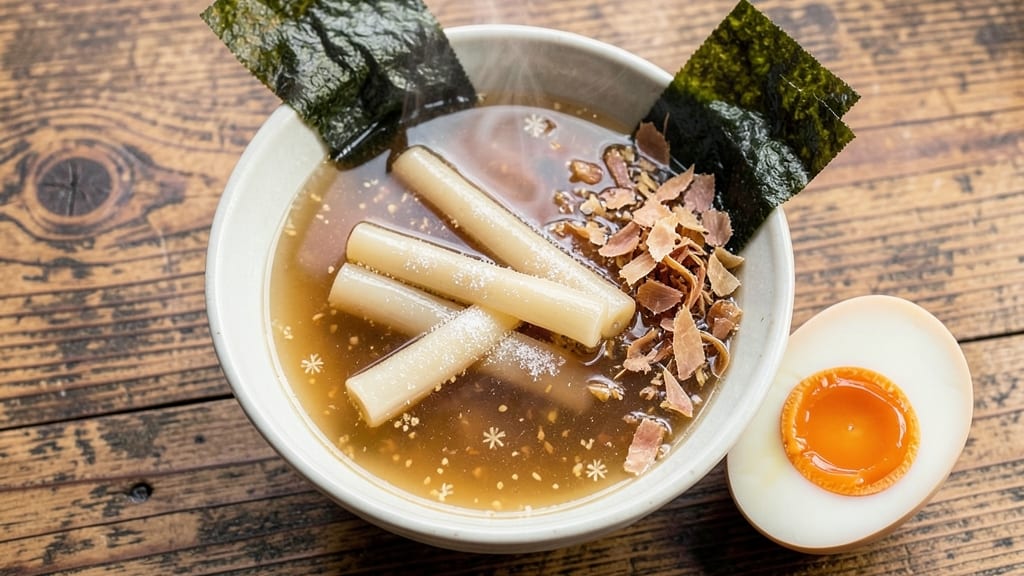
This odeng soup recipe delivers the perfect balance of silky fish broth and crispy, golden fish cakes that float temptingly on top. The secret lies in a carefully crafted dashi broth and a precise cooking technique that ensures those fish cakes develop that irresistible crunch while staying tender inside.
I've refined this recipe over years of testing, and it consistently delivers restaurant-quality results at home.
What makes odeng truly special is the contrast between the delicate broth and the crispy topping. The fish cakes are made with a simple batter of surimi, flour, and egg, which creates a light yet sturdy texture perfect for achieving that signature crispy exterior.
Meanwhile, the dashi broth simmers for hours, developing deep umami flavors that make every spoonful satisfying. This is comfort food at its finest—warm, flavorful, and impossible to resist.
The broth preparation is where the magic happens, using kombu and bonito flakes to create a rich, aromatic foundation. You'll simmer it gently to extract maximum flavor without overpowering the delicate fish cakes.
Once everything comes together, you'll have a bowl of odeng that's both visually stunning and deeply comforting—each spoonful offering layers of flavor from the silky broth to the crispy topping.
Serve this odeng with grated daikon radish and green onions for added freshness and texture. The crispy fish cakes will float temptingly on the surface, while the broth remains silky smooth beneath.
This recipe is perfect for chilly evenings when you crave something warm and hearty that feels like a hug in a bowl.
Ingredients for odeng soup
Crispy fish cakes and silky broth—just these 14 ingredients transform into restaurant-quality odeng.
| Ingredient | Amount | Notes |
|---|---|---|
| Surimi 🐟 | 1 lb | High-quality, finely chopped |
| All-Purpose Flour 🌾 | ½ cup | Light, for crispy texture |
| Large Eggs 🥚 | 2 whole | Room temperature for best mix |
| Dried Kombu 🍃 | 1 sheet | High-quality, 6-inch |
| Bonito Flakes 🐟 | ¼ cup | Freshly toasted for depth |
| Dashi Granules 🍲 | 2 tbsp | Instant or homemade preferred |
| Water 💧 | 6 cups | Filtered for clarity |
| Soy Sauce 🍶 | 2 tbsp | Light, not dark |
| Mirin 🍶 | 2 tbsp | Sweet cooking rice wine |
| Sesame Oil 🫒 | 1 tsp | Toasted, for aroma |
| Daikon Radish 🥕 | 1 whole | Freshly grated for garnish |
| Green Onions 🧅 | 4 whole | Thinly sliced, white and green |
| Salt 🧂 | 1 tsp | Kosher for seasoning |
| Vegetable Oil 🫒 | ¼ cup | High smoke point for frying |
The surimi is non-negotiable here—Koyo brand from Asian markets is my go-to, but any high-quality surimi works. Look for finely chopped pieces, not chunks. The kombu sheet should be vibrant green and pliable, not dried out. Maesato or Hojicha brands are excellent. For bonito flakes, toast them in a dry pan for 30 seconds to deepen the aroma before adding to the broth. The dashi granules are a shortcut, but if you're ambitious, make your own with kombu and bonito—trust me, it's worth it. Grab these at H Mart or Trader Joe's for convenience.
No mirin? Substitute equal parts sugar and water, but the real flavor comes from the mirin's sweetness and acidity. Out of bonito flakes? Dried shiitake mushrooms add umami depth. The daikon radish can be pre-shredded from the bag, but freshly grated has more texture. For the fish cakes, if you don't have surimi, firm white fish like cod or pollock works in a pinch—just chop it extra fine. The vegetable oil is for frying; peanut oil works too, but has a stronger flavor. And don't skip the sesame oil—it's the secret to that authentic aroma.
The broth keeps 3 days in the fridge, but the fish cakes are best made fresh. Store leftover broth in the fridge and reheat gently—never boil, or it'll get cloudy. The fish cake batter can be prepped 1 hour ahead and chilled. For a shortcut, fry the cakes, then reheat in the oven at 350°F for 5 minutes before serving. The daikon and green onions stay fresh 5 days wrapped in damp paper towels. Freeze the broth in ice cube trays for easy single-serving reheats!
Why You'll Love This Recipe
- No-Fuss Bites: I mix the surimi, flour, and egg in five minutes—no kneading, no fuss. The dough rolls out smooth, and those little fish-shaped dumplings come together faster than takeout.
- Umami Magic: That kombu and bonito flake combo? Chef’s kiss. The broth simmers into something rich and savory, while the crispy surimi bites add a satisfying crunch—like a hug in a bowl.
- Weeknight Wonder: Between us, this is my go-to when I’m exhausted but still want something special. The dumplings freeze perfectly, and reheating them in broth? Instant comfort. Even my picky roommate asks for seconds.
- Budget-Friendly Luxury: Surimi and kombu stretch into a whole pot of soup, and eggs add richness without breaking the bank. Honestly, it’s the kind of meal that feels fancy but costs less than delivery.
Step-by-step instructions for odeng soup
Here's how to create this incredible Japanese classic with a velvety broth and irresistible crispy top.
Prepare the Broth Base
First, rinse the 1 sheet dried kombu under cold water and pat it completely dry with paper towels. Place it in a large pot with the 6 cups water and bring to a gentle simmer over medium-low heat. You want just a few bubbles breaking the surface—no rolling boil. Simmer for 10 minutes to infuse the water with umami.
While the kombu steeps, toast the 0.25 cup bonito flakes in a dry skillet over medium heat for 1-2 minutes until they release their aroma and turn a deeper golden color. Immediately add them to the simmering kombu water along with the 2 tbsp dashi granules and 1 tsp salt. Let this mixture steep for another 5 minutes—this builds the rich, complex flavor foundation.
Create the Crispy Surimi Topping
In a medium bowl, whisk together the 2 whole large eggs until well combined. Gradually whisk in the 0.5 cup all-purpose flour until you have a smooth batter with no lumps. The consistency should be like heavy cream—thick enough to coat the back of a spoon but still pourable.
Heat the 0.25 cup vegetable oil in a non-stick skillet over medium heat until it shimmers but doesn't smoke. Working quickly, pour the batter into the skillet and immediately spread it into an even, thin layer using a spatula. Cook for 2-3 minutes until the top is set but still slightly jiggly in the center. Flip carefully and cook for another 1-2 minutes until golden brown on both sides. Remove and set aside on a wire rack.
Assemble and Simmer the Odeng
Remove the kombu from the broth and discard it. Stir in the 2 tbsp soy sauce and 2 tbsp mirin, then bring the broth to a gentle simmer again. Add the 1 lb surimi and let it cook for 5 minutes—just enough to warm through without overcooking. The surimi should remain tender with a slight bounce when pressed.
Place the crispy egg topping on top of the simmering broth and surimi. The heat from below will gently melt the bottom while keeping the top crispy. Let it sit for 2-3 minutes until the bottom is just softened but the top remains firm and golden. Drizzle with 1 tsp sesame oil for that final aromatic touch.
Prepare Garnishes and Serve
While the soup finishes, prepare the garnishes. Peel and grate the 1 whole daikon radish using a box grater. Thinly slice the 4 whole green onions, separating the white and green parts. The white will cook slightly in the hot broth, while the green adds freshness.
Ladle the hot odeng soup into bowls, placing the crispy egg topping on top. Arrange the grated daikon and sliced green onions around the edge. The contrast of temperatures and textures—creamy broth, tender surimi, crispy topping—is what makes this dish truly magical. Serve immediately while everything is at its peak!
Pro Tips For Making Odeng Soup
- Soak Kombu Properly: Toss that dried kombu into boiling water and you’ll just get bitter, murky broth. Instead, soak it in cold water for 10 minutes first—this rehydrates the edges and keeps the umami from bleeding too fast. I learned this the hard way after slurping a batch that tasted like seaweed tea gone wrong.
- Egg Wash, Not Dip: The surimi’s crust isn’t just about flour—it’s about the egg wash. Beat the eggs until frothy, then brush them on lightly (not dunk the whole piece). Too much egg makes the coating soggy; too little and it’ll crack when frying. I used to glob it on like icing—now I treat it like a whisper.
- Fry in Batches: Crowd the pan and the oil temp drops, leading to greasy, uneven cooking. Fry 2-3 pieces at a time in a medium-hot pan (350°F/175°C)—golden in 2-3 minutes, not 5. I once fried a whole tray at once and ended up with a sad, oil-slathered mess.
- Toast Bonito Flakes: Skip the toasting and you’ll just get bland, dusty flakes. Dry-toast them in a low-heat pan for 30 seconds until they sizzle and darken slightly—this concentrates the flavor. I was skeptical until I tried it; now I add them to the broth last, right before serving, so they stay crisp.
Flavor customization for odeng soup
Spicy Umami Twist
For a bold kick, add 1 tsp chili crisp or ½ tsp gochujang paste to the simmering broth along with the soy sauce and mirin. The heat from the chili crisp enhances the umami depth while adding a subtle smoky note.
I like to finish with a sprinkle of Korean red pepper flakes on top for extra heat. 🌶️
Creamy Miso Variation
Swap out the dashi granules for 2 tbsp white miso paste dissolved in ¼ cup warm water. This creates a richer, creamier broth with a deeper savory profile.
I recommend Hokkaido miso for its smooth texture and delicate sweetness. The miso also pairs beautifully with the crispy egg topping, creating a perfect balance of textures.
Vegetarian Adaptation
For a plant-based version, replace the surimi with 1 lb king oyster mushrooms, sliced into thin strips. These mushrooms have a meaty texture that mimics the surimi perfectly.
You can also use tofu skin strips for added crispiness. The broth remains the same, ensuring the dish stays true to its comforting essence while being entirely plant-friendly. 🌱
Sweet Soy Glaze Topping
After assembling the odeng, brush the crispy egg topping with a mixture of 1 tbsp soy sauce and 1 tbsp mirin before serving. Broil for 1-2 minutes until the glaze caramelizes slightly, adding a sweet-savory contrast to the dish.
This technique elevates the presentation and adds a delightful complexity to each bite.
Herb-Infused Broth
Infuse the broth with 2 sprigs fresh shiso leaves or 1 tbsp dried shiso powder while simmering. Shiso adds a bright, citrusy note that complements the umami flavors beautifully.
For a milder option, use ½ tsp dried basil instead. The herbs should steep for the last 5 minutes of cooking to preserve their delicate flavors.
Seafood Fusion
For a seafood lover's twist, add ½ lb shrimp or ½ lb scallops to the broth during the final 2 minutes of cooking. These ingredients cook quickly and add a luxurious texture to the soup.
The shrimp should be poached just until opaque, while the scallops should develop a golden sear on the outside. Garnish with extra green onions for a pop of freshness. 🦐
Nutrition facts
Frequently asked questions
What makes odeng soup different from other Japanese fish soups?
Odeng stands out with its signature crispy egg topping that floats on a silky fish broth. Unlike miso soup or chowder, the key is the two-stage cooking technique—first making a delicate dashi broth, then adding the crispy topping just before serving. The contrast between the creamy broth and crispy top creates its signature texture.
Can I make odeng soup ahead of time?
The broth can be prepped 3 days ahead and stored in the fridge, but the crispy egg topping is best made fresh. For a shortcut, fry the topping in advance and reheat for 5 minutes at 350°F before serving. The surimi can be cooked up to 2 hours ahead and kept warm in the broth.
Why does my egg topping get soggy?
This usually happens when the topping sits too long on the hot broth. Keep the heat at a gentle simmer and add the topping just before serving. For extra crispiness, fry the topping until golden (not pale) and place it on the broth no more than 2 minutes before eating.
What's the best way to store leftover odeng?
Store the broth and surimi separately in airtight containers for up to 3 days. Reheat the broth gently (never boil) and make fresh crispy topping when serving. The topping doesn't reheat well, so it's best enjoyed immediately. For leftovers, consider making extra broth and using it for rice or noodles.
Can I substitute surimi with another ingredient?
For a similar texture, try firm white fish like cod or pollock, chopped very fine. For a vegetarian option, king oyster mushrooms work well—they absorb flavors beautifully. Just ensure your substitute maintains the dish's delicate balance with the broth.