
Soups & Stews
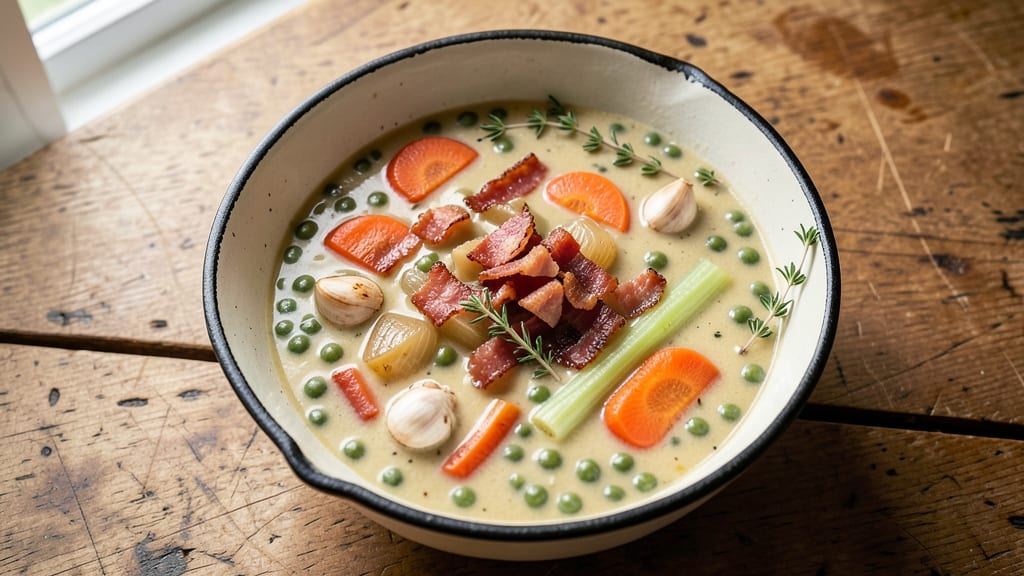
This old-fashioned pea soup recipe brings back the comforting flavors of classic British country cooking, where split peas simmer for hours with aromatic herbs and savory meat until the broth becomes rich and velvety.
The secret lies in patience—letting the peas break down into a thick, hearty consistency while building layers of flavor through slow simmering. I've perfected this version to deliver restaurant-quality results at home, with a balance of traditional techniques and modern convenience.
The beauty of this soup is its versatility—it can be made with or without meat, making it equally satisfying for vegetarians and meat lovers. Classic versions often include salt pork or bacon for depth, while modern adaptations might use smoked sausage or even mushrooms for a hearty vegetarian twist.
The key is building flavor through sautéing onions, carrots, and celery until they're deeply caramelized before adding the peas and liquid.
What you'll end up with is a soup so comforting it feels like a hug in a bowl—creamy yet not overly thick, with tender peas and aromatic herbs that make every spoonful taste like a cozy kitchen in the countryside.
The long simmering process develops a depth of flavor that store-bought soups can't match, while keeping the preparation simple enough for a weeknight dinner.
Serve it with crusty bread for dipping or alongside a simple green salad for a complete meal. The leftovers actually taste better the next day as the flavors continue to meld. Here's how to make it—step by step—for perfect results every time.
Ingredients for old fashioned pea soup
Pantry staples meet slow-cooked comfort in this classic British-inspired pea soup.
| Ingredient | Amount | Notes |
|---|---|---|
| Dried Split Peas 🌾 | 1 ½ cups | Yellow or green split peas preferred |
| Salt Pork or Bacon 🥓 | 6 oz | Diced, optional for meatless version |
| Yellow Onion 🧅 | 1 whole | Medium size, chopped |
| Carrots 🥕 | 2 medium | Peeled, chopped into chunks |
| Celery Stalks 🌿 | 3 whole | Chopped, including leaves |
| Garlic Cloves 🧄 | 4 cloves | Peeled, minced |
| Fresh Thyme Leaves 🌿 | ½ oz | Or 1 tbsp dried thyme |
| Fresh Bay Leaves 🌿 | 2 whole | Remove before serving |
| Chicken or Vegetable Broth 💧 | 6 cups | Low-sodium preferred |
| Extra-Virgin Olive Oil 🫒 | 2 tbsp | For sautéing vegetables |
| Sea Salt 🧂 | 1 ½ tsp | Adjust to taste |
| Black Peppercorns 🌶️ | ½ tsp | Freshly ground |
| Fresh Parsley 🌿 | ¼ cup | Chopped, for garnish |
The split peas are the heart of this soup—yellow or green varieties both work, but yellow has a slightly nuttier flavor. Bob's Red Mill or Whole Foods bulk bins are great sources for high-quality dried peas. If using salt pork or bacon, look for thick-cut, unsmoked for better flavor. Fresh herbs like thyme and bay leaves elevate the soup, so don't skimp. I always double-check the split peas for debris before rinsing them—saves time later. The broth should be low-sodium to control the final seasoning.
No salt pork? Smoked sausage or mushrooms add depth for vegetarians. Swap fresh thyme for dried at one-third the amount, but fresh is ideal. The carrots and celery can be swapped for frozen mixed vegetables in a pinch—just thaw and drain first. For extra richness, stir in 1 tbsp of Dijon mustard at the end. The olive oil should be extra-virgin—it makes all the difference when sautéing the vegetables. If you're short on time, pre-chopped frozen veggies work perfectly.
This soup tastes even better the next day as flavors meld. Store in an airtight container in the fridge for 4-5 days or freeze for up to 3 months. I always make a double batch—half for dinner, half for lunches. The peas soften as they sit, so reheat gently with a splash of broth. Garnish with fresh parsley right before serving to keep it vibrant. For extra coziness, serve with crusty sourdough bread or a simple green salad.
Why You'll Love This Recipe
- One-Pot Wonder: I swear by this recipe because it’s all in one pot—no fancy gadgets, no extra bowls. Toss in the dried peas, salt pork (or bacon), and chopped veggies, then let it simmer. The split peas soften while the pork renders its fat right into the soup, turning it rich without extra effort.
- Smoky Depth Magic: That crispy salt pork or bacon? It’s not just for flavor—it’s the secret weapon. The first bite hits with a smoky punch, then melts into a hearty, savory broth that makes you forget how simple the ingredients are. Honestly, the smell alone makes my kitchen feel like a cozy diner.
- Leftovers That Shine: This soup begs for seconds—and thirds. The flavors deepen overnight, so the next day, it’s even better. I freeze half the batch because reheating it is just dumping, warming, and serving. Perfect for lazy mornings or when unexpected guests show up.
- Budget Meal, Big Payoff: Dried split peas and a few pork scraps stretch into four or five servings without breaking the bank. It’s the kind of meal that makes you feel like you’re feeding a crowd, even if you’re just feeding yourself. Plus, the veggies (onion, carrots, celery) are the kind you always have lying around.
Step-by-step instructions for herbed pea soup
A rich, aromatic soup that simmers into tender perfection—here's how to create it.
Prepare the Vegetables and Meat
In a large Dutch oven or heavy pot, heat the 2 tablespoons extra-virgin olive oil over medium heat. Add the 6 ounces diced salt pork or bacon and cook for 5-6 minutes, stirring occasionally, until the fat renders out and the meat becomes light golden brown. This step builds the soup's deep, savory foundation.
Remove the bacon with a slotted spoon and set aside, leaving the rendered fat in the pot. Add the 1 whole chopped yellow onion, 2 medium chopped carrots, and 3 whole chopped celery stalks. Cook for 6-8 minutes, stirring occasionally, until the vegetables begin to soften and the onion becomes translucent. Here's the thing—don't rush this step. Properly caramelized vegetables create the soup's flavor backbone.
Add Aromatics and Simmer the Base
Stir in the 4 minced garlic cloves and cook for 30 seconds until fragrant—this prevents the garlic from burning, which would make the soup bitter. Add the 0.5 ounces fresh thyme leaves, 2 whole fresh bay leaves, 1.5 teaspoons sea salt, and 0.5 teaspoon black peppercorns. Stir everything together for 30 seconds to evenly distribute the seasonings.
Pour in the 6 cups chicken or vegetable broth and bring the mixture to a gentle boil. Once boiling, reduce heat to low and add the 1.5 cups dried split peas. Stir gently to combine, then cover the pot and let it simmer for 30 minutes. This initial simmer allows the peas to begin softening while the vegetables continue developing flavor. Real talk: Skipping this step results in uneven texture and less flavorful soup.
Cook Until Peas Are Tender and Flavor Deepens
After 30 minutes, stir the soup gently and check the peas. They should be partially tender but not fully cooked—you'll still see some firmness when pressed between your fingers. Return the reserved bacon to the pot and stir to distribute it evenly. Cover and continue simmering at a gentle bubble for another 45-60 minutes, until the peas are fork-tender and the soup has thickened to your desired consistency.
During this time, the flavors will meld together beautifully. You'll notice the aroma become more pronounced and inviting—this is your signal that the soup is developing properly. If the soup becomes too thick, add ½ cup water at a time until it reaches a smooth, velvety texture. The soup should coat the back of a spoon but still be easy to ladle.
Finish and Garnish
Once the peas are tender, remove the 2 whole fresh bay leaves (they'll be tough after simmering) and discard them. Taste the soup and adjust seasoning if needed—this is your final chance to balance the flavors. The soup should be rich, savory, and well-seasoned, with the herbs adding bright, aromatic notes.
Ladle the soup into bowls and garnish each serving with 0.25 cup chopped fresh parsley. The parsley adds a fresh contrast to the deep, herbed flavors of the soup. Serve immediately with crusty bread to soak up every last drop of this comforting classic.
Pro Tips For Making Old Fashioned Pea Soup
- SOAK THE PEAS OVERNIGHT: I used to skip this and wonder why my soup always tasted a little bitter. Split peas absorb water like sponges—soak them in cold water for 8-12 hours before cooking. Drain and rinse them right before starting, or you’ll end up with a watery, flavorless mush instead of that rich, creamy texture.
- CRISP THE PORK FIRST: Don’t just toss those salt pork cubes in raw—they’ll turn into greasy, flavorless mush. Sear them in a cold pot over medium heat until they render fat and develop a deep brown crust. This step alone makes the soup taste like it’s been simmering for hours, not minutes.
- CHOP VEGETABLES UNIFORM: Big chunks of onion and carrots take forever to soften, while tiny pieces burn before the peas are done. Aim for ¼-inch dice—small enough to cook through but not so fine they disappear. Celery should be cut into matchsticks, not confetti, or it’ll turn to mush before the soup’s ready.
- SKIP THE BOILING START: I learned this the hard way—peas don’t need a rolling boil to soften. Bring the pot to a gentle simmer (tiny bubbles at the edges) and cover it. The peas will cook faster and more evenly, and you’ll avoid the cloudy, starchy water that ruins the texture. Stir occasionally, but not obsessively.
Health benefits of old fashioned pea soup
Protein Powerhouse
Split peas are a plant-based complete protein, delivering all nine essential amino acids your body needs for muscle repair and immune function. A 1-cup serving of cooked peas provides about 16 grams of protein, making this soup a fantastic option for vegetarians and meat-eaters alike.
The slow simmering process preserves these nutrients while creating a hearty, satisfying bowl. 💪
Fiber for Digestion
This soup is packed with soluble fiber from the peas, carrots, and celery—about 12 grams per serving. This fiber helps regulate digestion, supports gut health, and keeps you feeling full longer.
The combination of fiber and protein makes this a perfect meal for weight management or post-workout recovery. I notice my energy levels stay steady for hours after eating this soup.
Rich in Vitamins
The peas provide folate (vitamin B9), crucial for cell growth and DNA synthesis, with one serving offering about 90% of your daily needs. Carrots contribute vitamin A (needed for vision and immunity), while celery adds vitamin K for bone health.
The thyme and bay leaves contribute small but meaningful amounts of vitamin C and antioxidants. 🌱
Mineral Boost
Split peas are an excellent source of iron (about 3.5mg per serving), which helps transport oxygen in your blood, and magnesium for muscle and nerve function. The broth adds potassium to support heart health. This mineral combination makes the soup particularly beneficial during cold months when immune support is key.
Honestly, I feel like I'm getting a full vitamin boost in every spoonful.
Low-Calorie Comfort
Despite its hearty texture, this soup is surprisingly light on calories—about 220-250 calories per serving depending on the broth used. The high fiber and protein content mean you'll stay satisfied without the calorie overload of cream-based soups.
It's the perfect comfort food that won't weigh you down. The long simmering process actually intensifies the flavors, making it taste rich and satisfying even with fewer calories.
Nutrition facts
Frequently asked questions
Why do I need to simmer split peas for so long?
The long simmering time—1 to 1.5 hours total—is key to breaking down the peas' tough skins into a creamy, velvety texture while developing deep, complex flavors. This traditional method creates the signature hearty consistency that separates homemade soup from instant versions.
Can I make this soup without meat?
Skip the salt pork or bacon and use smoked sausage or mushrooms for umami depth. For a purely vegetarian version, add 1 cup diced tomatoes or 1 tbsp soy sauce to enhance the savory profile. The soup will still be rich and satisfying.
What if my soup turns out too thick?
Simply stir in ½ cup water or broth at a time until you reach a smooth, spoonable consistency. The soup should coat the back of a spoon but remain easy to ladle. If it's still too thick after adding liquid, let it cool slightly—the peas will continue breaking down and thinning the soup naturally.
How can I make this soup ahead of time?
This soup actually tastes better the next day as flavors meld! Store in an airtight container in the fridge for 4-5 days or freeze for up to 3 months. Reheat gently on the stove with a splash of broth to restore creaminess. The long simmering process makes it perfect for meal prep.
What's the best way to serve old-fashioned pea soup?
Pair it with crusty sourdough bread or oatcakes for dipping, and a simple green salad to balance the richness. For extra coziness, top with a dollop of crème fraîche or a sprinkle of toasted breadcrumbs. The contrast of textures makes every bite more satisfying.