
Soups & Stews
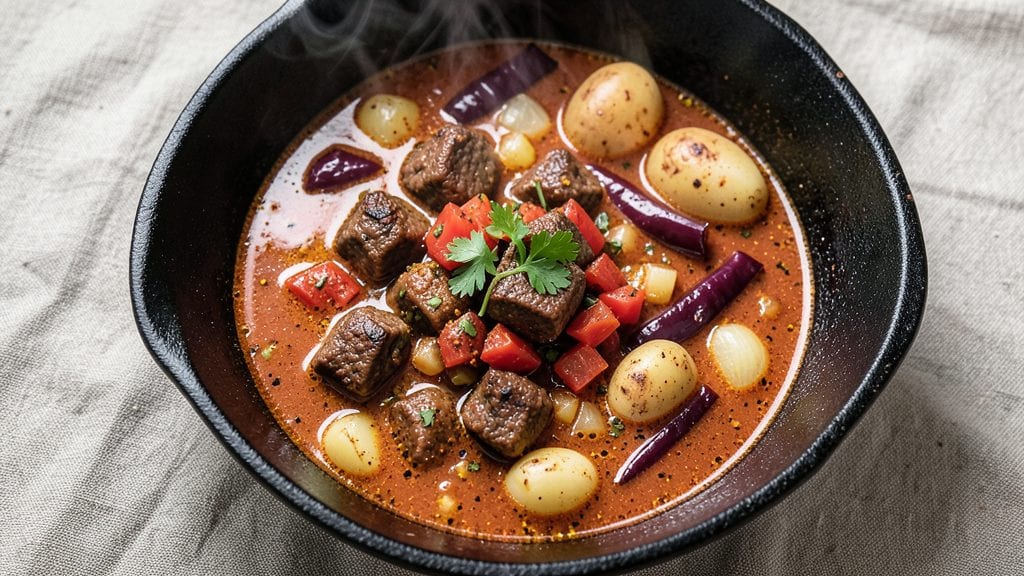
This original goulash soup recipe brings the rich, smoky heart of Hungary to your kitchen with tender beef, aromatic vegetables, and layers of paprika that create depth no shortcut can match.
The secret lies in slow-cooked beef that practically melts in your mouth, paired with onions and peppers that caramelize into sweet, savory perfection—all while the broth develops that signature paprika-kissed complexity.
I've perfected this over years of testing, balancing traditional techniques with modern convenience so you get restaurant-quality results without hours of fuss.
What sets this goulash apart is the two-stage cooking process: first browning the beef for deep flavor, then simmering everything together until the vegetables soften and the broth thickens into a velvety consistency.
The paprika blend—sweet and hot—infuses every spoonful with that unmistakable Hungarian soul, while bay leaves and caraway add subtle earthy notes that elevate the dish beyond simple beef soup. This is comfort food at its finest, packed with protein and vegetables that make it a complete meal.
The result is a steaming bowl of goulash where tender beef chunks float in a rich, paprika-spiced broth, surrounded by caramelized onions, peppers, and potatoes that've absorbed all the flavors.
The aroma alone will have everyone gathering at the table, and each bite delivers that perfect balance of smoky, sweet, and savory that defines Hungarian cuisine. Serve with crusty bread or dumplings to soak up every last drop of that flavorful broth.
This recipe serves six and comes together in under an hour of active time (plus the essential simmering), making it ideal for weeknight dinners or meal prep. The leftovers actually taste better the next day as the flavors deepen, proving that good soup only gets better with time.
Whether you're introducing someone to Hungarian classics or recreating a family tradition, this goulash delivers the real deal.
Ingredients for original goulash soup
Six core ingredients make this goulash sing—tender beef, caramelized veggies, and paprika's smoky embrace.
| Ingredient | Amount | Notes |
|---|---|---|
| Beef Chuck Roast 🥩 | 2 lb | Cut into 1-inch cubes |
| Yellow Onion 🧅 | 2 whole | Thinly sliced, about 3 cups |
| Bell Pepper 🌶️ | 1 whole | Red or green, diced |
| Russet Potatoes 🥔 | 2 lb | Cut into 1-inch cubes |
| Tomato Paste 🍅 | ½ cup | Squeeze tube preferred |
| Sweet Paprika 🌶️ | 2 tbsp | Hungarian preferred |
| Hot Paprika 🌶️ | 1 tbsp | For smoky depth |
| Bay Leaves 🍃 | 2 whole | Fresh if possible |
| Caraway Seeds 🌿 | 1 tsp | Toasted for aroma |
| Garlic Cloves 🧄 | 4 cloves | Minced for flavor |
| Beef Broth 💧 | 4 cups | Low-sodium preferred |
| Tomatoes 🍅 | 1 can | 14.5 oz, diced |
| Olive Oil 🫒 | 2 tbsp | For searing beef |
| Salt 🧂 | 1 ½ tsp | Adjust to taste |
| Black Pepper 🌶️ | ½ tsp | Freshly ground |
The beef is non-negotiable. Chuck roast gives you that melt-in-your-mouth texture—sirloin stays too tough. Most grocery stores carry it pre-cubed, which cuts prep time in half. I grab mine from Costco when possible, but the regular supermarket version works fine. Look for good marbling—those little white streaks mean more flavor. The potatoes? Russets hold up best to long cooking, but Yukon Golds add creaminess if you prefer. For the paprika, Hungarian brands like Szegedi are worth hunting down at specialty stores or online—it's that authentic taste you can't replicate with generic paprika.
No sweet paprika? Smoked paprika at double the amount gives a similar depth, though it'll be smokier. Fresh bell peppers are ideal, but frozen chopped peppers work in a pinch (thaw and drain first). Short on caraway seeds? Celery seeds at half the amount are a decent swap, though the flavor won't be identical. The tomato paste can be jarred, but those Trader Joe's squeeze tubes are perfect—no waste, and they last months. For the beef broth, low-sodium is key so you control the saltiness. If you're using bouillon cubes, Knorr Beef is the most widely available and reliable.
This soup tastes even better the next day, so make a double batch if you can. Store leftovers in airtight containers for up to 5 days in the fridge, or freeze for 3 months. The potatoes will get a bit softer after reheating, but that's what makes it so comforting. For meal prep, portion into individual containers—the broth stays flavorful even after reheating. If you're serving with bread, warm it in the oven while the goulash reheats so it's crispy. The aroma alone will have everyone at the table.
Why You'll Love This Recipe
- One-Pot Wonder: I swear, this soup is the kind of dish where you dump everything in one pot and walk away. The beef chuck roast practically melts into tender chunks while the onions and peppers caramelize—minimal chopping, no fuss, and zero cleanup beyond one spoon.
- Deep, Rich Umami: That tomato paste isn’t just a flavor booster—it’s the secret weapon. When it browns in the pot with the beef, it develops this unreal depth that makes every spoonful taste like a hug. The potatoes soak up all the goodness, turning into creamy, flavor-packed bites.
- Leftovers That Beg for More: Between us, this soup only gets better the next day. The flavors meld overnight, and the beef gets even more tender. I make a double batch on Sundays because it’s my go-to for lazy lunches—just reheat and serve with crusty bread. No one ever complains.
- Budget-Friendly Feast: Chuck roast is cheap, potatoes are cheap, and this recipe stretches to feed four for under $15. Honestly, it’s the kind of meal that makes grocery budgets breathe easier while still feeling like a proper dinner. Plus, the leftovers stretch into lunches or even a quick stir-fry the next night.
Step-by-step instructions for paprika-kissed beef and veggie goulash
Here's how to build a rich, hearty goulash with deep paprika flavor and tender beef.
Sear the Beef for Maximum Flavor
Heat a large Dutch oven over medium-high heat and add the 2 tablespoons olive oil. Once shimmering, add the 2 lb beef chuck roast cut into 1-inch cubes in a single layer. Let them sear undisturbed for 3-4 minutes until deeply browned on one side.
I press down gently on the beef cubes during the first minute—this prevents them from curling and ensures even contact with the pan. Once browned on the bottom, stir and repeat the process until all sides are golden brown. This step builds the foundation of flavor through the Maillard reaction. Transfer the seared beef to a plate and set aside.
Build the Paprika Spice Base
In the same Dutch oven, reduce heat to medium and add the 2 whole yellow onion sliced thinly. Cook for 5-6 minutes until softened and beginning to caramelize. Add the 1 whole bell pepper diced and cook for another 4 minutes until tender.
Stir in the 2 tablespoons sweet paprika and 1 tablespoon hot paprika, then add the 4 cloves garlic cloves minced. Cook for 1 minute until fragrant—this is where the paprika releases its signature aroma. The mixture should smell earthy and slightly sweet with a hint of smokiness from the hot paprika.
Add Tomatoes and Simmer the Base
Pour in the 0.5 cup tomato paste and stir to combine with the spices. Add the 1 can tomatoes (14.5 oz, diced), 4 cups beef broth, 2 whole bay leaves, and 1 teaspoon caraway seeds. Bring to a gentle boil, then reduce heat to low and let it simmer uncovered for 20 minutes.
During this time, the flavors meld together beautifully. The paprika will deepen in color, and you'll notice the aroma becoming more complex. This is the moment that matters: the spices are developing their full potential before the beef returns. Taste the mixture and adjust seasoning with 1.5 teaspoons salt and 0.5 teaspoon black pepper as needed.
Cook the Beef and Potatoes Together
Return the seared beef to the Dutch oven and add the 2 lb russet potatoes cut into 1-inch cubes. Stir gently to combine, then bring the mixture back to a simmer. Cover and cook for 45-50 minutes at a gentle simmer, stirring occasionally, until the beef is fork-tender and the potatoes are easily pierced with a fork.
Here's the thing—you want the beef to pull apart easily but still hold its shape. If the soup appears too thick, add ½ cup water or more broth to reach your desired consistency. The potatoes should be tender but not mushy, absorbing all those rich flavors from the beef and spices.
Finish and Serve Warm
Remove the 2 whole bay leaves from the soup and discard them. Taste again and adjust seasoning if needed—sometimes the paprika needs a little more salt to really pop. Ladle the goulash into warm bowls and serve immediately with crusty bread or over egg noodles.
This goulash should have a thick, velvety texture with chunks of tender beef and potatoes swimming in a rich, paprika-infused broth. The caraway seeds add a subtle earthy note that complements the smoky paprika perfectly. Leftovers keep well in the refrigerator for up to 3 days, and the flavors actually deepen overnight.
Pro Tips For Making Original Goulash Soup
- Brown the Meat Deep: Don’t just sear the chuck roast—get it dark brown in spots, almost black. I used to rush this, and the soup always tasted flat. High heat, no crowding, and let those crusty bits form before adding liquid. That’s where the flavor hides.
- Dice Potatoes Uniformly: Cut the russet potatoes into 1-inch cubes, not random chunks. I learned this the hard way—uneven pieces mean some cook to mush while others stay raw. Consistent size guarantees even cooking and a better texture in the soup.
- Bloom the Tomato Paste: Cook the tomato paste in the pot for 2-3 minutes before adding liquid. This step deepens its flavor and prevents that raw, chalky taste. Skip it, and you’ll miss the rich base the whole soup needs.
- Simmer, Don’t Boil: Keep the goulash at a gentle simmer after adding broth, not a rolling boil. I was skeptical until I tried it—low and slow pulls the collagen from the beef, making the soup richer. Cover the pot and let it do its thing.
Essential equipment for perfect results
Dutch Oven Essentials
The Dutch oven is non-negotiable for goulash—its heavy walls distribute heat evenly, preventing hot spots that can burn your onions or potatoes. I use a Lodge 5.5-quart cast iron Dutch oven because it retains heat beautifully and develops a natural nonstick patina over time.
For budget-conscious cooks, the Cuisinart MultiClad Pro is a great alternative with enamel coating that resists rust. 🔥
High-Quality Paprika
Skip the generic supermarket paprika—it lacks the depth of Hungarian sweet and hot paprika. Brands like Szegedi or Rosenstein deliver that authentic smoky-sweet flavor that defines goulash. If you can't find these, Penzeys Spices carries excellent Hungarian paprika blends.
Store your paprika in an airtight container away from light to preserve its flavor for up to 6 months.
Meat Thermometer
A meat thermometer ensures your beef reaches the perfect 160°F internal temperature without overcooking. I recommend the ThermoWorks Smoke for its accuracy and durability. Insert the probe into the thickest piece of beef during the final 10 minutes of cooking.
If it hasn't reached 160°F, cover and cook for another 5-10 minutes—the residual heat will carry it to perfection.
Wooden Spoon
A wooden spoon is your best friend when stirring goulash—it won't scratch your Dutch oven like metal utensils. I prefer a sturdy oak or hickory spoon with a long handle for easy reaching.
Avoid plastic spoons, which can melt or warp from the heat. Keep it handy while simmering to prevent sticking and ensure even cooking.
Instant-Read Thermometer
An instant-read thermometer (like the Thermapen One) helps gauge broth temperature and adjust seasoning. The ideal simmering range is 195-205°F—too low and the soup won't develop depth; too high and the potatoes may overcook.
Use it to check the broth's temperature before adding potatoes in Step 4 of the recipe. 🌡️
Colander for Prep
A fine-mesh colander simplifies rinsing potatoes and onions before cooking, removing any dirt or debris. I use a stainless steel colander with a handle for durability. If you're prepping large batches, a large-capacity colander (like the OXO Good Grips) saves time and reduces mess.
Rinse ingredients under cold water while they wait to be chopped.
Nutrition facts
Frequently asked questions
Can I use pork instead of beef for this goulash?
Pork shoulder works beautifully and stays tender when cooked low and slow. Use 2 lb pork shoulder cut into 1-inch cubes and follow the same searing technique. The fat content makes the broth even richer, though you may want to skim excess fat after simmering. For extra authenticity, try Hungarian-style smoked paprika which pairs perfectly with pork.
How do I make this goulash less spicy?
Reduce or omit the hot paprika entirely and use only sweet paprika. For a milder version, start with just 1 tablespoon sweet paprika and add more to taste after cooking. If you've already added hot paprika, balance it with a pinch of sugar or an extra ½ cup tomatoes to mellow the heat. Taste as you go—goulash is forgiving!
Can I make this goulash in a slow cooker?
Yes! Brown the beef in a skillet first, then transfer everything to a 6-quart slow cooker. Add all ingredients as directed and cook on low for 6-7 hours or high for 3-4 hours. The slow cooker method actually enhances the flavors as it simmers longer. Just check the beef's doneness with a fork before serving.
Why does my goulash taste bland after cooking?
Most likely, you skipped the beef searing step or didn't use enough paprika. Always brown the beef deeply for maximum flavor, and don't be shy with the paprika blend—it's what gives goulash its signature taste. If it's still bland, add a pinch of sugar (½ teaspoon) or a splash of red wine vinegar (1 tablespoon) to brighten the flavors.
What's the best way to reheat leftover goulash?
Gently reheat on the stovetop over low heat with a splash of water or broth to prevent drying out. Avoid microwaving as it can make the potatoes mushy. For best results, reheat just until warmed through (5-7 minutes) and serve immediately. The flavors actually improve after resting overnight, so leftovers taste even better!