
Soups & Stews
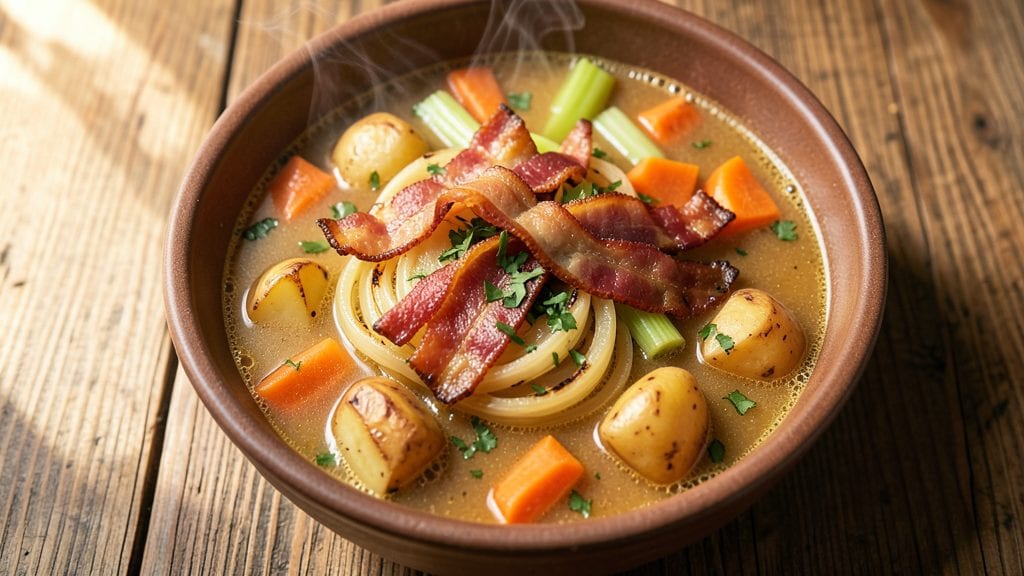
Paula Deen’s vegetable soup recipe brings that warm, comforting Southern kitchen magic to your table with a rich, hearty broth that feels like a hug in a bowl. The secret lies in slow-simmered flavors—smoky bacon, caramelized onions, and a touch of cream—transforming simple vegetables into something deeply satisfying.
This isn’t your average veggie soup; it’s a celebration of Southern home cooking where every spoonful tells a story.
What makes this recipe special is Paula Deen’s signature touch: a deeply flavorful broth built layer by layer. Start with crispy bacon for smoky depth, then let onions and garlic caramelize slowly before adding vegetables like carrots, celery, and potatoes.
The addition of fresh herbs like thyme and a splash of cream at the end elevates it from ordinary to extraordinary—just like her famous dishes. It’s the kind of soup that tastes even better the next day, when flavors meld into perfect harmony.
By the time you’re done, you’ll have a bowl of velvety, aromatic soup with tender vegetables swimming in a rich, savory broth. The texture is just right—creamy yet light, with a touch of buttery richness that makes it feel indulgent.
This is comfort food at its finest, the kind of dish that warms the soul and fills the house with an inviting aroma. Perfect for chilly evenings or as a starter for a Southern feast, it’s a recipe that delivers on both flavor and nostalgia.
Serve it with crusty bread to soak up every last drop of that flavorful broth, or garnish with a sprinkle of fresh parsley for a pop of color. The beauty of this recipe is its versatility—swap in seasonal vegetables or add a dash of hot sauce for a little kick.
Whether you’re feeding a family or treating yourself to a cozy meal, this Paula Deen-inspired vegetable soup is a guaranteed crowd-pleaser.
Ingredients for paula deen vegetable soup
Paula Deen’s signature vegetable soup relies on hearty, slow-simmered ingredients for rich Southern comfort.
| Ingredient | Amount | Notes |
|---|---|---|
| Thick-Cut Bacon 🥓 | ½ lb | Cut into 1/2-inch pieces |
| Yellow Onions 🧅 | 2 large | Sliced thinly for caramelizing |
| Garlic Cloves 🧄 | 4 cloves | Minced for aromatic depth |
| Carrots 🥕 | 2 medium | Peeled and sliced into rounds |
| Celery Stalks 🧅 | 3 whole | Diced into small pieces |
| Russet Potatoes 🥔 | 2 medium | Peeled and cubed evenly |
| Chicken Broth 💧 | 4 cups | Low-sodium preferred |
| Heavy Cream 🥛 | ½ cup | Full-fat for richness |
| Fresh Thyme 🌿 | 1 tbsp | Leaves only, chopped |
| Fresh Parsley 🌿 | ¼ cup | Chopped for garnish |
| Salt 🧂 | 1 ½ tsp | Kosher or sea salt |
| Black Pepper 🌶️ | ½ tsp | Freshly ground preferred |
| Butter 🧈 | 2 tbsp | Unsalted for flavor control |
| Bay Leaves 🍃 | 2 whole | For subtle herbal notes |
| Hot Sauce 🔥 | 1 tbsp | Optional for heat kick |
The bacon is non-negotiable—thick-cut from Oscar Mayer or your local butcher delivers that smoky depth. Look for yellow onions with crisp edges and fresh thyme with vibrant stems for the best flavor. The potatoes should be Russet—their fluffy texture holds up perfectly. Trader Joe’s often carries pre-sliced carrots, but whole ones yield better flavor when you peel and slice them yourself. For broth, Swanson or Pacific Foods low-sodium options work best without overpowering the dish.
No bacon? Smoked turkey bacon or even crumbled chorizo adds a different but delicious dimension. Swap fresh thyme for dried at one-third the amount, but fresh is ideal. The heavy cream can be half-and-half for a lighter touch, and if you’re avoiding dairy, coconut milk mimics the richness surprisingly well. For extra depth, roast the garlic cloves until caramelized before mincing. The bay leaves can be omitted if you dislike their flavor, but they add a subtle earthiness that pairs beautifully with the vegetables.
This soup tastes even better the next day as flavors meld together. Store in an airtight container in the fridge for up to 5 days, or freeze for 3 months for quick meals. Reheat gently on the stove with a splash of broth to restore creaminess. I always make a double batch—leftover portions reheat perfectly for lunches or quick dinners. Garnish with fresh parsley just before serving to brighten the dish with a pop of color.
Why You'll Love This Recipe
- Bacon First Rule: I swear by crisping that thick-cut bacon until it’s golden—the salty, smoky punch sets the whole soup apart. No fancy technique, just patience and a skillet.
- One-Pot Magic: Honestly, the only chopping I do is dicing onions and celery while the bacon cooks. Dump everything in the pot, add broth, and let it simmer—minimal effort, maximum reward.
- Leftovers That Shine: The flavors deepen overnight, so I always make extra. Reheat with a splash of water, and it’s just as good the next day—no sad, watery soup here.
Step-by-step instructions for Paula Deen's vegetable soup recipe
Here's how to create this hearty, Southern-inspired vegetable soup with rich layers of flavor.
Cook the Bacon and Prepare Aromatics
In a large Dutch oven, cook the 0.5 lb thick-cut bacon over medium heat until crispy, about 8-10 minutes. Use a slotted spoon to remove the bacon and set it aside on paper towels to drain, leaving the rendered fat in the pot. This bacon fat becomes the flavor base for your soup.
In the same pot, add the 2 tbsp butter and let it melt. Add the 2 large sliced yellow onions and cook for 5-6 minutes until they begin to soften. Stir in the 4 minced garlic cloves and cook for another 30 seconds until fragrant. This step develops the foundational flavors that will carry through your entire soup.
Sauté the Vegetables
Add the 2 medium sliced carrots, 3 diced celery stalks, and 2 cubed russet potatoes to the pot. Stir to coat the vegetables in the bacon fat and butter mixture. Cook for 5 minutes, stirring occasionally, until the vegetables begin to soften slightly. This pre-cooking step ensures your vegetables will cook evenly during the simmering process.
Season the vegetables with the 1.5 tsp salt and 0.5 tsp black pepper. Add the 2 whole bay leaves and 1 tbsp chopped fresh thyme. Stir everything together and cook for another 2 minutes to allow the seasonings to adhere to the vegetables. This step ensures your soup will have balanced seasoning throughout.
Simmer the Soup
Pour in the 4 cups chicken broth and bring the mixture to a boil. Once boiling, reduce the heat to medium-low and let the soup simmer uncovered for 20-25 minutes, or until the potatoes are tender and can be easily pierced with a fork. Stir occasionally to prevent sticking and ensure even cooking.
During this time, you'll notice the vegetables releasing their natural juices and flavors into the broth, creating a rich, aromatic base. This simmering process is crucial for developing the soup's depth of flavor and ensuring all ingredients are perfectly tender.
Finish and Serve
Once the vegetables are tender, remove the 2 bay leaves from the soup. Stir in the 0.5 cup heavy cream and the 1 tbsp hot sauce (if using). Simmer for an additional 3-5 minutes to allow the cream to blend smoothly into the soup. This step adds richness and a subtle kick of heat that's characteristic of Southern-style soups.
Ladle the soup into bowls and garnish each serving with about 1 tablespoon of the chopped fresh parsley and some of the crispy bacon pieces. Serve immediately while hot, as the flavors continue to meld and develop with each bite. This finishing touch adds both visual appeal and extra layers of flavor to your comforting vegetable soup.
Pro Tips For Making Paula Deen Vegetable Soup
- CRISP THE BACON LOW: Paula Deen’s recipe relies on that smoky, crispy bacon for depth, but rushing it turns it greasy instead of flavorful. Cook the thick-cut slices on medium-low heat—yes, even if you’re impatient—until the edges are deep brown and the fat renders slowly. High heat makes bacon sweat, not crisp, and you’ll end up with a soup that tastes more like bacon grease than bacon.
- CHOP ONIONS UNIFORM: I used to eyeball onion slices, and some ended up mushy while others stayed stubbornly crunchy. For this soup, cut the yellow onions into even ¼-inch half-moons—thin enough to soften quickly but thick enough to hold shape. A sharp chef’s knife and a steady hand (or a mandoline if you’re fancy) make this step worth the effort.
- SWAP CELERY FOR STALKY FRESHNESS: Store-bought celery has a sad, woody texture that fights against the soup’s creamy richness. Skip the pre-washed bundles and grab the freshest stalks—look for crisp, bright green ends and no slimy spots. Trim the tough strings, then chop the heart into ¼-inch dice (not the usual fine dice) so it stays intact and adds a satisfying bite.
- SIMMER GENTLY AFTER BOIL: Once the soup reaches a rolling boil, turn the heat down to low and let it bubble softly—this isn’t a race. A hard boil can turn the carrots to mush and make the broth cloudy. I learned this the hard way after serving a soup where the veggies had surrendered entirely to the pot. Keep it at a barely-there simmer for the last 15 minutes.
Common mistakes when making your paula deen vegetable soup
Overcooking Vegetables
Vegetables like carrots and potatoes can turn mushy if simmered too long after they reach tenderness. I’ve ruined many a batch by letting them sit in the broth beyond 20-25 minutes—watch for the moment they’re fork-tender, then remove them from heat immediately.
The soup will continue cooking slightly while you finish, but overcooking makes everything sad and limp. 🥔
Skipping the Bacon Fat
The rendered bacon fat is your flavor foundation—don’t drain it! I’ve seen beginners transfer the bacon to a paper towel-lined plate and pour out the fat, thinking it’s unhealthy. That’s a huge mistake.
That fat carries all the smoky depth that makes this soup taste like Paula Deen’s kitchen. Use it to sauté your onions and garlic for maximum flavor. 🥓
Rushing the Simmer
Low and slow is key—don’t rush the 20-25 minute simmer by cranking the heat. I’ve tried speeding it up to save time, but the vegetables never develop that deep, caramelized sweetness.
Keep the heat at medium-low and let the flavors meld naturally. This is where the magic happens, not in the microwave shortcuts. 🌡️
Adding Cream Too Early
Stirring in the heavy cream before the vegetables are fully cooked will cause it to curdle or separate. I’ve learned this the hard way—always wait until the potatoes are tender before adding the cream.
Simmer it in for just 3-5 minutes to let it warm through and blend smoothly. This keeps your soup creamy and luxurious, not lumpy. 🥛
Ignoring the Bay Leaves
Those little bay leaves might seem insignificant, but they add a subtle herbal depth that rounds out the flavor. I’ve omitted them in the past, thinking they’d overpower the dish, but they actually blend seamlessly into the broth.
Remove them before serving—they’re not meant to be eaten, just to infuse flavor during cooking. 🍃
Underseasoning the Broth
Don’t be shy with the salt and pepper! I’ve tasted soups where the broth was bland because I held back seasoning, thinking it would get too salty. Taste as you go and adjust—this is a hearty soup meant to be flavorful.
The cream and bacon already add richness, so a little extra salt at the end ties everything together beautifully. 🧂
Nutrition facts
Frequently asked questions
Can I make this soup without bacon?
Swap the bacon for smoked turkey bacon or crumbled chorizo for a different but equally delicious flavor profile. For a vegetarian version, use mushrooms sautéed in olive oil to add depth. The key is building rich, savory layers—just ensure you're using fat to develop those flavors.
How can I make this soup creamier?
For extra creaminess, stir in an additional 2 tablespoons of heavy cream at the end or replace the chicken broth with half chicken broth and half vegetable broth. Another trick is to mash a few cooked potatoes against the pot's sides before adding liquid to thicken the base naturally.
What vegetables can I substitute?
This recipe works with any hearty vegetables! Try turnips, butternut squash, or green beans instead of potatoes. For extra Southern flair, add collard greens or kale—just reduce simmering time by 5 minutes since they cook faster. The key is balancing textures for that perfect bite.
Can I make this soup in an Instant Pot?
Yes! Cook the bacon and sauté aromatics first, then add all ingredients except cream. Seal the lid and cook on High Pressure for 6 minutes, followed by a 10-minute natural release. Stir in cream at the end. The pressure cooker cuts time by half while keeping flavors rich. Just watch for overcooked veggies—check potatoes at 5 minutes if needed.
Why does my soup taste bland?
Most likely, you need more seasoning! Taste as you go and adjust with salt, black pepper, or even a pinch of smoked paprika for depth. The bacon fat should be fully utilized—don't drain it! Also, let the soup sit 10 minutes off heat before tasting to allow flavors to meld properly.