Soups & Stews
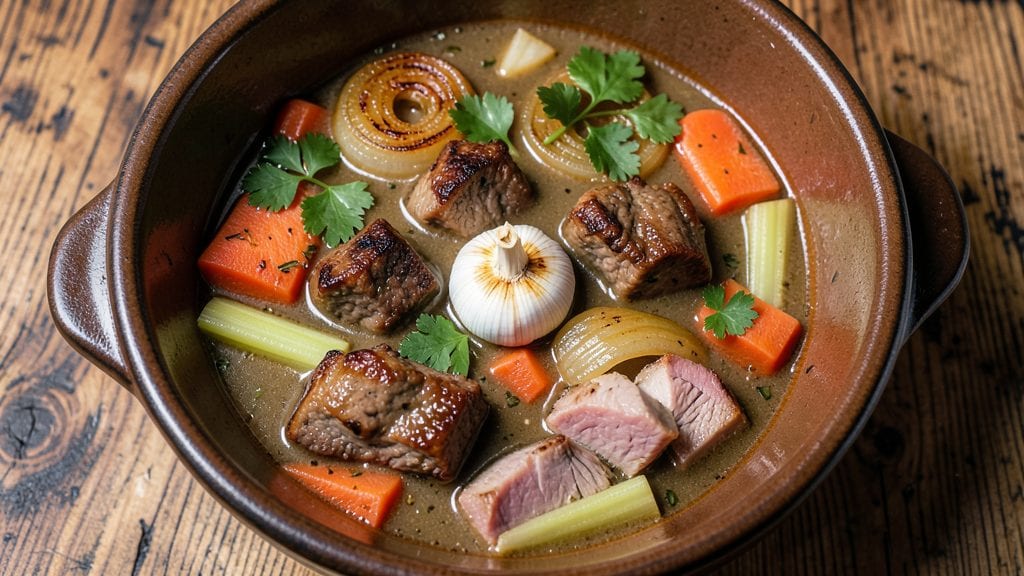
Philadelphia Pepper Pot Soup is a slow-simmered stew that carries the soul of Pennsylvania Dutch tradition through every spoonful. This hearty recipe transforms tough cuts of pork and beef into tender, smoky perfection, infused with aromatic spices and vegetables that develop deep flavor over hours of simmering.
The secret lies in patience—letting the broth reduce and the spices meld until the kitchen fills with an irresistible aroma that announces dinner is ready.
What sets this soup apart is its balance of rich, savory meat and vibrant vegetables, all harmonized by a blend of black pepper, mustard seeds, and vinegar that creates that signature tangy depth.
Unlike quick stews, this dish demands time—typically 3-4 hours on the stove—to build layers of flavor that make it worth every minute. The result is a soup that's both comforting and complex, with a texture that's velvety yet substantial.
The beauty of Pepper Pot Soup is its versatility—it serves as a main dish for cold evenings or a centerpiece for gatherings, always delivered with the same satisfying warmth.
The slow cooking process transforms simple ingredients into something extraordinary, proving that tradition and technique can elevate even the most humble meal. Ready to experience this classic for yourself?
Perfect for family dinners or holiday gatherings, this recipe stays true to its roots while adapting to modern kitchens. The key is maintaining the slow simmer, which develops the rich, smoky flavor that defines this iconic Pennsylvania dish. Let's get started on creating your own batch of this beloved tradition.
Ingredients for philadelphia pepper pot soup
Sixteen ingredients that transform into a soul-warming Pennsylvania tradition.
| Ingredient | Amount | Notes |
|---|---|---|
| Beef Chuck Roast 🥩 | 2 ½ lb | Cut into 1.5-inch cubes, trimmed of fat |
| Pork Shoulder 🐖 | 2 ½ lb | Cut into 1.5-inch cubes, trimmed of excess fat |
| Yellow Onions 🧅 | 3 whole | Peeled, quartered lengthwise, sliced into 1/2-inch pieces |
| Carrots 🥕 | 2 lb | Peeled, cut into 1-inch chunks |
| Celery Stalks 🌿 | 6 whole | Trimmed, cut into 1-inch pieces |
| Garlic Cloves 🧄 | 6 cloves | Peeled, smashed with side of knife |
| Black Peppercorns 🌶️ | 2 tbsp | Crushed between palms, not pre-ground |
| Mustard Seeds 🌿 | 1 tbsp | Whole, yellow or brown preferred |
| Apple Cider Vinegar 🍏 | ¼ cup | Unfiltered for authentic tang |
| Beef Broth 💧 | 6 cups | Homemade or high-quality low-sodium |
| Tomato Paste 🍅 | ½ cup | Squeeze tube or canned, no salt added |
| Bay Leaves 🌿 | 2 whole | Dried, standard size |
| Salt 🧂 | 1 ½ tsp | Diamond Crystal kosher salt |
| Fresh Thyme 🌿 | ¼ cup | Leaves only, stems removed |
| Whole Grain Mustard 🍯 | 1 tbsp | For finishing, optional but recommended |
The meat selection is non-negotiable for authentic Pepper Pot Soup. Beef chuck roast and pork shoulder provide that signature tender yet substantial texture—sirloin or tenderloin will disappoint. Local butchers often carry these cuts at better prices than grocery stores. For the best flavor development, look for USDA Choice or Prime grades with visible marbling. The vegetables should be fresh but firm—organic carrots and celery from Whole Foods or Trader Joe's work well, but conventional produce is fine if properly stored. Mustard seeds are crucial for that signature tang; Penzeys Spices carries authentic yellow mustard seeds that elevate the dish beyond standard recipes.
No beef broth on hand? Substitute equal parts water and chicken broth, but the flavor won't be identical. Fresh thyme is ideal, but dried thyme at one-third the amount works in a pinch. For vinegar, apple cider vinegar is traditional, but white vinegar or red wine vinegar can substitute. The tomato paste can be omitted entirely if you prefer a more rustic profile, though it adds depth. For a vegetarian adaptation, mushrooms and lentils can replace the meat, though the texture will differ significantly. When crushing peppercorns, use a mortar and pestle for the most aromatic release—pre-ground pepper lacks the necessary complexity. The mustard seeds should be toasted briefly in a dry pan before adding to the pot for enhanced flavor.
This soup improves dramatically with time—4-6 hours of simmering is ideal. Store in the refrigerator for up to 5 days in an airtight container, though the flavors peak at 2-3 days. For longer storage, freeze in 2-cup portions for up to 3 months. The soup reheats beautifully on the stove over medium-low heat, stirring occasionally to prevent scorching. When serving, a dollop of whole grain mustard and a sprinkle of fresh thyme add the perfect finishing touch. The leftovers make excellent lunches, and the broth can be strained and frozen for future use in other recipes.
Why You'll Love This Recipe
- Slow-Cooker Magic: I dump everything in—chuck roast, pork shoulder, onions, carrots, celery—and walk away. Six hours later, it’s fall-apart tender without a single pan to scrub.
- Rich, Deep Satisfaction: The beef and pork simmer until they’re practically melting, while the onions caramelize into something sweet and complex. Honestly, the first spoonful makes me forget I’m not at my grandma’s table.
- Weeknight Workhorse: This soup is my go-to for busy nights, potlucks, or when I need to feed a crowd. Double the batch—it reheats beautifully and tastes even better the next day.
- Budget-Friendly Feast: A few cheap cuts of meat and veggies stretch into enough servings for a family of four (or two very hungry people). Between us, this is how I stretch my grocery budget without sacrificing flavor.
Step-by-step instructions for philadelphia pepper pot soup
A slow-simmered masterpiece where rich meats and aromatic vegetables meld into velvety depth.
Prepare the Meat and Aromatics
Begin by cutting the 2.5 lb beef chuck roast and 2.5 lb pork shoulder into 1.5-inch cubes, trimming excess fat. This size ensures even cooking without toughness. In a large Dutch oven, combine the meat with the 3 whole yellow onions, 2 lb carrots, and 6 whole celery stalks—all prepped as specified. The vegetables should be evenly distributed around the meat to maximize flavor transfer during the long simmer.
Add the 6 cloves garlic, smashed with the side of your knife, and the 2 tbsp crushed black peppercorns. The garlic should release its aroma immediately, and the peppercorns will infuse the broth with subtle heat. Sprinkle the 1 tbsp mustard seeds over the mixture—they’ll add a subtle tangy bite as they toast. This foundational layer of aromatics forms the soul of the soup.
Build the Base and Simmer
Pour in the 0.25 cup apple cider vinegar and 6 cups beef broth, ensuring the broth fully covers the meat and vegetables. The vinegar will brighten the flavors and help tenderize the meat over time. Stir gently to combine, then add the 0.5 cup tomato paste, 2 whole bay leaves, and 1.5 tsp salt. The tomato paste will deepen the color and add a subtle sweetness that balances the richness.
Bring the mixture to a boil over medium-high heat, then reduce to a gentle simmer. The key here is patience—cover the Dutch oven and let it cook undisturbed for 3 hours. You’ll know it’s ready when the meat is fork-tender and the broth has thickened slightly, absorbing all the flavors. Avoid peeking or stirring; this disrupts the delicate cooking process and can make the meat tough.
Finish with Fresh Herbs and Mustard
After the initial simmer, stir in the 0.25 cup fresh thyme leaves and simmer uncovered for an additional 30 minutes. This allows the thyme to infuse the broth with its earthy aroma without overpowering the dish. The soup should now have a rich, smoky depth with a velvety texture. Taste and adjust the seasoning if needed—Philadelphia Pepper Pot Soup should be hearty yet balanced, with a touch of acidity from the vinegar and warmth from the pepper.
Remove the bay leaves and discard them. Stir in the 1 tbsp whole grain mustard just before serving. This final touch adds a subtle tang and a hint of complexity that elevates the soup from good to extraordinary. Serve immediately, ensuring each bowl captures the full depth of flavors—smoky, spiced, and richly satisfying.
Pro Tips For Making Philadelphia Pepper Pot Soup
- Sear the Meat First: That dark crust on your beef chuck and pork shoulder isn’t just for looks—it’s what carries flavor through hours of simmering. Hit the meat with high heat in batches (yes, even if it’s messy) until it’s deeply browned on all sides. I used to skip this, and my soup always tasted like it needed more salt.
- Cut Celery Uniformly: No, you don’t need to dice it tiny—just chop the celery stalks into even ½-inch pieces. This ensures they cook at the same rate as the onions and carrots, so you’re not left with mushy bits or crunchy chunks. (Pro move: Trim the ends first—they’re the toughest part.)
- Simmer Low and Slow: This isn’t a race. Once everything’s in the pot, keep the heat at a bare simmer (tiny bubbles, maybe 180°F) for at least 3 hours. I learned this the hard way—rushing it turned my tender meat into shredded rubber. Cover it loosely and let it do its thing.
- Add Onions Early: Don’t wait until the meat’s cooked to toss in the onions—they’ll turn to mush. Sauté them with the celery and carrots right after searing the meat, and let them soften for 10 minutes before adding liquid. This builds a flavor base that actually matters. (Yes, even if you’re impatient like me.)
Creative variations of this dish
Modern Shortcut Version
For busy weeknights, reduce the simmer time to 2 hours using a pressure cooker like the Instant Pot. Sauté the meat and aromatics on sauté mode for 5 minutes, then pressure cook on high for 60 minutes.
The high pressure breaks down collagen faster, delivering tender meat in a fraction of the time while preserving the deep, smoky flavor. I add 1 cup of water instead of broth to account for the pressure cooker's natural moisture retention. 💡
Vegetarian Adaptation
Swap the meat for 1.5 lbs mushrooms (cremini or portobello) and 1 cup lentils, cooked separately until tender. Use vegetable broth instead of beef broth and increase the tomato paste to 0.75 cup for richer depth.
The lentils add protein and heartiness, while the mushrooms provide an umami base that mimics the meaty texture. Finish with 1 tbsp soy sauce for extra savory complexity. 🌱
Spicy Kick Variation
Add 1 tbsp hot sauce (like Crystal or Tabasco) and 1 tsp cayenne pepper during the final 30 minutes of simmering. For smoky heat, stir in 1 tbsp smoked paprika with the mustard seeds at the beginning.
I also recommend serving with pickled jalapeños on the side for those who love extra spice. This version keeps the soup's traditional soul while adding a modern twist that appeals to heat lovers. 🌶️
Slow Cooker Adaptation
Transfer all ingredients to a 6-quart slow cooker and cook on low for 8 hours or high for 5 hours. The gentle heat allows the flavors to meld beautifully without the risk of overcooking the meat.
I find that slow cookers actually enhance the soup's tenderness, as the meat has more time to break down. Add a splash of beer (like Guinness or IPA) for depth if you're feeling adventurous—just reduce the broth by 1 cup to compensate. 🍺
Holiday Feast Version
Transform this into a showstopping centerpiece by adding 1 lb smoked sausage (like kielbasa) and 2 cups diced potatoes during the final 1 hour of cooking. Top with crispy fried onions and a dollop of sour cream before serving.
The sausage adds smoky richness, while the potatoes make it heartier for winter gatherings. This version feels festive yet stays true to the soup's roots. ✨
Global Fusion Twist
Infuse the soup with 1 tsp ground cumin and ½ tsp cinnamon for a Middle Eastern-inspired twist. Serve with warm pita bread and a side of tzatziki sauce for dipping. The spices add warmth without overpowering the traditional flavors, creating a fusion that feels both familiar and exciting.
This version works beautifully for those who love to experiment while keeping the soul of Pepper Pot Soup intact. 🌍
Nutrition facts
Frequently asked questions
Why does traditional Pepper Pot Soup need such a long cooking time?
The extended simmering—typically 3-4 hours—is essential for breaking down tough cuts of beef and pork into tender, flavorful pieces. This slow process also allows the spices, vinegar, and aromatics to meld into a harmonious broth that develops deep, smoky complexity. Skipping this step results in a dish that's more like stew than the velvety, rich soup this recipe promises.
Can I use pre-cut meat or frozen vegetables for this recipe?
While pre-cut meat works fine, trimming excess fat and cutting into 1.5-inch cubes yourself ensures even cooking. For vegetables, fresh is ideal, but frozen carrots and celery (thawed and drained) can substitute in a pinch. Just avoid frozen onions—they release too much moisture and dilute the broth. The key is maintaining the right texture balance for that authentic Pepper Pot Soup experience.
What's the best way to reheat leftovers without making the soup watery?
Reheat gently on the stove over medium-low heat, stirring occasionally to prevent scorching. For extra richness, add 1-2 tablespoons of beef broth or water to restore the velvety texture. Microwaving is possible but risks uneven heating—cover with a lid and use 50% power for 2-3 minutes, stirring halfway. The soup actually improves after resting overnight!
How do I know when the meat is tender enough?
The meat should easily pull apart with a fork and be fork-tender after 3 hours of simmering. For extra assurance, test a piece early—if it's still slightly chewy, return it to the pot and simmer 30 more minutes. The broth should also coat the back of a spoon, indicating proper reduction. Overcooking can happen if you peek too often, so resist the urge to stir during the initial simmer!
What's the secret to getting that signature tangy depth?
The tang comes from three key ingredients: apple cider vinegar, mustard seeds, and tomato paste. Toast the mustard seeds in a dry pan for 30 seconds before adding them to the pot to enhance their flavor. The vinegar brightens the broth, while the tomato paste adds subtle sweetness that balances the richness. Don't skip the 1 tbsp whole grain mustard at the end—it's what ties all the flavors together!