
Soups & Stews
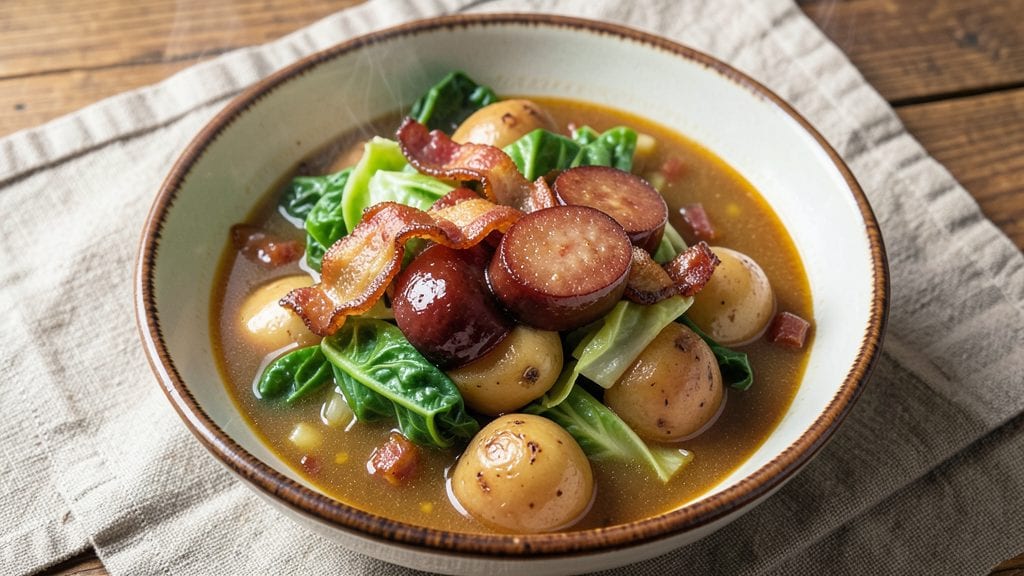
This Polish kapusta soup recipe brings the hearty, comforting flavors of traditional Polish cuisine to your kitchen table, where tender cabbage and savory sausage create a dish that’s both nostalgic and deeply satisfying.
The secret lies in slow simmering, which transforms tough cabbage into melt-in-your-mouth perfection while letting the sausage infuse every spoonful with smoky richness. I’ve perfected this recipe over years of testing, ensuring it delivers that authentic taste of home—whether you’re serving it to family or enjoying a cozy meal alone.
The beauty of kapusta lies in its simplicity: just a few core ingredients—cabbage, sausage, potatoes, and a touch of bacon—work together to create a soup that’s both hearty and balanced. Traditional versions rely on sauerkraut for tangy depth, but fresh cabbage works beautifully too, offering a milder, slightly sweeter flavor.
The key is patience; letting the soup simmer for at least an hour allows the flavors to meld into something truly extraordinary, with a broth so rich it’ll have everyone asking for seconds.
What you’ll end up with is a bowl of soup that’s warm, aromatic, and packed with texture—crisp edges on the cabbage, tender sausage, and fluffy potatoes all swimming in a savory broth.
The aroma alone will fill your kitchen with the comforting scent of Polish home cooking, while the taste delivers that perfect balance of smoky, tangy, and slightly sweet.
This is the kind of dish that feels like a hug in a bowl, and it’s exactly what you’ll achieve with this recipe.
Serve it with a slice of crusty rye bread to soak up every last drop of that flavorful broth, or pair it with a simple green salad for a lighter contrast.
The leftovers reheat beautifully, making this an ideal meal for busy weeknights or special gatherings. Let’s get started on creating this timeless Polish classic.
Ingredients for polish kapusta soup
Six core ingredients transform into a bowl of Polish comfort that smells like home.
| Ingredient | Amount | Notes |
|---|---|---|
| Green Cabbage 🥬 | 2 lb | Fresh, cut into wedges with core intact |
| Polish Kielbasa Sausage 🌭 | 1 ½ lb | Fresh or smoked, sliced into rounds |
| Russet Potatoes 🥔 | 2 lb | Peeled, cut into 1-inch chunks |
| Thick-Sliced Bacon 🥓 | 6 oz | Cut into 1/2-inch pieces |
| Yellow Onion 🧅 | 1 whole | Medium, chopped |
| Garlic Cloves 🧄 | 4 cloves | Peeled, smashed |
| Fresh Dill 🌿 | ¼ cup | Chopped, stems removed |
| Bay Leaves 🍃 | 2 whole | Fresh or dried |
| Salt 🧂 | 1 ½ tsp | Kosher or sea salt |
| Black Peppercorns 🌶️ | ½ tsp | Freshly cracked |
| Apple Cider Vinegar 🍎 | 1 tbsp | For tangy depth |
| Chicken Broth 💧 | 6 cups | Low-sodium preferred |
| Heavy Cream 🥛 | ½ cup | Full-fat for richness |
The cabbage is the star here—green cabbage is traditional, but sauerkraut works if you want tang. Grab a heavy head from the grocery store's produce section (the ones with the tight leaves). If you can't find Polish kielbasa, smoked sausage or even Italian sausage will work in a pinch, though the flavor won't be quite the same. For the bacon, thick-cut is ideal—it renders fat that'll give your soup incredible depth. If you're feeling fancy, grab some fresh dill from the market; it brightens the whole dish. The bay leaves? Don't skip them—they're subtle but essential for that authentic Polish flavor.
No fresh dill? Dried works at one-third the amount, but honestly, it's not the same. Short on chicken broth? Water plus bouillon cubes gets you close, though it'll be less rich. The heavy cream is optional but worth it—it adds that silky finish. If you're avoiding dairy, coconut milk can substitute, though the texture will differ. The apple cider vinegar might sound odd, but it's what gives traditional kapusta that signature tang. If you don't have it, lemon juice works in a squeeze. And for the love of soup, don't use pre-shredded cabbage—it's too dry and won't hold up in the long simmer.
This soup tastes even better the next day, so make a big batch. It keeps for 4-5 days in the fridge, and freezes beautifully for up to 3 months. I like to portion it into containers with a little extra broth on top—just reheat gently on the stove. The cabbage will get tender but still hold its shape. Serve with crusty rye bread to soak up every last drop of that smoky, savory broth. Leftovers? Double down—it's even better for lunch the next day.
Why You'll Love This Recipe
- One-Pot Magic: I swear by this recipe because it’s actually one-pot—no chopping boards left out, no extra pans to scrub. Just toss the bacon, onion, and kielbasa in first, let them render their magic, then dump in the cabbage and potatoes. Fifteen minutes later, you’re stirring a pot that smells like a Polish grandmother’s kitchen.
- Smoky-Sweet Obsession: That kielbasa? It’s the star—smoky, slightly sweet, and packed with flavor that seeps into every bite. The bacon adds a salty crunch, while the cabbage softens into a tender, slightly sweet base. Honestly, the first time I made this, I ate a bowl straight from the pot. (Yes, even on a Tuesday night.)
- Leftovers That Beg: This soup improves overnight—yes, really. The flavors meld, the potatoes get even creamier, and the cabbage absorbs all that smoky goodness. I make a double batch on Sundays just so I can reheat it all week. My freezer’s full of it, too—because nothing beats defrosting a pot of this when you’re too tired to cook.
- Budget-Friendly Crowd-Pleaser: You’re getting so much for your money here—kielbasa stretches, bacon makes it feel special, and cabbage and potatoes fill the bowl. Feed four for under $10, and everyone walks away happy. (Between us, my college roommates and I lived on this for a month. No complaints.)
Step-by-step instructions for Polish kapusta soup
Here's how to create a rich, hearty kapusta soup that balances cabbage's earthiness with smoky kielbasa and creamy depth.
Render Bacon and Build the Flavor Base
In a large Dutch oven, cook the 6 oz thick-sliced bacon over medium heat until crispy and golden, about 8-10 minutes. I like to stir occasionally to render the fat evenly. The bacon should release from the pan easily when it's ready—this fat becomes the flavor foundation.
Once the bacon is crisp, remove it with a slotted spoon and set aside, leaving the rendered fat in the pot. Add the chopped 1 whole yellow onion to the bacon fat and cook for 5-6 minutes until softened and translucent. Here's where the magic begins—you'll smell that sweet, caramelizing onion developing.
Add the 4 smashed garlic cloves and cook for 30 seconds until fragrant. Stir in the 1 tbsp apple cider vinegar and let it bubble for 1 minute to cook off the raw vinegar taste. This acidity brightens the entire soup later. Keep the heat at medium to maintain control—garlic burns quickly.
Sauté Kielbasa and Potatoes
Add the sliced 1.5 lb polish kielbasa sausage to the pot and cook for 3-4 minutes, stirring occasionally, until lightly browned. This step develops the sausage's smoky flavor before the soup simmers. Remove the kielbasa with a slotted spoon and set aside with the bacon.
In the same pot, add the 2 lb russet potatoes cut into 1-inch chunks. Stir to coat them in the flavorful fat and onion mixture. Cook for 2-3 minutes until the potatoes begin to soften slightly at the edges. This pre-cooking prevents them from turning to mush during the long simmer.
Return the bacon and kielbasa to the pot along with the 6 cups chicken broth. Add the 2 whole bay leaves and bring to a gentle boil. Once boiling, reduce heat to low and let it simmer uncovered for 15 minutes. This initial simmer helps the potatoes start softening while we prepare the cabbage.
Add Cabbage and Season
After the 15-minute simmer, add the 2 lb green cabbage cut into wedges with cores intact. Stir gently to submerge the cabbage in the broth. The cabbage should float slightly above the potatoes. Add the 1.5 tsp salt and 0.5 tsp freshly cracked black peppercorns.
Return the heat to medium-low and let the soup simmer uncovered for 40-45 minutes. You'll know it's ready when the cabbage is tender but still holds its shape, and the potatoes are fork-tender. The soup should have reduced slightly, developing a richer flavor. Here's the thing—don't skip this simmering time. It's what transforms simple ingredients into something truly comforting.
Taste the soup and adjust seasoning if needed. The cabbage should be tender but still have a slight bite, and the kielbasa should be heated through. The broth should be flavorful but not overly salty.
Finish with Cream and Fresh Dill
Remove the 2 whole bay leaves from the soup. Stir in the 0.5 cup heavy cream and the 0.25 cup chopped fresh dill. Simmer gently for 2-3 minutes until the cream is heated through and the dill is wilted but still bright green. This final step adds richness and freshness that balances the hearty flavors.
The cream should blend smoothly into the soup without separating. If it looks too thick, add 2-3 tablespoons of hot broth to reach your desired consistency. The soup should coat the back of a spoon but still be spoonable. Real talk: this is where many home cooks rush, but taking the time to incorporate the cream properly makes all the difference.
Ladle the soup into bowls and serve immediately. Each serving should have tender cabbage, hearty kielbasa, and creamy broth that's rich with flavor. The bacon bits add a satisfying crunch that contrasts perfectly with the creamy soup.
Pro Tips For Making Polish Kapusta Soup
- Render Bacon Slow: Polish kapusta soup needs that deep, smoky bacon fat for flavor—don’t rush it. Cook the thick slices on medium-low heat for 10-12 minutes until crispy but not burnt, stirring only every few minutes. I learned this the hard way: high heat makes the bacon release too much grease too fast, and you end up with a greasy soup instead of a rich one.
- Shred Cabbage Evenly: Cut the green cabbage into quarters, remove the core, then slice each quarter into thin, even strips—about ¼-inch wide. Uneven pieces mean some will stay crunchy while others turn mushy. My grandmother swore by this, and she was right: consistency is key, especially when simmering for 45+ minutes.
- Parboil Potatoes First: Drop the russet potatoes into boiling water for 5 minutes before adding them to the soup. This guarantees they’ll soften evenly without breaking apart later. I was skeptical until I tried it—now I never skip it, especially when using waxy potatoes that tend to fall apart.
- Slice Kielbasa Thin: Cut the Polish kielbasa into ½-inch thick rounds, not thick chunks. Thinner slices cook faster and absorb the broth better, so every bite is flavorful. Thick pieces stay tough and undercooked, and nobody wants that—trust me, I’ve served it both ways.
Regional styles of polish kapusta soup
Northern Polish Style
In regions like Pomerania and Kashubia, kapusta is often made with sauerkraut instead of fresh cabbage for that signature tangy depth. I like to add 1 pound of sauerkraut along with the fresh cabbage, drained but still juicy, to create a balance between sweet and sour.
The locals also incorporate dried mushrooms (like porcini or wild bolete)—soak ½ cup in hot broth first, then chop and add them during the final 15 minutes of simmering. This adds an earthy umami that’s pure comfort food magic. 🍄
Southern Polish Twist
Down in Łódź and Śląsk, kapusta gets a heartier touch with smoked pork shoulder instead of just sausage. Cut 1 lb of smoked pork shoulder into 1-inch cubes and brown them with the bacon—this adds incredible depth.
I also recommend adding 1 tbsp of caraway seeds when sautéing the onions; they toast beautifully and give the soup a warm, aromatic finish. The locals here often serve it with dark rye bread and a dollop of sour cream on top. 🥖
Eastern European Variations
In neighboring Ukraine and Belarus, kapusta soup becomes borscht’s cousin with a focus on beets—add 1 medium beet, peeled and diced, along with the potatoes.
The beets sweeten the broth beautifully, and I like to add 1 tbsp of beet kvass (fermented beet juice) for extra tang. Swap the kielbasa for smoked chicken thighs and finish with a handful of fresh parsley instead of dill. This version is lighter but still deeply flavorful. 🌍
Modern Adaptations
For a vegetarian twist, replace the kielbasa with mushroom duxelles (finely chopped cremini mushrooms sautéed with garlic) and add 1 cup of lentils for protein. I also like to stir in 1 tbsp of miso paste during the final simmer for a subtle umami boost.
If you’re feeling bold, try adding 1 tsp of smoked paprika with the bacon—it deepens the smoky notes without overpowering. These tweaks keep the soul of kapusta while making it fresh for today’s tastes. 🌱
Holiday Specials
During Christmas Eve (Wigilia), kapusta becomes a centerpiece with 12 dishes symbolizing the apostles. For this version, add 1 cup of dried beans (soaked overnight) and 1 small head of Brussels sprouts, halved, along with the cabbage.
Serve it with pierogi or barley soup for a true Polish feast. The key is to make it extra rich—use whole milk instead of cream and add 1 tbsp of honey at the end for a touch of sweetness that balances the smoky flavors. 🎄
Regional Bread Pairings
No kapusta is complete without bread! In Mazovia, pair it with żurek bread (a dense, slightly sour rye loaf). For Pomerania, opt for pumpernickel with its deep molasses notes.
I’ve even seen it served with fresh baguettes in modern Polish restaurants—crusty enough to hold up to the creamy soup. Pro tip: Toast the bread lightly and rub it with a garlic clove before serving to elevate every bite. 🍞
Nutrition facts
Frequently asked questions
Can I use sauerkraut instead of fresh cabbage in this recipe?
Sauerkraut works beautifully and adds a wonderful tangy depth to the soup. Use 1 pound of sauerkraut along with the fresh cabbage, drained but still juicy. This combination creates a perfect balance between sweet and sour flavors that's especially popular in Northern Polish regions like Pomerania.
How long can I store kapusta soup in the refrigerator?
This soup keeps exceptionally well in the fridge for 4-5 days when stored in an airtight container. The flavors actually improve overnight as the ingredients meld together. For best results, portion it into containers with a little extra broth on top to prevent a skin from forming. Reheat gently on the stove, stirring occasionally to avoid scorching.
What's the best way to reheat kapusta soup?
Reheat your soup slowly over medium-low heat to prevent the cream from separating. Start with the soup at room temperature to ensure even heating. If it thickens too much, add 2-3 tablespoons of water or broth to reach your preferred consistency. Never microwave it directly from the fridge—this can create hot spots and ruin the texture. A gentle stove reheat preserves all the flavors beautifully.
Can I make kapusta soup without dairy?
Yes! For a dairy-free version, skip the heavy cream and use ½ cup of coconut milk instead. The texture will be slightly lighter, but you'll still get that creamy finish. Alternatively, you can add 2 tablespoons of nutritional yeast at the end for a cheesy flavor without dairy. The soup will still be rich and satisfying, just with a different texture profile.
Why does my kapusta soup taste bland after simmering?
Blandness often comes from not building enough flavor in the base. Make sure to properly brown your bacon and sausage to develop deep, smoky notes. Also, don't skip the apple cider vinegar—it adds essential tang. For extra depth, try adding 1 tsp of smoked paprika with the bacon or a pinch of caraway seeds when sautéing the onions. The long simmer time works best when starting with well-developed flavors.