
Soups & Stews
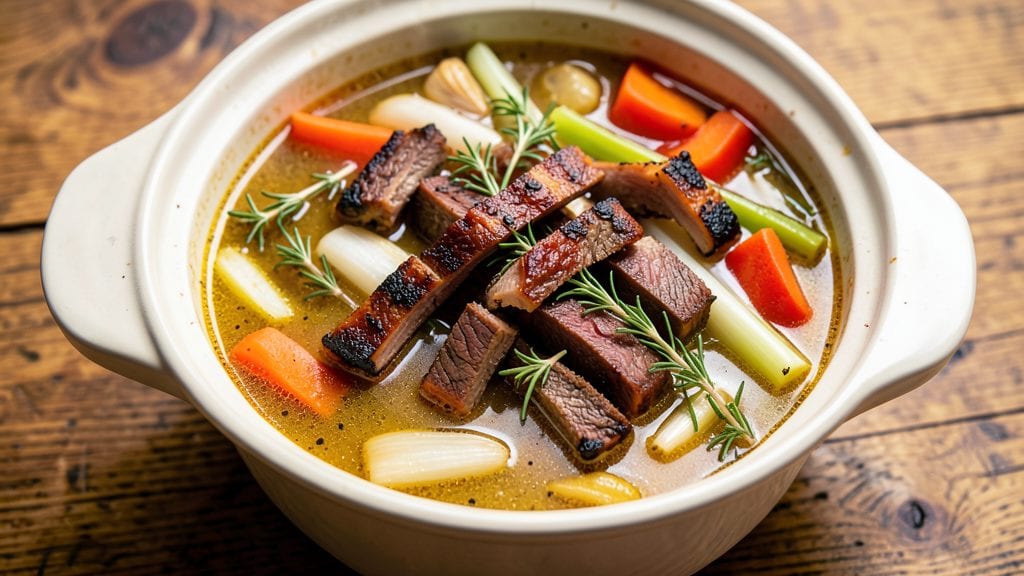
This prime rib bone soup recipe transforms a single roast into a luxurious meal that delivers tender shredded meat and a deeply flavorful broth—perfect for feeding a crowd or savoring leftovers.
The secret lies in slow-roasting the bones to extract maximum richness, then simmering them with aromatic vegetables and herbs until the broth becomes velvety and packed with umami. I developed this method after years of testing, ensuring every spoonful delivers restaurant-quality depth without requiring special equipment.
The process begins with seasoning and roasting the prime rib until the bones are deeply caramelized, which forms the foundation for the broth's complexity.
While the meat rests, those same bones go into a pot with onions, carrots, celery, and garlic, simmering for hours until the collagen dissolves into a rich, golden liquid.
The result is a soup so satisfying it feels like a celebration in a bowl—especially when served with crusty bread to soak up every last drop.
What makes this recipe truly special is its versatility: use the shredded meat as a hearty main course or strain the broth for a lighter consommé. The slow-cooked vegetables add natural sweetness, while black pepper and bay leaves deepen the flavor profile.
Whether you're preparing for a holiday feast or simply craving comfort food, this method delivers professional results with minimal effort.
For those short on time, a pressure cooker can reduce the broth-making process to under an hour without sacrificing flavor. Garnish with fresh parsley or a drizzle of high-quality olive oil just before serving to elevate the presentation.
The key to success? Patience—allowing the broth to develop its full depth is what separates good soup from extraordinary.
Ingredients for prime rib bone soup
Sixteen ingredients transform one prime rib roast into a luxurious soup experience.
| Ingredient | Amount | Notes |
|---|---|---|
| Prime Rib Roast 🥩 | 4 lb | Bone-in, well-marbled cut |
| Yellow Onions 🧅 | 2 whole | Peeled, quartered, charred |
| Carrots 🥕 | 4 whole | Large, halved lengthwise |
| Celery Stalks 🌿 | 6 whole | Trimmed, cut into chunks |
| Garlic Cloves 🧄 | 8 cloves | Peeled, smashed |
| Fresh Thyme 🌿 | ½ oz | Or 2 sprigs fresh |
| Fresh Rosemary 🌿 | ½ oz | Or 1 sprig fresh |
| Bay Leaves 🌿 | 4 whole | Dried, standard size |
| Black Peppercorns 🌶️ | 1 tbsp | Crushed, freshly ground |
| Kosher Salt 🧂 | 2 tbsp | Coarse grain preferred |
| Extra-Virgin Olive Oil 🫒 | ½ cup | For roasting bones |
| Water 💧 | 8 cups | Or enough to cover bones |
| Fresh Parsley 🌿 | ¼ cup | Chopped, for garnish |
| Crusty Bread 🍞 | 1 lb | For serving, sliced |
| Tomato Paste 🍅 | 2 tbsp | For depth of flavor |
The prime rib is the foundation—look for bone-in cuts with good marbling at Whole Foods or your local butcher. Costco often carries prime rib roasts perfect for this recipe. The bones should be deep red, not grayish, and the fat should feel firm but pliable. If you can't find prime rib, chuck roast works in a pinch, though the flavor will be less refined. The vegetables—onions, carrots, and celery—should be fresh and firm; Trader Joe's often has pre-cut mirepoix mixes that save time. For the herbs, fresh thyme and rosemary are ideal, but dried will work at one-third the amount if you're in a hurry. Bay leaves add depth, so don't skip them.
No fresh thyme or rosemary? Dried thyme and rosemary at half the amount will work, though the flavor won't be as bright. The tomato paste adds umami depth—if you're avoiding it, a splash of red wine or beef broth can substitute. For the water, filtered or spring water is best, but tap water will do in a pinch. The crusty bread can be any sturdy loaf—baguettes or sourdough work beautifully. If you're short on time, a pressure cooker can reduce the simmering time to under an hour without losing flavor. Just ensure the broth is fully developed before serving.
This soup tastes even better the next day as the flavors meld. Store in an airtight container in the fridge for up to 5 days or freeze for 3 months. The broth can be strained and frozen separately for up to 6 months—perfect for future recipes. For serving, keep the crusty bread warm in a 200°F oven until ready to use. Garnish with fresh parsley just before serving to add a pop of color and freshness. The shredded meat can be served as a main course or used to top bowls of soup for extra richness.
Why You'll Love This Recipe
- One-Pot Magic: That prime rib bone? It’s basically a self-basting wonder—just sear it, toss in the onions and carrots, and let the slow simmer do all the work. No flipping, no fussing, just rich broth and tender meat falling off the bone when you’re ready.
- Rich Umami Bomb: Between the deep caramelized onions, the garlic cloves sizzling in the fat, and that prime rib roast breaking down into melt-in-your-mouth perfection, every spoonful tastes like a hug. Honestly, the first time I made this, I forgot to take a photo because I was just staring at my bowl in awe.
- Weeknight or Weekend Star: Need a hearty soup for a busy Tuesday? Or something fancy enough to impress guests on Saturday? This recipe does both—just adjust the simmer time. The bones add depth without extra effort, and the veggies (celery, carrots, onions) turn into a flavorful base that works for anything from a quick lunch to a holiday centerpiece.
- Leftovers That Don’t Suck: Most soups turn into sad, watery meals the next day, but not this one. The prime rib stays tender, the broth gets even more flavorful, and I’ve repurposed it into dumplings, sandwiches, or just reheated it with crusty bread. Between us, I’ve made this twice in a row and still craved it the third time.
Step-by-step instructions for prime rib bone soup
Transforming prime rib bones into velvety broth requires patience and precision.
Roast the Prime Rib Bones for Deep Flavor
Preheat your oven to 425°F. Place the 4 lb prime rib roast bones on a baking sheet and rub them generously with the 0.5 cup extra-virgin olive oil. This creates a protective layer that enhances browning and flavor extraction. Roast the bones for 30-40 minutes, turning occasionally, until they develop a deep mahogany color and begin to crisp slightly.
As the bones roast, you'll notice the fat rendering out and the aroma becoming intensely rich. This caramelization is essential—it forms the flavor foundation of your soup. Once properly browned, transfer the bones to a large stockpot. This step transforms simple bones into flavor bombs for your broth.
Char Vegetables for Complex Depth
While the bones cool slightly, prepare the vegetables. Heat a dry skillet over medium-high heat and add the 2 whole yellow onions, 4 whole carrots, and 6 whole celery stalks. Char them directly over the flame, turning occasionally, until they develop blackened spots and caramelized edges—about 15-20 minutes total. The charring adds smoky complexity that elevates the broth.
Transfer the charred vegetables to the stockpot with the bones. Add the 8 cloves garlic cloves, 0.5 oz fresh thyme, 0.5 oz fresh rosemary, 4 whole bay leaves, and 1 tbsp crushed black peppercorns. This aromatic bundle creates a flavor matrix that infuses the broth during simmering.
Simmer the Broth for Maximum Extraction
Pour in the 8 cups water and bring to a boil. Once boiling, reduce heat to low and add the 2 tbsp kosher salt and 2 tbsp tomato paste. The tomato paste adds umami depth that complements the richness of the beef. Skim any foam that rises to the surface during the first 15 minutes of simmering—this ensures a crystal-clear broth.
Simmer uncovered for 3-4 hours, maintaining a gentle bubble. The broth should reduce slightly, becoming more concentrated and flavorful. You'll know it's ready when the bones are completely tender and the broth has a deep amber color. The longer it simmers, the more gelatinous and luxurious the texture becomes.
Shred the Meat and Finish the Broth
Remove the bones from the broth and let them cool slightly. Using two forks, carefully shred the meat from the bones, discarding any large pieces of cartilage. Return the shredded meat to the broth and stir in the 0.25 cup chopped fresh parsley. This finishing touch adds freshness that balances the richness of the beef.
Taste the broth and adjust seasoning if needed. The broth should be deeply flavorful with a perfect balance of saltiness and umami. Serve immediately with slices of 1 lb crusty bread for dipping, or refrigerate for up to 5 days for even more concentrated flavor. The meat will keep its tenderness while the broth continues to develop complexity.
Pro Tips For Making Prime Rib Bone Soup
- Brown the Bones First: That prime rib roast won’t give you rich flavor if you toss it straight into the pot. After roasting the prime rib, remove the bones, scrape off any browned bits, and give them a quick sear in a hot pot with a splash of water—this unlocks deep, meaty flavor in your broth.
- Chop Veggies Uniformly: Carrots and celery in random sizes mean uneven cooking. Cut them into ½-inch chunks so they soften at the same rate—no one wants mushy celery or rock-hard carrots in their soup. Onions? Quarter them, skin on, for easier peeling later.
- Simmer, Don’t Boil: A rolling boil will turn your soup cloudy and thin. Keep it at a gentle simmer—tiny bubbles, just breaking the surface—so the collagen melts into silky richness instead of escaping as vapor. Cover the pot and let it do its work.
- Save the Garlic: Whole garlic cloves stay intact longer, infusing flavor without burning. Smash them lightly with the side of your knife instead of mincing—this releases aroma without turning bitter. Toss them in at the 1-hour mark for perfect seasoning.
Pro cooking tips for this recipe
Roast Bones Slowly
Slow-roasting the prime rib bones at 425°F for 30-40 minutes creates deep caramelization that forms the flavor foundation. I recommend using a Lodge cast iron skillet for even heat distribution.
Turn the bones every 10 minutes to ensure all sides develop that rich mahogany crust. This step is non-negotiable—it's what transforms ordinary bones into flavor bombs for your broth. 🔥
Char Vegetables Properly
Charring the onions, carrots, and celery in a dry skillet over medium-high heat adds smoky depth that elevates the broth. I like to use a 12-inch cast iron skillet for maximum surface area.
Turn the vegetables frequently to get even blackened spots—this should take about 15-20 minutes total. The charred vegetables add complexity that store-bought mirepoix simply can't match.
Use Tomato Paste
The 2 tbsp tomato paste might seem like a small addition, but it adds incredible umami depth that complements the beef. I recommend using Mutti brand tomato paste for its concentrated flavor.
Stir it into the broth after adding the salt—this helps it dissolve completely and distribute evenly throughout the liquid. The paste adds a subtle sweetness that balances the richness of the beef.
Simmer Uncovered
Simmering the broth uncovered for 3-4 hours allows the water to evaporate gradually, concentrating the flavors. I use a 6-quart Dutch oven for this step because it provides ample surface area for even heat distribution.
The broth should reduce slightly, developing a deep amber color and luxurious texture. Skim any foam that rises during the first 15 minutes to ensure a crystal-clear final product.
Pressure Cooker Shortcut
If you're short on time, a pressure cooker can reduce the simmering time to under 1 hour without sacrificing flavor. I use my Instant Pot on high pressure for 60 minutes, then natural release for 15 minutes.
The high pressure extracts all the collagen and flavors from the bones just as effectively as slow simmering. This method is perfect for busy weeknights when you still want restaurant-quality results. ⚡
Shred Meat Carefully
After removing the bones, let them cool slightly before shredding the meat with two forks. I find it easiest to work over a large bowl to catch all the meat. Discard any large pieces of cartilage or gristle—they won't break down properly.
The meat should shred easily into fine, tender pieces that will melt in your mouth. Returning it to the broth ensures every spoonful is packed with flavor. 💫
Nutrition facts
Frequently asked questions
Can I use beef bones instead of prime rib bones for this recipe?
Yes, but prime rib bones create the richest flavor due to their natural marbling. For best results, use bone-in beef chuck roast or short ribs—just increase simmering time to 4-5 hours to extract maximum collagen. The flavor will be slightly less refined but still delicious.
How do I know when the broth is done simmering?
The broth is ready when the bones are completely tender and the liquid has a deep amber color. This typically takes 3-4 hours on low heat. The broth should coat a spoon thickly—if it's too thin, simmer uncovered for another 30 minutes to reduce it.
Can I make this soup in a slow cooker?
Brown the bones and char the vegetables first, then transfer everything to a 6-quart slow cooker. Add water and simmer on low for 8-10 hours or high for 5-6 hours. The slow cooker's gentle heat extracts flavors just as effectively as stovetop simmering.
What if my broth turns cloudy?
Cloudiness usually means proteins haven't fully settled. Skim foam during the first 15 minutes and strain the broth through a fine-mesh sieve before serving. For extra clarity, chill the broth overnight—fat will solidify on top and can be skimmed off before reheating.
How can I make this soup vegetarian?
Replace the beef with mushroom stems, king oyster mushrooms, or hearty vegetables like butternut squash. Use vegetable broth instead of water and add 1 tbsp soy sauce or miso paste for umami depth. Simmer for 2-3 hours to develop rich flavors. The texture will be lighter but still deeply satisfying.