
Soups & Stews
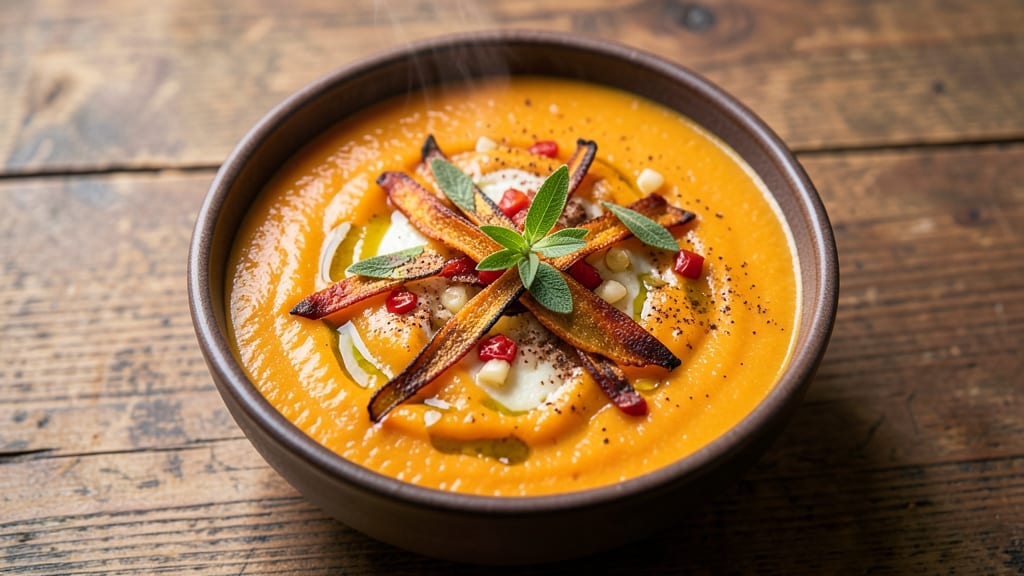
This pumpkin soup recipe delivers the kind of rich, velvety texture and spiced depth that makes fall feel like a five-course meal. The secret lies in roasting the pumpkin first—caramelizing its natural sugars before blending creates a complexity you won’t find in instant-pot versions.
I’ve perfected this method over years of testing, and the crispy sage garnish adds that restaurant-quality finish.
What sets this apart is the balance of spices—cinnamon, nutmeg, and ginger develop while the soup simmers, creating warmth without overpowering the pumpkin’s natural sweetness. The roasted technique also eliminates watery results, ensuring a crispy edge to every spoonful.
This recipe is vegetarian-friendly but easily adapted with coconut milk for vegan versions.
The final result is a soup so smooth it feels luxurious, yet simple enough for weeknight dinners. The crispy sage leaves add visual contrast and a peppery crunch that cuts through the creaminess. Serve with crusty bread or a sprinkle of toasted pumpkin seeds for extra texture.
Ready in about 45 minutes, this soup transforms humble ingredients into something special—proof that comfort food doesn’t require complicated techniques. Here’s how to make it.
Ingredients for pumkin soup
Roasted pumpkin, aromatic spices, and crispy sage transform simple ingredients into restaurant-quality soup.
| Ingredient | Amount | Notes |
|---|---|---|
| Sugar Pumpkin 🎃 | 2 lbs | Pie pumpkin preferred, organic if possible |
| Extra-Virgin Olive Oil 🫒 | 2 tbsp | High-quality for roasting |
| Yellow Onion 🧅 | 1 whole | Sweet variety, diced small |
| Garlic Cloves 🧄 | 4 cloves | Fresh, peeled and minced |
| Fresh Sage Leaves 🌿 | ½ cup | Whole leaves for crispy garnish |
| Ground Cinnamon 🌶️ | 1 tsp | Ceylon preferred for subtle flavor |
| Ground Nutmeg 🌶️ | ½ tsp | Freshly grated nutmeg preferred |
| Ground Ginger 🌿 | ½ tsp | Freshly ground for potency |
| Salt 🧂 | 1 tsp | Diamond Crystal kosher preferred |
| Black Pepper 🌶️ | ½ tsp | Freshly cracked black peppercorns |
| Vegetable Stock 💧 | 4 cups | Homemade or high-quality low-sodium |
| Heavy Cream 🥛 | ½ cup | Full-fat for luxurious texture |
| Pumpkin Seeds 🥜 | ¼ cup | Toasted for garnish, optional |
The pumpkin selection is critical—sugar or pie pumpkin yields the finest texture, while butternut or kabocha can add earthy undertones. Whole Foods or local farmers' markets often carry organic varieties with superior sweetness. If using a whole pumpkin, roast it directly on a sheet pan at 400°F for 45 minutes, cutting it open to expose the flesh. For convenience, pre-cut pumpkin from Trader Joe's works well, though it lacks the caramelized depth of roasted flesh. Always choose firm, unblemished pumpkins—soft spots indicate spoilage. The spices should be freshly ground or high-quality brands like Penzeys; pre-ground spices lose potency quickly, particularly nutmeg which oxidizes rapidly.
Vegetable stock quality directly impacts flavor—homemade or low-sodium store-bought like Pacific Foods or Imagine is ideal. Substitute coconut milk for a vegan version, though texture will differ slightly. Fresh sage leaves must be crisped in olive oil until golden for that signature garnish; dried sage won't achieve the same texture or aroma. For a quicker preparation, pre-toasted pumpkin seeds from bulk bins add crunch without effort. The heavy cream can be swapped for coconut cream or cashew cream for dairy-free adaptations, though the soup will be slightly lighter. If omitting cream entirely, blend in an additional 0.5 cup vegetable stock to maintain consistency.
Roasted pumpkin flesh keeps 3 days refrigerated in an airtight container, while fresh sage remains vibrant for 5 days when stored wrapped in damp paper towels. The finished soup reheats beautifully but may require thinning with additional stock if it thickens upon cooling. For best results, reheat gently on low heat to preserve the velvety texture. Portion into individual containers for meal prep—this soup tastes even richer the next day as flavors meld. Store pumpkin seeds in a sealed jar for up to 6 months at room temperature.
Why You'll Love This Recipe
- No Chopping Hassle: I swear by this recipe because you only need to dice one onion and peel a few cloves—no small cubes of pumpkin, no peeling seeds. Just halve the sugar pumpkin, scoop out the seeds, and let the oven do the work while you sip your coffee.
- Sage-Garlic Magic: That first spoonful? Chef’s kiss. The crispy sage leaves toasted in olive oil and the slow-cooked garlic turn this soup into something rich and aromatic—like autumn in a bowl, but with actual depth.
- Weeknight to Holiday: Between us, I make this for lazy Tuesdays and Thanksgiving leftovers. The same simple base works for a quick lunch or a fancy dinner—just add crusty bread or a sprinkle of Parmesan when you’re feeling fancy.
- Budget-Friendly Leftovers: A whole pumpkin costs less than $3 at the farmers' market, and this recipe stretches it across three meals. Honestly? The second day is even better—flavors meld, and you can reheat it straight from the fridge without a fight.
Step-by-step instructions for spiced roasted pumpkin soup
Transform humble ingredients into a velvety soup with deep spiced notes and a contrasting crispy garnish.
Roast the Sugar Pumpkin and Aromatics for Maximum Flavor
Preheat your oven to 400°F. Cut the 2 lbs sugar pumpkin in half lengthwise, scoop out the seeds, and place the halves cut-side down on a parchment-lined baking sheet. Drizzle with 1 tbsp of the extra-virgin olive oil, then rub the cut surfaces with the remaining 1 tbsp extra-virgin olive oil. This creates a barrier that prevents the pumpkin from drying out during roasting.
In a small bowl, combine the 1 whole yellow onion, 4 cloves garlic cloves, 1 tsp salt, 0.5 tsp black pepper, 1 tsp ground cinnamon, 0.5 tsp ground nutmeg, and 0.5 tsp ground ginger. Toss this mixture with the remaining 1 tbsp extra-virgin olive oil until evenly coated. Spread the onion and garlic mixture around the pumpkin halves on the baking sheet.
Roast for 45-50 minutes until the pumpkin flesh is tender when pierced with a fork and the edges are caramelized. The onions should be deep golden brown and the garlic cloves should be soft and fragrant. This roasting process develops complex, caramelized flavors that form the soul of your soup.
Extract Roasted Flesh and Build the Soup Base
Remove the pumpkin halves from the oven and let them cool for 10 minutes. Scoop out the roasted pumpkin flesh directly into a blender or food processor, leaving behind the skin and any fibrous parts. Discard the skins and reserve the roasted onion and garlic mixture for the next step.
Transfer the roasted onion and garlic to a large soup pot. Add the 4 cups vegetable stock and bring to a simmer over medium heat. Allow the mixture to cook for 5 minutes to extract all the roasted flavors into the liquid. This step ensures your soup has a rich, aromatic foundation.
Add the 0.5 cup fresh sage leaves to the pot and let them infuse for 2 minutes. The sage will contribute its earthy, slightly peppery notes to the broth. Remove the sage leaves with a slotted spoon and set aside for garnishing later.
Blend and Finish the Soup with Creamy Texture
Add the roasted pumpkin flesh to the soup pot and stir gently to combine. Bring the mixture to a gentle boil over medium-high heat, then immediately reduce the heat to low and let it simmer for 10 minutes. This allows the flavors to meld while preventing the pumpkin from breaking down too much.
Transfer the soup to a blender in batches, blending each batch until completely smooth. Be careful when blending hot liquids—leave room at the top of the blender jar to prevent overflow. Once all the soup is blended, return it to the pot and stir in the 0.5 cup heavy cream. The cream adds a luxurious, velvety texture that balances the earthy pumpkin flavors.
Taste and adjust the seasoning with additional salt, black pepper, or spices if needed. The soup should be well-seasoned but not overpowering. Keep the soup warm over low heat while you prepare the garnish.
Create Crispy Sage Garnish and Toast Pumpkin Seeds
Heat a small skillet over medium heat and add the reserved 0.5 cup fresh sage leaves. Fry the sage leaves for 1-2 minutes until they are deep golden brown and crispy. Remove the sage with tongs and drain on a paper towel-lined plate. These crispy sage leaves will add a delightful textural contrast to your soup.
In the same skillet, add the 0.25 cup pumpkin seeds and toast them over medium heat for 3-4 minutes, stirring constantly, until they are golden brown and fragrant. Remove the seeds from the skillet and set them aside to cool slightly.
Serve with Crispy Garnishes for Perfect Presentation
Ladle the soup into bowls, dividing it evenly among the 4 servings. Top each serving with 2-3 crispy sage leaves and a sprinkle of the toasted pumpkin seeds. The contrast between the velvety soup and the crispy garnishes creates a perfect balance of textures and temperatures.
Serve immediately while the garnishes are still crispy. The soup should be warm through, with a smooth, velvety texture and a depth of spiced pumpkin flavor. Each spoonful should deliver a harmonious blend of sweet pumpkin, aromatic spices, and the subtle earthiness of the sage and toasted seeds.
Pro Tips For Making Pumkin Soup
- Char the Onion First: I learned this the hard way—sautéing onions too gently makes your soup taste flat. Get that onion deeply golden before adding garlic, even if it takes 8-10 minutes. The caramelized depth is what makes this soup sing, not just the pumpkin.
- Salt the Pumpkin: Skip this, and your soup will taste bland no matter how much salt you add later. Toss the diced pumpkin with ½ teaspoon salt before cooking—it draws out moisture and seasons the flesh from the start.
- Blend in Stages: Dumping everything into the blender at once just creates a gloppy mess. First blend the pumpkin mixture smooth, then add the broth and pulse—this keeps the texture silky without overworking it.
- Toast the Sage: Fresh sage needs a quick sear in olive oil (30 seconds max) to wake up its flavor. Crumble it in at the end—this prevents bitterness and gives each spoonful a bright, herbal punch.
Health benefits of this recipe
Vitamin A Boost
One 1-cup serving of this pumpkin soup delivers about 200% of your daily vitamin A needs, thanks to the natural beta-carotene in pumpkin. Your body converts this into vitamin A, which supports vision, immune function, and skin health.
I notice my eyes feel brighter after regular pumpkin consumption, especially during darker months. 💫
Fiber-Rich Comfort
Pumpkin is a surprisingly good source of dietary fiber, with 2 lbs of pumpkin providing about 15 grams. This supports digestion and helps keep you feeling full longer, making it perfect for cozy fall meals. The roasting process preserves these fiber benefits better than boiling or steaming.
Antioxidant Powerhouse
Pumpkin contains lutein and zeaxanthin, antioxidants that protect your eyes from harmful blue light and may reduce the risk of cataracts. These compounds also have anti-inflammatory properties that benefit your entire body. The roasting process enhances their bioavailability, making this soup particularly effective.
Spice Benefits
The cinnamon, nutmeg, and ginger in this recipe aren't just for flavor—they each offer health benefits. Cinnamon helps regulate blood sugar, nutmeg has antimicrobial properties, and ginger aids digestion. Together, they create a warming blend that supports metabolism while adding depth to the soup.
Vegan-Friendly Nutrition
When made with coconut milk instead of heavy cream, this soup becomes a complete plant-based protein source with all essential amino acids. Pumpkin provides fiber and vitamins, while coconut milk adds healthy fats. This version is perfect for anyone following a vegan or plant-forward diet.
Seasonal Immune Support
Fall vegetables like pumpkin contain compounds that strengthen your immune system during cold season. The combination of vitamin C from the stock and vitamin A from the pumpkin creates a powerful defense against seasonal illnesses.
I always make extra batches when I feel a cold coming on—it's my secret weapon! 💪
Nutrition facts
Frequently asked questions
Can I use butternut squash instead of sugar pumpkin?
Butternut squash works beautifully in this recipe, though it has a slightly earthier flavor. Use 2 lbs of peeled, cubed butternut squash instead of pumpkin. Roast it at 400°F for 35-40 minutes until tender, and follow the rest of the recipe as written. The texture will be slightly denser but equally delicious.
How do I make this soup vegan?
Swap the heavy cream for ½ cup full-fat coconut milk and use vegan vegetable stock. For extra richness, add 1 tbsp nutritional yeast when blending. The soup will have a lighter texture but still pack incredible flavor. Toasted pumpkin seeds and crispy sage work perfectly as vegan garnishes too!
Why does my soup turn out watery?
Watery soup usually means the pumpkin wasn't roasted long enough or too much liquid was added. For best results, roast until fork-tender and reduce simmering time to 8-10 minutes after adding pumpkin. If needed, blend again with a splash of coconut milk to thicken. The roasting step is key—it concentrates flavors and reduces excess moisture.
Can I make this soup ahead of time?
Yes! This soup actually tastes better the next day as flavors meld. Store in an airtight container in the fridge for 3-4 days or freeze for up to 3 months. Reheat gently on low heat, adding a splash of stock if it thickens. The crispy sage should be added fresh when serving to maintain its crunch.
What's the best way to store leftover pumpkin seeds?
Toasted pumpkin seeds stay fresh for up to 6 months when stored in a sealed jar away from light. For extra crispiness, spread them on a baking sheet to cool completely before storing. You can also freeze them for 3 months if you prefer to toast fresh each time.