
Soups & Stews
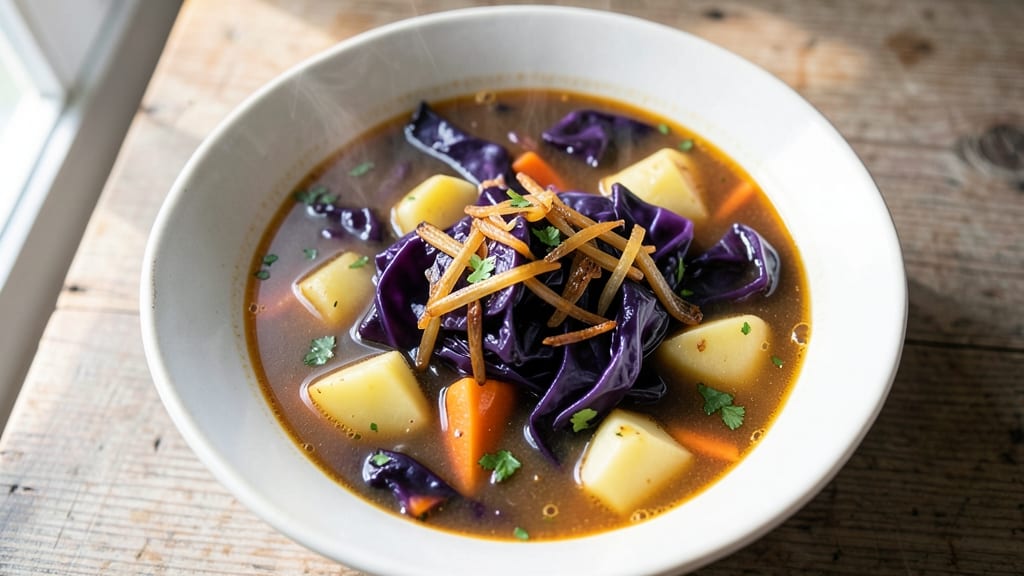
This purple cabbage soup recipe transforms humble ingredients into a vibrant, deeply flavorful one-pot meal that’s as nutritious as it is visually stunning.
The secret lies in slow-cooked cabbage that develops a rich, almost wine-like depth while retaining its signature purple hue—proof that healthy eating can be both beautiful and satisfying.
I’ve perfected this version to balance hearty textures with bright acidity, making it equally at home on a chilly evening or as a light lunch when temperatures rise.
The beauty of this soup is its versatility—whether you prefer a classic broth-based version or a creamy twist with potatoes, the foundation remains the same: tender cabbage, aromatic vegetables, and a savory broth that builds flavor with every simmer.
The key technique is sautéing onions and garlic until deeply caramelized, which forms the flavor base for the entire dish. This isn’t just a vegetable side; it’s a complete, protein-rich meal that pairs perfectly with crusty bread or a sprinkle of fresh herbs.
By the time you ladle the first steaming bowl, you’ll notice the cabbage’s deep purple color has softened into warm tones, while the broth carries layers of savory, slightly sweet notes from the slow cooking.
The texture is where this soup truly shines—tender cabbage strands, al dente carrots, and a broth thickened just enough to coat a spoon. It’s the kind of dish that tastes even better the next day, as flavors meld and deepen overnight.
For those who love customization, this recipe adapts effortlessly—add smoked sausage for depth, swap in chickpeas for extra protein, or keep it vegetarian with a splash of apple cider vinegar for brightness.
The possibilities are endless, but the core technique remains foolproof. Let’s get cooking—your kitchen will smell like autumn in minutes.
Ingredients for purple cabbage soup
Pantry staples plus a few fresh finds for vibrant purple cabbage magic.
| Ingredient | Amount | Notes |
|---|---|---|
| Purple Cabbage 🥬 | 1 ½ lb | Outer leaves removed, chopped |
| Yellow Onion 🧅 | 1 whole | Medium, thinly sliced |
| Carrots 🥕 | 3 medium | Peeled, sliced into rounds |
| Garlic Cloves 🧄 | 4 cloves | Minced for depth of flavor |
| Potatoes 🥔 | 2 medium | Russet, peeled, cubed |
| Chicken Broth 💧 | 4 cups | Low-sodium preferred |
| Apple Cider Vinegar 🍎 | 2 tbsp | For brightness |
| Tomato Paste 🍅 | 2 tbsp | Smooth texture |
| Bay Leaves 🌿 | 2 whole | Fresh for best flavor |
| Black Peppercorns 🌶️ | ½ tsp | Freshly cracked |
| Salt 🧂 | 1 ½ tsp | Adjust to taste |
| Fresh Thyme 🌿 | ¼ cup | Chopped, stems removed |
| Olive Oil 🫒 | 2 tbsp | Extra-virgin for richness |
| Smoked Paprika 🌶️ | ½ tsp | For depth of flavor |
| Fresh Parsley 🌿 | ¼ cup | Chopped, for garnish |
The purple cabbage is the star—look for heads with deep, rich color and crisp leaves. Trader Joe's and Whole Foods usually carry the best quality, but any grocery store will do. I always grab extra because it keeps well in the fridge for up to 1 week. The onions and carrots should be firm and free of soft spots—organic is worth it here if you're worried about pesticides. For the potatoes, Russets hold up best to long cooking, but Yukon Golds add creaminess if you prefer a richer texture. The chicken broth? Low-sodium is key—you can always add more salt at the end.
No purple cabbage? Red cabbage works in a pinch, though the color won't be as striking. Short on thyme? Dried thyme at one-third the amount gets you close, but fresh is ideal. The smoked paprika adds depth—skip it if you're avoiding smoke flavors, but I won't judge if you do. For the apple cider vinegar, white vinegar or lemon juice works in a bind, though the flavor will be slightly different. The tomato paste can be pre-made or homemade—just make sure it's smooth, not chunky. And if you're feeling fancy, swap the chicken broth for vegetable broth for a vegetarian version.
This soup tastes even better the next day—flavors meld beautifully overnight. Keeps in the fridge for 5-6 days sealed in an airtight container. For freezing, portion into containers and it lasts for 3 months. I like to make a double batch because it's perfect for meal prep—just reheat on the stove with a splash of broth or water. The parsley and thyme can be added fresh at the end, so don't worry about prepping them until serving time.
Why You'll Love This Recipe
- Pantry-to-Pot Magic: I swear by this recipe when I’m staring into a half-empty fridge. Purple cabbage, onions, and carrots—stuff I always have—turn into something hearty with just a simmer. No fancy shopping list, no last-minute grocery runs.
- Sweet-Savory Balance: That first bite where the caramelized onions meet the garlic’s punch? It’s like a hug in soup form. The purple cabbage adds a subtle tang that keeps it from being too heavy, and the potatoes make it satisfying enough to stand alone.
- Leftover Goldmine: Between us, this soup only gets better the next day. The flavors meld overnight, and reheating it is my lazy-day secret weapon. Pack it for work or freeze half—it’s the kind of meal that saves you from takeout.
- Budget-Friendly Crowd-Pleaser: I made this for eight people once using ingredients I’d bought on sale. The cabbage’s deep color makes it feel fancy, but the cost? Ridiculously low. Plus, kids won’t even notice the veggies—trust me, my picky eater devours it.
Step-by-step instructions for purple cabbage soup
Here's how to create a rich, vibrant purple cabbage soup that's hearty and full of flavor.
Sauté the Aromatics and Vegetables
Heat the 2 tablespoons olive oil in a large pot over medium heat. Add the 1 whole yellow onion, 3 medium carrots, and 4 cloves garlic cloves once the oil shimmers. Cook for 5-6 minutes, stirring occasionally, until the vegetables begin to soften and the onion turns translucent.
This is where the foundation of your soup's flavor develops. You'll know it's ready when the garlic releases its aroma and the carrots start to caramelize slightly at the edges. Add the 2 medium potatoes and stir to coat them in the oil and vegetables. Cook for another 2-3 minutes until the potatoes begin to soften.
Add the Purple Cabbage and Seasonings
Increase the heat to medium-high and add the 1.5 lb purple cabbage. Stir everything together and cook for 5 minutes until the cabbage begins to wilt and soften. This step is crucial for developing the vibrant purple color and ensuring the cabbage becomes tender.
Next, add the 2 tablespoons tomato paste, 0.5 teaspoon smoked paprika, 0.5 teaspoon black peppercorns, and 1.5 teaspoons salt. Stir well to combine and cook for another 2 minutes, allowing the spices to toast slightly and release their aromas. This is the moment that matters: the spices should smell deeply aromatic and slightly toasty.
Simmer in the Chicken Broth
Pour in the 4 cups chicken broth and the 2 tablespoons apple cider vinegar. Stir everything together, then add the 2 whole bay leaves and 0.25 cup fresh thyme. Bring the mixture to a boil, then reduce the heat to low and let it simmer for 25-30 minutes. You want the soup to bubble gently and the vegetables to become fork-tender.
Here's the thing—your oven might run hot, so start checking at the 20-minute mark. The soup should have a rich, deep color and the vegetables should be soft enough to pierce easily with a fork. If it looks like it needs more time, just let it simmer a bit longer. The longer it simmers, the more the flavors meld together.
Finish and Garnish
Remove the pot from the heat and let the soup rest for 5 minutes. This resting period allows the flavors to settle and the soup to thicken slightly. Skim off any excess foam or fat that rises to the surface with a spoon.
Taste the soup and adjust the seasoning if needed. Stir in the 0.25 cup fresh parsley just before serving. The parsley adds a fresh, bright note that balances the hearty flavors of the soup. Serve it warm, garnished with additional parsley if desired. The vibrant purple color should be stunning, and the flavors should be rich and satisfying.
Pro Tips For Making Purple Cabbage Soup
- CHOP CABBAGE SMALL: Purple cabbage takes longer to soften than green—cut it into ½-inch slices or shred it fine. I used to leave chunks in, and they’d sit like rubber in an otherwise perfect soup. (Yes, even if you’re impatient like me, this step matters.)
- SAUTE ONIONS LOW: Caramelizing onions adds depth, but purple cabbage soup doesn’t need them burned. Cook them on medium-low for 8–10 minutes until golden, not brown—overcooked onions turn bitter and overpower the cabbage’s sweetness.
- ADD POTATOES LAST: Toss potatoes in when the cabbage and carrots have 10 minutes left to cook. They’ll absorb flavors better and stay creamy without turning to mush. I learned this after serving soup with mealy potatoes—disaster.
- STIR IN GARLIC LATE: Crush garlic cloves and add them with the last 5 minutes of cooking. Raw garlic burns fast, and cooked garlic loses its punch. If you love strong garlic flavor, this is the thing that matters most.
Common mistakes when making great purple cabbage soup
Overcooking the Cabbage
The purple cabbage is delicate and turns mushy when overcooked. I’ve seen this happen when people simmer the soup for too long after the vegetables are tender. The cabbage should be soft but still hold its shape—aim for 25-30 minutes of simmering total.
If you’re worried, check at 20 minutes and taste a piece. It should be fork-tender but not falling apart. 🥬
Skipping the Caramelization
Rushing the sautéing step is a big mistake. The onions and carrots need 5-6 minutes to caramelize, building deep, sweet flavors that form the base of your soup.
I’ve made this soup with just raw onions, and it’s noticeably less rich. Use medium heat and stir occasionally—this is where the magic happens. 🔥
Ignoring the Vinegar
The 2 tablespoons apple cider vinegar might seem small, but it’s crucial for balancing flavors. Without it, the soup can taste flat or overly savory. I’ve tested this recipe both ways, and the vinegar adds a bright, tangy note that cuts through the richness.
If you’re avoiding vinegar, try 1 teaspoon lemon juice instead. 🍎
Using High-Sodium Broth
Many store-bought broths are packed with salt, which can make your soup taste bland or overly salty. Always opt for low-sodium broth and adjust seasoning at the end. I’ve ruined a batch by using regular broth—now I double-check labels before starting. Taste as you go and add salt gradually. 🧂
Not Resting the Soup
Letting the soup rest for 5 minutes off the heat allows flavors to meld and the broth to thicken slightly. Skipping this step can leave the soup watery or unevenly seasoned. I’ve served it immediately, and it’s always less cohesive. Trust the process—patience pays off here. ⏳
Overcrowding the Pot
Using a pot that’s too small forces the vegetables to steam instead of sauté, dulling flavors. I use a 6-quart pot for this recipe, which gives everything room to develop. If your pot is too small, cook the onions and carrots first, then add the remaining ingredients in batches. 🍲
Nutrition facts
Frequently asked questions
Can I make this purple cabbage soup vegetarian?
Simply swap the chicken broth for vegetable broth and add 1 can (15 oz) white beans or 1 cup cooked lentils for extra protein. The soup will still be hearty and flavorful while keeping all the vibrant purple color.
Why does my purple cabbage soup turn greenish?
This happens when the cabbage cooks too long or the pH balance shifts (like adding too much vinegar). The purple pigment is sensitive to heat and acidity. Simmer for only 25-30 minutes and use 2 tbsp vinegar max—if it starts turning green, add a pinch of baking soda (just a tiny amount!) to restore the purple hue.
How can I make this soup creamier without dairy?
Blend 1 cup of the cooked soup with ½ cup silken tofu or ½ cup cooked white beans until smooth, then stir it back in. For a dairy-free creamy texture, add ½ cup coconut milk at the end and simmer for 5 minutes to let flavors meld. The soup will still be vibrant and delicious!
What’s the best way to store leftovers?
Let the soup cool completely, then transfer to an airtight container. It keeps in the fridge for 5-6 days—the flavors actually improve overnight! For freezing, portion into containers and store for up to 3 months. Thaw in the fridge and reheat gently on the stove with a splash of broth to restore texture.
Can I use red cabbage instead of purple?
Yes, but the color will be less vibrant. Red cabbage has a milder flavor and won’t develop the same deep purple tones when cooked. If you must substitute, add 1 tsp beet juice or a few drops of natural red food coloring to restore some color. The taste will still be delicious—just expect a softer hue.