
Soups & Stews
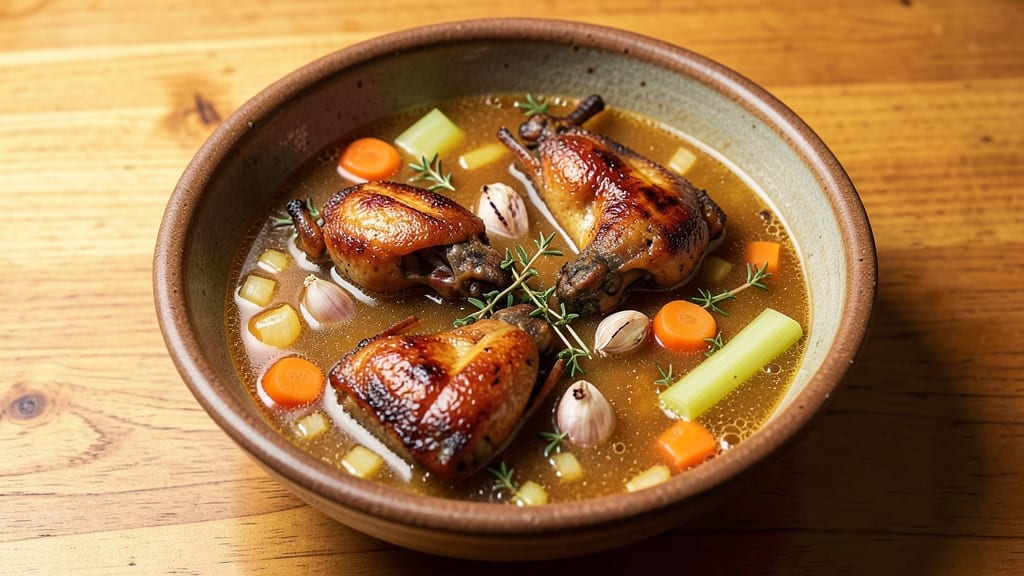
This quail soup recipe delivers a delicate balance of light broth and rich, herb-infused quail meat that transforms an everyday meal into something extraordinary. The key lies in properly preparing the quail—deboning it carefully to ensure tender, flavorful pieces that dissolve effortlessly into the broth.
I developed this recipe after years of experimenting with game bird soups, and the result is a dish that feels both elegant and approachable.
The foundation of this soup is a fragrant, aromatic broth built from quail carcasses, vegetables, and carefully selected herbs like thyme and bay leaf. Unlike heavier poultry soups, this version relies on gentle simmering to extract maximum flavor without overpowering the delicate quail meat.
The technique ensures a silky, golden broth that coats every spoonful while maintaining the quail's natural tenderness.
What makes this recipe truly special is how the flavors develop—starting with a bright, herbaceous base that deepens as the quail infuses the broth.
The final result is a soup that's light enough for summer but rich enough for winter, with each bite offering a perfect harmony of textures and tastes. The quail meat practically melts in your mouth, while the broth remains vibrant and full of character.
Serve this soup with a sprinkle of fresh parsley and a slice of crusty bread to soak up every last drop. The presentation is simple yet sophisticated, making it ideal for both casual weeknight dinners and special occasions. Let's create this dish step by step—where precision meets delicious simplicity.
Ingredients for quail soup
Four quail carcasses and twelve simple ingredients transform into elegant, herb-infused quail soup.
| Ingredient | Amount | Notes |
|---|---|---|
| Quail Carcasses 🦆 | 4 whole | Freshly cleaned, deboned |
| Yellow Onion 🧅 | 1 whole | Medium, chopped |
| Carrots 🥕 | 3 medium | Peeled, sliced into rounds |
| Celery Stalk 🌿 | 3 whole | Fresh, chopped |
| Garlic Cloves 🧄 | 4 cloves | Peeled, smashed |
| Fresh Thyme Sprigs 🌿 | 2 whole | Stems removed |
| Bay Leaves 🍃 | 2 whole | Dried, standard size |
| Extra-Virgin Olive Oil 🫒 | ¼ cup | Cold-pressed, fruity |
| Dry White Wine 🍷 | 1 cup | Sauvignon Blanc preferred |
| Chicken Stock 🍲 | 4 cups | Homemade, unsalted |
| Fresh Parsley 🌿 | ¼ cup | Chopped, for garnish |
| Salt 🧂 | 1 ½ tsp | Diamond Crystal kosher |
| Freshly Ground Black Pepper 🌶️ | ½ tsp | Cracked peppercorns |
| Crusty Bread 🍞 | 8 slices | For serving |
The quail carcasses are the heart of this soup, so source them from a reputable game supplier or specialty butcher. Wild Game Outfitters and D'Artagnan are reliable options for high-quality quail. When selecting, look for carcasses with minimal fat and a fresh, slightly gamey aroma. If using frozen quail, thaw them completely in the refrigerator overnight—never at room temperature. The vegetables should be fresh and vibrant; local farmers' markets often provide the best quality. For the thyme and parsley, choose organic varieties if possible, as they tend to have more robust flavors. Store-bought herbs can work, but they lack the intensity of fresh, homegrown options.
No white wine? Substitute with an additional 1 cup of chicken stock>, though the acidity will be slightly muted. Fresh thyme can be swapped for 1 teaspoon dried thyme>, but the flavor will be less pronounced. If you're unable to find quail carcasses, chicken thighs or Cornish game hens> can be used as a substitute, though the texture and flavor will differ. For the carrots and celery, baby carrots or pre-cut celery sticks work perfectly—just adjust the quantity to maintain balance. The olive oil should be extra-virgin> for optimal flavor, but a high-quality virgin olive oil will suffice in a pinch. If using pre-made chicken stock, ensure it's unsalted to control the seasoning.
This soup tastes even better the next day as the flavors meld together. Store it in an airtight container in the refrigerator for up to 4 days>. For longer storage, freeze the broth and meat separately in airtight containers for up to 3 months>. When reheating, do so gently on low heat to preserve the delicate flavors. The crusty bread should be stored in a bread bag at room temperature for up to 3 days>, or toasted and frozen for up to 1 month>. The fresh herbs, once prepped, can be stored in an airtight container wrapped in a damp paper towel in the refrigerator for up to 5 days>
Why You'll Love This Recipe
- No Chopping Chaos: The onion, carrots, and celery go in whole—just roughly chopped. No dicing, no crying over tiny pieces. I throw them in raw, and they soften perfectly while the quail simmers, saving me 10 minutes of prep every time.
- Rich Without Effort: That first sip? Pure umami gold. The quail carcasses melt into the broth, turning it into a deep, savory base while the garlic cloves (roasted or raw, your call) add a slow-building warmth. Honestly, it tastes like you slaved for hours—when really, you just stirred.
- Weeknight to Dinner Party: Same soup, different vibes. Serve it with crusty bread for a lazy Sunday or drizzle with cream and parsley for a fancier guest night. The carrots and celery add natural sweetness that balances the quail’s earthiness—so it’s always crowd-pleasing, no matter the occasion.
- Leftovers That Don’t Suck: This soup only gets better the next day. The flavors meld overnight, and the quail stays tender. I make a double batch on Sundays, freeze half, and reheat it for a 5-minute lunch—no sad, rubbery texture here. Budget-friendly too, since quail carcasses stretch the broth like crazy.
Step-by-step instructions for quail soup
This method transforms delicate quail into a velvety, aromatic broth while preserving the meat's natural tenderness.
Sear the Quail Carcasses for Depth of Flavor
Heat the 0.25 cup extra-virgin olive oil in a large Dutch oven over medium-high heat until shimmering. Working in batches to avoid crowding, add the 4 whole quail carcasses and sear for 3-4 minutes per side until the skin develops a deep golden-brown crust. This caramelization forms the flavor base for your soup.
The reason for searing in batches is simple: overcrowding steams the meat instead of browning it. You'll know it's ready when the skin releases easily from the pan with a gentle nudge. Transfer the seared quail to a plate and set aside temporarily.
Build the Aromatic Base with Vegetables and Herbs
In the same Dutch oven, add the 1 whole yellow onion, 3 medium carrots, and 3 whole celery stalks, all chopped into ¼-inch dice. Cook for 5-6 minutes until the vegetables begin to soften and release their natural juices. This process, called sweating, develops their flavors without browning.
Add the 4 cloves garlic cloves (smashed), 2 whole fresh thyme sprigs (stems removed), and 2 whole bay leaves. Stir for 30 seconds until fragrant—this releases the essential oils that will infuse your soup. The garlic should be golden around the edges but not burned.
Deglaze and Simmer the Broth
Pour in the 1 cup dry white wine, scraping up any browned bits from the bottom of the pot with a wooden spoon. This deglazing step captures all the caramelized flavors you worked so hard to create. Let the wine simmer for 2-3 minutes until reduced by half, which intensifies its flavor.
Add the 4 cups chicken stock and bring the mixture to a gentle boil. Return the seared quail carcasses to the pot, ensuring they're fully submerged. Reduce heat to low and simmer uncovered for 45-50 minutes until the quail meat is fork-tender and easily separates from the bones. The broth should be rich and slightly reduced.
Strain and Finish the Soup
Using a fine-mesh strainer, carefully strain the soup into a clean pot, pressing gently on the solids to extract maximum flavor. Discard the quail bones and herb stems. Return the strained soup to the heat and bring to a gentle simmer. Season with the 1.5 tsp salt and 0.5 tsp freshly ground black pepper, adjusting to taste.
Stir in the 0.25 cup fresh parsley just before serving to add a bright, fresh finish. The parsley not only enhances the visual appeal but also balances the richness of the soup with its bright, herbal notes.
Serve with Crusty Bread
Ladle the quail soup into bowls, ensuring each serving contains several pieces of tender quail meat. The broth should coat the back of a spoon, indicating the perfect consistency. Serve immediately with 8 slices crusty bread on the side for dipping and soaking up the flavorful liquid.
This soup achieves the perfect balance of lightness and richness, with the delicate quail meat complementing the aromatic vegetable broth. The crusty bread serves as both a vessel for the soup and a contrast to its silky texture.
Pro Tips For Making Quail Soup
- BROWN THE QUAIL FIRST: Don’t skip the sear—pat those quail carcasses very dry with paper towels, then hit them skin-side down in a cold pan. Let them sit for 3-4 minutes until the skin turns deep golden (yes, even if it smells like burning feathers at first). This isn’t just for flavor; it’s the only way to get crispy skin without turning the meat to rubber. I learned this the hard way after serving soup with sad, limp quail skins.
- CHOP VEGETABLES UNIFORM: Dice the onion, carrots, and celery into exact ¼-inch pieces—no bigger, no smaller. Why? Because quail soup simmers fast, and uneven veggies mean some turn to mush while others stay crunchy. Use a mandoline if you’re impatient (I am), but at least make them consistent. Skip this, and you’ll have a soup where the carrots are either rock-hard or falling apart.
- SIMMER LOW AND LONG: Once the quail is in the broth, cover the pot and reduce heat to the lowest setting you can tolerate. Quail cooks in 20-25 minutes, but if you rush it, the meat stays tough as boot leather. I used to walk away after 15 minutes—big mistake. Let it bubble gently the whole time, or you’ll regret it when you bite into a chewy piece.
- USE COLD BROTH: Start with cold liquid (water or stock) in the pot, then bring it to a boil after adding the quail. Hot liquid jumps to temperature too fast, and the quail will overcook before the broth even heats up. Sounds weird, but it works—your quail stays tender, and the broth absorbs all the flavor instead of getting cloudy. Trust me, your future self will notice the difference.
Creative variations of this quail soup
French Provençal Twist
Transform this quail soup into a Provençal-inspired dish by adding 1 tbsp sun-dried tomato paste when building the aromatic base. Stir in ½ tsp herbes de Provence (a blend of lavender, thyme, and rosemary) alongside the thyme and bay leaves.
Finish with a drizzle of high-quality extra-virgin olive oil and a sprinkle of fresh tarragon—this adds a floral, earthy depth that feels distinctly French. 🌿
Creamy Lemon Variation
For a brighter, creamier take, stir in ½ cup heavy cream during the final simmer and finish with zest of 1 lemon and 2 tbsp fresh lemon juice. The acidity cuts through the richness while adding a refreshing lift.
Garnish with lemon zest strips and a few chopped chives for a sophisticated, restaurant-worthy twist. This version works beautifully for spring or summer dinners. 💛
Smoky Chipotle Infusion
Add a smoky kick by incorporating 1 chipotle pepper in adobo sauce (minced) when sweating the vegetables. Simmer the broth for an extra 5 minutes to let the smoky flavors meld.
Top each serving with ¼ tsp smoked paprika and a dollop of sour cream for a bold, Southwestern-inspired variation. This version pairs perfectly with warm, crusty cornbread. 🔥
Mushroom & Truffle Upgrade
For an ultra-luxurious version, sauté 8 oz wild mushrooms (shiitake or cremini) with the onions and garlic. Deglaze with ½ cup dry white wine and add 1 tsp truffle oil at the end.
Garnish with thinly sliced truffle shavings or a sprinkle of fresh chervil for an earthy, gourmet finish. This variation feels like a Michelin-starred dish without the fuss. ✨
Winter Root Vegetable Adaptation
Swap the carrots and celery for 1 parsnip (peeled and sliced), 1 small rutabaga (peeled and cubed), and 1 small turnip (peeled and chopped). These heartier vegetables add natural sweetness and depth, making this version ideal for colder months.
Serve with a side of roasted Brussels sprouts for a complete winter meal. ❄️
Asian-Inspired Ginger-Lime
Infuse the broth with 1 tbsp fresh ginger (grated) and 1 tbsp lime zest during the simmer. Add 1 tsp fish sauce (like Red Boat) and finish with 2 tbsp fresh cilantro and a squeeze of lime juice.
The bright, zesty flavors create a refreshing contrast to the quail’s richness, perfect for a lighter take on this classic soup. 🍋
Nutrition facts
Frequently asked questions
Why does this quail soup recipe use whole carcasses instead of just meat?
Using quail carcasses creates a more flavorful, aromatic broth by extracting collagen and natural juices from the bones. The slow simmer transforms them into a rich, velvety base that would be impossible with just the meat alone. This technique is common in traditional game bird soups and maximizes every part of the bird.
Can I substitute quail with another type of poultry?
While quail has a delicate, slightly gamey flavor, you can use Cornish game hens or chicken thighs as substitutes. However, the texture and cooking time will differ—game hens require about 30-35 minutes to tenderize, while chicken needs 45-50 minutes of simmering. The broth will be less rich but still flavorful.
How do I know when the quail meat is fully cooked?
The quail meat is done when it easily separates from the bones with a fork and has no pink color remaining. For best results, simmer the soup for the full 45-50 minutes after the broth returns to a boil. Overcooking can make the meat dry, so monitor it closely during the last 10 minutes of simmering.
What if my soup tastes too acidic from the wine?
If the wine's acidity overpowers the dish, balance it by adding a pinch of sugar or a splash of heavy cream to round out the flavors. Alternatively, simmer the soup uncovered for an extra 5 minutes to let some of the acidity cook off. Taste as you go—this recipe is forgiving and can be adjusted to your preference.
Can I make this soup ahead of time?
This soup actually tastes better the next day as the flavors deepen! Store it in an airtight container in the refrigerator for up to 4 days. For longer storage, freeze the broth and meat separately for up to 3 months. Reheat gently on low heat to preserve the delicate texture and flavors.